Spain
175 events
Spain, officially the Kingdom of Spain, is a country in Southern and Western Europe with territories in North Africa. Featuring the southernmost point of continental Europe, it is the largest country in Southern Europe and the fourth-most populous European Union (EU) member state. Spanning the majority of the Iberian Peninsula, its territory also includes the Canary Islands, in the Eastern Atlantic Ocean; the Balearic Islands, in the Western Mediterranean Sea; and the autonomous cities of Ceuta and Melilla, in mainland Africa.
Text from the Wikipedia article Spain, CC BY-SA 4.0
Built from Wikidata: an event or person is listed when Wikidata links them to this page, as shown next to each one. Many aren’t recorded there, so this list is incomplete.
Earlier states here
Key people
 Pablo Picasso1881 – 1973Spanish painter and sculptor (1881–1973)Source: Wikidata (citizenship)
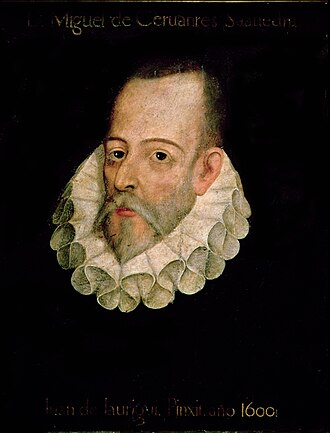 Miguel de Cervantes1547 – 1616Spanish novelist, poet, and playwright (1547-1616)Source: Wikidata (country of birthplace)
 Salvador Dalí1904 – 1989Spanish artist (1904–1989)Source: Wikidata (citizenship)
 Shakirab. 1977Colombian singer-songwriter (born 1977)Source: Wikidata (citizenship)
 Lionel Messib. 1987Argentine association football player (born 1987)Source: Wikidata (citizenship)
 Francisco Goya1746 – 1828Spanish painter and printmaker (1746–1828)Source: Wikidata (citizenship)
 Simón Bolívar1783 – 1830Venezuelan statesman and military officer (1783–1830)Source: Wikidata (citizenship)
 Hernán Cortés1485 – 1547Spanish conquistadorSource: Wikidata (citizenship)
 Diego Velázquez1599 – 1660Spanish painter (1599–1660)Source: Wikidata (citizenship)
 Rafael Nadalb. 1986Spanish tennis player (born 1986)Source: Wikidata (citizenship)
 Federico García Lorca1898 – 1936Spanish poet, dramatist and prose writer (1898–1936)Source: Wikidata (citizenship)
 Francisco Franco1892 – 1975Spanish general and dictator (1892-1975)Source: Wikidata (citizenship)
 Antoni Gaudí1852 – 1926Catalan architect (1852–1926)Source: Wikidata (citizenship)
 Mario Vargas Llosa1936 – 2025Peruvian, Spanish and Dominican novelist and writer (1936–2025)Source: Wikidata (citizenship)
 Averroes1126 – 1198Arab Andalusian Muslim writer and philosopher (1126–1198)Source: Wikidata (country of birthplace)
 Juan Carlos I of Spainb. 1938King of Spain from 1975 to 2014Source: Wikidata (citizenship)
 Lope de Vega1562 – 1635Spanish playwright and poet (1562-1635)Source: Wikidata (citizenship)
 Penélope Cruzb. 1974Spanish actress (born 1974)Source: Wikidata (citizenship)
 Felipe VI of Spainb. 1968King of Spain since 2014Source: Wikidata (citizenship)
 Trajan53 CE – 117 CE13th Roman Emperor (98–117)Source: Wikidata (country of birthplace)
 Mariano Rajoyb. 1955Spanish politician (born 1955)Source: Wikidata (citizenship)
 Ronaldinhob. 1980Brazilian associaton fooball player (born 1980)Source: Wikidata (citizenship)
 Hadrian76 CE – 138 CE14th Roman Emperor (117–138)Source: Wikidata (country of birthplace)
 Moshe ben Maimon1138 – 1204Medieval Jewish philosopher from Spain (1135–1204)Source: Wikidata (country of birthplace)
 Teresa of Ávila1515 – 1582Roman Catholic saint (1515-1582)Source: Wikidata (citizenship)
 Pedro Calderón de la Barca1600 – 1681Spanish dramatist (1600-1681)Source: Wikidata (citizenship)
 Joan Miró1893 – 1983Spanish painter, sculptor, and ceramicist (1893–1983)Source: Wikidata (citizenship)
 Andrés Iniestab. 1984Spanish footballer and managerSource: Wikidata (citizenship)
 Juan Ramón Jiménez1881 – 1958PoetSource: Wikidata (citizenship)
 Pedro Sánchezb. 1972Prime Minister of Spain since 2018Source: Wikidata (citizenship)
 Antonio Banderasb. 1960Spanish actorSource: Wikidata (citizenship)
 Jacinto Benavente1866 – 1954Spanish writer (1866-1954)Source: Wikidata (citizenship)
 Iker Casillasb. 1981Spanish association football playerSource: Wikidata (citizenship)
 José Martí1853 – 1895Cuban poet, philosopher and nationalist (1853-1895)Source: Wikidata (citizenship)
 Lamine Yamalb. 2007Spanish association football player (born 2007)Source: Wikidata (citizenship)
 Camilo José Cela1916 – 2002Spanish writer (1916–2002)Source: Wikidata (citizenship)
 Natalia Oreirob. 1977Uruguayan actress, singer, host, and modelSource: Wikidata (citizenship)
 Xavi Hernándezb. 1980Spanish footballer and managerSource: Wikidata (citizenship)
 José Luis Rodríguez Zapaterob. 1960Spanish politicianSource: Wikidata (citizenship)
 Carles Puigdemontb. 1962Catalan politicianSource: Wikidata (citizenship)
 Pedro Almodóvarb. 1949Spanish filmmaker (born 1949)Source: Wikidata (citizenship)
 Pep Guardiolab. 1971Spanish association football manager and player (born 1971)Source: Wikidata (citizenship)
 Enrique Iglesiasb. 1975Spanish singer, songwriter and producer (born 1975)Source: Wikidata (citizenship)
 Luis Buñuel1900 – 1983Spanish-Mexican filmmaker (1900–1983)Source: Wikidata (citizenship)
 Joan Fuster1922 – 1992Spanish writer (1922–1992)Source: Wikidata (citizenship)
 Santiago Ramón y Cajal1852 – 1934Spanish scientist (1852-1934)Source: Wikidata (citizenship)
 Theodosius I347 CE – 395 CERoman emperor from 379 to 395Source: Wikidata (country of birthplace)
 Ferenc Puskás1927 – 2006Hungarian association football player (1927–2006)Source: Wikidata (citizenship)
Showing the 48 best-known of 200 people.
Everything that happened
- 264 BCE – 241 BCEFirst Punic WarMediterranean SeaThe First Punic War (264–241 BC) was the first of three wars fought between Rome and Carthage, the two main powers of the western Mediterranean in the early 3rd century BC. For 23 years, in the longest continuous conflict and greatest naval war of antiquity, the two powers struggled for supremacy. The war was fought primarily on the Mediterranean island of Sicily and its surrounding waters, and also in North Africa.Source: Wikidata (country of the location)
- 219 BCESiege of SaguntumSaguntumThe siege of Saguntum took place in 219 BC between the Carthaginians and the Saguntines at the town of Saguntum, near the modern town of Sagunto in the province of Valencia, Spain. The battle is mainly remembered today because it triggered one of the most important wars of antiquity, the Second Punic War.Source: Wikidata (country)
- 218 BCE – 201 BCESecond Punic WarMediterranean SeaThe Second Punic War (218 to 201 BC) was the second in a series of three wars fought between Carthage and the Roman Republic, who were at the time the two main powers in the western Mediterranean. The protracted war was fought across the region, incurring immense materiel and human losses on both sides.Source: Wikidata (country)
- 218 BCEBattle of CissaKesseThe Battle of Cissa was part of the Second Punic War. It was fought in the fall of 218 BC, near the town of Tarraco in north-eastern Iberia. A Roman army under Gnaeus Cornelius Scipio Calvus defeated an outnumbered Carthaginian army under Hanno, thus gaining control of the territory north of the Ebro River that Hannibal had just subdued a few months prior in the summer of 218 BC.Source: Wikidata (country)
- 217 BCEBattle of Ebro RiverEbroThe Battle of Ebro River was a naval battle fought near the mouth of Ebro River in the spring of 217 BC between a Carthaginian fleet of approximately 40 quinqueremes, under the command of Himilco, and a Roman fleet of 35 ships, under Gnaeus Cornelius Scipio Calvus. Hasdrubal Barca, the Carthaginian commander in Iberia, had launched a joint expedition to destroy the Roman base north of the Ebro River.Source: Wikidata (country of the location)
- 215 BCEBattle of IberaHiberaThe Battle of Ibera, also known as the Battle of Dertosa, was fought in the spring of 215 BC on the south bank of the Ebro River near the town of Ibera and was part of the Second Punic War. A Roman army, under the command of the brothers Gnaeus and Publius Scipio, defeated a similarly sized Carthaginian army under Hasdrubal Barca.Source: Wikidata (country)
- 211 BCEBattle of the Upper BaetisGuadalquivirThe Battle of the Upper Baetis was a double battle, comprising the battles of Castulo and Ilorca, fought in 211 BC during the Second Punic War between a Carthaginian force led by Hasdrubal Barca (Hannibal's brother) and a Roman force led by Publius Cornelius Scipio and his brother Gnaeus. The immediate result was a Carthaginian victory in which both Roman brothers were killed.Source: Wikidata (country)
- 209 BCEBattle of New CarthageQart HadashtThe battle of New Carthage took place in early 209 BC when a Roman army under Publius Cornelius Scipio successfully assaulted New Carthage, the capital of Carthaginian Iberia, which was defended by a garrison under Mago. The battle was part of the Second Punic War.Source: Wikidata (country)
- 208 BCEBattle of BaeculaSanto ToméThe Battle of Baecula was a major field battle in Iberia during the Second Punic War. Roman Republican and Iberian auxiliary forces under the command of Scipio Africanus routed the Carthaginian army of Hasdrubal Barca.Source: Wikidata (country)
- 206 BCEBattle of IlipaIlipaThe Battle of Ilipa was an engagement considered by many as Scipio Africanus's most brilliant victory in his military career during the Second Punic War in 206 BC. It may have taken place on a plain east of Alcalá del Río, Seville, Spain, near the village of Esquivel, the site of the Carthaginian camp.Source: Wikidata (country)
- 143 BCE – 133 BCENumantine WarNumantiaThe Numantine War (from Bellum Numantinum in Appian's Roman History) was the last conflict of the Celtiberian Wars fought by the Romans to subdue those people along the Ebro, in what is now Spain. It was a twenty-year conflict between the Celtiberian tribes of Hispania Citerior and the Roman government. It began in 154 BC as a revolt of the Celtiberians of Numantia on the Douro.Source: Wikidata (country)
- 49 BCEBattle of IlerdaLleidaThe Battle of Ilerda took place in June 49 BC between the forces of Julius Caesar and the Hispanian army of Pompey Magnus, led by his legates Lucius Afranius and Marcus Petreius. Unlike many of the other battles of the civil war, this was more a campaign of manoeuvre than actual fighting.Source: Wikidata (country)
- 45 BCEBattle of MundaMundaThe Battle of Munda (17 March 45 BC), in southern Hispania Ulterior, was the final battle of Caesar's civil war against the leaders of the Optimates. With the military victory at Munda and the deaths of Titus Labienus and Gnaeus Pompeius (eldest son of Pompey), Caesar was politically able to return in triumph to Rome, and then govern as the elected Roman dictator.Source: Wikidata (country)
- 456 CEBattle of ÓrbigoÓrbigo RiverThe Battle of Órbigo, also known as the Battle of the Urbicus and the Battle of Campus Paramus took place in 456 when the Visigoths of Theodoric II defeated the Suevi Kingdom and sacked their capital Braga. Although very little is known of the battle the defeat proved a significant blow to the Suevi who would enter a period of decline afterwards and would never fully recover their territory.Source: Wikidata (country)
- 711 CE – 726 CEMuslim conquest of the Iberian PeninsulaIberian PeninsulaThe Umayyad Caliphate conquered the Visigothic Kingdom on the Iberian Peninsula in the early 8th century. The conquest resulted in the end of Christian rule throughout most of Iberia and the establishment of Muslim rule in that territory, which came to be known as al-Andalus under the Umayyad dynasty.Source: Wikidata (country of the location)
- 711 CEBattle of GuadaleteIberian PeninsulaThe Battle of Guadalete was the first major battle of the Muslim conquest of the Iberian Peninsula, fought in July 711 at an unidentified location in what is now southern Spain between the Visigoths under their king, Roderic, and the invading forces of the Umayyad Caliphate, composed of mainly Berbers and some Arabs under the commander Tariq ibn Ziyad.Source: Wikidata (country)
- 718 CEBattle of CovadongaCovadongaThe Battle of Covadonga took place in 722 between the army of Pelagius of Asturias and the army of Umayyad Caliphate commanders Alqama and Munuza. Fought near Covadonga, in the Picos de Europa, the outcome was victory for the Christian forces of Pelagius.Source: Wikidata (country)
- 778 CEBattle of Roncevaux PassRoncevaux PassThe Battle of Roncevaux Pass (French and English spelling, Roncesvalles in Spanish, Orreaga in Basque) in 778 saw a large force of Basques ambush a part of Charlemagne's army in Roncevaux Pass, a high mountain pass in the Pyrenees on the present border between France and Spain, after his invasion of the Iberian Peninsula.Source: Wikidata (country of the location)
- 791 CEBattle of the Burbia RiverVillafranca del BierzoThe Battle of Río Burbia or the Battle of the Burbia River was fought in the year 791 between the troops of the Kingdom of Asturias, commanded by King Bermudo I of Asturias, and the troops of the Emirate of Córdoba, led by Yusuf ibn Bukht. The battle occurred in the context of the Ghazws of Hisham I against the Asturians in the northern Iberian Peninsula.Source: Wikidata (country)
- 794 CEBattle of LutosGradoThe Battle of Lutos occurred in 794 when the Emir of Cordoba, Hisham I sent military incursions against the Kingdom of Asturias under the command of the brothers Abd al-Karim ibn Abd al-Walid ibn Mugaith and Abd al-Malik ibn Abd al-Walid ibn Mugaith.Source: Wikidata (country)
- 816 CEBattle of PancorboPancorboThe Battle of Pancorbo took place in 816 between a Moorish army from the Emirate of Cordoba sent by Al-Hakam I and under the control of Abd al-Karim ibn Abd al-Wahid ibn Mugit and pro-Frankish forces under the control of Balask al-Yalasqi. The battle was fought when the Córdoban forces attempted to cross the pass at Pancorbo.Source: Wikidata (country)
- 852 CEBattle of GuadalaceteToledoThe Battle of Guadalacete was fought in 852 between a coalition of troops from the Kingdom of Asturias and the Kingdom of Pamplona, and a force of troops from the Umayyad Muslim Emirate of Córdoba under the command of Muhammad I of Córdoba. The outcome was a Umayyad victory.Source: Wikidata (country)
- 859 CEBattle of Monte LaturceSpainThe Battle of Monte Laturce, also known as the second Battle of Albelda, was a victory for the forces of Ordoño I of Asturias and his ally García Íñiguez of Pamplona over the latter's uncle and former ally, Musa ibn Musa al-Qasawi, the Banu Qasi lord of Borja, Zaragoza, Terrer, and Tudela, Navarre, in 859 or 860.Source: Wikidata (country)
- 939 CEBattle of SimancasSimancasThe Battle of Simancas (also called Alhandega or al-Khandaq) was a military battle that started on 19 July 939 in the Iberian Peninsula between the troops of the King of León Ramiro II and Cordovan caliph Abd al-Rahman III near the walls of the city of Simancas.Source: Wikidata (country)
- 1063Battle of GrausGrausThe Battle of Graus was a battle of the Reconquista, traditionally said to have taken place on 8 May 1063. Either in or as a result of the battle, King Ramiro I of Aragon died.Source: Wikidata (country)
- 1064Crusade of BarbastroBarbastroThe crusade of Barbastro (also known as the siege of Barbastro or battle of Barbastro) was an international expedition, sanctioned by Pope Alexander II, to take the Spanish city of Barbastro, then part of the Hudid Emirate of Lārida. A large army composed of elements from all over Western Europe took part in the siege and conquest of the city (1064).Source: Wikidata (country)
- 1086Battle of SagrajasBadajozThe Battle of Sagrajas (23 October 1086), also called Zalaca or Zallaqah (Arabic: معركة الزلاقة, romanized: Maʿrakat az-Zallāqah), was a conflict fought in 1086 between the Almoravid army, led by their king, Yusuf ibn Tashfin, and the forces of King Alfonso VI of Castile.Source: Wikidata (country)
- 1096Battle of AlcorazHuescaThe Battle of Alcoraz took place on 15 November 1096 on the fields of Alcoraz between the city walls of Huesca and the Castle of Montearagón. The battle pitted the forces of Peter I of Aragon and Pamplona against the allied forces of Al-Musta'in II of the Taifa of Zaragoza and García Ordóñez de Nájera and Gonzalo Núñez de Lara representing Alfonso VI of León and Castille.Source: Wikidata (country)
- 1108Battle of UclésUclésThe Battle of Uclés was fought on 29 May 1108 during the Reconquista period near Uclés just south of the river Tagus between the Christian forces of Castile and León under Alfonso VI and the forces of the Muslim Almoravids under Tamim ibn-Yusuf.Source: Wikidata (country)
- 1134Battle of FragaFragaThe Battle of Fraga was a battle of the Spanish Reconquista that took place on 17 July 1134 at Fraga, Aragon, Spain. The battle was fought between the combined forces of King Alfonso the Battler and Viscount Centule VI of Béarn, and a variety of Almoravid forces that had come to the aid of the town of Fraga which was being besieged by Alfonso. The battle resulted in an Almoravid victory.Source: Wikidata (country)
- 1147 – 1149Second CrusadeIberian PeninsulaThe Second Crusade (1147–1149) was the second major crusade launched from Europe. The Second Crusade was started in response to the fall of the County of Edessa in 1144 to the Seljuk forces of Zengi. The county had been founded during the First Crusade (1096–1099) by Baldwin in 1098. While it was the first Crusader state to be founded, it was also the first to fall.Source: Wikidata (country of the location)
- 1195Battle of AlarcosAlarcosBattle of Alarcos (July 18, 1195) was fought between the Almohads led by Abu Yusuf Ya'qub al-Mansur and King Alfonso VIII of Castile. It resulted in the defeat of the Castilian forces and their subsequent retreat to Toledo, whereas the Almohads reconquered Trujillo, Montánchez, and Talavera.Source: Wikidata (country)
- 1212Battle of Las Navas de TolosaSanta ElenaThe Battle of Las Navas de Tolosa, known in Islamic history as the Battle of Al-Uqab (Arabic: معركة العقاب), took place on 16 July 1212 and was an important turning point in the Reconquista and the history of medieval Spain. The Christian forces were led by King Alfonso VIII of Castile, joined by his rivals, Kings Sancho VII of Navarre and Peter II of Aragon.Source: Wikidata (country)
- 1247 – 1248Siege of SevilleSevilleThe siege of Seville (July 1247 – November 1248) was a 16-month successful investment during the Reconquista of Seville by forces of Ferdinand III of Castile. Although perhaps eclipsed in geopolitical importance by the rapid capture of Córdoba in 1236, which sent a shockwave through the Muslim world, the siege of Seville was nonetheless the most complex military operation undertaken by Fernando III.Source: Wikidata (country)
- 1337 – 1453Hundred Years' WarFranceThe Hundred Years' War (French: Guerre de Cent Ans; 1337–1453) was a series of conflicts between the kingdoms of England and France and a civil war in France during the late Middle Ages. It emerged from feudal disputes over the Duchy of Aquitaine and was triggered by a claim to the French throne made by Edward III of England.Source: Wikidata (country of the location)
- 1340Battle of Río SaladoTarifaThe Battle of Río Salado also known as the Battle of Tarifa (30 October 1340) was a battle of the allied Christian armies of King Alfonso XI of Castile and King Afonso IV of Portugal against the allied Muslim armies of Sultan Abu al-Hasan 'Ali of the Marinids and Emir Yusuf I of the Emirate of Granada.Source: Wikidata (country)
- 1367Battle of NájeraNájeraThe Battle of Nájera, also known as the Battle of Navarrete, was fought on 3 April 1367 to the northeast of Nájera, in the province of La Rioja, Castile. It was an episode of the first Castilian Civil War which confronted King Peter of Castile with his half-brother Count Henry of Trastámara who aspired to the throne; the war involved Castile in the Hundred Years' War.Source: Wikidata (country)
- 1369Battle of MontielMontielThe Battle of Montiel was fought on 14 March 1369 between the Franco-Castilian forces supporting Henry of Trastámara and the Granadian-Castilian forces supporting the reigning Peter of Castile.Source: Wikidata (country)
- 1378 – 1381War of ChioggiaMediterranean SeaThe War of Chioggia (Italian: Guerra di Chioggia) was a conflict fought by the Republic of Genoa against the Republic of Venice between 1378 and 1381, the conclusion of an open confrontation that had lasted for years and which had already included some occasional and limited military clashes.Source: Wikidata (country of the location)
- 1412Compromise of CaspeCaspeThe 1412 Compromise of Caspe (Compromiso de Caspe in Spanish, Compromís de Casp in Catalan) was an act and resolution of parliamentary representatives of the constituent realms of the Crown of Aragon (the Kingdom of Aragon, Kingdom of Valencia, and Principality of Catalonia), meeting in Caspe, to resolve the interregnum following the death of King Martin of Aragon in 1410 without a legitimate heir.Source: Wikidata (country of the location)
- 1431Battle of La HigueruelaVega de GranadaThe Battle of La Higueruela (lit. 'Battle at the little fig tree') was fought in the vega of the river Genil near Granada on 1 July 1431 between the forces of John II of Castile, led by Álvaro de Luna, and troops loyal to Muhammed IX, Nasrid Sultan of Granada. The battle was a modest victory for the forces of Castile, with no territorial gain and failing to take Granada.Source: Wikidata (country)
- 1468Treaty of the Bulls of GuisandoBulls of GuisandoThe Treaty of the Bulls of Guisando (Spanish: Tratado de los Toros de Guisando) is the name of a treaty agreed on top of the hill of Guisando near the Bulls of Guisando (located in Ávila, Spain) on 19 September 1468, between Henry IV of Castile and his half-sister Isabella of Castile. The treaty granted Isabella the title of Princess of Asturias and so she became heiress presumptive to the Crown of Castile.Source: Wikidata (country of the location)
- 1476Battle of ToroToroThe Battle of Toro was part of the War of the Castilian Succession, fought on 1 March 1476, near the city of Toro, between the Castilian-Aragonese troops of the Catholic Monarchs and the Portuguese-Castilian forces of Afonso V and Prince John of Portugal.Source: Wikidata (country)
- 1494Treaty of TordesillasTordesillasThe Treaty of Tordesillas, signed in Tordesillas, Spain, on 7 June 1494, and ratified in Setúbal, Portugal, divided the newly discovered lands outside Europe between the Kingdom of Portugal and the Crown of Castile, along a meridian 370 leagues (c. 2,100 km or 1,300 mi) west of the Cape Verde islands, off the west coast of Africa.Source: Wikidata (country of the location)
- 1499 – 1501Rebellion of the AlpujarrasKingdom of GranadaThe first rebellion of the Alpujarras of 1499–1501 (Arabic: ثورة البشرات الأولى) was a series of uprisings by the Muslim population of the Kingdom of Granada, Crown of Castile (formerly, the Emirate of Granada) against their Catholic rulers.Source: Wikidata (country)
- 1508 – 1516War of the League of CambraiItalian PeninsulaThe War of the League of Cambrai, also known by its second stage as the War of the Holy League, was fought from December 1508 to December 1516, as part of the wider Italian Wars of 1494–1559.Source: Wikidata (country of the location)
- 1520 – 1522Revolt of the ComunerosCrown of CastileThe Revolt of the Comuneros (Spanish: Guerra de las Comunidades de Castilla, "War of the Communities of Castile") was an uprising by citizens of Castile against the rule of Charles I and his administration between 1520 and 1521. At its height, the rebels controlled the heart of Castile, ruling the cities of Valladolid, Tordesillas, and Toledo.Source: Wikidata (country)
- 1529Battle of FormenteraFormenteraThe Battle of Formentara occurred on 28 October 1529 when an Ottoman fleet under Aydin Reis captured a small Spanish fleet of eight galleys off the island of Formentera near Ibiza.Source: Wikidata (country)
- 1537 – 1540Ottoman–Venetian WarMediterranean SeaThe Third Ottoman–Venetian War (1537–1540) was one of the Ottoman–Venetian wars which took place during the 16th century. The war arose out of the Franco-Ottoman alliance between Francis I of France and Süleyman I of the Ottoman Empire against the Holy Roman Emperor Charles V.Source: Wikidata (country of the location)
- 1539Siege of CastelnuovoHerceg NoviThe siege of Castelnuovo was an engagement during the Ottoman-Habsburg struggle for control of the Mediterranean, which took place in July 1539 at the walled town of Castelnuovo, present-day Herceg Novi, Montenegro. Castelnuovo had been conquered by elements of various Spanish tercios the year before during the failed campaign of the Holy League against the Ottoman Empire in Eastern Mediterranean waters.Source: Wikidata (country)
- 1551 – 1559Italian War of 1551–1559FranceThe Italian War of 1551–1559 began when Henry II of France declared war against Charles V, Holy Roman Emperor, with the intent of recapturing parts of Italy and ensuring French, rather than Habsburg, domination of European affairs. The war ended following the signing of the Treaty of Cateau-Cambrésis between the monarchs of Spain, England and France in 1559.Source: Wikidata (country of the location)
- 1568 – 1571Rebellion of the AlpujarrasKingdom of GranadaThe second rebellion of the Alpujarras (Arabic: ثورة البشرات الثانية; 1568–1571), sometimes called the War of the Alpujarras or the Morisco Revolt, was triggered by Philip II of Spain's Pragmatic Sanction of 1567 and was the second Morisco revolt against the Castilian Crown in the mountainous Alpujarra region and on the Granada Altiplano region, northeast of the city of Granada.Source: Wikidata (country)
- 1607Battle of GibraltarBay of GibraltarThe naval Battle of Gibraltar took place on 25 April 1607, during the Eighty Years' War, when a Dutch fleet surprised and engaged a Spanish fleet anchored at the Bay of Gibraltar. During the four hours of action, most of the Spanish ships were destroyed.Source: Wikidata (country)
- 1625 – 1630Anglo-Spanish WarAtlantic OceanThe Anglo-Spanish War of 1625–1630 was fought between Spain and England, with the Dutch Republic and Scotland participating on the English side. An offshoot of the Eighty Years' War between the Dutch and Spanish, the conflict's battles consisted of a mixture of land and naval engagements. The war ended with the signing of the Treaty of Madrid in 1630, resulting in a status quo ante bellum.Source: Wikidata (country of the location)
- 1640 – 1668Portuguese Restoration WarIberian PeninsulaThe Portuguese Restoration War, December 1640 to February 1668, ended with the Treaty of Lisbon, which dissolved the Iberian Union between Portugal and Spain.Source: Wikidata (country of the location)
- 1640 – 1659Reapers' WarPrincipality of CataloniaThe Reapers' War (Catalan: Guerra dels Segadors, Eastern Catalan: [ˈɡɛrə ðəls səɣəˈðos]; Spanish: Guerra de los Segadores, French: Guerre des faucheurs), also known as the Catalan Revolt or Catalan Revolution, was a conflict that affected the Principality of Catalonia between 1640 and 1659, in the context of the Franco-Spanish War of 1635–1659.Source: Wikidata (country)
- 1654 – 1660Anglo-Spanish WarCádizThe Anglo-Spanish War of 1654–1660 was fought between the Commonwealth of England and Habsburg Spain. It was driven by the economic and religious rivalry between the two countries, with each side attacking the other's commercial and colonial interests in various ways, such as privateering and naval expeditions.Source: Wikidata (country of the location)
- 1659Treaty of the PyreneesPheasant IslandThe Treaty of the Pyrenees was signed on 7 November 1659 and ended the Franco–Spanish War that had begun in 1635.Source: Wikidata (country)
- 1667 – 1668War of DevolutionDutch RepublicThe War of Devolution took place from May 1667 to May 1668. In the course of the war, France occupied large parts of the Spanish Netherlands and Franche-Comté, both then provinces of the Holy Roman Empire ruled by Spain. Its name derives from an obscure law known as the Jus Devolutionis, used by Louis XIV to claim that these territories had "devolved" to him by right of marriage to Maria Theresa of Spain.Source: Wikidata (country)
- 1670Treaty of MadridMadridThe Treaty of Madrid, also known as the Godolphin Treaty, was a treaty between England and Spain that was agreed to in July 1670 "for the settlement of all disputes in America". The treaty officially ended the war begun in 1654 in the Caribbean in which England had conquered Jamaica.Source: Wikidata (country)
- 1672 – 1678Franco-Dutch WarWestern EuropeThe Franco-Dutch War, 1672 to 1678, was primarily fought by France and the Dutch Republic, with both sides backed at different times by a variety of allies. Related conflicts include the Third Anglo-Dutch War of 1672 to 1674 and the Scanian War of 1675 to 1679.Source: Wikidata (country of the location)
- 1702Battle of CádizCádizThe Battle of Cádiz was an attempt by English and Dutch forces to seize the southern Spanish port of Cádiz in 1702 during the War of the Spanish Succession. The Andalusian port of Cádiz served as the centre of Spanish trade with its American colonies.Source: Wikidata (country)
- 1702Battle of Vigo BayRía de VigoThe Battle of Vigo Bay, also known as the Battle of Rande (Galician: Batalla de Rande; Spanish: Batalla de Rande) or sometimes as the Battle of Redondela Bay, was a naval engagement fought on 23 October 1702 during the opening years of the War of the Spanish Succession.Source: Wikidata (country)
- 1704Battle of MálagaMálagaThe Battle of Málaga, also known as the Battle of Vélez-Málaga, was a major fleet action which took place during the War of the Spanish Succession between an Anglo-Dutch fleet and a Franco-Spanish naval force on 24 August 1704. Both sides fought an intense engagement before the Anglo-Dutch fleet withdrew the next day.Source: Wikidata (country)
- 1705Siege of BarcelonaBarcelonaThe siege of Barcelona took place between 14 September and 19 October 1705 during the War of the Spanish Succession when a multinational Grand Alliance army led by Lord Peterborough, supporting the Habsburg pretender to the Spanish throne, captured the city of Barcelona from its Spanish Bourbonic defenders,Source: Wikidata (country)
- 1706Siege of BarcelonaBarcelonaThe siege of Barcelona took place between 3 and 27 April 1706 during the War of the Spanish Succession when a Franco-Spanish army laid siege to Barcelona in an attempt to recapture the city following its fall to an English-led Allied army the previous year. After the Earl of Peterborough entered Valencia in triumph in January 1706, Barcelona was left vulnerable.Source: Wikidata (country)
- 1707Battle of AlmansaAlmansaThe Battle of Almansa took place on 25 April 1707, during the War of the Spanish Succession. It was fought between an army loyal to Philip V of Spain, Bourbon claimant to the Spanish throne, and one supporting his Habsburg rival, Archduke Charles of Austria. The result was a decisive Bourbon victory that reclaimed most of eastern Spain for Philip.Source: Wikidata (country)
- 1710Battle of AlmenarAlmenarThe Battle of Almenar took place near Balaguer in Catalonia, on 27 July 1710, during the War of the Spanish Succession.Source: Wikidata (country)
- 1710Battle of BrihuegaBrihuegaThe Battle of Brihuega took place on 8 December 1710 in the War of the Spanish Succession, during the Allied retreat from Madrid to Barcelona. A British Army rearguard led by James Stanhope, 1st Earl Stanhope was cut off and trapped within the town of Brihuega before being overwhelmed by a Franco-Spanish army under the command of Louis Joseph, Duke of Vendôme.Source: Wikidata (country)
- 1710Battle of SaragossaMount of TorreroThe Battle of Saragossa, 20 August 1710, took place during the War of the Spanish Succession, near Zaragoza in Spain. A slightly inferior Franco-Bourbon Spanish army commanded by the Marquis de Bay was severely defeated by a Grand Alliance force under Guido Starhemberg, which included Habsburg Spanish troops.Source: Wikidata (country)
- 1710Battle of VillaviciosaVillaviciosa de TajuñaThe Battle of Villaviciosa (11 December 1710) was a battle between a Franco-Spanish army led by Louis Joseph, Duke of Vendôme and Philip V of Spain and a Grand Alliance army commanded by Austrian General Guido Starhemberg. The battle took place during the War of the Spanish Succession, one day after a Vendôme's army overran a smaller British force under James Stanhope at Brihuega.Source: Wikidata (country)
- 1713 – 1714Siege of BarcelonaBarcelonaThe siege of Barcelona (Catalan: Setge de Barcelona, IPA: [ˈsedʒə ðə βəɾsəˈlonə]) was a 13 month battle at the end of the War of Spanish Succession, which pitted Archduke Charles of Austria (backed by Great Britain and the Netherlands, i.e. the Grand Alliance) against Philip V of Spain, backed by France in a contest for the Spanish crown.Source: Wikidata (country)
- 1718 – 1720War of the Quadruple AllianceIberian PeninsulaThe War of the Quadruple Alliance, 1718 to 1720, was a conflict between Spain and a coalition of Austria, Great Britain, France, and Savoy, with the addition of the Dutch Republic in 1719. Military operations focused primarily on Sicily and Spain, with minor engagements in North America. The Spanish-backed Jacobite rising of 1719 in Scotland is considered a related conflict.Source: Wikidata (country of the location)
- 1747First Battle of Cape FinisterreCape FinisterreThe First Battle of Cape Finisterre (14 May 1747) was waged during the War of the Austrian Succession. It refers to the attack by 14 British ships of the line under Admiral George Anson against a French 30-ship convoy commanded by Admiral de la Jonquière. The French were attempting to protect their merchant ships by using warships with them.Source: Wikidata (country)
- 1747Second Battle of Cape FinisterreCape FinisterreThe second battle of Cape Finisterre was a naval encounter fought during the War of the Austrian Succession on 25 October 1747. A British fleet of fourteen ships of the line commanded by Rear-Admiral Edward Hawke intercepted a French convoy of 250 merchant ships, sailing from the Basque Roads in western France to the West Indies and protected by eight ships of the line commanded by Vice Admiral Henri-François des…Source: Wikidata (country)
- 1750Treaty of MadridMadridThe Treaty of Madrid (also known as the Treaty of Limits of the Conquests) was an agreement concluded between Spain and Portugal on 13 January 1750. In an effort to end decades of conflict in the region of present-day Uruguay, the treaty established detailed territorial boundaries between Portuguese Brazil and the Spanish colonial territories to the south and west.Source: Wikidata (country)
- 1756Battle of MinorcaMenorcaThe Battle of Minorca was a fleet action fought on 20 May 1756 between the French and British navies during the Seven Years' War. Fought off Minorca shortly after the war began, it was the opening naval battle of the war's European theatre and resulted in a French strategic victory.Source: Wikidata (country)
- 1762 – 1763Fantastic WarIberian PeninsulaThe Spanish–Portuguese War (1762–1763) or Fantastic War (Portuguese: Guerra Fantástica; French: Guerre Fantastique; Mirandese: Guerra de l Mirandun; Spanish: Guerra Fantástica) was fought as part of the Seven Years' War. The first and main theatre of the war was an invasion of Portugal by Spain in alliance with France against the Anglo-Portuguese Alliance, which ended after three disastrous invasions.Source: Wikidata (country of the location)
- 1762Treaty of FontainebleauFontainebleauThe Treaty of Fontainebleau, signed on November 3, 1762, was a secret agreement of 1762 in which the Kingdom of France ceded Louisiana to Spain. The treaty followed the last battle in the French and Indian War in North America, the Battle of Signal Hill in September 1762, which confirmed British control of Canada. In Europe, the associated Seven Years' War continued to rage.Source: Wikidata (country of the location)
- 1774 – 1775Siege of MelillaMelillaThe siege of Melilla was an attempt by the Sultanate of Morocco, supported by Algerian mercenaries, to capture the Spanish fortress of Melilla on the Moroccan Mediterranean coast. Mohammed ben Abdallah, then Sultan of Morocco, invaded Melilla in December 1774 with a large army of Royal Moroccan soldiers and Algerian mercenaries.Source: Wikidata (country of the location)
- 1777First Treaty of San IldefonsoRoyal Palace of La Granja de San IldefonsoThe First Treaty of San Ildefonso, 1 October 1777, fixed borders between the colonial possessions in South America held by Spain and Portugal, primarily in the Río de la Plata region.Source: Wikidata (country of the location)
- 1778 – 1783Anglo-French WarEnglish ChannelThe Anglo-French War, also known as the War of 1778 or the Bourbon War in Britain, was a military conflict fought between France and Great Britain, sometimes with their respective allies, between 1778 and 1783.Source: Wikidata (country of the location)
- 1778Treaty of El PardoRoyal Palace of El PardoThe Treaty of El Pardo signed on 11 March 1778 sought to end conflict between Spain and Portugal in the Río de la Plata region, along the modern boundary between Argentina and Uruguay. It confirmed Spanish ownership of Colonia del Sacramento, now in Uruguay, while Portugal ceded possession of strategically important territories in Africa, now the modern state of Equatorial Guinea.Source: Wikidata (country of the location)
- 1793 – 1795War of the PyreneesPyreneesThe War of the Pyrenees, also known as War of Roussillon or War of the Convention, was the Pyrenean front of the First Coalition's war against the First French Republic. It pitted Revolutionary France against the kingdoms of Spain and Portugal from March 1793 to July 1795 during the French Revolutionary Wars.Source: Wikidata (country of the location)
- 1795Pinckney's TreatyMadridPinckney's Treaty, also known as the Treaty of San Lorenzo or the Treaty of Madrid, was signed on October 27, 1795, by the United States and Spain.Source: Wikidata (country)
- 1796 – 1808Anglo-Spanish WarEnglish ChannelThe Anglo-Spanish War was fought between 1796 and 1802, and again from 1804 to 1808, as part of the First Coalition Wars. The war ended when an unexpected alliance was formed between Great Britain and the Spanish Bourbon dynasty, resulting in the French invasion.Source: Wikidata (country of the location)
- 1796Second Treaty of San IldefonsoReal Sitio de San IldefonsoThe Second Treaty of San Ildefonso was signed on 19 August 1796 between the Spanish Empire and the First French Republic. Based on the terms of the agreement, France and Spain would become allies and combine their forces against the Kingdom of Great Britain.Source: Wikidata (country of the location)
- 1798 – 1802War of the Second CoalitionItalian PeninsulaThe War of the Second Coalition (French: Guerre de la Deuxième Coalition) (1798–1802) was the second war between revolutionary France and a coalition of European monarchies, led by Britain, Austria and Russia, and including the Ottoman Empire, Portugal, Naples and various German monarchies. Prussia did not join the coalition, while Spain supported France.Source: Wikidata (country of the location)
- 1800Third Treaty of San IldefonsoRoyal Palace of La Granja de San IldefonsoThe Third Treaty of San Ildefonso was a secret agreement signed on 1 October 1800 between Spain and the French Republic by which Spain agreed in principle to exchange its North American colony of Louisiana for territories in Tuscany. The terms were later confirmed by the March 1801 Treaty of Aranjuez.Source: Wikidata (country of the location)
- 1801 – 1805First Barbary WarMediterranean SeaThe First Barbary War (1801–1805), also known as the Tripolitan War and the Barbary Coast War, was a conflict during the 1801–1815 Barbary Wars, in which the United States fought against Ottoman Tripolitania. Tripolitania had declared war against the United States over disputes regarding tributary payments in exchange for a cessation of Tripolitanian commerce raiding at sea.Source: Wikidata (country of the location)
- 1801First Battle of AlgecirasBay of GibraltarThe First Battle of Algeciras was fought on 6 July 1801 between a Royal Navy squadron and a smaller French Navy squadron lying at anchor in the Spanish port of Algeciras during the Algeciras campaign of the War of the Second Coalition.Source: Wikidata (country)
- 1801Treaty of AranjuezAranjuezThe Treaty of Aranjuez (1801) was signed on 21 March 1801 between France and Spain. It confirmed a previous secret agreement in which Spain agreed to exchange Louisiana for territories in Tuscany. The treaty also stipulated Spain's cession of Louisiana to be a "restoration", not a retrocession.Source: Wikidata (country)
- 1805Battle of TrafalgarCape TrafalgarThe Battle of Trafalgar was a fleet action which took place on 21 October 1805 between the Royal Navy and a combined fleet of the French and Spanish navies during the War of the Third Coalition. As part of Napoleon's planned invasion of the United Kingdom, the French and Spanish navies planned to take control of the English Channel and provide the French invasion army with safe passage to Britain.Source: Wikidata (country)
- 1805Battle of Cape FinisterreCape FinisterreIn the Battle of Cape Finisterre (22 July 1805) off Galicia, Spain, the British fleet under Admiral Robert Calder fought an indecisive naval battle against the combined Franco-Spanish fleet which was returning from the West Indies.Source: Wikidata (country)
- 1805Battle of Cape OrtegalOrtegalThe Battle of Cape Ortegal was the final action of the Trafalgar campaign, and was fought between a squadron of the Royal Navy and a remnant of the French fleet that had been defeated earlier at the Battle of Trafalgar. It took place on 4 November 1805 off Cape Ortegal, in north-west Spain and saw Captain Sir Richard Strachan defeat and capture a French squadron under Counter-admiral Pierre Dumanoir le Pelley.Source: Wikidata (country)
- 1808 – 1814Peninsular WarIberian PeninsulaThe Peninsular War (1808–1814) was fought in the Iberian Peninsula by the Iberian nations Spain and Portugal, along with the United Kingdom, against the invading and occupying forces of the First French Empire during the Napoleonic Wars. In Spain, it is considered to overlap with the Spanish War of Independence. It overlapped with the War of the Fifth Coalition (1809) and the War of the Sixth Coalition (1812–1814).Source: Wikidata (country of the location)
- 1808Battle of BailénBailénThe Battle of Bailén was fought in 1808 between the Spanish Army's Army of Andalusia, under General Francisco Javier Castaños and the French Imperial Army's 2nd Gironde Observational Corps under Divisional-General Pierre Dupont de l'Étang.Source: Wikidata (country)
- 1808Battle of CabezónCabezón de PisuergaThe Battle of Cabezón was an engagement early in the Peninsular War on 12 June 1808 between Spain's Army of Castile, under Cuesta, based at Valladolid, and detachments of Marshal Bessières' French Army Corps under generals General Lasalle and Merle. Lasalle occupied Valladolid without opposition that same evening.Source: Wikidata (country)
- 1808Battle of Espinosa de los MonterosEspinosa de los MonterosThe Battle of Espinosa de los Monteros took place during the Napoleonic Wars, on 10 and 11 November 1808 at the village of Espinosa de los Monteros in the Cantabrian Mountains. It resulted in a French victory under Marshal Victor against Lieutenant General Joaquín Blake's Army of Galicia.Source: Wikidata (country)
- 1808Battle of Medina de RiosecoMedina de RiosecoThe Battle of Medina de Rioseco, also known as the Battle of Moclín, was fought during the Peninsular War on 14 July 1808 when a combined body of Spanish militia and regulars moved to rupture the French line of communications to Madrid.Source: Wikidata (country)
- 1808Battle of SomosierraSomosierraThe Battle of Somosierra took place on 30 November 1808, during the Peninsular War, when a combined Franco-Napoleonic Spanish-Polish force under the direct command of Napoleon I forced a passage through a Spanish division stationed at the Sierra de Guadarrama, which shielded Madrid from direct French attack.Source: Wikidata (country)
- 1808Battle of TudelaTudelaThe Battle of Tudela (23 November 1808) saw an Imperial French army led by Marshal Jean Lannes attack a Spanish army under General Castaños. The battle resulted in the complete victory of the Imperial forces over their adversaries. The combat occurred near Tudela in Navarre, Spain during the Peninsular War, part of a wider conflict known as the Napoleonic Wars.Source: Wikidata (country)
- 1808Battles of El BruchEl BrucThe two battles of the Bruch (Spanish: Batallas del Bruch; Catalan: Batalles del Bruc) were engagements fought successively, at El Bruc, near Barcelona, Catalonia, on 6 and 14 June 1808, during the Peninsular War, by French troops commanded by Brigadier General François de Schwarz and General of Division Joseph Chabran against Spanish volunteers and mercenaries led by General Antoni Franch i Estalella and Joan Baget.Source: Wikidata (country)
- 1808Dos de Mayo UprisingMadridThe Dos de Mayo or Second of May Uprising took place in Madrid, Spain, on 2–3 May 1808. The rebellion, mainly by civilians, with some isolated military action by junior officers, was against the occupation of the city by French troops, and was violently repressed by the French Imperial forces, with hundreds of public executions.Source: Wikidata (country)
- 1808 – 1809Siege of Zaragoza (1809)ZaragozaThe siege of Zaragoza was the French capture of the Spanish city of Zaragoza in 1809 during the Peninsular War. It was particularly noted for its brutality. The city was heavily outnumbered against the French. Afterwards, a great part of the city lay in ruins, and the garrison had suffered 24,000 deaths along with 30,000 civilians deaths.Source: Wikidata (country)
- 1808Siege of Zaragoza (1808)ZaragozaThe siege of Zaragoza (also known as the siege of Saragossa) was a bloody struggle in the Peninsular War. A French army under General Lefebvre-Desnouettes and subsequently commanded by General Jean-Antoine Verdier besieged, repeatedly stormed, and was repulsed from the Spanish city of Zaragoza in the summer of 1808.Source: Wikidata (country)
- 1809Battle of CorunnaA CoruñaThe Battle of Corunna (or A Coruña, La Corunna, La Coruña or La Corogne), in Spain known as Battle of Elviña, took place on 16 January 1809, when a French corps under Marshal of the Empire Jean de Dieu Soult attacked a British army under Lieutenant-General Sir John Moore. The battle took place during the Peninsular War, which was part of the wider Napoleonic Wars.Source: Wikidata (country)
- 1809Battle of OcañaOcañaThe Battle of Ocaña was fought on 19 November 1809 between French forces under Marshal Jean-de-Dieu Soult against the Spanish army under General Juan Carlos Aréizaga, which suffered its greatest single defeat in the Peninsular War.Source: Wikidata (country)
- 1809Battle of TalaveraTalavera de la ReinaThe Battle of Talavera (27–28 July 1809) was fought just outside the town of Talavera de la Reina, Spain some 120 kilometres (75 mi) southwest of Madrid, during the Peninsular War. At Talavera, a British army under Sir Arthur Wellesley combined with a Spanish army under General Gregorio García de la Cuesta fought in operations against French-occupied Madrid.Source: Wikidata (country)
- 1811Battle of AlbueraLa AlbueraThe Battle of Albuera (16 May 1811) was a battle during the Peninsular War. A mixed British, Spanish and Portuguese corps engaged elements of the French armée du Midi (Army of the South) at the small Spanish village of Albuera, about 20 kilometres (12 mi) south of the frontier fortress-town of Badajoz, Spain.Source: Wikidata (country)
- 1811Battle of the GeboraGévoraThe Battle of the Gebora took place during the Peninsular War between Spanish and French armies on 19 February 1811, northwest of Badajoz, Spain. An outnumbered French force routed and nearly destroyed the Spanish Army of Extremadura.Source: Wikidata (country)
- 1812Battle of SalamancaArapilesThe Battle of Salamanca (in French and Spanish known as the Battle of the Arapiles) took place on 22 July 1812. An Anglo-Portuguese army under the Earl of Wellington (future Duke of Wellington) defeated Marshal Auguste Marmont's French forces at Arapiles, south of Salamanca, Spain, during the Peninsular War. A Spanish division was also present but took no part in the battle.Source: Wikidata (country)
- 1812Siege of BadajozBadajozIn the siege of Badajoz (16 March – 6 April 1812), also called the third siege of Badajoz, an Anglo-Portuguese Army under the command of the Arthur Wellesley, the Earl of Wellington (who was later made Duke of Wellington) besieged Badajoz, Spain, and forced the surrender of the French garrison.Source: Wikidata (country)
- 1813Battle of VitoriaVitoria-GasteizAt the Battle of Vitoria (21 June 1813), a British, Portuguese and Spanish army under the Marquess of Wellington broke the French army under King Joseph Bonaparte and Marshal Jean-Baptiste Jourdan near Vitoria in Spain, eventually leading to victory in the Peninsular War.Source: Wikidata (country)
- 1815Second Barbary WarMediterranean SeaThe Second Barbary War, also known as the U.S.–Algerian War and the Algerine War, was a brief military conflict between the United States and the North African state of Algiers in 1815.Source: Wikidata (country of the location)
- 1823Battle of TrocaderoIsla del TrocaderoThe Battle of Trocadero, fought on 31 August 1823, was a significant battle in France's expedition in support of the Spanish King Ferdinand VII. The French defeated the Spanish liberal forces and restored Ferdinand to absolute rule.Source: Wikidata (country)
- 1847Battle of ChapultepecReal Valle de CamargoThe Battle of Chapultepec took place between U.S. troops and Mexican forces holding the strategically located Chapultepec Castle on the outskirts of Mexico City on September 13, 1847 during the Mexican–American War. The castle was built atop a 200-foot (61 m) hill in 1783, and in 1833 it was converted into a military academy and a gunpowder storage facility. The hill was surrounded by a wall 1,600 yards long.Source: Wikidata (country of the location)
- 1868Glorious RevolutionSpainThe Glorious Revolution (Spanish: la Gloriosa or la Septembrina) took place in Spain in 1868, resulting in the deposition of Queen Isabella II. The success of the revolution marked the beginning of the Sexenio Democrático with the installation of a provisional government.Source: Wikidata (country of the location)
- 1873 – 1874Cantonal RebellionAndalusiaThe Cantonal Revolution (Spanish: Revolución cantonal) was an attempt to establish a revolutionary republic, based on a decentralised system of cantons, in Spain in 1873.Source: Wikidata (country of the location)
- 1887Sino-Portuguese Treaty of PekingBeijingThe Sino-Portuguese Treaty of Peking was a treaty signed on 1 December 1887 between the Kingdom of Portugal and the Qing dynasty. Regarded by China as one of the unequal treaties concluded following the Second Opium War, it granted Portugal perpetual colonial rights over Macau in exchange for its cooperation in curbing the smuggling of opium.Source: Wikidata (country)
- 1891Madrid ProtocolMadridThe Madrid System, also known as the Madrid Protocol, is the primary international system for facilitating the registration of trademarks in multiple jurisdictions around the world.Source: Wikidata (country)
- 1914Battle of GaliciaLvivThe Battle of Galicia, also known as the Great Battle of Galicia, was a major battle between Russia and Austria-Hungary during the early stages of World War I in 1914. In the course of the battle, the Austro-Hungarian armies were severely defeated in several encounters and forced out of Galicia, while the Russians captured Lemberg (now Lviv) and, for approximately nine months, ruled Eastern Galicia until their…Source: Wikidata (country of the location)
- 1914Pursuit of Goeben and BreslauMediterranean SeaThe pursuit of Goeben and Breslau was a naval action that occurred in the Mediterranean Sea at the outbreak of the First World War when elements of the British Mediterranean Fleet attempted to intercept the German Mittelmeerdivision consisting of the battlecruiser SMS Goeben and the light cruiser SMS Breslau.Source: Wikidata (country of the location)
- 1936Battle of BadajozBadajozThe Battle of Badajoz was one of the first major engagements of the Spanish Civil War, resulting in a tactical and strategic Nationalist victory, however at a significant cost in time and troops.Source: Wikidata (country)
- 1936Battle of MallorcaMallorcaThe Battle of Mallorca, also known as the Mallorca Landings, was an amphibious landing of Republican forces in 1936, early in the Spanish Civil War, aimed at driving the Nationalists from Mallorca and reclaiming the island for the Republic.Source: Wikidata (country)
- 1936Battle of MéridaMéridaThe Battle of Mérida saw the Republican militia twice fail to halt the Spanish Army of Africa near the historic town of Mérida early in the Spanish Civil War.Source: Wikidata (country)
- 1936Paracuellos massacresParacuellos de JaramaThe Paracuellos massacres (Spanish: Matanzas de Paracuellos) were a series of mass killings of prisoners of war deemed to have been part of or supporting the Nationalists by the Republican faction of the Spanish Civil War that took place before and during the Siege of Madrid during the early stages of the war. The death toll remains a subject of debate and controversy.Source: Wikidata (country of the location)
- 1936 – 1937Revolutionary CataloniaSpainRevolutionary Catalonia (21 July 1936 – 8 May 1937) was the period in which the autonomous region of Catalonia in northeast Spain was controlled or largely influenced by various anarchist, syndicalist, communist, and socialist trade unions, parties, and militias of the Spanish Civil War era.Source: Wikidata (country)
- 1936Siege of MadridMadridThe siege of Madrid was a two-and-a-half-year siege of the Republican-controlled Spanish capital city of Madrid by the Nationalist armies, under General Francisco Franco, during the Spanish Civil War (1936–1939). The city, besieged from October 1936, fell to the Nationalist armies on 28 March 1939.Source: Wikidata (country)
- 1936Siege of the AlcázarToledoThe siege of the Alcázar was a highly symbolic Nationalist victory in Toledo in the opening stages of the Spanish Civil War. The Alcázar of Toledo was held by a variety of military forces in favor of the Nationalists. Militias of the parties in the Popular Front began their siege on July 21, 1936. The siege ended on September 27 with the arrival of the Army of Africa under Francisco Franco.Source: Wikidata (country)
- 1937Battle of BelchiteBelchite ViejoThe Battle of Belchite refers to a series of military operations that took place between 24 August and 7 September 1937, in and around the town of Belchite (almost 4,000 inhabitants in 1936, decreasing to around 2,600 during the battle, from the repression and displacement of the first year), in Aragon during the Spanish Civil War, as part of a much bigger offensive to take Zaragoza, that continued until the…Source: Wikidata (country)
- 1937Battle of BruneteBruneteThe Battle of Brunete (6–25 July 1937), fought 24 kilometres (15 mi) west of Madrid, was a Republican attempt to alleviate the pressure exerted by the Nationalists on the capital and on the north during the Spanish Civil War. Although initially successful, the Republicans were forced to retreat from Brunete after Nationalist counterattacks, and suffered devastating casualties from the battle.Source: Wikidata (country)
- 1937Battle of GuadalajaraGuadalajaraThe Battle of Guadalajara (8–23 March 1937) saw the victory of the Spanish Republican Army (Ejército Popular Republicano, or EPR) and of the International Brigades over the Italian and Nationalist forces attempting to encircle Madrid during the Spanish Civil War. The Nationalist forces involved in the Battle of Guadalajara were primarily the Italian Corps of Volunteer Troops (Corpo Truppe Volontarie, or CTV).Source: Wikidata (country)
- 1937Battle of JaramaMadridThe Battle of Jarama (6–27 February 1937) was an attempt by General Francisco Franco's Nationalists to dislodge the Republican lines along the river Jarama, just east of Madrid, during the Spanish Civil War.Source: Wikidata (country)
- 1937Battle of MálagaMálagaThe Battle of Málaga was the culmination of an offensive in February 1937 by the combined Nationalist and Italian forces to eliminate Republican control of the province of Málaga during the Spanish Civil War. Nazi Germany was also involved through air and naval support.Source: Wikidata (country)
- 1937Battle of SantanderCantabriaThe Battle of Santander was fought in the War in the North campaign of the Spanish Civil War during the summer of 1937 and saw the victory of Italian and Nationalist forces against the Republicans. Santander's fall on 26 August assured the Nationalist conquest of the province of Santander, now Cantabria.Source: Wikidata (country)
- 1937 – 1938Battle of TeruelTeruelThe Battle of Teruel was fought in and around the city of Teruel during the Spanish Civil War between December 1937 and February 1938, during the worst Spanish winter in 20 years. The battle was one of the bloodiest actions of the war, with the city changing hands several times by first falling to the Republicans and eventually being retaken by the Nationalists.Source: Wikidata (country)
- 1937Málaga–Almería road massacreN-340 roadThe Málaga–Almería road massacre, also known as the Desbandá, was an attack on people fleeing on foot from Málaga after the largely Republican city was captured by Nationalist and fascist armies on 8 February 1937, during the Spanish Civil War.Source: Wikidata (country)
- 1937May DaysBarcelonaThe May Days, sometimes also called May Events, were a series of clashes between 3 and 8 May 1937 during which factions on the Republican side of the Spanish Civil War engaged one another in street battles in various parts of Catalonia, centered on the city of Barcelona.Source: Wikidata (country)
- 1938Aragon OffensiveSpainThe Aragon Offensive was an important military campaign during the Spanish Civil War, which began after the Battle of Teruel. The offensive, which ran from March 7, 1938, to April 19, 1938, smashed the Republican forces, overran Aragon, and conquered parts of Catalonia and the Levante.Source: Wikidata (country)
- 1938Battle of Cape PalosCape PalosThe Battle of Cape Palos, also known as the Second Battle of Cape Palos, was the biggest naval battle of the Spanish Civil War, fought on the night of March 5–6, 1938, east of Cape Palos near Cartagena, Spain.Source: Wikidata (country)
- 1938Battle of the EbroEbroThe Battle of the Ebro (Spanish: Batalla del Ebro, Catalan: Batalla de l'Ebre) was the longest and largest battle of the Spanish Civil War and the greatest, in terms of manpower, logistics and material ever fought on Spanish soil.Source: Wikidata (country)
- 1938 – 1939Catalonia OffensiveCataloniaThe Catalonia Offensive (Catalan: Ofensiva de Catalunya, Spanish: Ofensiva de Cataluña) was part of the Spanish Civil War. The Nationalist Army started the offensive on 23 December 1938 and rapidly conquered Republican-held Catalonia with Barcelona (the Republic's capital city from October 1937). Barcelona was captured on 26 January 1939. The Republican and Catalan governments headed for the French border.Source: Wikidata (country)
- 1939 – 1945World War IIWorldwideThe deadliest conflict in history, fought between the Allies and the Axis powers. It ends with the surrender of Germany and Japan in 1945.Source: Wikidata (country of the location)
- 1940Action off Cape PasseroMediterranean SeaThe Action off Cape Passero, was a naval engagement in the Second World War between the British light cruiser HMS Ajax, three torpedo boats and seven destroyers of the Italian Regia Marina, in the central Mediterranean, to the south-east of Sicily, on the night of 11/12 October 1940.Source: Wikidata (country of the location)
- 1940Battle of Cape SpadaMediterranean SeaThe Battle of Cape Spada (Battaglia di Capo Spada) was a naval battle between the Royal Navy and the Regia Marina during the Battle of the Mediterranean in the second World War. It took place during the morning of 19 July 1940 off Cape Spada, the north-western extremity of Crete.Source: Wikidata (country of the location)
- 1940Battle of Cape SpartiventoMediterranean SeaThe Battle of Cape Spartivento (Battaglia di Capo Teulada) was a naval battle during the Battle of the Mediterranean in the Second World War, fought between naval forces of the Royal Navy and the Italian Regia Marina on 27 November 1940.Source: Wikidata (country of the location)
- 1940Battle of the Espero ConvoyMediterranean SeaThe Battle of the Espero Convoy (Battaglia del convoglio Espero) on 28 June 1940, was the first surface engagement between Italian and Allied warships of the Second World War. Three 36 kn (67 km/h; 41 mph) Italian destroyers made a dash from Taranto for Tobruk in Libya to transport Blackshirt (Milizia Volontaria per la Sicurezza Nazionale) anti-tank units, in case of an armoured attack from Egypt by the British.Source: Wikidata (country of the location)
- 1941Battle of Cape BonMediterranean SeaThe naval Battle of Cape Bon took place on 13 December 1941 during the Second World War, between two Italian light cruisers and a British–Dutch destroyer flotilla, off Cape Bon in Tunisia.Source: Wikidata (country of the location)
- 1941Battle of the Duisburg ConvoyMediterranean SeaThe Battle of the Duisburg Convoy (Battle of the BETA Convoy) was fought on the night of 8/9 November 1941 between an Italian convoy, its escorts and four British ships. The convoy was named BETA (Duisburg refers to the largest ship) by the Italian naval authorities and carried supplies for the Italian Army (Regio Esercito) civilian colonists and the Afrika Korps in Italian Libya.Source: Wikidata (country of the location)
- 1941Operation HalberdMediterranean SeaOperation Halberd was a British naval operation that took place from 24 to 27 September 1941, during the Second World War. The British were attempting to deliver a convoy from Gibraltar to Malta.Source: Wikidata (country of the location)
- 1942Operation HarpoonMediterranean SeaOperation Harpoon (Battle of Pantelleria (Battaglia di Mezzo Giugno [Battle of mid-June]) was part of Operation Julius, two simultaneous Allied convoys sent to supply Malta in the Axis-dominated central Mediterranean Sea in mid-June 1942, during the Second World War.Source: Wikidata (country of the location)
- 1942Operation PedestalMediterranean SeaOperation Pedestal (Italian: Battaglia di Mezzo Agosto, Battle of mid-August), known in Malta as Il-Konvoj ta' Santa Marija (Santa Maria Convoy), was a British operation to carry supplies to the island of Malta in August 1942, during the Second World War. British ships, submarines and aircraft from Malta attacked Axis convoys to Libya, during the North African Campaign (1940–1943).Source: Wikidata (country of the location)
- 1943Operation MincemeatSpainOperation Mincemeat was a successful British deception operation of the Second World War to disguise the 1943 Allied invasion of Sicily. Two members of British intelligence obtained the body of Glyndwr Michael, a tramp who died from eating rat poison, dressed him as an officer of the Royal Marines and placed personal items on him identifying him as the fictitious Captain (Acting Major) William Martin.Source: Wikidata (country)
- 1957 – 1958Ifni WarSpanish SaharaThe Ifni War, sometimes called the Forgotten War (la Guerra Olvidada) in Spain, was a series of armed incursions into Spanish West Africa by Moroccan insurgents that began in November 1957 and culminated with the abortive siege of Sidi Ifni.Source: Wikidata (country of the location)
- 1970Dan-Air Flight 1903ArbúciesDan-Air Flight 1903 was an unscheduled international passenger service from Manchester to Barcelona, operated by Dan Air Services Limited under contract with British tour operator Clarksons Holidays, which arranged for the flight to carry a group of holidaymakers who had booked an all-inclusive package holiday with the operator.Source: Wikidata (country)
- 1973Assassination of Luis Carrero BlancoClaudio Coello StreetOn 20 December 1973, Luis Carrero Blanco, the Prime Minister of Spain, was assassinated when a cache of explosives in a tunnel set up by the Basque separatist group ETA was detonated.Source: Wikidata (country)
- 1975Madrid AccordsMadridThe Madrid Accords, formally the Declaration of Principles on Western Sahara, was a treaty between Spain, Morocco, and Mauritania setting out six principles which would end the Spanish presence in the territory of Spanish Sahara and arrange a temporary administration in the area pending a referendum.Source: Wikidata (country)
- 1976Barcelona ConventionBarcelonaThe Convention for the Protection of the Marine Environment and the Coastal Region of the Mediterranean, originally the Convention for Protection of the Mediterranean Sea against Pollution, and often simply referred to as the Barcelona Convention, is a regional convention adopted in 1976 to prevent and abate pollution from ships, aircraft and land based sources in the Mediterranean Sea.Source: Wikidata (country)
- 1982Kuwait plays at the World CupSpainKuwait qualifies for its first and only World Cup so far, playing Czechoslovakia, France and England. Italy wins the tournament.Source: Wikidata (country)
- 19891989 air battle near TobrukMediterranean SeaOn 4 January 1989, two Grumman F-14A Tomcats of the United States Navy shot down two Libyan-operated Mikoyan-Gurevich MiG-23ML Flogger-G which the American aircrews believed were attempting to engage and attack them, as had happened eight years prior during the 1981 Gulf of Sidra incident. The engagement took place over the Mediterranean Sea, about 40 miles (64 km) north of Tobruk, Libya.Source: Wikidata (country of the location)
- 1991Madrid Conference of 1991Salón de Columnas del Palacio Real de MadridThe Madrid Conference of 1991 was a peace conference, held from 30 October to 1 November 1991 in Madrid, hosted by Spain and co-sponsored by the Soviet Union and the United States. It was an attempt by the international community to revive the Israeli–Palestinian peace process through negotiations, involving Israel and the Palestinians as well as Arab countries, including Jordan, Lebanon, Syria, and Egypt.Source: Wikidata (country)
- 1991Protocol on Environmental Protection to the Antarctic TreatyMadridThe Protocol on Environmental Protection to the Antarctic Treaty, also known as the Madrid Protocol, is a complementary legal instrument to the Antarctic Treaty signed in Madrid on 4 October 1991. It entered into force on 14 January 1998.Source: Wikidata (country of the location)
- 2001 – 2016Operation Active EndeavourMediterranean SeaOperation Active Endeavour was a maritime operation of the North Atlantic Treaty Organization. It operated in the Mediterranean Sea and was designed to prevent the movement of terrorists or weapons of mass destruction. It had collateral benefits in enhanced security of shipping in general.Source: Wikidata (country of the location)
- 20042004 Madrid train bombingsMadridThe 2004 Madrid train bombings (also known in Spain as 11M for 11 de marzo) (or 3/11) were a series of coordinated, nearly simultaneous bombings against the Cercanías commuter train system of Madrid, Spain, on the morning of 11 March 2004—three days before Spain's general elections. The explosions killed 193 people and injured around 2,500.Source: Wikidata (country)
- 20112011 Lorca earthquakeSpainThe 2011 Lorca earthquake (Spanish: Terremoto de Lorca de 2011) was a moderate 5.1 Mw earthquake that occurred 18:47 CEST (16:47 UTC) on 11 May 2011, near the town of Lorca, causing significant localized damage in the Region of Murcia, Spain, and panic among locals, and displacing many from their homes.Source: Wikidata (country)
- 2011Operation Unified ProtectorLibyaOperation Unified Protector was a NATO operation in 2011 enforcing United Nations Security Council resolutions 1970 and 1973 concerning the Libyan Civil War and adopted on 26 February and 17 March 2011, respectively.Source: Wikidata (country of the location)
- 20122012 Catalan independence demonstrationBarcelonaThe 2012 Catalan independence demonstration was a protest which occurred in central Barcelona in Catalonia, Spain, on 11 September 2012 during the National Day of Catalonia. The protestors demanded the independence of Catalonia and its establishment as a sovereign state under the slogan "Catalonia, new state in Europe" (Catalan: "Catalunya, nou estat d'Europa").Source: Wikidata (country)
- 2013 – 2016Western African Ebola epidemicWest AfricaThe 2013–2016 epidemic of Ebola virus disease, centered in West Africa, was the most widespread outbreak of the disease in history. It caused major loss of life and socioeconomic disruption in the region, mainly in Guinea, Liberia and Sierra Leone. The first cases were recorded in Guinea in December 2013; the disease spread to neighbouring Liberia and Sierra Leone, with minor outbreaks occurring in Nigeria and Mali.Source: Wikidata (country)
- 2015Ni una menosArgentinaNi una menos (Spanish: [ni ˈuna ˈmenos]; Spanish for "Not one [woman] less") is a Hispanic American fourth-wave grassroots feminist movement, which started in Argentina and has spread across several Hispanic American countries, that campaigns against gender-based violence. This mass mobilization comes as a response to various systemic issues that proliferate violence against women.Source: Wikidata (country of the location)
- 2020COVID-19 pandemicWorldwideA new coronavirus spreads worldwide. Lockdowns, remote work and fast-developed vaccines reshape daily life.Source: Wikidata (country)
- 20222022 Melilla border incidentMelilla border fenceOn 24 June 2022, 23 migrants and asylum seekers were killed after a crowd crush at the Melilla border fence during a conflict with Moroccan and Spanish security forces. The conflict broke out as around 2,000 migrants and asylum seekers gathered in the early hours of the day to cross the border into Spain.Source: Wikidata (country)
- 2023Red Sea crisisMiddle EastThe Red Sea crisis is an ongoing armed conflict and maritime crisis instigated by the Houthis, an armed group in Yemen fighting a civil war against the country's internationally recognized government.Source: Wikidata (country of the location)
- 20242024 Spanish floodsValencian CommunityOn 29 October 2024, torrential rain caused by an isolated low-pressure area at high levels brought over a year's worth of precipitation to several areas in eastern Spain, including the Valencian Community, Castilla–La Mancha, and Andalusia. The resulting floodwaters caused the deaths of about 241 people and substantial property damage.Source: Wikidata (country)
- 20252025 Iberian Peninsula blackoutIberian PeninsulaOn Monday, 28 April 2025, at 12:33 CEST (11:33 WEST; 10:33 UTC), a major power blackout occurred across the Iberian Peninsula affecting mainland Portugal and peninsular Spain, where electric power was interrupted for about ten hours in most of the Peninsula and longer in some areas.Source: Wikidata (country)