Former state · 1731 – 1942
United Kingdom of Great Britain and Ireland
12 events
The United Kingdom of Great Britain and Ireland was established by the Acts of Union in 1801 that united the Kingdom of Great Britain and the Kingdom of Ireland into one unitary and sovereign state. It continued in this form until 1922, after the Irish Free State gained independence, with the remainder continuing as the United Kingdom of Great Britain and Northern Ireland.
Text from the Wikipedia article United Kingdom of Great Britain and Ireland, CC BY-SA 4.0
Built from Wikidata: an event or person is listed when Wikidata links them to this page, as shown next to each one. Many aren’t recorded there, so this list is incomplete.
Showing 243 years
Countries on this land today
Key people
 Charles Darwin1809 – 1882English naturalist and biologist (1809–1882)Source: Wikidata (citizenship)
 Winston Churchill1874 – 1965British statesman, soldier and writer (1874–1965)Source: Wikidata (citizenship)
 Charlie Chaplin1889 – 1977English actor and filmmaker (1889–1977)Source: Wikidata (citizenship)
 Charles Dickens1812 – 1870English novelist and social critic (1812–1870)Source: Wikidata (citizenship)
 Oscar Wilde1854 – 1900Irish poet, playwright, and aesthete (1854-1900)Source: Wikidata (citizenship)
 Lord Byron1788 – 1824English Romantic poet and lyricist (1788–1824)Source: Wikidata (citizenship)
 George Orwell1903 – 1950British writer and journalist (1903–1950)Source: Wikidata (citizenship)
 Jane Austen1775 – 1817Author, novelist, writer (1775–1817)Source: Wikidata (citizenship)
 Agatha Christie1890 – 1976English mystery and detective writer (1890–1976)Source: Wikidata (citizenship)
 Rudyard Kipling1865 – 1936English writer and poet (1865–1936)Source: Wikidata (citizenship)
 Alfred Hitchcock1899 – 1980British filmmaker (1899–1980)Source: Wikidata (citizenship)
 John Maynard Keynes1883 – 1946British economist (1883–1946)Source: Wikidata (citizenship)
 Bertrand Russell1872 – 1970British philosopher and logician (1872–1970)Source: Wikidata (citizenship)
 Arthur Conan Doyle1859 – 1930British writer and physician (1859–1930)Source: Wikidata (citizenship)
 Michael Faraday1791 – 1867British scientist (1791–1867)Source: Wikidata (citizenship)
 Virginia Woolf1882 – 1941English modernist writer (1882–1941)Source: Wikidata (citizenship)
 Victoria1819 – 1901Queen of the United Kingdom from 1837 to 1901 (1819-1901)Source: Wikidata (citizenship)
 H. G. Wells1866 – 1946English writer (1866–1946)Source: Wikidata (citizenship)
 James Clerk Maxwell1831 – 1879Scottish physicist (1831–1879)Source: Wikidata (citizenship)
 William Blake1757 – 1827English poet and artist (1757–1827)Source: Wikidata (citizenship)
 Alexander Graham Bell1847 – 1922Canadian-American scientist inventor of telephone (1847–1922)Source: Wikidata (citizenship)
 Lewis Carroll1832 – 1898British author and scholar (1832–1898)Source: Wikidata (citizenship)
 Robert Louis Stevenson1850 – 1894Scottish novelist and poet (1850–1894)Source: Wikidata (citizenship)
 Florence Nightingale1820 – 1910English social reformer, statistician, and founder of modern nursing (1820–1910)Source: Wikidata (citizenship)
 John Stuart Mill1806 – 1873British philosopher and political economist (1806–1873)Source: Wikidata (citizenship)
 John Keats1795 – 1821English Romantic poet (1795–1821)Source: Wikidata (citizenship)
 Percy Bysshe Shelley1792 – 1822British Romantic poet (1792–1822)Source: Wikidata (citizenship)
 William Wordsworth1770 – 1850English Romantic poet (1770–1850)Source: Wikidata (citizenship)
 George Eliot1819 – 1880English novelist, essayist, poet and journalist (1819–1880)Source: Wikidata (citizenship)
 Benjamin Disraeli1804 – 1881British statesman (1804–1881)Source: Wikidata (citizenship)
 James Prescott Joule1818 – 1889English physicist and brewer (1818–1889)Source: Wikidata (citizenship)
 Charlotte Brontë1816 – 1855British novelist and poet (1816-1855)Source: Wikidata (citizenship)
 Doris Lessing1919 – 2013British novelist, poet, playwright, librettist, biographer, and short story writer (1919–2013)Source: Wikidata (citizenship)
 Mary Shelley1797 – 1851English writer (1797–1851)Source: Wikidata (citizenship)
 Ada Lovelace1815 – 1852English mathematician (1815–1852)Source: Wikidata (citizenship)
 Emily Brontë1818 – 1848English novelist and poet (1818–1848)Source: Wikidata (citizenship)
 Joseph Conrad1857 – 1924Polish-British writer (1857–1924)Source: Wikidata (citizenship)
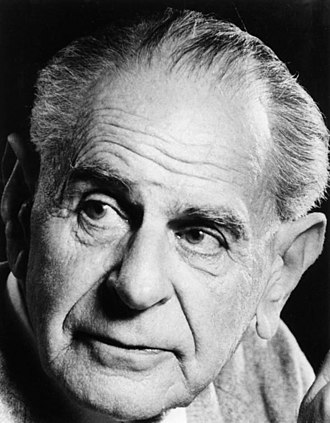 Karl Popper1902 – 1994Austrian-British philosopher of science and social and política e falsificationism and for criticism of Plato, Hegel and Marx as totalitarian opponents of open society (1902-1994)Source: Wikidata (citizenship)
 Samuel Taylor Coleridge1772 – 1834English poet, literary critic and philosopher (1772–1834)Source: Wikidata (citizenship)
 George VI1895 – 1952King of the United Kingdom from 1936 to 1952Source: Wikidata (citizenship)
 John Galsworthy1867 – 1933English novelist and playwright (1867–1933)Source: Wikidata (citizenship)
 Neville Chamberlain1869 – 1940Prime Minister of the United Kingdom from 1937 to 1940Source: Wikidata (citizenship)
 Herbert Spencer1820 – 1903English philosopher and political theorist (1820–1903)Source: Wikidata (citizenship)
 Max Born1882 – 1970German-Jewish physicist and mathematician (1882–1970)Source: Wikidata (citizenship)
 Thomas Carlyle1795 – 1881Scottish essayist, historian and philosopher (1795–1881)Source: Wikidata (citizenship)
 Alfred Tennyson1809 – 1892British Poet Laureate (1809–1892)Source: Wikidata (citizenship)
 John Ruskin1819 – 1900English writer and art critic (1819–1900)Source: Wikidata (citizenship)
 Rosalind Franklin1920 – 1958British chemist, biophysicist, and X-ray crystallographer (1920–1958)Source: Wikidata (citizenship)
Showing the 48 best-known of 200 people.
Everything that happened
- 1812Assassination of Spencer PercevalPalace of WestminsterOn 11 May 1812, at about 5:15 pm, Spencer Perceval, the prime minister of the United Kingdom of Great Britain and Ireland, was shot dead in the lobby of the House of Commons by John Bellingham, a Liverpool merchant with a grievance against the government. Bellingham was detained; four days after the murder, he was tried, convicted and sentenced to death.Source: Wikidata (country)
- 1819Peterloo MassacreManchesterThe Peterloo Massacre took place at St Peter's Field, Manchester, England, on Monday 16 August 1819. An estimated eighteen people were killed and 400–700 were injured when the cavalry of the Yeomanry charged into a crowd of around 60,000 people who had gathered to demand the reform of parliamentary representation.Source: Wikidata (country)
- 1860Convention of PekingBeijingThe Convention of Peking or First Convention of Peking is an agreement comprising three distinct unequal treaties concluded between the Qing dynasty of China and Great Britain, France, and the Russian Empire in 1860.Source: Wikidata (country)
- 1869Red River RebellionRed River ColonyThe Red River Rebellion (French: Rébellion de la rivière Rouge), also known as the Red River Resistance, Red River uprising, or First Riel Rebellion, was the sequence of events that led up to the 1869 establishment of a provisional government by Métis leader Louis Riel and his followers at the Red River Colony, in the early stages of establishing today's Canadian province of Manitoba.Source: Wikidata (country of the location)
- 1898Convention for the Extension of Hong Kong TerritoryQing dynastyThe Convention between the United Kingdom and China, Respecting an Extension of Hong Kong Territory, commonly known as the Convention for the Extension of Hong Kong Territory or the Second Convention of Peking, was a lease and unequal treaty signed between Qing China and the United Kingdom in Peking on 9 June 1898, leasing to the United Kingdom for 99 years, at no charge, the New Territories (as the area became…Source: Wikidata (country)
- 1914Raid on Scarborough, Hartlepool and WhitbyScarboroughThe Raid on Scarborough, Hartlepool and Whitby on 16 December 1914 was an attack by the Imperial German Navy on the British ports of Scarborough, Hartlepool, West Hartlepool and Whitby. The bombardments caused hundreds of civilian casualties and resulted in public outrage in Britain against the German Navy for the raid and the Royal Navy for failing to prevent it.Source: Wikidata (country)
- 1916Easter RisingDublinThe Easter Rising (Irish: Éirí Amach na Cásca), also known as the Easter Rebellion, was an armed insurrection in Ireland during Easter Week in April 1916. The Rising was launched by Irish republicans against British rule in Ireland with the aim of establishing an independent Irish Republic while the United Kingdom was fighting the First World War.Source: Wikidata (country)
- 1919Scuttling of the German fleet at Scapa FlowScapa FlowOn 21 June 1919 the Imperial German Navy's High Seas Fleet was scuttled by its sailors while held off the harbour of the British Royal Navy base at Scapa Flow, in the Orkney Islands of Scotland. The fleet was interned there at the end of World War I under the terms of the Armistice of 11 November 1918 while negotiations took place over its fate.Source: Wikidata (country)
- 19201920 Nebi Musa riotsOccupied Enemy Territory AdministrationThe 1920 Nebi Musa riots or 1920 Jerusalem riots took place in the British-controlled part of Occupied Enemy Territory Administration from 4 to 7 April 1920 in and around the Old City of Jerusalem. Five Jews were killed and several hundred injured; four Arabs were killed and 18 injured; seven Britons were injured.Source: Wikidata (country of the location)
- 1920Franco-Syrian WarArab Kingdom of SyriaThe Franco-Syrian War took place during 1920 between France and the Hashemite rulers of the newly established Arab Kingdom of Syria. During a series of engagements, which climaxed in the Battle of Maysalun, French forces defeated the forces of the Hashemite monarch King Faisal, and his supporters, entering Damascus on July 24, 1920.Source: Wikidata (country of the location)
- 1922Battle of DublinDublinThe Battle of Dublin was a week of street battles in Dublin from 28 June to 5 July 1922 that marked the beginning of the Irish Civil War. Six months after the Anglo-Irish Treaty ended the recent Irish War of Independence, it was fought between the forces of the new Provisional Government and a section of the Irish Republican Army (IRA) that opposed the Treaty.Source: Wikidata (country)
- 1940 – 1942Siege of MaltaCrown Colony of MaltaThe Siege of Malta (or Battle of Malta) in World War II was a military campaign in the Mediterranean theatre. From June 1940 to November 1942, the fight for the control of the strategically important island of the British Crown Colony of Malta pitted the air and naval forces of the Kingdom of Italy and Nazi Germany against the Royal Air Force (RAF) and the Royal Navy.Source: Wikidata (country of the location)