Russia
188 events
Russia, or the Russian Federation, is a country in Eastern Europe and North Asia. It is the largest country in the world, spanning eleven time zones and sharing land borders with fourteen countries. With a population of over 140 million, Russia is the most populous country in Europe and the ninth-most populous in the world. It is a highly urbanised country, with three-fourths of its population living in urban areas. Moscow, the most populous metropolitan area in Europe, is the capital and largest city of Russia, while Saint Petersburg is its second-largest city and a major cultural centre.
Text from the Wikipedia article Russia, CC BY-SA 4.0
Built from Wikidata: an event or person is listed when Wikidata links them to this page, as shown next to each one. Many aren’t recorded there, so this list is incomplete.
Earlier states here
Key people
 Vladimir Putinb. 1952President of the Russian FederationSource: Wikidata (citizenship)
 Vladimir Lenin1870 – 1924Founding leader of the Soviet Union (1870–1924)Source: Wikidata (country of birthplace)
 Leo Tolstoy1828 – 1910Russian author (1828–1910)Source: Wikidata (country of birthplace)
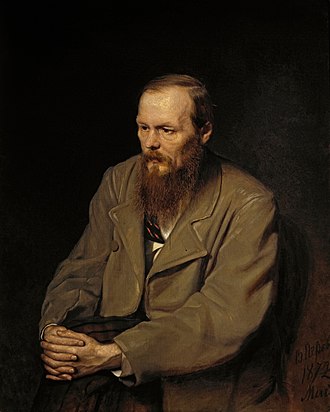 Fyodor Dostoyevsky1821 – 1881Russian novelist (1821–1881)Source: Wikidata (country of birthplace)
 Alexander Pushkin1799 – 1837Russian poet, playwright, and novelist (1799–1837)Source: Wikidata (country of birthplace)
 Anton Chekhov1860 – 1904Russian dramatist and author (1860–1904)Source: Wikidata (country of birthplace)
 Yuri Gagarin1934 – 1968Soviet pilot and cosmonaut, first human in space (1934–1968)Source: Wikidata (country of birthplace)
 Mikhail Gorbachev1931 – 2022Leader of the Soviet Union from 1985 to 1991 (1931–2022)Source: Wikidata (citizenship)
 Pyotr Ilyich Tchaikovsky1840 – 1893Russian composer (1840–1893)Source: Wikidata (country of birthplace)
 Maxim Gorky1868 – 1936Russian and Soviet writer (1868–1936)Source: Wikidata (country of birthplace)
 Dmitri Mendeleev1834 – 1907Russian chemist (1834–1907)Source: Wikidata (country of birthplace)
 Dmitry Medvedevb. 1965President of Russia from 2008 to 2012, Prime Minister of Russia (2012-2020) and Deputy Chairman of the Security Council of Russia since 2020Source: Wikidata (citizenship)
 Nikita Khrushchev1894 – 1971Leader of the Soviet Union from 1953 to 1964Source: Wikidata (country of birthplace)
 Anna Netrebkob. 1971Russian and Austrian operatic sopranoSource: Wikidata (citizenship)
 Igor Stravinsky1882 – 1971Russian, French, and American composer (1882–1971)Source: Wikidata (country of birthplace)
 David Hilbert1862 – 1943German mathematician (1862–1943)Source: Wikidata (country of birthplace)
 Isaac Asimov1920 – 1992American writer and biochemist (1920–1992)Source: Wikidata (country of birthplace)
 Boris Yeltsin1931 – 2007Soviet and Russian politician, 1st President of Russia (1931–2007)Source: Wikidata (citizenship)
 Aleksandr Solzhenitsyn1918 – 2008Russian writer, publicist, poet and politician (1918–2008)Source: Wikidata (citizenship)
 Ivan Turgenev1818 – 1883Russian writer (1818–1883)Source: Wikidata (country of birthplace)
 Vladimir Nabokov1899 – 1977Russian-American novelist, lepidopterist, professor (1899–1977)Source: Wikidata (country of birthplace)
 Mikhail Bakunin1814 – 1876Russian revolutionary anarchist and philosopher (1814–1876)Source: Wikidata (country of birthplace)
 Boris Pasternak1890 – 1960Russian writer (1890–1960)Source: Wikidata (country of birthplace)
 Nicholas II of Russia1868 – 191814th and last Emperor of Russia (1894–1917)Source: Wikidata (country of birthplace)
 Kim Jong-il1941 – 2011Supreme Leader of North Korea from 1994 to 2011Source: Wikidata (country of birthplace)
 Alexei Navalny1976 – 2024Russian jurist and opposition leader (1976-2024)Source: Wikidata (citizenship)
 Valentina Tereshkovab. 1937Russian cosmonaut and pilot, first woman to have flown in space (born 1937)Source: Wikidata (citizenship)
 Valery Leontievb. 1949Russian singerSource: Wikidata (citizenship)
 Mikhail Lermontov1814 – 1841Russian writer, poet and painter (1814–1841)Source: Wikidata (country of birthplace)
 Steven Seagalb. 1952American actor, martial artist, and film producerSource: Wikidata (citizenship)
 Ayn Rand1905 – 1982Russian-born American writer and public philosopher (1905–1982)Source: Wikidata (country of birthplace)
 Ivan Bunin1870 – 1953Russian writer and poet (1870–1953)Source: Wikidata (country of birthplace)
 Joseph Brodsky1940 – 1996Russian-American poet, essayist, and Nobel laureate (1940–1996)Source: Wikidata (country of birthplace)
 Ivan Pavlov1849 – 1936Russian physiologist (1849–1936)Source: Wikidata (country of birthplace)
 Garry Kasparovb. 1963Russian chess grandmaster and activistSource: Wikidata (citizenship)
 Peter Kropotkin1842 – 1921Russian revolutionary socialist and philosopher (1842–1921)Source: Wikidata (country of birthplace)
 Viktor Yanukovychb. 1950President of Ukraine from 2010 to 2014Source: Wikidata (citizenship)
 Edward Snowdenb. 1983American whistleblower and former NSA contractor (born 1983)Source: Wikidata (citizenship)
 Mikhail Sholokhov1905 – 1984Soviet writer (1905-1984)Source: Wikidata (country of birthplace)
 Vladimir Vysotsky1938 – 1980Soviet singer-songwriter and actor (1938–1980)Source: Wikidata (country of birthplace)
 Ivan the Terrible1530 – 1584Tsar of all Russia from 1547 to 1584Source: Wikidata (country of birthplace)
 Yuri Andropov1914 – 1984General Secretary of the Communist Party of the Soviet Union (1914–1984)Source: Wikidata (country of birthplace)
 Georg Cantor1845 – 1918German mathematician, inventor of set theory (1845–1918)Source: Wikidata (country of birthplace)
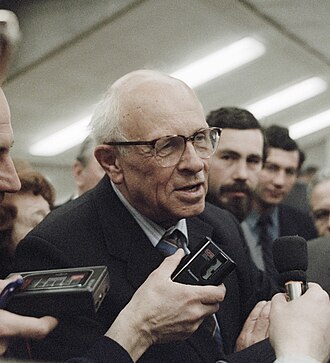 Andrei Sakharov1921 – 1989Soviet nuclear physicist and human rights activist (1921–1989)Source: Wikidata (country of birthplace)
 Maria Sharapovab. 1987Russian tennis playerSource: Wikidata (citizenship)
 Alexander I of Russia1777 – 1825The tenth Emperor of Russia (1777–1825)Source: Wikidata (country of birthplace)
 Sergei Yesenin1895 – 1925Russian poet (1895–1925)Source: Wikidata (country of birthplace)
 Grigori Rasputin1869 – 1916Russian mystic (1869–1916)Source: Wikidata (country of birthplace)
Showing the 48 best-known of 200 people.
Everything that happened
- 1223Battle of the Kalka RiverKalchykThe Battle of the Kalka River was fought between the Mongol Empire, whose armies were led by Jebe and Subutai, and a coalition of several Rus' principalities, including Kiev and Galicia-Volhynia, and the Cumans under Köten. They were under the joint command of Mstislav the Bold and Mstislav III of Kiev.Source: Wikidata (country)
- 1238Battle of the Sit RiverYaroslavl OblastThe Battle of the Sit River took place on 4 March 1238 between the Mongol forces of Batu Khan and the army of Vladimir-Suzdal led by Grand Prince Yuri II of Vladimir during the Mongol invasion of Kievan Rus'. The engagement occurred in the northern part of what is now the Sonkovsky District of Tver Oblast, near the selo of Bozhonka.Source: Wikidata (country)
- 1240Battle of the NevaNevaThe Battle of the Neva (Russian: Невская битва, romanized: Nevskaya bitva; Swedish: slaget vid Neva; Finnish: Nevan taistelu) was fought between the Novgorod Republic, along with Karelians, and the Kingdom of Sweden, including Norwegian, Finnish and Tavastian forces, on the Neva River, near the settlement of Ust-Izhora, on 15 July 1240.Source: Wikidata (country)
- 1262 – 1266Berke–Hulegu warCaucasus MountainsThe Berke–Hulegu war was fought between two Mongol leaders, Berke Khan of the Golden Horde and Hulegu Khan of the Ilkhanate. It was fought mostly in the Caucasus Mountains area in the 1260s after the destruction of Baghdad in 1258. The war overlaps with the Toluid Civil War in the Mongol Empire between two members of the Tolui family line, Kublai Khan and Ariq Böke, who both claimed the title of Great Khan (Khagan).Source: Wikidata (country of the location)
- 1368 – 1372Lithuanian–Muscovite WarMoscowThe Lithuanian–Muscovite War, known in the Rogozh Chronicle as Litovschina (Russian: Литовщина), encompasses three raids by Algirdas, Grand Duke of Lithuania, to the Principality of Moscow in 1368, 1370, and 1372. Algirdas organized the raids against Dmitry Donskoy in support of the Principality of Tver, chief rival of Moscow.Source: Wikidata (country)
- 1380Battle of KulikovoKulikovo FieldThe Battle of Kulikovo (Russian: Куликовская битва, romanized: Kulikovskaya bitva) was fought between the forces of Mamai, a powerful Mongol military commander of the Golden Horde, and Russian forces led by Grand Prince Dmitry of Moscow.Source: Wikidata (country)
- 1382Siege of MoscowMoscowThe siege of Moscow in 1382 was a battle between the Principality of Moscow and Tokhtamysh, khan of the Golden Horde.Source: Wikidata (country)
- 1386 – 1395Tokhtamysh–Timur warTurkestanThe Tokhtamysh–Timur war was fought from 1386 to 1395 between Tokhtamysh, the khan of the Golden Horde, and the warlord and conqueror Timur, founder of the Timurid Empire, in the areas of the Caucasus Mountains, Turkestan and Eastern Europe. The battle between Timur and Tokhtamysh played a key role in the decline of Mongol power over the Russian principalities.Source: Wikidata (country of the location)
- 1391Battle of the Kondurcha RiverKondurchaThe Battle of the Kondurcha River (18 June 1391) was the first major battle of the Tokhtamysh–Timur war. It took place at the Kondurcha River, in the Bulgar Ulus of the Golden Horde, in present-day Samara Oblast, Russia. Tokhtamysh's cavalry tried to encircle Timur's army from the flanks. However, the Central Asian army withstood the assault, after which its sudden frontal attack put the Horde troops to flight.Source: Wikidata (country)
- 1395Battle of the Terek RiverTerekThe Battle of the Terek River was the last major battle of the Tokhtamysh–Timur war. It took place on 14 April 1395, at the Terek River, North Caucasus. The result was a victory for Timur.Source: Wikidata (country)
- 1399Battle of the Vorskla RiverVorsklaThe Battle of the Vorskla River was fought on August 12, 1399, between the Tatars of the Golden Horde, under Edigu and Temür Qutlugh, and the armies of Tokhtamysh and a large Crusader force led by Grand Duke Vytautas the Great of Lithuania. The battle ended in a decisive Tatar victory for the Golden Horde.Source: Wikidata (country of the location)
- 1471Battle of ShelonShelonThe Battle of Shelon (Russian: Шелонская битва, romanized: Shelonskaya bitva) was a decisive battle between the forces of the Grand Principality of Moscow under Ivan III (r. 1462–1505) and the Novgorod Republic, which took place on the Shelon River on 14 July 1471.Source: Wikidata (country)
- 1480Great Stand on the Ugra RiverUgraThe Great Stand on the Ugra River (Russian: Великое стояние на Угре) or the Standing on the Ugra River, also known as the Battle of the Ugra, was a standoff in 1480 on the banks of the Ugra River between the forces of Akhmat Khan of the Great Horde, and Grand Prince Ivan III of the Grand Duchy of Moscow.Source: Wikidata (country)
- 1500Battle of VedroshaKalugaThe Battle of Vedrosha (Lithuanian: Vedrošos mūšis; Russian: Ведрошская битва) was fought near the Vedrosha river, close to Dorogobuzh (then in the Grand Duchy of Lithuania, now in Russia) on 14 July 1500, during the Second Muscovite–Lithuanian War (1500–1503).Source: Wikidata (country)
- 1552Siege of KazanKazanThe Siege of Kazan, also known as the Fall of Kazan, was the decisive military campaign of the Russo-Kazan Wars in 1552 that resulted in the capture of Kazan and the annexation of the Khanate of Kazan by the Tsardom of Russia. The siege began on 23 August 1552 and ended with the capture of the city on 2 October.Source: Wikidata (country)
- 1568 – 1570Russo-Turkish WarAstrakhanThe Russo-Turkish War (1568–1570) or Don-Volga-Astrakhan campaign of 1569 (referred to in Ottoman sources as the Astrakhan Expedition) was a war between the Tsardom of Russia and the Ottoman Empire over the Astrakhan Khanate. It was the first of twelve Russo-Turkish wars ending with World War I in 1914–18.Source: Wikidata (country)
- 1570Massacre of NovgorodVeliky NovgorodThe massacre of Novgorod (Russian: Новгородский погром, romanized: Novgorodsky pogrom) was an attack launched by Ivan the Terrible's oprichniki on the city of Novgorod, Russia, in 1570.Source: Wikidata (country)
- 1572Battle of MolodiMolodiThe Battle of Molodi (Russian: Би́тва при Мóлодях) was one of the key battles of Ivan the Terrible's reign. It was fought near the village of Molodi, circa 50 km (31 mi) south of Moscow, in July–August 1572 between the 120,000 horde of Devlet I Giray of Crimea and about 60,000–70,000 Russians and Cossacks led by Prince Mikhail Vorotynsky.Source: Wikidata (country)
- c. 1580 – 1700Russian conquest of SiberiaSiberiaThe Russian conquest of Siberia took place between 1581 and 1778, when the Khanate of Sibir became a loose political structure of vassalages that were being undermined by the activities of Russian explorers. Although outnumbered, the Russians pressured the various family-based tribes into changing their loyalties and establishing distant forts from which they conducted raids.Source: Wikidata (country of the location)
- 1609 – 1611Siege of SmolenskSmolenskThe siege of Smolensk (Polish: oblężenie Smoleńska), also known as the Smolensk Defense in Russia (Russian: Смоленская оборона), lasted 20 months between 29 September 1609 to 13 June 1611, when the Polish army besieged the Russian city of Smolensk during the Polish–Russian War of 1609–1618.Source: Wikidata (country)
- 1610Battle of KlushinoKlushinoThe Battle of Klushino, or the Battle of Kłuszyn, was fought on 4 July 1610, between forces of the Polish–Lithuanian Commonwealth and the Tsardom of Russia during the Polish–Russian War, part of Russia's Time of Troubles. The battle occurred near the village of Klushino (Polish: Kłuszyn) near Smolensk (Polish: Smoleńsk).Source: Wikidata (country)
- 1610 – 1617Ingrian WarRussiaThe Ingrian War (Swedish: Ingermanländska kriget) was a conflict fought between the Swedish Empire and the Tsardom of Russia which lasted between 1610 and 1617. It can be seen as part of Russia's Time of Troubles, and is mainly remembered for the attempt to put a Swedish duke on the Russian throne.Source: Wikidata (country)
- 1612Battle of MoscowMoscowThe Battle of Moscow was a series of two engagements that took place in Moscow on 1 and 3 September 1612, during the Polish–Russian War of 1609–1618 and the Time of Troubles. The forces of the Polish–Lithuanian Commonwealth were commanded by Field Hetman Jan Karol Chodkiewicz, while the Russians were led by Prince Dmitry Pozharsky. The engagements ended in decisive Russian victories.Source: Wikidata (country)
- 1648Moscow uprising of 1648MoscowThe Moscow uprising of 1648 (Russian: Соляной бунт, Московское восстание 1648), sometimes known as the salt riot, started because of the government's replacement of different taxes with a universal salt tax for the purpose of replenishing the state treasury after the Time of Troubles. This drove up the price of salt, leading to violent riots in the streets of Moscow.Source: Wikidata (country)
- 1651 – 1653Russo-Persian WarDagestanThe Russo-Persian War of 1651–1653 was an armed conflict in the North Caucasus fought between the Safavid Empire and the Tsardom of Russia, associated with the Safavid plans to strengthen its position in the region and to exclude Russia.Source: Wikidata (country of the location)
- 1682Moscow uprising of 1682MoscowThe Moscow uprising of 1682, also known as the Streltsy uprising of 1682 (Russian: Стрелецкий бунт), was an uprising of the Moscow Streltsy regiments that resulted in supreme power devolving on Sophia Alekseyevna, the daughter of the late Tsar Aleksey Mikhailovich and of his first wife Maria Miloslavskaya.Source: Wikidata (country)
- 1702Siege of NöteborgShlisselburgThe siege of Nöteborg was one of the first sieges of the Great Northern War, when Russian forces captured the Swedish fortress of Nöteborg (later renamed Shlisselburg) in October 1702. Peter the Great had assembled a force of 20,000 men for this task, and marched for ten days to his destination. About 12,000 of these men were positioned on the banks of the Neva river, where they camped until 6 October (N.S.).Source: Wikidata (country)
- 1757Battle of Gross-JägersdorfChernyakhovsky DistrictThe Battle of Gross Jägersdorf (Gross-Jägersdorf; 30 August 1757) was a victory for the Russian force under Field Marshal Stepan Fyodorovich Apraksin over a smaller Prussian force commanded by Field Marshal Hans von Lehwaldt, during the Seven Years' War. This was the first battle in which Russia engaged during the Seven Years' War.Source: Wikidata (country)
- 1783Treaty of GeorgievskGeorgiyevskThe Treaty of Georgievsk (Russian: Георгиевский трактат, romanized: Georgievskiy traktat; Georgian: გეორგიევსკის ტრაქტატი, romanized: georgievsk'is t'rakt'at'i) was a bilateral treaty concluded between the Russian Empire and the east Georgian kingdom of Kartli-Kakheti on July 24, 1783.Source: Wikidata (country of the location)
- 1785 – 2017Chechen–Russian conflictNorth CaucasusThe Chechen–Russian conflict (Russian: Чеченский конфликт, romanized: Chechensky konflikt; Chechen: Нохчийн-Оьрсийн дов, romanized: Noxçiyn-Örsiyn dov) was the centuries-long ethnic and political conflict, often armed, between the Russian, Soviet and Imperial Russian governments and various Chechen forces.Source: Wikidata (country of the location)
- 1790Battle of SvensksundGulf of FinlandThe Second Battle of Svensksund (Finnish: Ruotsinsalmi; Russian: Роченсальм) was a naval battle fought in the Gulf of Finland outside the present day city of Kotka on 9 and 10 July 1790. The Swedish naval forces dealt the Russian fleet a devastating defeat that brought an end to the Russo-Swedish War (1788–1790). The battle is the biggest Swedish naval victory and the largest naval battle ever in the Baltic Sea.Source: Wikidata (country of the location)
- 1796Persian expedition of 1796North CaucasusThe Persian expedition of Catherine the Great of 1796, like the Persian expedition of Peter the Great (1722–1723), was one of the Russo-Persian Wars of the 18th century which did not entail any lasting consequences for either belligerent.Source: Wikidata (country of the location)
- 1804 – 1813Russo-Persian WarNorth CaucasusThe Russo-Persian War of 1804–1813 was one of the many wars between the Iranian Empire and Imperial Russia, and, like many of their other conflicts, began as a territorial dispute. The new Persian king, Fath Ali Shah Qajar, wanted to consolidate the northernmost reaches of his kingdom—modern-day Georgia—which had been annexed by Tsar Paul I several years after the Russo-Persian War of 1796.Source: Wikidata (country of the location)
- 1807Battle of EylauKaliningradThe Battle of Eylau (also known as the Battle of Preussisch-Eylau) was a bloody and strategically inconclusive battle on 7 and 8 February [O.S. 26 and 27 Jan.] 1807 between Napoleon's Grande Armée and the Imperial Russian Army under the command of General Levin August von Bennigsen near the town of Preussisch Eylau in East Prussia.Source: Wikidata (country of the location)
- 1807Battle of FriedlandPravdinskThe Battle of Friedland (14 June 1807) was a major engagement of the Napoleonic Wars between the armies of the French Empire and the Russian Empire, led by Napoleon I and General Levin August von Bennigsen respectively. Napoleon and the French obtained a decisive victory that routed much of the Russian army, which retreated chaotically over the Alle river by the end of the fighting.Source: Wikidata (country)
- 1812Battle of BorodinoBorodinoThe Battle of Borodino or the Battle of the Moskva took place on the outskirts of Moscow near the village of Borodino on 7 September 1812, during Napoleon's invasion of Russia. The Grande Armée fought against the Imperial Russian Army.Source: Wikidata (country)
- 1812Battle of KrasnoiKrasnyThe Battle of Krasnoi (at Krasny or Krasnoe) unfolded from 15 to 18 November 1812 marking a critical episode in Napoleon's arduous retreat from Moscow. Over the course of six skirmishes the Russian forces under Field Marshal Kutuzov inflicted significant blows from a prepared ambush upon the remnants of the Grande Armée, already severely weakened by attrition warfare.Source: Wikidata (country)
- 1812Battle of MaloyaroslavetsMoscowThe Battle of Maloyaroslavets took place on 24 October 1812 as part of the French invasion of Russia. Armies were evenly matched in the battle and suffered similar casualties, with a marginal edge going to the Franco-Italian army. It was Mikhail Kutuzov's decisive battle to force Napoleon to retreat northwest over Mozhaisk to Smolensk on the devastated route of his advance with a higher probability of starvation.Source: Wikidata (country)
- 1812Battle of SmolenskSmolenskThe Battle of Smolensk was the first major battle of the French invasion of Russia. It took place on 16–18 August 1812 and involved about 45,000 men of the Grande Armée under Emperor Napoleon I against about 30,000 Russian troops under General Barclay de Tolly. Napoleon occupied Smolensk by driving out Prince Pyotr Bagration's Second Army. The French artillery bombardment burned the city to the ground.Source: Wikidata (country)
- 1812Battle of TarutinoMoscowThe Battle of Tarutino (18 October 1812; Russian: Тарутинское сражение) was a part of Napoleon's invasion of Russia. In the battle, Russian troops under the general command of Bennigsen, acting on instructions from Kutuzov and being part of his army, launched a surprise attack and defeated French troops under Murat's command.Source: Wikidata (country)
- 1812Fire of MoscowMoscowDuring the French occupation of Moscow, a fire persisted from 14 to 18 September 1812 and destroyed the city. The Russian troops and most of the remaining civilians had abandoned the city on 14 September 1812 just ahead of French Emperor Napoleon's troops entering the city after the Battle of Borodino.Source: Wikidata (country of the location)
- 1825Decembrist revoltSenate SquareThe Decembrist revolt (Russian: Восстание декабристов, romanized: Vosstaniye dekabristov, lit. 'Uprising of the Decembrists') was a failed coup d'état led by liberal military and political dissidents against the Russian Empire. It took place in Saint Petersburg on 26 December [O.S. 14 December] 1825, following the death of Emperor Alexander I.Source: Wikidata (country of the location)
- 1853 – 1856Crimean WarCrimeaThe Crimean War was fought between Russia and an alliance of the Ottoman Empire, France, the United Kingdom, and Sardinia from October 1853 to February 1856. Geopolitical causes of the war included the Eastern question (the decline of the Ottoman Empire), the expansion of Russia in the preceding Russo-Turkish wars, and the British and French preference to preserve the Ottoman Empire to maintain the balance of power…Source: Wikidata (country of the location)
- 1854Battle of InkermanInkermanThe Battle of Inkerman was fought during the Crimean War on 5 November 1854 by the allied armies of Britain and France against the Imperial Russian Army. The battle broke the will of the Russian Army to defeat the allies in the field, and was followed by the siege of Sevastopol.Source: Wikidata (country)
- 1854Battle of the AlmaAlmaThe Battle of the Alma (short for Battle of the Alma River) took place during the Crimean War between an allied expeditionary force (made up of French, British, and Ottoman forces) and Russian forces defending the Crimean Peninsula on 20 September 1854. The allies had made a surprise landing in Crimea on 14 September.Source: Wikidata (country)
- 1854Charge of the Light BrigadeBalaklavaThe Charge of the Light Brigade was a military action undertaken by British light cavalry against Russian forces during the Battle of Balaclava in the Crimean War, resulting in many casualties to the cavalry. On 25 October 1854, the Light Brigade, led by Lord Cardigan, mounted a frontal assault against a Russian artillery battery which was well-prepared with excellent fields of defensive fire.Source: Wikidata (country)
- 1854Siege of PetropavlovskPetropavlovsk-KamchatskyThe Siege of Petropavlovsk was a military operation in the Pacific theatre of the Crimean War in which British and French naval forces unsuccessfully attempted to capture the Russian port of Petropavlovsk on the Kamchatka peninsula.Source: Wikidata (country of the location)
- 1854 – 1855Siege of SevastopolSevastopolThe Siege of Sevastopol (at the time called in English the Siege of Sebastopol) lasted from October 1854 until September 1855, during the Crimean War. The allies (French, Sardinian, Ottoman, and British) landed at Eupatoria on 14 September 1854, intending to make a triumphal march to Sevastopol, the capital of the Crimea, with 50,000 men.Source: Wikidata (country)
- 1855Battle of EupatoriaYevpatoriyaThe Battle of Eupatoria (Russian: Штурм Евпатории, lit. 'Storm of Eupatoria'; Turkish: Gözleve Muharebesi) occurred on 17 February 1855 during the Crimean War when the army of the Russian Empire unsuccessfully attempted to capture the Crimean port city of Eupatoria held by the forces of the Ottoman Empire.Source: Wikidata (country)
- 1855Battle of MalakoffSevastopolThe Battle of Malakoff (French: Bataille de Malakoff, Russian: Бой на Малаховом кургане) or the Storming of the Malakhov Kurgan (Russian: Штурм Малахова кургана) was a series of French attacks against Russian forces on the Malakoff redoubt. The first attack was unsuccessful, and occurred on 18 June 1855; subsequent capture of the redoubt was on 8 September 1855.Source: Wikidata (country)
- 1855Siege of TaganrogTaganrogThe siege of Taganrog is a name given in some Russian histories to Anglo-French naval operations in the Sea of Azov between June and November 1855 during the Crimean War. British and French forces were implementing a strategy of destroying the supply lines for the main Russian army which ran through the Sea of Azov.Source: Wikidata (country)
- 1875Treaty of Saint PetersburgSaint Petersburg(including de facto control)Source: Wikidata (country)
- 1881Treaty of Saint PetersburgSaint PetersburgThe Treaty of Saint Petersburg or Treaty of Ili was an unequal treaty between the Russian Empire and the Qing dynasty that was signed in Saint Petersburg, Russia, on 24 February [O.S. 12 February] 1881. It provided for the return to China of the eastern part of the Ili Basin region, also known as Zhetysu, which had been occupied by Russia since 1871 during the Dungan Revolt.Source: Wikidata (country)
- 1896Li–Lobanov TreatyMoscowThe Li–Lobanov Treaty or the Sino-Russian Secret Treaty (Chinese: 中俄密約; Russian: Союзный договор между Российской империей и Китаем) was a secret and unequal treaty signed on June 3, 1896 in Moscow by foreign minister Alexey Lobanov-Rostovsky on behalf of the Russian Empire and viceroy Li Hongzhang on behalf of Qing China.Source: Wikidata (country)
- 1904Battle of KorsakovKorsakovThe Battle of Korsakov, a naval engagement of the Russo-Japanese War, was fought on 20 August 1904 off the southern coast of Sakhalin island. The battle foiled an attempt by the Imperial Russian Navy protected cruiser Novik at escaping Port Arthur to join the Russian cruiser squadron at Vladivostok, Russia, after the Russian Pacific Squadron was scattered in the Battle of the Yellow Sea.Source: Wikidata (country)
- 1905 – 1907Russian Revolution of 1905RussiaThe Russian Revolution of 1905, also known as the First Russian Revolution, was a revolution in the Russian Empire which began on 22 January 1905 and led to the establishment of a constitutional monarchy under the Russian Constitution of 1906, the country's first.Source: Wikidata (country of the location)
- 1905Moscow uprising of 1905MoscowThe Moscow uprising, centered in Moscow's Presnensky district between 7 and 18 December 1905, was the climax of the Russian Revolution of 1905. Thousands of workers joined an armed rebellion against the imperial government fighting for better societal conditions. The uprising ended in defeat for the revolutionaries and provoked a swift counter-revolution that lasted until 1907.Source: Wikidata (country)
- 1914Battle of GumbinnenGusevThe Battle of Gumbinnen, initiated by forces of the German Empire on 20 August 1914, was a German offensive on the Eastern Front during the First World War. Because of the hastiness of the German attack, the Russian Army emerged victorious.Source: Wikidata (country)
- 1914Battle of LimanowaGaliciaThe Battle of Limanowa-Łapanów took place from 1 December to 13 December 1914, between the Austro-Hungarian Army and the Russian Army near the town of Limanowa (40 kilometres (25 mi) south-east of Kraków).Source: Wikidata (country)
- 1914Battle of StallupönenNesterovThe Battle of Stallupönen, fought between Russian and German armies on August 17, 1914, was the opening battle of World War I on the Eastern Front. The Germans under the command of Hermann von François conducted a successful counterattack against four Russian infantry divisions from different infantry corps, which heavily outnumbered them but were separated from each other, creating a gap between the 27th Infantry…Source: Wikidata (country)
- 1914Black Sea raidBlack SeaThe Black Sea raid was an Ottoman naval sortie against Russian ports in the Black Sea on 29 October 1914, supported by Germany, that led to the Ottoman entry into World War I. The attack was conceived by Ottoman War Minister Enver Pasha, German Admiral Wilhelm Souchon, and the German foreign ministry.Source: Wikidata (country)
- 1914First Battle of the Masurian LakesMasurian Lake DistrictThe First Battle of the Masurian Lakes was a German offensive in the Eastern Front 2–16 September 1914, during the Russian invasion of East Prussia. It took place only days after the Battle of Tannenberg where the German 8th Army encircled and destroyed the Russian 2nd Army.Source: Wikidata (country)
- 1915Second Battle of the Masurian LakesMasurian Lake DistrictThe Second Battle of the Masurian Lakes or Winter Battle of the Masurian Lakes, known in Germany as the Winter Battle in Masuria and in Russia as the Battle of Augustowo, was the northern part of the Central Powers' offensive on the Eastern Front in the winter of 1915 during World War I. The offensive was intended to advance beyond the Vistula River and potentially knock Russia out of the war.Source: Wikidata (country)
- 1915Treaty of KyakhtaKyakhtaThe Treaty of Kyakhta (Mongolian: Хиагтын гэрээ; Russian: Кяхтинский договор; Chinese: 中俄蒙協約) was a tri-party treaty signed on 25 May 1915 among Russia, Mongolia, and China.Source: Wikidata (country of the location)
- 1917February RevolutionSaint PetersburgThe February Revolution (Russian: Февральская революция), known in Soviet historiography as the February Bourgeois Democratic Revolution, and sometimes as the March Revolution, was the first of two revolutions which took place in Russia in 1917.Source: Wikidata (country of the location)
- 1917October RevolutionSaint PetersburgThe October Revolution, also known as the Great October Socialist Revolution (in Soviet historiography), October coup, Bolshevik coup, or Bolshevik Revolution, was the second of two revolutions in Russia in 1917. It was led by Vladimir Lenin's Bolsheviks as part of the broader Russian Revolution of 1917–1923. It began through an insurrection in Petrograd (now Saint Petersburg) on 7 November 1917 [O.S. 25 October].Source: Wikidata (country of the location)
- 1917 – 1922Russian Civil WarRussian RepublicThe Russian Civil War was a multi-party civil war in the former Russian Empire, lasting from 1917 to 1922, sparked by the overthrowing of the Russian Provisional Government in the October Revolution, as many factions vied to determine Russia's political future. It resulted in the formation of the Russian Socialist Federative Soviet Republic and later the Soviet Union in most of its territory.Source: Wikidata (country of the location)
- 1917July DaysSaint PetersburgThe July Days (Russian: Июльские дни) were a period of unrest in Petrograd, Russia, between 16–20 July [O.S. 3–7 July] 1917. It was characterised by spontaneous armed demonstrations by soldiers, sailors, and industrial workers engaged against the Russian Provisional Government. The demonstrations were angrier and more violent than those during the February Revolution months earlier.Source: Wikidata (country of the location)
- 1918Murder of the Romanov familyIpatiev HouseMembers of the Romanov family–the former Emperor Nicholas II of Russia, Empress Alexandra, and their children, Olga, Tatiana, Maria, Anastasia, and Alexei–were shot and stabbed to death by Bolshevik revolutionaries under Yakov Yurovsky on the orders of the Ural Regional Soviet in Yekaterinburg on the night of 16–17 July 1918.Source: Wikidata (country of the location)
- 1918 – 1920Battle of TsaritsynVolgogradThe Battle of Tsaritsyn was a military confrontation between the Red Army and the White Army during the Russian Civil War for control of Tsaritsyn (now Volgograd), a significant city and port on the Volga River in southwestern Russia.Source: Wikidata (country)
- 1918Left SR uprisingMoscowThe Left SR uprising, or Left SR revolt, was a rebellion against the Bolsheviks by the Left Socialist Revolutionary Party in Moscow, Soviet Russia, on 6–7 July 1918. It was one of a number of left-wing uprisings against the Bolsheviks that took place during the Russian Civil War.Source: Wikidata (country)
- 1920Nikolayevsk incidentNikolayevsk-on-AmurThe Nikolayevsk incident or Nikolaevsk incident (Russian: Николаевский инцидент) was a series of mass killings that took place in the region of Nikolayevsk-on-Amur during the Russian Civil War.Source: Wikidata (country of the location)
- 1921Kronstadt rebellionKronstadtThe Kronstadt rebellion (Russian: Кронштадтское восстание, romanized: Kronshtadtskoye vosstaniye) was a 1921 insurrection of Soviet sailors, naval infantry, and civilians against the Bolshevik government in the Russian port city of Kronstadt. Located on Kotlin Island in the Gulf of Finland, Kronstadt defended the former capital city, Petrograd (now Saint Petersburg), as the base of the Baltic Fleet.Source: Wikidata (country)
- 1921Treaty of MoscowMoscowThe Treaty of Moscow, or Treaty of Brotherhood (Turkish: Moskova Antlaşması, Russian: Московский договор) was an agreement between the Grand National Assembly of Turkey (TBMM), under the leadership of Mustafa Kemal, and Russia, under the leadership of Vladimir Lenin, signed on 16 March 1921. Neither the Republic of Turkey nor the Soviet Union had then been established.Source: Wikidata (country of the location)
- 1922 – 1991Treaty on the Creation of the Union of Soviet Socialist RepublicsMoscowThe Declaration and Treaty on the Formation of the Union of Soviet Socialist Republics (Russian: Декларация и договор об образовании Союза Советских Социалистических Республик) officially created the Union of Soviet Socialist Republics (USSR), commonly known as the Soviet Union.Source: Wikidata (country of the location)
- 1929Litvinov ProtocolMoscowThe Litvinov Protocol is the common name of an international peace treaty concluded in Moscow on February 9, 1929. Named after the chief Soviet diplomat moving the negotiations forward, Maxim Litvinov, the treaty provided for immediate implementation of the Kellogg-Briand Pact by its signatories, thereby formally renouncing war as a part of national foreign policy.Source: Wikidata (country)
- 1938Battle of Lake KhasanLake KhasanThe Battle of Lake Khasan (Russian: Хасанские бои), also known as the Changkufeng Incident (Chinese and Japanese: 張鼓峰事件; Chinese pinyin: Zhānggǔfēng Shìjiàn; Japanese romaji: Chōkohō Jiken), was an attempted military incursion by Manchukuo, a Japanese puppet state, into territory claimed and controlled by the Soviet Union.Source: Wikidata (country)
- 1939 – 1945World War IIWorldwideThe deadliest conflict in history, fought between the Allies and the Axis powers. It ends with the surrender of Germany and Japan in 1945.Source: Wikidata (country of the location)
- 1939 – 1940Battle of KollaaKollaaThe Battle of Kollaa was fought from 7 December 1939 to 13 March 1940 in Ladoga Karelia, Finland, as a part of the Soviet-Finnish Winter War.Source: Wikidata (country)
- 1939 – 1940Battle of PetsamoPechengaThe Battle of Petsamo was fought between Finnish and Soviet troops in the area of Petsamo in the far north of Finland in 1939 and 1940. The Finnish troops were greatly outnumbered but managed to contain the Soviet troops due to the extreme terrain, weather and leadership.Source: Wikidata (country)
- 1939Battle of TolvajärviTolvajärviThe Battle of Tolvajärvi ([ˈtol.ʋɑˌjær.ʋi]; Finnish: Tolvajärven–Ägläjärven taistelu, Russian: Битва при Толваярви) began on 12 December 1939 and continued for about a week and a half, between Finland and the Soviet Union. It was the first large offensive victory for the Finns in the Winter War.Source: Wikidata (country of the location)
- 1939Soviet–Estonian Mutual Assistance TreatyMoscowThe Soviet–Estonian Mutual Assistance Treaty (Estonian: Eesti Vabariigi ja NSV Liidu vaheline vastastikuse abistamise pakt, Russian: Пакт о взаимопомощи между СССР и Эстонией, romanized: Pakt o vzaimopomoshchi mezhdu SSSR i Estoniyey), also known as the Bases Treaty (Estonian: baaside leping) was a bilateral treaty between the Soviet Union and Estonia, signed in Moscow on 28 September 1939.Source: Wikidata (country of the location)
- 1939Soviet–Lithuanian Mutual Assistance TreatyMoscowThe Soviet–Lithuanian Mutual Assistance Treaty (Lithuanian: Lietuvos-Sovietų Sąjungos savitarpio pagalbos sutartis, Russian: советско-литовский договор о взаимопомощи, romanized: sovetsko-litovskiy dogovor o vzaimopomoshchi) was a bilateral treaty signed between the Soviet Union and Lithuania on October 10, 1939.Source: Wikidata (country)
- 1940Katyn massacreKatynThe Katyn massacre was a series of mass executions of Poles carried out by the Soviet Union between April and May 1940. Though the killings also occurred in the NKVD prisons in Kalinin, Kharkiv and elsewhere, the massacre is named after the Katyn forest, where some of the mass graves were first discovered by Nazi German forces in 1943.Source: Wikidata (country of the location)
- 1940German–Soviet Commercial AgreementMoscowThe 1940 German–Soviet Commercial Agreement (Russian: Хозяйственное соглашение между Союзом Советских Социалистических Республик и Германией; also known as Economic Agreement of 11 February 1940 Between the German Reich and the Union of Soviet Socialist Republics) was an economic arrangement between the Soviet Union and Nazi Germany signed on 11 February 1940.Source: Wikidata (country)
- 1941Operation BarbarossaEstoniaOperation Barbarossa was the invasion of the Soviet Union by Nazi Germany and several of its European Axis allies starting on Sunday, 22 June 1941, during World War II. More than 3.8 million Axis troops invaded the western Soviet Union along a 2,900-kilometer (1,800 mi) front, with the main goal of capturing territory up to a line between Arkhangelsk and Astrakhan, known as the A–A line.Source: Wikidata (country of the location)
- 1941 – 1942Battle of MoscowMoscow OblastThe Battle of Moscow was a military campaign that consisted of two periods of strategically significant fighting on a 600 km (370 mi) sector of the Eastern Front during World War II, between October 1941 and January 1942. The Soviet defensive effort thwarted Germany's attack on Moscow, the capital and largest city of the Soviet Union.Source: Wikidata (country of the location)
- 1941 – 1944Siege of LeningradSaint PetersburgThe Siege of Leningrad was a military blockade undertaken by the Axis powers against the city of Leningrad (present-day Saint Petersburg) in the Soviet Union on the Eastern Front of World War II from 1941 to 1944. Leningrad, the country's second largest city, was besieged by Germany and Finland for 872 days, but never captured.Source: Wikidata (country of the location)
- 1941Battle of BryanskBryanskThe Battle of Bryansk (30 September – 21 October 1941) was a battle during World War II conducted in the Bryansk Oblast as a part of the overall Moscow campaign. Returning from the Kiev operation, Heinz Guderian attacked in an unexpected direction capturing Bryansk and Oryol with few casualties thereby encircling two Soviet formations, the 13th Army and 3rd Army.Source: Wikidata (country)
- 1941Battle of RostovRostov-on-DonThe Battle of Rostov (1941) took place on the Eastern Front of World War II around Rostov-on-Don and was fought between Army Group South of Nazi Germany and the Southern Front of the Soviet Union.Source: Wikidata (country)
- 1941Battle of SmolenskSmolenskThe first Battle of Smolensk (German: Kesselschlacht bei Smolensk, lit. 'Cauldron-battle at Smolensk') was a battle during the second phase of Operation Barbarossa, the Axis invasion of the Soviet Union, in World War II. It was fought around the city of Smolensk between 10 July and 10 September 1941, about 400 km (250 mi) west of Moscow.Source: Wikidata (country of the location)
- 1941Operation EFKirkenesOperation EF (1941) (the Raid on Kirkenes and Petsamo) took place on 30 July 1941, during the Second World War. After Operation Barbarossa, the German invasion of the Soviet Union, began on 22 June 1941, Fleet Air Arm aircraft flew from the aircraft carriers HMS Victorious and Furious to attack merchant vessels in the northern Norwegian port of Kirkenes and the Finnish port of Liinakhamari in Petsamo.Source: Wikidata (country of the location)
- 1941 – 1944Oranienbaum BridgeheadLomonosovThe Oranienbaum Bridgehead (Ораниенбаумский плацдарм in Russian) was an isolated portion of the Leningrad Oblast in Russia, which was retained under Soviet control during the siege of Leningrad in World War II. It played a significant role in protecting the city.Source: Wikidata (country)
- 1941 – 1942Siege of SevastopolSevastopolThe siege of Sevastopol, also known as the defence of Sevastopol (Russian: Оборона Севастополя, romanized: Oborona Sevastopolya) or the Battle for Sevastopol (German: Schlacht um Sewastopol;Source: Wikidata (country)
- 1942 – 1943Battle of StalingradVolgogradThe Battle of Stalingrad was a major battle on the Eastern Front of World War II in which Nazi Germany and its Axis allies fought the Soviet Union for control of the city of Stalingrad (now Volgograd) in southern Russia.Source: Wikidata (country)
- 1942Battle of LyubanLyubanThe Battle of Lyuban, Lyuban offensive operation or Battle of the Volkhov (7 January 1942 – 30 April 1942) (Russian: Любанская наступательная операция; German: Schlacht am Wolchow) was a Soviet offensive operation of World War II.Source: Wikidata (country)
- 1942Battle of the Barents SeaBarents SeaThe Battle of the Barents Sea was a World War II naval engagement on 31 December 1942 between warships of the German Navy (Kriegsmarine) and British ships escorting Convoy JW 51B to Kola Inlet in the USSR. The action took place in the Barents Sea north of North Cape, Norway.Source: Wikidata (country of the location)
- 1942 – 1943Battle of the CaucasusKubanThe Battle of the Caucasus was a series of Axis and Soviet operations in the Caucasus as part of the Eastern Front of World War II. On 25 July 1942, German troops captured Rostov-on-Don, opening the Caucasus region of the southern Soviet Union to the Germans and threatening the oil fields beyond at Maykop, Grozny, and ultimately Baku.Source: Wikidata (country)
- 1942 – 1943Battle of Velikiye LukiVelikiye LukiThe Battle of Velikiye Luki, also named Velikiye Luki offensive operation (Russian: Великолукская наступательная операция), started with the attack by the forces of the Kalinin Front against the 3rd Panzer Army during the winter campaign of 1942–1943 with the objective of liberating the Russian city of Velikiye Luki as a previous part of the northern pincer of the Rzhev-Sychevka Strategic Offensive Operation…Source: Wikidata (country)
- 1942Battle of VoronezhVoronezhThe Battle of Voronezh, or First Battle of Voronezh, was a battle on the Eastern Front of World War II, fought in and around the strategically important city of Voronezh on the Don river, 450 km (280 mi) south of Moscow, from 28 June to 24 July 1942, as the opening move of the German summer offensive in 1942.Source: Wikidata (country)
- 1942 – 1943Battles of RzhevRzhevThe Battles of Rzhev (Russian: Ржевская битва, romanized: Rzhevskaya bitva) were a series of Red Army offensives against the Wehrmacht between 8 January 1942 and 31 March 1943, on the Eastern Front of World War II. The battles took place in the northeast of Smolensk Oblast and the south of Tver Oblast, in and around the salient surrounding Rzhev.Source: Wikidata (country)
- 1942Case BlueRostov-on-DonCase Blue (German: Fall Blau) was the Wehrmacht's plan for the 1942 summer offensive in southern Russia between 28 June and 24 November 1942, during World War II. The objective was to capture the oil fields of Baku (Azerbaijan SSR), Grozny and Maikop, to enable the Germans to obtain fuel and also to deny it to the Soviet Union, bringing about the complete collapse of the Soviet war effort.Source: Wikidata (country)
- 1942Demyansk PocketDemyanskThe Demyansk Pocket (German: Kessel von Demjansk; Russian: Демя́нский котёл) was the name given to the pocket of German troops encircled by the Red Army around Demyansk, south of Leningrad, on World War II's Eastern Front. The pocket existed mainly from 8 February to 21 April 1942.Source: Wikidata (country)
- 1942Kholm PocketKholmThe Kholm Pocket (German: Kessel von Cholm; Russian: Холмский котёл) was the name given for the encirclement of German troops by the Red Army around Kholm, south of Leningrad, in World War II's the Eastern Front, from 23 January 1942 to 5 May 1942. The pocket was created by the Soviet Toropets–Kholm offensive.Source: Wikidata (country)
- 1942Operation MarsRzhevOperation Mars (Russian: Операция «Марс»), also known as the Second Rzhev-Sychevka Offensive Operation (Russian: Вторая Ржевско-Сычёвская наступательная операция), was the codename for an offensive launched by Soviet forces against German forces during World War II. It took place between 25 November and 20 December 1942 around the Rzhev salient in the vicinity of Moscow.Source: Wikidata (country of the location)
- 1942Operation UranusVolgogradOperation Uranus (19–23 November 1942) was a Soviet strategic operation on the Eastern Front of World War II which led to the encirclement of Axis forces in the vicinity of Stalingrad: the German Sixth Army, the Third and Fourth Romanian armies, and portions of the German Fourth Panzer Army.Source: Wikidata (country)
- 1942Operation Winter StormVolgogradOperation Winter Storm (German: Unternehmen Wintergewitter) was a German offensive in December 1942 during World War II, in which the German 4th Panzer Army failed to break the Soviet encirclement of the German 6th Army during the Battle of Stalingrad.Source: Wikidata (country)
- 1942Operation WunderlandNorthern Sea RouteOperation Wonderland (Unternehmen Wunderland) was an operation from 16 to 30 August 1942 by the Kriegsmarine in the Barents Sea and the Kara Sea off the Arctic coast of the Soviet Union. The operation was an attack on Soviet shipping using the Northern Sea Route which ran along the Soviet Arctic coast from the Bering Strait, westwards along Siberia to the Kara Sea.Source: Wikidata (country of the location)
- 1943Battle of KurskKurskThe Battle of Kursk, also called the Battle of the Kursk Salient, was a major World War II Eastern Front battle between the forces of Nazi Germany and the Soviet Union near Kursk in southwestern Russia during the summer of 1943, resulting in a Soviet victory. The Battle of Kursk is the single largest battle in the history of warfare.Source: Wikidata (country of the location)
- 1943Battle of ProkhorovkaProkhorovka, Belgorod OblastThe Battle of Prokhorovka was fought on 12 July 1943 near Prokhorovka, 87 kilometres (54 mi) southeast of Kursk, in the Soviet Union, during the Second World War. Taking place on the Eastern Front, the engagement was part of the wider Battle of Kursk and occurred when the 5th Guards Tank Army of the Soviet Red Army attacked the II SS-Panzer Corps of the German Waffen-SS in one of the largest tank battles in history.Source: Wikidata (country)
- 1943Battle of the DnieperDnieperThe Battle of the Dnieper, known on the German side as the Defensive battles on the Dnieper (German: Abwehrschlachten am Dnepr), was a military campaign that took place in 1943 on the Eastern Front of World War II. Being one of the largest operations of the war, it involved almost four million troops at one point and stretched over a 1,400 kilometres (870 mi) front.Source: Wikidata (country of the location)
- 1943Battle of the Komandorski IslandsCommander IslandsThe Battle of the Komandorski Islands was a naval battle between American and Imperial Japanese forces which took place on 27 March 1943 in the North Pacific, south of the Soviet Komandorski Islands. The Japanese were escorting a three ship convoy, while the Americans were patrolling waters west of the Aleutian Islands.Source: Wikidata (country)
- 1943Kerch–Eltigen operationKerch PeninsulaThe Kerch–Eltigen operation was a World War II amphibious offensive made in November 1943 by the Red Army as a precursor to the Crimean offensive (8 April-12 May 1944), with the object of defeating and forcing the withdrawal of the German forces from the Crimea.Source: Wikidata (country of the location)
- 1943Moscow DeclarationsMoscowThe Moscow Declarations were four declarations signed during the Moscow Conference on October 30, 1943. The declarations are distinct from the communique that was issued following the Moscow Conference of 1945. They were signed by the foreign secretaries of the governments of the United States, the United Kingdom, the Soviet Union and the Republic of China.Source: Wikidata (country)
- 1943Operation CitadelKurskOperation Citadel (German: Unternehmen Zitadelle) was the German offensive operation in July 1943 against Soviet forces in the Kursk salient, proposed by Generalfeldmarschall Erich von Manstein during the Second World War on the Eastern Front that initiated the Battle of Kursk.Source: Wikidata (country of the location)
- 1943Operation IskraSaint PetersburgOperation Iskra (Russian: операция Искра, lit. 'Operation Spark'), a Soviet military operation in January 1943 during World War II, aimed to break the Wehrmacht's siege of Leningrad. Planning for the operation began shortly after the failure of the Sinyavino Offensive. The German defeat in the Battle of Stalingrad in late 1942 had weakened the German front.Source: Wikidata (country)
- 1943Operation KoltsoVolgogradOperation Koltso (Operation Ring) was the last part of the Battle of Stalingrad. It resulted in the capitulation of the remaining Axis forces encircled in the city. The operation was likely the largest-scale economy-of-force offensive ever conducted in military history.Source: Wikidata (country)
- 1943Operation KutuzovOryolOperation Kutuzov was the first of the two counteroffensives launched by the Red Army as part of the Kursk Strategic Offensive Operation. It commenced on 12 July 1943, in the Central Russian Upland, against Army Group Center of the German Heer. The operation was named after General Mikhail Kutuzov, the Russian general credited with saving Russia from Napoleon during the French invasion of Russia in 1812.Source: Wikidata (country of the location)
- 1943Ostrogozhsk–Rossosh offensiveOstrogozhskThe Ostrogozhsk–Rossosh offensive (Russian: Острогожско-Россошанская операция) was an offensive of the Voronezh Front on the Eastern Front of World War II against the Hungarian 2nd Army and parts of the Italian 8th Army as part of the Voronezh–Kharkov offensive.Source: Wikidata (country of the location)
- 1943Smolensk operationSmolenskThe second Smolensk operation (code naming "Suvorov"; 7 August – 2 October 1943) was a Soviet strategic offensive operation conducted by the Red Army as part of the Summer-Autumn Campaign of 1943.Source: Wikidata (country)
- 1943Voronezh–Kastornoye offensiveVoronezhThe 1943 Battle of Voronezh or Voronezh–Kastornoye offensive operation (often credited in Russian as the liberation of Voronezh (освобождение Воронежа)) was a Soviet counter-offensive on the Eastern Front of World War II on recapturing the city of Voronezh during January 1943.Source: Wikidata (country)
- 1944Battle of Tali–IhantalaKarelian IsthmusThe Battle of Tali–Ihantala (June 25 to July 9, 1944) was part of the Finnish-Soviet Continuation War (1941–1944), which occurred during World War II. The battle was fought between Finnish forces—using war materiel provided by Germany—and Soviet forces. To date, it is the largest battle in the history of the Nordic countries.Source: Wikidata (country)
- 1944Leningrad–Novgorod offensiveSoviet UnionThe Leningrad–Novgorod strategic offensive was a strategic offensive during World War II. It was launched by the Red Army on 14 January 1944 with an attack on the German Army Group North by the Soviet Volkhov and Leningrad fronts, along with part of the 2nd Baltic Front, with a goal of fully lifting the siege of Leningrad.Source: Wikidata (country)
- 1944Moscow ConferenceMoscowThe Fourth Moscow Conference, also known as the Tolstoy Conference for its code name Tolstoy, was a meeting in Moscow between Winston Churchill and Joseph Stalin from 9 to 19 October 1944.Source: Wikidata (country)
- 1944Nemmersdorf massacreMayakovskoyeThe Nemmersdorf massacre was a civilian massacre perpetrated by Red Army soldiers in the late stages of World War II. Nemmersdorf (present-day Mayakovskoye, Kaliningrad Oblast) was one of the first prewar ethnic German settlements to fall to the advancing Red Army during the war. On 21 October 1944, Soviet soldiers killed many German civilians as well as French and Belgian POWs.Source: Wikidata (country of the location)
- 1944Operation Tanne OstGoglandOperation Tanne Ost ("Fir East") was a German operation during World War II to capture the island Suursaari (Swedish: Hogland; Russian: Гогланд, romanized: Gogland) in the Gulf of Finland before it could fall into Soviet hands. Suursaari was especially important because it worked as a lock in the Finnish Gulf guarding the minefields keeping the Soviet Baltic Fleet in Kronstadt.Source: Wikidata (country of the location)
- 1945Battle of KönigsbergKönigsbergThe Battle of Königsberg, also known as the Königsberg offensive, was one of the last operations of the East Prussian offensive during World War II. In four days of urban warfare, Soviet forces of the 1st Baltic Front and the 3rd Belorussian Front captured the city of Königsberg, present day Kaliningrad, Russia. The siege started in late January 1945 when the Soviets initially surrounded the city.Source: Wikidata (country)
- 1945Battle of ShumshuShumshuThe Battle of Shumshu, the Soviet invasion of Shumshu in the Kuril Islands, was the first stage of the Soviet Union's Invasion of the Kuril Islands in August–September 1945 during World War II. It took place from 18 to 23 August 1945, and was the only major battle of the Soviet campaign in the Kuril Islands and arguably the very last battle of World War II.Source: Wikidata (country)
- 1945Soviet–Japanese WarManchuriaThe Soviet–Japanese War was a campaign of the Second World War that began with the Soviet invasion of Manchuria following the Soviet declaration of war against Japan on 8 August 1945. The Soviet Union and Mongolian People's Republic toppled the Japanese puppet states of Manchukuo in Manchuria and Mengjiang in Inner Mongolia, as well as northern Korea, Karafuto on the island of Sakhalin, and the Kuril Islands.Source: Wikidata (country of the location)
- 1948Finno-Soviet Treaty of 1948MoscowThe Agreement of Friendship, Cooperation, and Mutual Assistance of 1948, also known as the YYA Treaty from the Finnish Ystävyys-, yhteistyö- ja avunantosopimus (YYA-sopimus) (Swedish: Vänskaps-, samarbets- och biståndsavtalet (VSB-avtalet)), was the basis for Finno–Soviet relations from 1948 to 1992. It was the main instrument in implementing the Finnish policy called Paasikivi–Kekkonen doctrine.Source: Wikidata (country)
- 1950 – 1953Korean WarKorea StraitThe Korean War (25 June 1950 – 27 July 1953) was an armed conflict fought on the Korean Peninsula between North Korea (Democratic People's Republic of Korea; DPRK) and South Korea (Republic of Korea; ROK) and their allies. North Korea was supported by China and the Soviet Union, while South Korea was supported by the United Nations led by the United States under the auspices of the United Nations Command (UNC).Source: Wikidata (country of the location)
- 1962Novocherkassk massacreNovocherkasskThe Novocherkassk massacre (Russian: Новочеркасский расстрел, romanized: Novocherkasskiy rasstrel) took place on 2 June 1962 in Novocherkassk, Russian SFSR, Soviet Union, when Soviet Army soldiers and MVD Internal Troops, supported by KGB units, fired on unarmed demonstrators protesting economic conditions.Source: Wikidata (country of the location)
- 1963Partial Nuclear Test Ban TreatyMoscowThe Partial Test Ban Treaty (PTBT), formally known as the 1963 Treaty Banning Nuclear Weapon Tests in the Atmosphere, in Outer Space and Under Water, prohibited all test detonations of nuclear weapons except for those conducted underground.Source: Wikidata (country of the location)
- 1967Outer Space TreatyWashington, D.C.The Outer Space Treaty, formally called the Treaty on Principles Governing the Activities of States in the Exploration and Use of Outer Space, including the Moon and Other Celestial Bodies, is a multilateral treaty that forms the basis of international space law.Source: Wikidata (country of the location)
- 1968Treaty on the Non-Proliferation of Nuclear WeaponsWashington, D.C.The Treaty on the Non-Proliferation of Nuclear Weapons, commonly known as the Non-Proliferation Treaty or NPT, is an international treaty, the objective of which is to prevent the spread of nuclear weapons and weapons technology, to promote cooperation in the peaceful uses of nuclear energy, and to further the goal of achieving nuclear disarmament and general and complete disarmament.Source: Wikidata (country of the location)
- 1970Treaty of MoscowMoscowThe Treaty of Moscow was signed on 12 August 1970 between the Soviet Union and West Germany. It was signed by Willy Brandt and Walter Scheel for West Germany's side and by Alexei Kosygin and Andrei Gromyko for the Soviet Union.Source: Wikidata (country of the location)
- 1972Anti-Ballistic Missile TreatyMoscowThe Anti-Ballistic Missile Treaty, also known as the ABM Treaty or ABMT, was a 1972 arms control treaty between the United States and the Soviet Union on the limitation of the anti-ballistic missile (ABM) systems used in defending areas against strategic ballistic missiles, which are used to deliver nuclear weapons It was intended to reduce pressures to build more nuclear weapons to maintain deterrence.Source: Wikidata (country of the location)
- 1972Biological Weapons ConventionWashington, D.C.The Biological Weapons Convention (BWC), or Biological and Toxin Weapons Convention (BTWC), is a disarmament treaty that effectively bans biological and toxin weapons by prohibiting their development, production, acquisition, transfer, stockpiling and use.Source: Wikidata (country of the location)
- 19771977 Moscow bombingsMoscow MetroA series of three terrorist bombings in Moscow on 8 January 1977 killed seven people and seriously injured 37 others. No one claimed responsibility for the bombings, although three members of an Armenian nationalist organization were executed early in 1979 after a KGB investigation and a secret trial. Some Soviet dissidents said that the suspects had an alibi.Source: Wikidata (country of the location)
- 1990Treaty on the Final Settlement with Respect to GermanyMoscowThe Treaty on the Final Settlement with Respect to Germany (German: Vertrag über die abschließende Regelung in Bezug auf Deutschland),Source: Wikidata (country)
- 1991Belovezha AccordsBiałowieża ForestThe Agreement on the creation of the Commonwealth of Independent States (officially), or unofficially the Minsk Agreement and best known as the Belovezha Accords, is the agreement declaring that the Soviet Union (USSR) had effectively ceased to exist and establishing the Commonwealth of Independent States (CIS) in its place as an organization created by the same Union Republics.Source: Wikidata (country)
- 1991START IMoscowSTART I (Strategic Arms Reduction Treaty) was a bilateral treaty between the United States and the Soviet Union on the reduction and the limitation of strategic offensive arms. The treaty was signed on 31 July 1991 and entered into force on 5 December 1994. The treaty barred its signatories from deploying more than 6,000 nuclear warheads and a total of 1,600 intercontinental ballistic missiles (ICBMs) and bombers.Source: Wikidata (country)
- 1992 – 19931993 Russian constitutional crisisMoscowIn September and October 1993, a constitutional crisis arose in the Russian Federation from a conflict between the then Russian president Boris Yeltsin and the country's parliament. Yeltsin performed a self-coup, dissolving parliament and instituting a presidential rule by decree system. The crisis ended with Yeltsin using military force to attack Moscow's House of Soviets and arrest the lawmakers.Source: Wikidata (country)
- 1993Barents RegionRussiaThe Barents Region is a name given, by advocates of establishing international cooperation after the fall of the Soviet Union, to the land along the coast of the Barents Sea, from Nordland county in Norway to the Kola Peninsula in Russia and beyond all the way to the Ural Mountains and Novaya Zemlya, and south to the Gulf of Bothnia of the Baltic Sea and the great lakes Ladoga and Onega.Source: Wikidata (country)
- 1993START IIMoscowSTART II (Strategic Arms Reduction Treaty) was a bilateral treaty between the United States and Russia on the Reduction and Limitation of Strategic Offensive Arms. It was signed by US president George H. W. Bush and Russian president Boris Yeltsin on 3 January 1993, banning the use of multiple independently targetable re-entry vehicles (MIRVs) on intercontinental ballistic missiles (ICBMs).Source: Wikidata (country)
- 1994 – 1996First Chechen WarChechnyaThe First Chechen War, also referred to as the First Russo-Chechen War, was a conflict between the separatist Chechen Republic of Ichkeria and the Russian Federation from 1994 to 1996. The conflict ended in a peace treaty that saw Russian forces withdraw from the territory only for them to invade again three years later, sparking the Second Chechen War of 1999–2009.Source: Wikidata (country of the location)
- 1994 – 1995Battle of GroznyGroznyThe First Battle of Grozny was the Russian Army's invasion and subsequent conquest of the Chechen capital, Grozny, during the early months of the First Chechen War. The attack would last from December 1994 to March 1995, which resulted in the military occupation of the city by the Russian Army and rallied most of the Chechen nation around the government of Dzhokhar Dudayev.Source: Wikidata (country)
- 1994Battle of GroznyGroznyThe November 1994 Battle of Grozny was a covert attempt by Russian Intelligence services to oust the Chechen government of Dzhokhar Dudayev, by seizing the Chechen capital of Grozny. The attack was conducted by armed formations of the opposition Provisional Council, led by Umar Avturkhanov, with a clandestine support of Russian Federation armor and aircraft on 26 November 1994.Source: Wikidata (country)
- 19951995 Neftegorsk earthquakeSakhalinThe 1995 Neftegorsk earthquake occurred on 28 May at 01:03 local time in northern Sakhalin Island in the Russian Far East. It was the most destructive earthquake known within the modern borders of Russia, with a magnitude of Mw 7.1 and maximum Mercalli intensity of IX (Violent) that devastated the town of Neftegorsk. Many buildings collapsed, and 1,989 of its 3,977 citizens were killed, with another 750 injured.Source: Wikidata (country)
- 1995Samashki massacreSamashkiThe Samashki massacre (Russian: Резня в Самашках) was the mass murder of Chechen civilians by Russian Forces in April 1995 during the First Chechen War. Hundreds of Chechen civilians died as result of a Russian "cleansing operation" and the bombardment of the village. Most of the victims were shot at close range or killed by grenades thrown into basements where they were hiding.Source: Wikidata (country)
- 1996Battle of GroznyGroznyThe Battle of Grozny of August 1996, also known as Operation Jihad or Operation Zero Option, when Chechen fighters regained and then kept control of Chechnya's capital Grozny in a surprise raid. Russian federal forces had captured the city in a previous battle that ended in February 1995, and subsequently posted a large garrison of federal and republican Ministry of the Interior (MVD) troops in the city.Source: Wikidata (country)
- 1999 – 2009Second Chechen WarChechnyaThe Second Chechen War (Russian: Втора́я чече́нская война́, Chechen: Шолгӏа оьрсийн-нохчийн тӏом, lit. 'Second Russian-Chechen War') took place in Chechnya and the border regions of the North Caucasus between the Russian Federation and the breakaway Chechen Republic of Ichkeria, from August 1999 to April 2009.Source: Wikidata (country)
- 19991999 war in DagestanDagestanThe 1999 war in Dagestan, also known as the Dagestan incursions (Russian: Война в Дагестане), was an armed conflict that began when the Ichkerian-based Islamic International Peacekeeping Brigade (IIPB), an Islamist group led by Shamil Basayev, Ibn al-Khattab, Ramzan Akhmadov and Arbi Barayev, invaded the neighboring Russian republic of Dagestan on 7 August 1999.Source: Wikidata (country of the location)
- 1999 – 2000Battle of GroznyGroznyThe second battle of Grozny or Operation Wolf Hunt was the siege and assault of the Chechen capital Grozny by Russian forces, lasting from late 1999 to early 2000. The siege and assault on the city resulted in the near total destruction of the urban area. In 2003, the United Nations designated Grozny as the most destroyed city on Earth. The battle had a devastating impact on the civilian population.Source: Wikidata (country of the location)
- 2000Battle for Height 776ArgunThe Battle for Height 776, part of the larger Battle of Ulus-Kert, was an engagement in the Second Chechen War that took place during fighting for control of the Argun River gorge in the highland Shatoysky District of central Chechnya, between the villages of Ulus-Kert and Selmentauzen.Source: Wikidata (country)
- 2000Novye Aldi massacreGroznensky DistrictThe Novye Aldi massacre was the mass murder of Chechen civilians on February 5, 2000, in which Russian forces went on a cleansing operation (zachistka), summarily executing dozens. The village had been cluster-bombed a day prior to the massacre, and local residents urged to come out for inspection the next day. Upon entering the village, Russian forces shot their victims with automatic fire at close range.Source: Wikidata (country)
- 2004Beslan school siegeBeslanThe Beslan school siege, also referred to as the Beslan school hostage crisis or the Beslan massacre, was an Islamic terrorist attack that occurred from 1 September 2004 to 3 September 2004 in the town of Beslan, North Ossetia, Russia. It lasted three days, and involved the imprisonment of more than 1,100 people as hostages, including 777 children.Source: Wikidata (country)
- 20042004 Russian aircraft bombingsTula OblastOn the night of 24 August 2004, explosive devices were detonated on board two domestic passenger flights that had taken off from Domodedovo International Airport in Moscow, Russia, causing the destruction of both aircraft and the death of all 90 people on board.Source: Wikidata (country)
- 2004February 2004 Moscow Metro bombingMoscowThe February 2004 Moscow metro bombing occurred on 6 February 2004 when a male suicide bomber killed 41 people near Avtozavodskaya subway station on the Zamoskvoretskaya Line in Moscow. Up to 250 people were injured in the incident, some of the more common injuries being broken bones and smoke inhalation.Source: Wikidata (country)
- 20062006 Kuril Islands earthquakeKuril IslandsThe 2006 Kuril Islands earthquake occurred on November 15 at 8:14:16 pm JST with a moment magnitude (Mw) of 8.3 and shaking that reached a maximum Mercalli intensity of IV (Light) and a maximum Shindo intensity of JMA 2. This megathrust earthquake was the largest event in the central Kuril Islands since 1915 and generated a small tsunami that affected the northern Japanese coast.Source: Wikidata (country)
- 20082008 Chechnya earthquakeRussiaThe 2008 Chechnya earthquake occurred October 11 at 09:06:10 UTC in Chechnya, Russia, with a Mwc magnitude of 5.8. At least 13 people from the districts of Gudermes, Shalinsky and Kurchaloyevsky were killed. The mainshock and a series of aftershocks were felt throughout the North Caucasus, and even in Armenia and Georgia. About 116 people were injured.Source: Wikidata (country)
- 2010Putin Must GoRussia"Putin Must Go" (Russian: "Путин должен уйти", romanized: "Putin dolzhen uyti", IPA: [ˈputʲɪn ˈdolʐɨn ʊjˈtʲi]) is a Russian website and public campaign organised for the collection of signatures to an open letter demanding the resignation of Vladimir Putin, who at the time was Prime Minister (currently President).Source: Wikidata (country)
- 2011 – 2021New STARTPragueNew START was a nuclear arms reduction treaty between the United States and Russia with the formal name of Measures for the Further Reduction and Limitation of Strategic Offensive Arms. It was signed on 8 April 2010 in Prague, and after ratification it entered into force on 5 February 2011.Source: Wikidata (country)
- 20122012 Krasnodar Krai floodsKrasnodar KraiThe 2012 Krasnodar Krai floods were floods in southwest Russia in early July 2012, mainly in Krasnodar Krai near the coast of the Black Sea. The equivalent of five months of rain fell overnight in some southern parts of the country according to the Hydrometeorological Centre of Russia. One hundred seventy-one people died during the floods.Source: Wikidata (country)
- 2012Immortal RegimentRussiaThe Immortal Regiment (Russian: Бессмертный полк, romanized: Bessmertnyy polk) is a massive civil event in major cities in Russia and around the world every 9 May during the Victory Day celebrations.Source: Wikidata (country)
- 2014Russo-Ukrainian warSea of AzovThe Russo-Ukrainian war began in February 2014 and is ongoing. Following Ukraine's Revolution of Dignity, Russia occupied Crimea and annexed it from Ukraine. It then supported Russian separatist armed groups who started a war in the eastern Donbas region against Ukraine's military. In 2018, Ukraine declared the region to be occupied by Russia.Source: Wikidata (country)
- 20142014 Russian annexation of CrimeaCrimeaIn February and March 2014, Russia invaded the Crimean Peninsula of Ukraine, occupied it, and then annexed it after an illegitimate referendum. This took place amid the uncertainty that immediately followed Ukraine's Revolution of Dignity. The invasion marked the beginning of the Russo-Ukrainian war. Crimea's annexation has been described as an instance of modern Russian imperialism.Source: Wikidata (country)
- 2015Assassination of Boris NemtsovBolshoy Moskvoretsky BridgeOn 27 February 2015, Boris Nemtsov, a Russian politician opposed to the government of Vladimir Putin, was assassinated as he crossed the Bolshoy Moskvoretsky Bridge in central Moscow at 23:31 local time. An unknown assailant fired seven or eight shots from a Makarov pistol. Four of them hitSource: Wikidata (country)
- 20162016 international conference on Sunni Islam in GroznyGroznyThe 2016 conference on Sunni Islam in Grozny or shortly Chechnya Conference was convened to define the term "Ahl al-Sunnah wa al-Jama'ah", i.e. who are "the people of Sunnah and majority Muslim community", and oppose Takfiri groups.Source: Wikidata (country of the location)
- 20172017 Saint Petersburg Metro bombingSaint PetersburgOn 3 April 2017, a terrorist attack using an explosive device took place on the Saint Petersburg Metro between Sennaya Ploshchad and Tekhnologichesky Institut stations. Eleven people (including the perpetrator) were initially reported to have died, and five more died later from their injuries, bringing the total to 15.Source: Wikidata (country)
- 20182018 FIFA World CupLuzhniki StadiumThe 2018 FIFA World Cup (Russian: Чемпионат мира по футболу 2018 года) was the 21st FIFA World Cup, the quadrennial world championship for national football teams organised by FIFA. It took place in Russia from 14 June to 15 July 2018, after the country was awarded the hosting rights in late 2010.Source: Wikidata (country)
- 2020COVID-19 pandemicWorldwideA new coronavirus spreads worldwide. Lockdowns, remote work and fast-developed vaccines reshape daily life.Source: Wikidata (country)
- 2020 – 20212020–2021 Khabarovsk Krai protestsKhabarovsk KraiProtests began on 11 July 2020 in Khabarovsk Krai, Russia, in support of the popular then-Governor, Sergei Furgal, after his arrest that was seen by many as politically motivated. Similar protests in support of Furgal also took place in other mostly eastern cities, including Novosibirsk, Vladivostok and Omsk.Source: Wikidata (country)
- 20202020 Nagorno-Karabakh ceasefire agreementBakuThe 2020 Nagorno-Karabakh ceasefire agreement was an armistice agreement that ended the Second Nagorno-Karabakh War. It was signed on 9 November by the President of Azerbaijan Ilham Aliyev, the Prime Minister of Armenia Nikol Pashinyan and the President of Russia Vladimir Putin, and ended all hostilities in the Nagorno-Karabakh region from 00:00, on 10 November 2020 Moscow time.Source: Wikidata (country)
- 20212021 Russian protestsRussiaThe 2021 Russian protests, also known as Navalny Protests, began on 23 January 2021 in support of the opposition leader Alexei Navalny after he was immediately detained upon returning to Russia after being sent to Germany for treatment following his poisoning the previous year.Source: Wikidata (country)
- 2022Russo-Ukrainian warEastern EuropeOn 24 February 2022, Russia invaded Ukraine, starting the largest and deadliest war in Europe since World War II, in a major escalation of the existing war between the two countries that began when Russia attacked Ukraine in 2014. The fighting has caused hundreds of thousands of military casualties and tens of thousands of Ukrainian civilian casualties. Russian troopsSource: Wikidata (country)
- 20222022 Crimean Bridge explosionCrimean BridgeThe 2022 Crimean Bridge explosion occurred on 8 October 2022, at 6:07 a.m. A fire broke out on the Crimean Bridge as a result of an explosion of a bomb that had been loaded onto a truck. The explosion occurred on the road bridge, on the westbound vehicle lanes, from Russia to Kerch in Russian-occupied Crimea.Source: Wikidata (country)
- 20222022 Saky air base attackNovofedorivkaThe 2022 Saky air base attack was an event during the Russian invasion of Ukraine, when several large explosions occurred at the Saky airbase in the town of Novofedorivka, Crimea, on 9 August 2022. The military base was seized by Russian forces during the 2014 annexation of Crimea, part of the Russo-Ukrainian War. The explosions destroyed a number of Russian warplanes and caused substantial other damage.Source: Wikidata (country)
- 2022Killing of Darya DuginaBolshie VyazyomyDarya Aleksandrovna Dugina (Russian: Дарья Александровна Дугина; 15 December 1992 – 20 August 2022), also known under the pen name Daria Platonova (Russian: Дарья Платонова), was a Russian journalist, political scientist, and activist. She was the daughter of Aleksandr Dugin, a far-right political philosopher, whose political views and support for Vladimir Putin she shared.Source: Wikidata (country)
- 2022Millerovo air base attackMillerovoOn 25 February 2022, the Russian air base in Millerovo, Rostov Oblast, Russia, was attacked by Ukrainian forces during the 2022 Russian invasion of Ukraine. According to some Ukrainian officials, Ukrainian military forces attacked the Millerovo air base with OTR-21 Tochka missiles, destroying Russian Air Force planes and setting the airbase on fire.Source: Wikidata (country)
- 2022Russian occupation of Zaporizhzhia OblastRussiaThe ongoing military occupation of Ukraine's Zaporizhzhia Oblast began after Russian forces launched an invasion of mainland Ukraine out of Crimea on 24 February 2022. Russian-controlled parts of the oblast were administered by a Russian military-civilian administration until 30 September 2022, when Russia declared their annexation (widely regarded as illegal and unrecognized internationally) to become a federal…Source: Wikidata (country)
- 2023Wagner Group rebellionEuropean RussiaOn 23 June 2023, the Wagner Group, a Russian private military company, staged an uprising against the Russian government. It marked the climax of the Wagner Group–Ministry of Defense conflict, which had begun about six months earlier. Russian oligarch Yevgeny Prigozhin, who had been leading Wagner Group activities in Ukraine, stood down after reaching an agreement a day later.Source: Wikidata (country)
- 20232023 Belgorod Oblast incursionsGrayvoronsky DistrictOn 22 May 2023, armed groups from Ukraine carried out a cross-border raid into Belgorod Oblast, Russia. Two Russian rebel groups allied with and based in Ukraine—the Freedom of Russia Legion (FRL) and the Russian Volunteer Corps (RVC)—claimed to have taken control of several border settlements, and clashed with Russian government forces. The Polish Volunteer Corps participated in the raid.Source: Wikidata (country)
- 20232023 Noto earthquakeSea of JapanOn 5 May 2023, a MJMA6.5 or Mw6.3 earthquake struck off the coast of Ishikawa Prefecture, Japan. It was located 49 kilometres (30 miles) northeast of Anamizu, Hōsu District, with the town of Suzu closest to the epicenter.Source: Wikidata (country of the location)
- 2023Assassination of Vladlen TatarskyStreet Food Bar №1On 2 April 2023, a bombing occurred in the Street Food Bar No.1 café on Universitetskaya Embankment in Saint Petersburg, Russia. Russian military blogger Vladlen Tatarsky, real name Maxim Fomin, died as a result of the explosion and 42 people were injured, 24 of whom were hospitalized, including six in critical conditions.Source: Wikidata (country)
- 2024Crocus City Hall attackCrocus CityOn 22 March 2024, a coordinated terrorist attack against civilians occurred at the Crocus City Hall music venue in Crocus City, Krasnogorsk, Moscow Oblast, Russia. The attack began at around 20:00 MSK (UTC+3), shortly before the Russian band Picnic was scheduled to play a sold-out show at the venue.Source: Wikidata (country)
- 20242024 Dagestan attacksDerbentOn 23 June 2024, coordinated attacks were launched in the cities of Derbent and Makhachkala in the Russian republic of Dagestan in the North Caucasus. Two synagogues, two Eastern Orthodox churches, and a traffic police post were attacked simultaneously with automatic weapons and Molotov cocktails. It was reported that 17 police officers and five civilians were killed along with all five attackers.Source: Wikidata (country)
- 2024 – 2025Kursk campaignKursk OblastOn 6 August 2024, during the Russo-Ukrainian war, the Armed Forces of Ukraine launched an incursion into Russia's Kursk Oblast and clashed with the Russian Armed Forces and Russian border guard. A state of emergency was declared in Kursk Oblast, and Russian reserves were rushed to the area.Source: Wikidata (country)