Lutheranism
0 events
Lutheranism or Evangelical Lutheranism is a major branch of Protestantism that arose under the work of Martin Luther, the 16th-century German friar and reformer whose efforts to reform the theology and practices of the Catholic Church helped launch the Reformation in 1517. The Lutheran churches adhere to the Bible and the ecumenical creeds, with Lutheran doctrine being explicated in the Book of Concord. Lutherans hold themselves to be in continuity with the apostolic church and affirm the writings of the Church Fathers and the first four ecumenical councils.
Text from the Wikipedia article Lutheranism, CC BY-SA 4.0
Built from Wikidata: an event or person is listed when Wikidata links them to this page, as shown next to each one. Many aren’t recorded there, so this list is incomplete.
Key people
 Johann Wolfgang von Goethe1749 – 1832German writer, artist, natural scientist and politician (1749–1832)Source: Wikidata (religion)
 Johann Sebastian Bach1685 – 1750German composer (1685–1750)Source: Wikidata (religion)
 Martin Luther1483 – 1546German priest and theologian (1483–1546)Source: Wikidata (religion)
 Immanuel Kant1724 – 1804German philosopher (1724-1804)Source: Wikidata (religion)
 Hans Christian Andersen1805 – 1875Danish writer and poet (1805–1875)Source: Wikidata (religion)
 Angela Merkelb. 1954Chancellor of Germany from 2005 to 2021 (born 1954)Source: Wikidata (religion)
 Otto von Bismarck1815 – 1898German statesman and Chancellor (1815-1898)Source: Wikidata (religion)
 Richard Wagner1813 – 1883German composer (1813–1883)Source: Wikidata (religion)
 Gottfried Wilhelm Leibniz1646 – 1716German mathematician and philosopher (1646–1716)Source: Wikidata (religion)
 Albrecht Dürer1471 – 1528German painter, printmaker, mathematician, and theorist (1471-1528)Source: Wikidata (religion)
 Johannes Kepler1571 – 1630German mathematician and astronomer (1571–1630)Source: Wikidata (religion)
 Friedrich Schiller1759 – 1805German playwright, poet, philosopher and historian (1759–1805)Source: Wikidata (religion)
 Max Planck1858 – 1947German theoretical physicist (1858–1947)Source: Wikidata (religion)
 Søren Kierkegaard1813 – 1855Danish theologian, philosopher, poet and social critic (1813–1855)Source: Wikidata (religion)
 Thomas Mann1875 – 1955German novelist and Nobel Prize laureate (1875–1955)Source: Wikidata (religion)
 George Frideric Handel1685 – 1759German-British Baroque composer (1685–1759)Source: Wikidata (religion)
 Selma Lagerlöf1858 – 1940Swedish writer (1858–1940)Source: Wikidata (religion)
 Catherine II of Russia1729 – 1796Eighth Emperor of Russia, called the Great, r. 1762–1796 (lived 1729-1796)Source: Wikidata (religion)
 Alexander von Humboldt1769 – 1859Prussian geographer, naturalist and explorer (1769–1859)Source: Wikidata (religion)
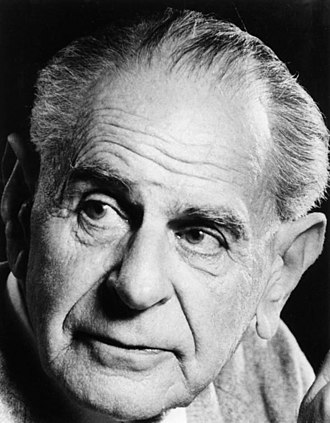 Karl Popper1902 – 1994Austrian-British philosopher of science and social and política e falsificationism and for criticism of Plato, Hegel and Marx as totalitarian opponents of open society (1902-1994)Source: Wikidata (religion)
 William James1842 – 1910American philosopher, psychologist, and pragmatist (1842–1910)Source: Wikidata (religion)
 Dag Hammarskjöld1905 – 1961Swedish diplomat, economist, and author (1905–1961)Source: Wikidata (religion)
 Frederick II of Prussia1712 – 1786King of Prussia from 1740 to 1786 (1712-1786)Source: Wikidata (religion)
 Felix Mendelssohn1809 – 1847German composer, pianist, organist and conductor of Jewish descent (1809-1847)Source: Wikidata (religion)
 Tycho Brahe1546 – 1601Danish astronomer and alchemist, 1546–1601Source: Wikidata (religion)
 Ingrid Bergman1915 – 1982Swedish actress (1915–1982)Source: Wikidata (religion)
 Max Born1882 – 1970German-Jewish physicist and mathematician (1882–1970)Source: Wikidata (religion)
 Ursula von der Leyenb. 1958President of the European Commission since 2019Source: Wikidata (religion)
 Greta Garbo1905 – 1990Swedish-American actress (1905–1990)Source: Wikidata (religion)
 Georg Cantor1845 – 1918German mathematician, inventor of set theory (1845–1918)Source: Wikidata (religion)
 William Herschel1738 – 1822German-born British astronomer and composer (1738–1822)Source: Wikidata (religion)
 Novalis1772 – 1801German poet and writer (1772-1801)Source: Wikidata (religion)
 Erwin Rommel1891 – 1944German field marshal (1891–1944)Source: Wikidata (religion)
 Heinrich Hertz1857 – 1894German physicist (1857–1894)Source: Wikidata (religion)
 Helmut Schmidt1918 – 2015Chancellor of West Germany (1974–1982)Source: Wikidata (religion)
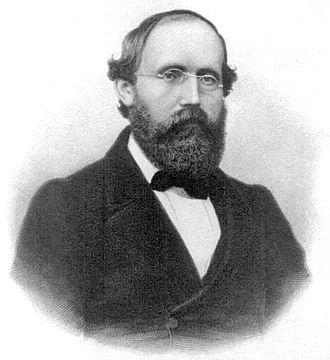 Bernhard Riemann1826 – 1866German mathematician (1826–1866)Source: Wikidata (religion)
 Hermann Göring1893 – 1946German Nazi politician, military leader, and convicted war criminal (1893–1946)Source: Wikidata (religion)
 George III of Great Britain1738 – 1820King of Great Britain and Ireland from 1760 to 1820 (1738–1820)Source: Wikidata (religion)
 Paul von Hindenburg1847 – 1934Prussian-German field marshal of the German Empire, statesman and president of Weimar Germany and Nazi Germany (1847–1934)Source: Wikidata (religion)
 Wernher von Braun1912 – 1977German and later American aerospace engineer and space architect (1912–1977)Source: Wikidata (religion)
 Harald V of Norway1937 – 2026King of Norway from 1991 to 2026 (1937–2026)Source: Wikidata (religion)
 Martti Ahtisaari1937 – 2023President of Finland from 1994 to 2000Source: Wikidata (religion)
 Sándor Petőfi1823 – 1849Hungarian poet and liberal revolutionary (1823–1849)Source: Wikidata (religion)
 Johann Gottfried Herder1744 – 1803German philosopher, theologian, poet (1744–1803)Source: Wikidata (religion)
 Halldór Laxness1902 – 1998Icelandic author (1902-1998)Source: Wikidata (religion)
 Edmund Husserl1859 – 1938German philosopher, known as the father of phenomenology (1859–1938)Source: Wikidata (religion)
 Sauli Niinistöb. 1948Finnish politician and the 12th President of Finland (2012-2024)Source: Wikidata (religion)
 Wilhelm von Humboldt1767 – 1835Prussian philosopher, government official, diplomat, and educator (1767–1835)Source: Wikidata (religion)
Showing the 48 best-known of 170 people.
Everything that happened
Events for this topic are being added.