Country · 600 BCE – today
India
85 events
India, officially the Republic of India, is a country in South Asia. It is the world's seventh-largest country by area and its most populous. Bounded by the Indian Ocean on the south, the Arabian Sea on the southwest, and the Bay of Bengal on the southeast, it shares land borders with Pakistan to the west, China, Nepal, and Bhutan to the north, and Bangladesh and Myanmar to the east. In the Indian Ocean, India is near Sri Lanka and the Maldives.
Text from the Wikipedia article India, CC BY-SA 4.0
Built from Wikidata: an event or person is listed when Wikidata links them to this page, as shown next to each one. Many aren’t recorded there, so this list is incomplete.
Showing 3,020 years
Earlier states here
Key people
 Mahatma Gandhi1869 – 1948Indian independence activist (1869–1948)Source: Wikidata (citizenship)
 Rabindranath Tagore1861 – 1941Bengali poet, philosopher and polymath (1861–1941)Source: Wikidata (country of birthplace)
 George Orwell1903 – 1950British writer and journalist (1903–1950)Source: Wikidata (country of birthplace)
 Jawaharlal Nehru1889 – 1964Prime Minister of India from 1947 to 1964Source: Wikidata (citizenship)
 Rudyard Kipling1865 – 1936English writer and poet (1865–1936)Source: Wikidata (country of birthplace)
 Ashoka304 BCE – 232 BCEMauryan emperor from 268 to 232 BCESource: Wikidata (country of birthplace)
- Narendra Modib. 1950Prime Minister of India since 2014Source: Wikidata (country of birthplace)
- Indira Gandhi1917 – 1984Prime Minister of India (1966-1977; 1980-1984)Source: Wikidata (citizenship)
 B. R. Ambedkar1891 – 1956Indian jurist, economist, and social reformer (1891–1956)Source: Wikidata (citizenship)
 Satyajit Ray1921 – 1992Indian filmmaker and writer (1921–1992)Source: Wikidata (citizenship)
 Swami Vivekananda1863 – 1902Indian Hindu monk and philosopher (1863–1902)Source: Wikidata (country of birthplace)
 Shah Rukh Khanb. 1965Indian actor, producer and television personalitySource: Wikidata (citizenship)
 Salman Rushdieb. 1947Indian-born English and American novelist (born 1947)Source: Wikidata (citizenship)
 Brahmagupta598 CE – 670 CEIndian mathematician and astronomer (c. 598 – c. 668 CE)Source: Wikidata (country of birthplace)
 Amitabh Bachchanb. 1942Indian film actor (born 1942)Source: Wikidata (citizenship)
- Nagarjuna150 CE – 250 CE3rd-century Indian Buddhist philosopherSource: Wikidata (country of birthplace)
 Chandrasekhara Venkata Raman1888 – 1970Indian physicist (1888–1970)Source: Wikidata (citizenship)
 Pervez Musharraf1943 – 2023Pakistani soldier and politician (1943-2023)Source: Wikidata (country of birthplace)
- Manmohan Singh1932 – 2024Indian economist, bureaucrat, academician and politicianSource: Wikidata (citizenship)
 Aishwarya Raib. 1973Indian actress (1973–)Source: Wikidata (citizenship)
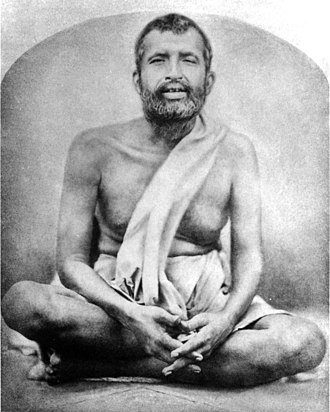 Ramakrishna1836 – 1886Indian mystic and religious preacher (1836–1886)Source: Wikidata (country of birthplace)
 Priyanka Choprab. 1982Indian actress (born 1982)Source: Wikidata (citizenship)
 Srinivasa Ramanujan1887 – 1920Indian mathematician (1887–1920)Source: Wikidata (country of birthplace)
 Vivien Leigh1913 – 1967British actress (1913–1967)Source: Wikidata (country of birthplace)
 Rajiv Gandhi1944 – 1991Prime Minister of India (1984-1989)Source: Wikidata (citizenship)
 Amartya Senb. 1933Indian economist and philosopher (1933-)Source: Wikidata (citizenship)
 Jiddu Krishnamurti1895 – 1986Indian spiritual philosopher, mystic, speaker and writer (1895–1986)Source: Wikidata (citizenship)
 Salman Khanb. 1965Indian actor and producer (born 1965)Source: Wikidata (citizenship)
 Aamir Khanb. 1965Indian actorSource: Wikidata (citizenship)
 Viswanathan Anandb. 1969Indian chess grandmasterSource: Wikidata (citizenship)
- A. P. J. Abdul Kalam1931 – 2015Indian scientist, president and statesman (1931–2015)Source: Wikidata (citizenship)
 Aryabhata476 CE – 550 CEPioneer astronomer who formulated zero, quadratic rules, and earth's rotation.Source: Wikidata (country of birthplace)
 Aurobindo Ghosh1872 – 1950Indian Bengali philosopher, yogi, maharishi, poet and nationalist (1872–1950)Source: Wikidata (citizenship)
 Osho1931 – 1990Indian guru and leader of the Rajneesh movement (1931–1990)Source: Wikidata (citizenship)
 William Makepeace Thackeray1811 – 1863British novelist (1811–1863)Source: Wikidata (country of birthplace)
 Ādi Shankara788 CE – 820 CEAn Indian philosopher and theologian who consolidated the doctrine of Advaita Vedanta and revitalized Sanskrit scholasticism.Source: Wikidata (country of birthplace)
 Pranab Mukherjee1935 – 2020President of India from 2012 to 2017Source: Wikidata (citizenship)
 Ravi Shankar1920 – 2012Indian sitar player (1920–2012)Source: Wikidata (citizenship)
 Kareena Kapoorb. 1980Indian actress (born 1980)Source: Wikidata (citizenship)
 Alia Bhattb. 1993British actressSource: Wikidata (country of birthplace)
 Aurangzeb1618 – 1707The sixth Mughal Emperor from 1658 to 1707Source: Wikidata (country of birthplace)
 Arundhati Royb. 1961Indian novelist, essayist, and activistSource: Wikidata (citizenship)
 Ronald Ross1857 – 1932British doctor, Nobel laureate, writer, and artist (1857–1932)Source: Wikidata (country of birthplace)
- Pratibha Patilb. 1934President of India from 2007 to 2012Source: Wikidata (citizenship)
 Tenzing Norgay1914 – 1986Nepalese Indian Sherpa mountaineer (1914-1986)Source: Wikidata (citizenship)
 Subrahmanyan Chandrasekhar1910 – 1995Indian-American astrophysicistSource: Wikidata (citizenship)
- Droupadi Murmub. 1958President of India since 2026Source: Wikidata (citizenship)
 Pran1920 – 2013Indian actor (1920–2013)Source: Wikidata (citizenship)
Showing the 48 best-known of 200 people.
Everything that happened
- 326 BCEBattle of the HydaspesJhelum RiverThe Battle of the Hydaspes also known as Battle of Jhelum, or First Battle of Jhelum, was fought between the Macedonian Empire under Alexander the Great and the Pauravas under Porus in May of 326 BC. It took place on the banks of the Hydaspes River in what is now the Punjab province of Pakistan, as part of Alexander's Indian campaign.Source: Wikidata (country of the location)
- 1192Second Battle of TarainTaraoriThe Second Battle of Tarain or Second Battle of Tararoi was fought in 1192 between the Ghurid forces of Muhammad Ghuri and the Rajput Confederacy of Prithviraj Chauhan. It took place near Tarain (modern Taraori), which is 110 kilometres (68 mi), north of Delhi. The battle ended in a decisive victory for the invading Ghurids and their successful penetration into the north Indian plain.Source: Wikidata (country of the location)
- 1506Battle of CannanoreIndiaThe Battle of Cannanore took place in 1506 off the harbour of Cannanore in India, between the Indian fleet of the Zamorin of Calicut and a Portuguese fleet under Lourenço de Almeida, son of the Viceroy Almeida.Source: Wikidata (country)
- 1507Siege of CannanoreKannurThe siege of Cannanore was a four-month siege, from 27 April 1507 to 27 August 1507, when troops of the local ruler (the Kōlattiri Raja of Cannanore), supported by the Zamorin of Calicut besieged the Portuguese garrison at St. Angelo Fort in Cannanore, in what is now the Indian state of Kerala. It followed the Battle of Cannanore, in which the fleet of the Zamorin was defeated by the Portuguese.Source: Wikidata (country)
- 1508Battle of ChaulChaulThe Battle of Chaul was a naval battle between the Portuguese and the Egyptian Mamluk fleets in 1508 in the harbour of Chaul in India. The battle ended in a Mamluk victory. It followed the Siege of Cannanore in which a Portuguese garrison successfully resisted an attack by southern Indian rulers. This was the first Portuguese defeat at sea in the Indian Ocean.Source: Wikidata (country)
- 1509Battle of DiuDaman and DiuThe Battle of Diu was a naval battle fought on 3 February 1509 in the Arabian Sea, in the port of Diu, India, between the Portuguese Empire and a joint fleet of the Sultan of Gujarat, the Mamlûk Burji Sultanate of Egypt and the Zamorin of Calicut.Source: Wikidata (country of the location)
- 1526First Battle of PanipatPanipatThe First Battle of Panipat, on 21 April 1526 was fought between the invading forces of Babur against Ibrahim Khan Lodi, the Sultan of Delhi, in North India. Babur's forces, employing gunpowder firearms and cannons, defeated Ibrahim. This was one of the earliest battles involving gunpowder arms on the Indian subcontinent. The victory marked the beginning of Mughal rule in India.Source: Wikidata (country)
- 1527Battle of KhanwaAgraThe Battle of Khanwa was fought at Khanwa in modern-day Rajasthan on 16 March 1527, between the Mughal Empire, led by Babur, and the Kingdom of Mewar, led by Rana Sanga for supremacy of Northern India. The battle ended in a Mughal victory and was a major event in medieval Indian history. The Kingdom of Mewar under the rule of Rana Sanga, had turned into one of the strongest powers in northern India.Source: Wikidata (country)
- 1556Second Battle of PanipatPanipatThe Second Battle of Panipat was fought on 5 November 1556, between the Mughals under Akbar and king Hemu, titularly known as Hemchandra Vikramaditya. Hemchandra had conquered Delhi and Agra a few weeks earlier by defeating Mughal forces under Tardi Beg Khan in the Battle of Delhi. He crowned himself Vikramaditya at Purana Quila in Delhi.Source: Wikidata (country)
- 1565Battle of TalikotaHampiThe Battle of Talikota, also known as that of Rakshasi-Tangadi, (23 January 1565) was a watershed battle fought between the Vijayanagara Empire and an alliance of the Deccan sultanates. The battle resulted in the defeat of Aliya Rama Raya which led to the eventual collapse of the polity and reconfigured Deccan politics.Source: Wikidata (country)
- 1576Battle of HaldighatiHaldighatiThe battle of Haldighati was fought on 18 June 1576 between the Mewar forces led by Maharana Pratap, and the Mughal forces led by Man Singh I of Amber. The Mughals emerged victorious after inflicting significant casualties on Mewari forces, though they failed to capture Pratap, who reluctantly retreated persuaded by his fellow commanders.Source: Wikidata (country of the location)
- 1686 – 1690Anglo-Mughal warIndian subcontinentThe Anglo-Mughal war, also known as the Child's War, was the first Anglo-Indian war on the Indian subcontinent.Source: Wikidata (country of the location)
- 1739Battle of KarnalKarnalThe Battle of Karnal (Persian: نبرد کرنال) (24 February 1739) was a decisive victory for Nader Shah, the founder of the Afsharid dynasty of Iran, during his invasion of India. Nader's forces defeated the army of Mughal emperor Muhammad Shah within three hours, paving the way for the Iranian sack of Delhi. The engagement is considered the crowning jewel in Nader's military career as well as a tactical masterpiece.Source: Wikidata (country)
- 1740 – 1748War of the Austrian SuccessionNorth AmericaThe War of the Austrian Succession, 1740 to 1748, was a conflict between the European great powers, fought primarily in Europe, the Atlantic Ocean and Mediterranean Sea. Related conflicts include King George's War, the War of Jenkins' Ear, the First Carnatic War, and the First and Second Silesian Wars.Source: Wikidata (country of the location)
- 1746 – 1763Carnatic warsCarnatic regionThe Carnatic wars were a series of military conflicts in the middle of the 18th century in India's coastal Carnatic region, a dependency of Hyderabad State, India. The first Carnatic wars were fought between 1740 and 1748.Source: Wikidata (country of the location)
- 1746 – 1748First Carnatic WarChennaiThe First Carnatic War (1744/1746–1748) was the Indian theatre of the War of the Austrian Succession and the first of a series of Carnatic Wars that established early British dominance on the east coast of the Indian subcontinent.Source: Wikidata (country)
- 1756 – 1763Seven Years' WarEuropeThe Seven Years' War, 1756 to 1763, was a global conflict fought by numerous great powers, primarily in Europe, with significant subsidiary campaigns in North America and the Indian subcontinent.Source: Wikidata (country of the location)
- 1756Black Hole of CalcuttaFort WilliamThe Black Hole of Calcutta was a dungeon in Fort William, Calcutta, measuring 14 by 18 feet (4.3 m × 5.5 m), in which troops of Siraj-ud-Daulah, the Nawab of Bengal, held British prisoners of war on the night of 20 June 1756.Source: Wikidata (country)
- 1757Battle of PlasseyPalashiThe Battle of Plassey was a decisive victory of the British East India Company, under the leadership of Robert Clive, over the Nawab of Bengal and his French allies on 23 June 1757.Source: Wikidata (country)
- 1759Battle of PondicherryPondicherryThe Battle of Pondicherry was a naval battle between a British squadron under Vice-Admiral George Pocock and French squadron under Comte d'Aché on 10 September 1759 off the Carnatic coast of India near Pondicherry during the Seven Years' War. Pocock attempted to intercept d'Aché, whose squadron was carrying reinforcements and money for the French forces in Pondicherry.Source: Wikidata (country)
- 1760Battle of WandiwashVandavasiThe Battle of Wandiwash was a battle in India between the French and the British in 1760. The battle was part of the Third Carnatic War fought between the French and British colonial empires, which itself was a part of the global Seven Years' War. It took place at Vandavasi (Wandiwash being the Anglicised pronunciation) in Tamil Nadu.Source: Wikidata (country)
- 1761Third Battle of PanipatPanipatThe Third Battle of Panipat took place on 14 January 1761 between the Maratha Empire and the invading army of the Durrani Empire. The battle took place in and around the city of Panipat, approximately 97 kilometres (60 mi) north of Delhi.Source: Wikidata (country)
- 1764Battle of BuxarBuxarThe Battle of Buxar was fought on 22-23 October 1764, between the forces of the British East India Company (EIC), under the command of Major Hector Munro, and the combined armies of Mughal Emperor Shah Alam II and his allies: Mir Qasim, Nawab of Bengal; Maharaja Balwant Singh of Benares; and Shuja-ud-Daula, Nawab of Awadh and Grand Vizier to the Emperor.Source: Wikidata (country of the location)
- 1767 – 1769First Anglo-Mysore WarMysoreThe First Anglo-Mysore War (1767–1769) was a conflict in India between the Sultanate of Mysore and the East India Company. The war was instigated in part by the machinations of Asaf Jah II, the Nizam of Hyderabad, who sought to divert the company's resources from attempts to gain control over the Northern Circars.Source: Wikidata (country)
- 1775 – 1782First Anglo-Maratha WarPuneThe First Anglo-Maratha War (1775–1782) was the first conflict fought between the British East India Company and Maratha Empire in India. The war, fought in between Surat and Poona, began with the 1775 Treaty of Surat after the East India Company agreed to support the recently-deposed Raghunathrao's claim as Peshwa of the Maratha Empire.Source: Wikidata (country)
- 1780 – 1784Second Anglo-Mysore WarSouth IndiaThe Second Anglo-Mysore War was a conflict between the Kingdom of Mysore and the British East India Company from 1780 to 1784. At the time, Mysore was a key French ally in India, and the conflict between Britain against the French and Dutch in the American Revolutionary War influenced Anglo-Mysorean hostilities in India.Source: Wikidata (country of the location)
- 1790 – 1792Third Anglo-Mysore WarSouth IndiaThe Third Anglo-Mysore War (1789–1792) was a military conflict in Southern India between the Sultanate of Mysore and the East India Company, Maratha Empire, Kingdom of Travancore and the Nizam of Hyderabad. It was the third of four Anglo-Mysore Wars.Source: Wikidata (country of the location)
- 1798 – 1799Fourth Anglo-Mysore WarIndian subcontinentThe Fourth Anglo-Mysore War was a conflict in South India during which the Mysore State fought against the East India Company, Maratha Empire and the Hyderabad State (under the suzerainty of Marathas) in 1798–99.Source: Wikidata (country of the location)
- 1799Siege of SeringapatamSrirangapatnaThe siege of Seringapatam (5 April – 4 May 1799) was the final confrontation of the Fourth Anglo-Mysore War between the British East India Company and the Kingdom of Mysore led by Tipu Sultan who ruled after the death of his father.Source: Wikidata (country)
- 1803Battle of AssayeAssayeThe Battle of Assaye was fought on 23 September 1803 during the Second Anglo-Maratha War between the British and Maratha empires. An outnumbered British army led by Major General Arthur Wellesley defeated a Maratha army under the command of Daulatrao Scindia and Raghoji II Bhonsle near Assaye in western India.Source: Wikidata (country)
- 1817 – 1818Third Anglo-Maratha WarMaharashtraThe Third Anglo-Maratha War (1817–1819) was the final and decisive conflict between the British East India Company and the Maratha Empire. The war left the Company in control of most of India. It began with an invasion of Maratha territory by East India Company troops, and although the British were outnumbered, the Maratha army was decimated.Source: Wikidata (country of the location)
- 1818Battle of KoregaonKoregaonThe Battle of Koregaon was fought on 1 January 1818 between the East India Company and the Peshwa faction of the Maratha Empire, at Koregaon Bhima.Source: Wikidata (country of the location)
- 1845Battle of MudkiMoodkeeThe Battle of Mudki was fought on 18 December 1845, between the forces of the British East India Company and a part of the Sikh Khalsa Army, the army of the Sikh Empire. The British army were able to win the battle, despite suffering heavy casualties in the process.Source: Wikidata (country of the location)
- 1846Battle of AliwalAliwal, Taran TaranThe Battle of Aliwal was fought on 28 January 1846 between the British and Sikh forces in northern India (now Punjab, India). The British were led by Sir Harry Smith, while the Sikhs were led by Ranjodh Singh Majithia. Britain's victory in the battle is sometimes regarded as the turning point in the First Anglo-Sikh War.Source: Wikidata (country)
- 1846Battle of SobraonSobraonThe Battle of Sobraon was fought on 10 February 1846, between the forces of the East India Company and the Sikh Khalsa Army. The Sikhs were completely defeated, making this the decisive battle of the First Anglo-Sikh War. The battle was a disaster for the Sikhs, with 10,000 deaths, including their general Sham Singh Attariwala.Source: Wikidata (country)
- 1855Santhal rebellionBritish RajThe Santhal Rebellion , also known as the Santhal Hool, was a rebellion in present-day Jharkhand against the East India Company (EIC) and zamindari system by the Santals. It started on 30 June 1855, and on 10 November 1855, martial law was proclaimed by the East India Company which lasted until 3 January 1856, when martial law was suspended and the rebellion was eventually suppressed by the presidency armies.Source: Wikidata (country)
- 1857 – 1858Indian Rebellion of 1857Company rule in IndiaThe Indian Rebellion of 1857 was a major uprising in India in 1857–58 against the rule of the British East India Company, which functioned as a sovereign power on behalf of the British Crown. The rebellion began on 10 May 1857 as a mutiny of sepoys of the company's garrison in Meerut, a town 40 miles (64 km) northeast of Delhi.Source: Wikidata (country)
- 1857Siege of CawnporeKanpurThe siege of Cawnpore was a key episode in the Indian Rebellion of 1857. The besieged East India Company forces and civilians in Cawnpore (now Kanpur) were duped into a false assurance of a safe passage to Allahabad by the rebel forces under Nana Sahib. Their evacuation from Cawnpore thus turned into a massacre; most of the men were killed, while women and children were taken to a nearby dwelling known as Bibi Ghar.Source: Wikidata (country)
- 1857Siege of DelhiDelhiThe siege of Delhi was a decisive conflict of the Indian Rebellion of 1857. The rebellion against the authority of the East India Company was widespread through much of Northern India, but was essentially sparked by the mass uprising by the sepoys of the Bengal Army, which the company had itself raised in its Bengal Presidency (which actually covered a vast area from Assam to the borders of Delhi).Source: Wikidata (country)
- 1857Siege of LucknowLucknowThe siege of Lucknow was the prolonged defence of the British Residency within the city of Lucknow from rebel sepoys (Indian soldiers in the British East India Company's Army) during the Indian Rebellion of 1857. After two successive relief attempts had reached the city, the defenders and civilians were evacuated from the Residency, which was then abandoned.Source: Wikidata (country)
- 1919Jallianwala Bagh massacreJallianwala BaghThe Jallianwala Bagh massacre (IPA: [dʒəlɪjãːʋaːlaː baːɣ, baːɡ]), also known as the Amritsar massacre, took place on 13 April 1919. A large crowd had gathered at the Jallianwala Bagh in Amritsar, Punjab, British India, during the annual Baisakhi fair to protest against the Rowlatt Act and the arrest of pro-Indian independence activists Saifuddin Kitchlew and Satyapal.Source: Wikidata (country of the location)
- 1921Malabar rebellionMalabar DistrictThe Malabar rebellion of 1921 (also called Moplah rebellion, and Mappila rebellion, Malayalam: malabār kalāpam) started as a resistance against the British Raj in certain places in the southern part of old Malabar district of present-day Kerala.Source: Wikidata (country)
- 19341934 Nepal–India earthquakeNepalThe 1934 Nepal–India earthquake or 1934 Bihar–Nepal earthquake was one of the worst earthquakes in India's history. The towns of Munger and Muzaffarpur were completely destroyed. This 8.0 magnitude earthquake occurred on 15 January 1934 at around 2:13 pm IST (08:43 UTC) and caused widespread damage in northern Bihar and in Nepal.Source: Wikidata (country)
- 1944Battle of ImphalImphalThe Battle of Imphal (Meitei: Japan Laan, lit. 'Japanese invasion'), also known as the "Stalingrad of the East" in combination with Kohima, took place in the region around the city of Imphal, the capital of the state of Manipur in Northeast India from March until July 1944. Japanese armies attempted to destroy the Allied forces at Imphal and invade India, but were driven back into Burma with heavy losses.Source: Wikidata (country)
- 1944Battle of KohimaKohimaThe Battle of Kohima was the turning point of the Japanese U-Go offensive into British India in 1944 during the Second World War. It took place in three stages from 4 April to 22 June 1944 around the town of Kohima, now the capital city of the state of Nagaland in Northeast India.Source: Wikidata (country)
- 1947Kashmir conflictKashmirThe Kashmir conflict is a territorial conflict over the Kashmir region, primarily between India and Pakistan, and also between China and India in the northeastern portion of the region. The conflict started after the partition of India in 1947 as both India and Pakistan claimed the entirety of the former princely state of Jammu and Kashmir.Source: Wikidata (country)
- 1948Assassination of Mahatma GandhiGandhi SmritiMahatma Gandhi was assassinated on 30 January 1948 at the age of 78 in the compound of The Birla House (now Gandhi Smriti), a large mansion in central New Delhi. His assassin was Nathuram Godse, from Pune, Maharastra a right-wing Hindu nationalist, with a history of association with the Rashtriya Swayamsevak Sangh (RSS), a right-wing Hindu paramilitary organization, and with membership in the Hindu Mahasabha.Source: Wikidata (country of the location)
- 1948Indian annexation of HyderabadHyderabad StateThe annexation of Hyderabad (code-named Operation Polo) was a military operation launched in September 1948 that resulted in the annexation of the princely state of Hyderabad by India, which was dubbed a "police action".Source: Wikidata (country of the location)
- 19501950 Assam–Tibet earthquakeIndiaThe 1950 Assam–Tibet earthquake, also known as the Assam earthquake, occurred on 15 August and had a moment magnitude of 8.7. The epicentre was located in the Mishmi Hills. It is one of the strongest earthquakes ever recorded on land.Source: Wikidata (country)
- 1962Sino-Indian WarAksai ChinThe Sino-Indian War, also known as the China–India War or the Indo-China War, was an armed conflict between China and India that took place from October to November 1962. It was a military escalation of the Sino-Indian border dispute.Source: Wikidata (country)
- 1965India–Pakistan war of 1965KashmirThe India–Pakistan war of 1965, also known as the second Kashmir war, was an armed conflict between Pakistan and India that took place from August 1965 to September 1965.Source: Wikidata (country)
- 1965Operation GibraltarJammu and KashmirOperation Gibraltar was the codename of a military operation planned and executed by the Pakistan Army in the territory of Indian-administered Jammu and Kashmir in August 1965. The operation's strategy was to covertly cross the Line of Control (LoC) and incite the Muslim-majority Kashmiri population's uprising against the Indian Government.Source: Wikidata (country)
- 1971India–Pakistan war of 1971Bangladesh–India borderThe India–Pakistan war of 1971, also known as the third Indo-Pakistani war, was a military confrontation between India and Pakistan that occurred during the Bangladesh Liberation War in East Pakistan from 3 December 1971 until the Pakistani capitulation in Dhaka on 16 December 1971. The war began with Pakistan's Operation Chengiz Khan, consisting of preemptive aerial strikes on eight Indian air stations.Source: Wikidata (country of the location)
- 1983Nellie massacreAssamThe Nellie massacre took place in central Assam during a seven-hour period on the morning of 18 February 1983. The massacre claimed the lives of 2000–3000 people from 14 villages—Alisingha, Khulapathar, Basundhari, Bugduba Beel, Bugduba Habi, Borjola, Butuni, Dongabori, Indurmari, Mati Parbat, Muladhari, Mati Parbat no. 8, Silbheta, Borburi and Nellie—of Nagaon district.Source: Wikidata (country)
- 19841984 anti-Sikh riotsPunjabThe 1984 anti-Sikh riots, also known as the 1984 Sikh massacre, were a series of organised pogroms against Sikhs in India following the assassination of Indira Gandhi by her Sikh bodyguards. Government estimates were that about 2,800 Sikhs were killed in Delhi and 3,350 nationwide, whilst other sources estimate the number of deaths at about 8,000–17,000.Source: Wikidata (country)
- 1984Operation Blue StarIndiaOperation Blue Star was a military operation by the Indian Armed Forces conducted between 1 and 10 June 1984, with the stated objective of removing Damdami Taksal leader Jarnail Singh Bhindranwale and militants from the buildings of the Golden Temple, the holiest site of Sikhism, in Amritsar.Source: Wikidata (country)
- 1984 – 2003Siachen conflictSiachen GlacierThe Siachen conflict, sometimes referred to as the Siachen Glacier conflict or the Siachen War, was a military conflict between India and Pakistan over the disputed 1,000-square-mile (2,600 km2) Siachen Glacier region in Kashmir. The conflict was started in 1984 by India's successful capture of the Siachen Glacier as part of Operation Meghdoot, and continued with Operation Rajiv in 1987.Source: Wikidata (country of the location)
- 1987Hashimpura massacreMeerutThe Hashimpura massacre was the killing of 42 Indian Muslim men by police on or around 22 May 1987 near Meerut in Uttar Pradesh state, India, during the 1987 Meerut communal riots.Source: Wikidata (country)
- 1991Assassination of Rajiv GandhiSriperumbudurFormer Indian prime minister Rajiv Gandhi was assassinated by a suicide bombing in Sriperumbudur in Tamil Nadu on 21 May 1991. The incident resulted in the deaths of 17 people including Rajiv Gandhi and the perpetrator, 22-year-old Kalaivani Rajaratnam, a member of the Tamil militant organization Liberation Tigers of Tamil Eelam (LTTE).Source: Wikidata (country)
- 1999Kargil WarKargil districtThe Kargil War, also known as the Kargil conflict, was fought between India and Pakistan from May to July 1999 in the Kargil district of Ladakh, then part of the Indian-administered state of Jammu and Kashmir and along the Line of Control (LoC). In India, the conflict is also referred to as Operation Vijay (lit. 'Victory'), which was the codename of the Indian military operation in the region.Source: Wikidata (country)
- 20012001 Gujarat earthquakeIndiaAn earthquake struck India and Pakistan on 26 January 2001 at 08:46 am IST. The epicentre was about 9 km south-southwest of the village of Chobari in Bhachau Taluka of Kutch district in Gujarat, India. The earthquake had a maximum Mercalli intensity of XII (Extreme).Source: Wikidata (country)
- 20012001 Indian Parliament attackOld Parliament HouseThe 2001 Indian Parliament attack was a terrorist attack on the Parliament of India in New Delhi, India, on 13 December 2001. The attack was carried out by five Jaish-e-Mohammed militants and resulted in the deaths of six Delhi Police personnel, two Parliament Security Service personnel, and a gardener. All five militants were killed by security forces.Source: Wikidata (country)
- 20042004 Indian Ocean earthquake and tsunamiIndonesiaOn 26 December 2004, at 07:58:53 local time (UTC+7), a Mw 9.2–9.3 earthquake struck with its epicenter off the west coast of Aceh, in northern Sumatra, Indonesia. The undersea megathrust earthquake, known in the scientific community as the Sumatra–Andaman earthquake, was caused by a rupture along the fault boundary between the Burma plate and the Indian plate, and reached a maximum Mercalli intensity of IX in some…Source: Wikidata (country)
- 20052005 Kashmir earthquakeKashmirOn 8 October 2005, at 08:50:39 PKT, a Mw 7.6 earthquake struck the Azad Kashmir region in northern Pakistan. Its epicenter was located in the tehsil of Patikka, near the city of Muzaffarabad. It caused catastrophic damage and tens of thousands of fatalities across Azad Kashmir and northwestern Jammu and Kashmir, India.Source: Wikidata (country)
- 20112011 Sikkim earthquakeKanchenjungaThe 2011 Sikkim earthquake (also known as the 2011 Himalayan earthquake) occurred with a moment magnitude of 6.9 and was centered within the Kanchenjunga Conservation Area, near the border of Nepal and the Indian state of Sikkim, at 18:10 IST on Sunday, 18 September. The earthquake was felt across northeastern India, Nepal, Bhutan, Bangladesh, and southern Tibet.Source: Wikidata (country)
- 2011WikiConference IndiaIndiaWikiConference India is the national Wikipedia conference organised in India. The flagship conference took place in Mumbai, in 2011. The conference is organised with support of the Wikimedia Foundation and allied knowledge partners, and is open to participation from citizens of all nations.Source: Wikidata (country)
- 20122012 Indian Ocean earthquakesIndonesiaThe 2012 Indian Ocean earthquakes were magnitude 8.6 and 8.2 Mw undersea earthquakes that struck near the Indonesian province of Aceh on 11 April at 15:38 local time. Initially, authorities feared that the initial earthquake would cause a tsunami and warnings were issued across the Indian Ocean; however, these warnings were subsequently cancelled.Source: Wikidata (country)
- 2015April 2015 Nepal earthquakeNepalThe April 2015 Nepal earthquake (also known as the Gorkha earthquake) killed 8,962 people and injured 21,952 across the countries of Nepal, India, China and Bangladesh. It occurred at 11:56 Nepal Standard Time on Saturday 25 April 2015, with a magnitude of Mw 7.8–7.9 or Ms 8.1 and a maximum Mercalli Intensity of X (Extreme).Source: Wikidata (country)
- 20162016 Pathankot attackPathankot AB AirportOn 2 January 2016, four militants belonging to the United Jihad Council attacked the Indian Air Force's Pathankot Airbase, part of its Western Air Command.Source: Wikidata (country)
- 20162016 Uri attackUriThe 2016 Uri attack was carried out on 18 September 2016 by four terrorists from Jaish-e-Mohammed against an Indian Army brigade headquarters near the town of Uri in the Indian Jammu and Kashmir. 19 Indian soldiers were killed in the attack, and 19–30 others were injured. It was reported by the BBC as having been "the deadliest attack on Indian Forces in Kashmir in two decades".Source: Wikidata (country)
- 20172017 Gorakhpur hospital deathsBaba Raghav Das Medical CollegeMany child deaths occurred at the state-run BRD Medical College hospital in Gorakhpur city of Uttar Pradesh, India in 2017. As of 2 September 2017, 1,317 children had died at the hospital in 2017. The 2017 deaths attracted national attention in August, when 63 children died at the hospital after the hospital's piped oxygen supply ran out.Source: Wikidata (country)
- 20192019 India–Pakistan border skirmishesKashmirIn the aftermath of the Pulwama attack on 14 February 2019, a standoff emerged between India and Pakistan consisting of cross-border airstrikes and exchanges of gunfire between India and Pakistan across the de facto border in the disputed Kashmir region, which is subject to extensive territorial claims by both countries.Source: Wikidata (country)
- 20192019 Pulwama attackLethaporaThe 2019 Pulwama attack occurred on 14 February 2019, when a convoy of vehicles carrying Indian security personnel on the Jammu–Srinagar National Highway was attacked by a vehicle-borne suicide bomber at Lethapora in the Pulwama district of the erstwhile state of Jammu and Kashmir.Source: Wikidata (country)
- 2020COVID-19 pandemicWorldwideA new coronavirus spreads worldwide. Lockdowns, remote work and fast-developed vaccines reshape daily life.Source: Wikidata (country)
- 2020 – 20212020–2021 Indian farmers' protestIndiaThe 2020–2021 Indian farmers' protest was a protest against three farm acts passed by the Parliament of India in September 2020. The acts, often called the Farm Bills, had been described as "anti-farmer laws" by many farmer unions, and politicians from the opposition who said that the three laws would leave farmers at the "mercy of corporates" since the farmer-trader disputes were taken to SDM instead of judiciary.Source: Wikidata (country)
- 2020Visakhapatnam gas leakR. R. VenkatapuramThe Visakhapatnam gas leak, also referred to as the Vizag gas leak, was an industrial accident that occurred at the LG Polymers chemical plant in the R. R. Venkatapuram village of the Gopalapatnam neighbourhood, located at the outskirts of Visakhapatnam, Andhra Pradesh, India, during the early morning of 7 May 2020.Source: Wikidata (country)
- 20212021 Uttarakhand floodIndiaThe 2021 Uttarakhand flood, also known as the Chamoli disaster, began on 7 February 2021 in the environs of the Nanda Devi National Park, a UNESCO World Heritage Site in the outer Garhwal Himalayas in Uttarakhand state, India. It was caused by a large rock and ice avalanche consisting of material dislodged from Ronti peak.Source: Wikidata (country)
- 20222022 Karnataka hijab rowKarnatakaAt the beginning of February 2022, a dispute pertaining to school uniforms was reported in the Indian state of Karnataka, when some Muslim students of a junior college who wanted to wear hijab to classes were denied entry on the grounds that it was a violation of the college's uniform policy which was also followed by the other religion students as well.Source: Wikidata (country)
- 2023Red Sea crisisMiddle EastThe Red Sea crisis is an ongoing armed conflict and maritime crisis instigated by the Houthis, an armed group in Yemen fighting a civil war against the country's internationally recognized government.Source: Wikidata (country of the location)
- 20242024 Wayanad landslidesWayanad districtA series of landslides occurred in Punjirimattom, Mundakkai, Chooralmala, and Vellarimala villages in Meppadi panchayat, Vythiri taluk in Wayanad district, Kerala, India in the early hours of 30 July 2024. The landslides were caused by heavy rains that caused hillsides to collapse onto the areas below.Source: Wikidata (country)
- 20252025 Delhi Red Fort blastLal Qila metro stationOn 10 November 2025, a car exploded near the Red Fort in Delhi, India, killing at least 15 people and injuring more than 20 others. According to the Delhi Police, there were two to three people inside the car at the time of the explosion.Source: Wikidata (country)
- 20252025 Pahalgam attackBaisaran ValleyThe 2025 Pahalgam attack, also referred to as the 2025 Pahalgam massacre, was an Islamist terrorist attack on tourists by three armed militants near Pahalgam in Indian-administered Jammu and Kashmir in which 26 civilians were killed on 22 April 2025. The attackers targeted Hindu tourists, though a Christian tourist and a local Muslim pony ride operator were also killed.Source: Wikidata (country)
- 20252025 Prayag Maha Kumbh MelaTriveni SangamThe 2025 Prayag Maha Kumbh Mela was the most recent iteration of the Kumbh Mela, a Hindu pilgrimage festival that marked a full orbital revolution of Jupiter around the Sun. It was scheduled from 13 January to 26 February 2025, at the Triveni Sangam in Prayagraj, Uttar Pradesh, India.Source: Wikidata (country)
- 2025Operation SindoorIndiaA brief armed conflict between India and Pakistan began on 7 May 2025, after India launched missile strikes on Pakistan, in a military campaign codenamed Operation Sindoor. India said that the operation was in response to the Pahalgam attack in Indian-administered Jammu and Kashmir on 22 April 2025 in which 26 civilians were killed. India accused Pakistan of supporting cross-border terrorism, which Pakistan denied.Source: Wikidata (country)
- 20262026 Delhi Jantar Mantar protestsJantar MantarA series of demonstrations took place in Jantar Mantar, New Delhi, India, between 6 June and 25 July 2026. They were initiated by the Cockroach Janta Party (CJP), an Indian youth-based satirical political movement, along with left-wing student organisations including the All India Students Federation, All India Students Association, and Students' Federation of India.Source: Wikidata (country)