British Raj
4 events
The British Raj ( RAHJ; from Hindustani rāj, 'reign', 'rule' or 'government') was the period of rule of the British Crown on the Indian subcontinent, lasting from 1858 to 1947. It is also called Crown rule in India, or direct rule in India. The region under British control was commonly called India in contemporaneous usage and included areas directly administered by the United Kingdom, which were collectively called British India, and areas ruled by indigenous rulers, but under British paramountcy, called the princely states.
Text from the Wikipedia article British Raj, CC BY-SA 4.0
Built from Wikidata: an event or person is listed when Wikidata links them to this page, as shown next to each one. Many aren’t recorded there, so this list is incomplete.
Countries on this land today
Key people
 Mahatma Gandhi1869 – 1948Indian independence activist (1869–1948)Source: Wikidata (citizenship)
 Rabindranath Tagore1861 – 1941Bengali poet, philosopher and polymath (1861–1941)Source: Wikidata (citizenship)
 Jawaharlal Nehru1889 – 1964Prime Minister of India from 1947 to 1964Source: Wikidata (citizenship)
- Indira Gandhi1917 – 1984Prime Minister of India (1966-1977; 1980-1984)Source: Wikidata (citizenship)
 B. R. Ambedkar1891 – 1956Indian jurist, economist, and social reformer (1891–1956)Source: Wikidata (citizenship)
 Swami Vivekananda1863 – 1902Indian Hindu monk and philosopher (1863–1902)Source: Wikidata (citizenship)
 Chandrasekhara Venkata Raman1888 – 1970Indian physicist (1888–1970)Source: Wikidata (citizenship)
 Pervez Musharraf1943 – 2023Pakistani soldier and politician (1943-2023)Source: Wikidata (citizenship)
- Manmohan Singh1932 – 2024Indian economist, bureaucrat, academician and politicianSource: Wikidata (citizenship)
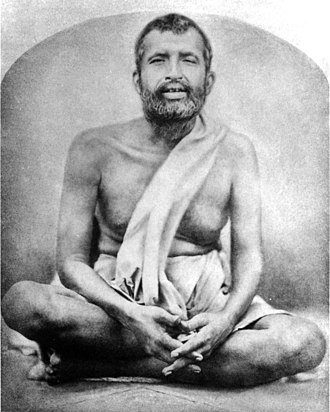 Ramakrishna1836 – 1886Indian mystic and religious preacher (1836–1886)Source: Wikidata (citizenship)
 Muhammad Iqbal1877 – 1938British-Indian Islamic philosopher, poet and politician (1877-1938)Source: Wikidata (citizenship)
 Srinivasa Ramanujan1887 – 1920Indian mathematician (1887–1920)Source: Wikidata (citizenship)
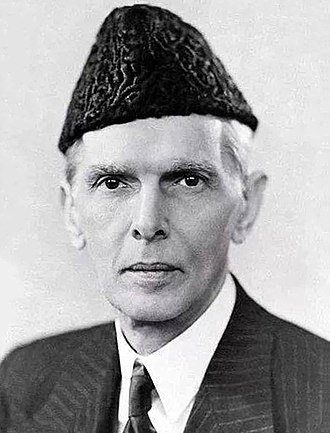 Mohammad Ali Jinnah1876 – 1948Politician and the founder of Pakistan (1876–1948)Source: Wikidata (citizenship)
 George V1865 – 1936King of the United Kingdom from 1910 to 1936Source: Wikidata (citizenship)
 Rajiv Gandhi1944 – 1991Prime Minister of India (1984-1989)Source: Wikidata (citizenship)
 Jiddu Krishnamurti1895 – 1986Indian spiritual philosopher, mystic, speaker and writer (1895–1986)Source: Wikidata (citizenship)
 Aurobindo Ghosh1872 – 1950Indian Bengali philosopher, yogi, maharishi, poet and nationalist (1872–1950)Source: Wikidata (citizenship)
 Osho1931 – 1990Indian guru and leader of the Rajneesh movement (1931–1990)Source: Wikidata (citizenship)
 Ravi Shankar1920 – 2012Indian sitar player (1920–2012)Source: Wikidata (citizenship)
 Sheikh Mujibur Rahman1920 – 1975President of the Provisional Government of Bangladesh and the 2nd Prime Minister and first President of BangladeshSource: Wikidata (citizenship)
 Zulfikar Ali Bhutto1928 – 19794th President and 9th Prime Minister of Pakistan (1928–1979)Source: Wikidata (citizenship)
 Subrahmanyan Chandrasekhar1910 – 1995Indian-American astrophysicistSource: Wikidata (citizenship)
 Pran1920 – 2013Indian actor (1920–2013)Source: Wikidata (citizenship)
- Atal Bihari Vajpayee1924 – 2018Prime Minister of India in 1996 and from 1998 to 2004Source: Wikidata (citizenship)
 Sarvepalli Radhakrishnan1888 – 19752nd President and 1st Vice President of India, Indian philosopher and politician (1888–1975)Source: Wikidata (citizenship)
 Abdus Salam1926 – 1996Theoretical physicist, and Nobel Prize in Physics recipientSource: Wikidata (citizenship)
 Rajendra Prasad1884 – 1963Indian statesman, lawyer and writer (1884–1963); first President of IndiaSource: Wikidata (citizenship)
 Paramahansa Yogananda1893 – 1952Yogi, Kriya Yoga guru and founder of Self-Realization Fellowship (1893-1952)Source: Wikidata (citizenship)
 Satyendra Nath Bose1894 – 1974Indian Bengali physicist and polymath (1894–1974)Source: Wikidata (citizenship)
 Sardar Vallabhbhai Patel1875 – 1950Indian barrister, leader of the Indian National Congress and founding father of the Republic of India (1875-1950)Source: Wikidata (citizenship)
 Mirza Ghalib1797 – 1869Indian poet (1797-1869)Source: Wikidata (citizenship)
 Premchand1880 – 1936Indian writer of Hindi and Urdu fiction (1880–1936); pioneer of social realism in Hindustani literatureSource: Wikidata (citizenship)
 Ram Narayan1927 – 2024Indian classical sarangi player (1927–2024)Source: Wikidata (citizenship)
 Subhas Chandra Bose1897 – 1945Indian nationalist leader (1897-1945)Source: Wikidata (citizenship)
 Raj Kapoor1924 – 1988Indian actor and filmmaker (1924–1988)Source: Wikidata (citizenship)
 Har Gobind Khorana1922 – 2011Indian-American molecular biologist (1922-2011)Source: Wikidata (citizenship)
 A. C. Bhaktivedanta Swami Prabhupada1896 – 1977Indian spiritual teacher and founder of the ISKCONSource: Wikidata (citizenship)
 Ramana Maharshi1879 – 1950Indian spiritual teacher (1879–1950)Source: Wikidata (citizenship)
- Lal Bahadur Shastri1904 – 1966Prime Minister of India from 1964 to 1966Source: Wikidata (citizenship)
 Muhammad Zia-ul-Haq1924 – 1988President of Pakistan from 1978 to 1988, of Saudi originSource: Wikidata (citizenship)
 Ayub Khan1907 – 1974President of Pakistan from 1958 to 1969Source: Wikidata (citizenship)
 Sarojini Naidu1879 – 1949Indian poet, politician, governor of the United Provinces of Agra and Oudh from1947 to 1949Source: Wikidata (citizenship)
 Zakir Husain1897 – 19693rd President of India (1897-1969)Source: Wikidata (citizenship)
- Abdul Hamidb. 1944President of Bangladesh in 2013-2023Source: Wikidata (citizenship)
 Mamnoon Hussain1940 – 202112th president of Pakistan from 2013 to 2018Source: Wikidata (citizenship)
 Khaleda Zia1945 – 2025Prime Minister of Bangladesh (1991–1996, 2001–2006)Source: Wikidata (citizenship)
 P. V. Narasimha Rao1921 – 2004Prime Minister of India (1991-1996)Source: Wikidata (citizenship)
 Amrita Sher-Gil1913 – 1941Hungarian-Indian painter (1913–1941)Source: Wikidata (citizenship)
Showing the 48 best-known of 92 people.
Everything that happened
- 1855Santhal rebellionBritish RajThe Santhal Rebellion , also known as the Santhal Hool, was a rebellion in present-day Jharkhand against the East India Company (EIC) and zamindari system by the Santals. It started on 30 June 1855, and on 10 November 1855, martial law was proclaimed by the East India Company which lasted until 3 January 1856, when martial law was suspended and the rebellion was eventually suppressed by the presidency armies.Source: Wikidata (country)
- 1919Jallianwala Bagh massacreJallianwala BaghThe Jallianwala Bagh massacre (IPA: [dʒəlɪjãːʋaːlaː baːɣ, baːɡ]), also known as the Amritsar massacre, took place on 13 April 1919. A large crowd had gathered at the Jallianwala Bagh in Amritsar, Punjab, British India, during the annual Baisakhi fair to protest against the Rowlatt Act and the arrest of pro-Indian independence activists Saifuddin Kitchlew and Satyapal.Source: Wikidata (country)
- 1944Battle of KohimaKohimaThe Battle of Kohima was the turning point of the Japanese U-Go offensive into British India in 1944 during the Second World War. It took place in three stages from 4 April to 22 June 1944 around the town of Kohima, now the capital city of the state of Nagaland in Northeast India.Source: Wikidata (country)
- 1947 – 1949India–Pakistan war of 1947–1948Jammu and KashmirThe India–Pakistan war of 1947–1948, also known as the first Kashmir war, was a war fought between India and Pakistan over the princely state of Jammu and Kashmir from 1947 to 1948. It was the first of the India–Pakistan wars between the two newly independent nations; both were dominions within the British Commonwealth of Nations.Source: Wikidata (country of the location)