Germany
176 events
Germany, officially the Federal Republic of Germany, is a country in Western and Central Europe. It lies between the Baltic Sea and the North Sea to the north with the Alps to the south. Its 16 constituent states have a total population of over 83 million, making it the most populous member state of the European Union (EU). Germany borders Denmark to the north; Poland and the Czech Republic to the east; Austria and Switzerland to the south; and France, Luxembourg, Belgium, and the Netherlands to the west.
Text from the Wikipedia article Germany, CC BY-SA 4.0
Built from Wikidata: an event or person is listed when Wikidata links them to this page, as shown next to each one. Many aren’t recorded there, so this list is incomplete.
Earlier states here
Key people
 Albert Einstein1879 – 1955German-born theoretical physicist (1879–1955)Source: Wikidata (citizenship)
 Karl Marx1818 – 1883German-born philosopher (1818–1883)Source: Wikidata (country of birthplace)
 Johann Wolfgang von Goethe1749 – 1832German writer, artist, natural scientist and politician (1749–1832)Source: Wikidata (country of birthplace)
 Ludwig van Beethoven1770 – 1827German composer (1770-1827)Source: Wikidata (country of birthplace)
 Johann Sebastian Bach1685 – 1750German composer (1685–1750)Source: Wikidata (country of birthplace)
 Martin Luther1483 – 1546German priest and theologian (1483–1546)Source: Wikidata (country of birthplace)
 Friedrich Nietzsche1844 – 1900German philosopher (1844-1900)Source: Wikidata (country of birthplace)
 Angela Merkelb. 1954Chancellor of Germany from 2005 to 2021 (born 1954)Source: Wikidata (citizenship)
 Otto von Bismarck1815 – 1898German statesman and Chancellor (1815-1898)Source: Wikidata (country of birthplace)
 Richard Wagner1813 – 1883German composer (1813–1883)Source: Wikidata (citizenship)
 Gottfried Wilhelm Leibniz1646 – 1716German mathematician and philosopher (1646–1716)Source: Wikidata (country of birthplace)
 Marlene Dietrich1901 – 1992German and American actress and singer (1901–1992)Source: Wikidata (country of birthplace)
 Benedict XVI1927 – 2022265 th pope of the Catholic Church (2005–2013)Source: Wikidata (citizenship)
 Friedrich Engels1820 – 1895German philosopher, sociologist and economist (1820–1895)Source: Wikidata (country of birthplace)
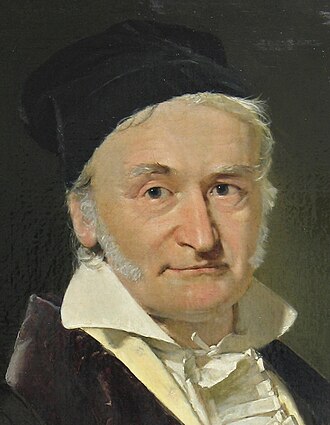 Carl Friedrich Gauss1777 – 1855German mathematician and physicist (1777–1855)Source: Wikidata (country of birthplace)
 Georg Wilhelm Friedrich Hegel1770 – 1831German philosopher and theologian (1770–1831)Source: Wikidata (country of birthplace)
 Rosa Luxemburg1871 – 1919Polish-German Marxist revolutionary (1871–1919)Source: Wikidata (citizenship)
 Albrecht Dürer1471 – 1528German painter, printmaker, mathematician, and theorist (1471-1528)Source: Wikidata (country of birthplace)
 Charlemagne748 CE – 814 CEKing of Franks, regarded as the first Holy Roman Emperor (747–814) (742-814)Source: Wikidata (country of birthplace)
 Johannes Kepler1571 – 1630German mathematician and astronomer (1571–1630)Source: Wikidata (country of birthplace)
 Friedrich Schiller1759 – 1805German playwright, poet, philosopher and historian (1759–1805)Source: Wikidata (country of birthplace)
 Johannes Gutenberg1400 – 1468German inventor and craftsman (1400-1468)Source: Wikidata (country of birthplace)
 Max Planck1858 – 1947German theoretical physicist (1858–1947)Source: Wikidata (country of birthplace)
 Peter Paul Rubens1577 – 1640Flemish painter (1577–1640)Source: Wikidata (country of birthplace)
 Max Weber1864 – 1920German sociologist, philosopher, and political economist (1864–1920)Source: Wikidata (citizenship)
 Anne Frank1929 – 1945German-born Dutch Jewish diarist and Holocaust victim (1929–1945)Source: Wikidata (country of birthplace)
 Heinrich Heine1797 – 1856German poet, writer and literary critic (1797–1856)Source: Wikidata (country of birthplace)
 Thomas Mann1875 – 1955German novelist and Nobel Prize laureate (1875–1955)Source: Wikidata (country of birthplace)
 Erwin Schrödinger1887 – 1961Austrian physicist (1887–1961)Source: Wikidata (citizenship)
 Hermann Hesse1877 – 1962Nobel Prize winning German-Swiss poet, novelist and painter (1877–1962)Source: Wikidata (citizenship)
 Johannes Brahms1833 – 1897German composer (1833–1897)Source: Wikidata (citizenship)
 George Frideric Handel1685 – 1759German-British Baroque composer (1685–1759)Source: Wikidata (country of birthplace)
 Wilhelm Röntgen1845 – 1923German physicist (1845–1923)Source: Wikidata (country of birthplace)
 Bertolt Brecht1898 – 1956German poet, playwright, and theatre director (1898–1956)Source: Wikidata (country of birthplace)
 Martin Heidegger1889 – 1976German philosopher (1889–1976)Source: Wikidata (citizenship)
 Konrad Adenauer1876 – 1967German politician, Chancellor of West Germany (1949–1963), Zentrum and CDUSource: Wikidata (citizenship)
 Henry Kissinger1923 – 2023American diplomat and geopolitical advisor, served as U.S. Secretary of State from 1973 to 1977 (1923–2023)Source: Wikidata (country of birthplace)
 Alexander von Humboldt1769 – 1859Prussian geographer, naturalist and explorer (1769–1859)Source: Wikidata (country of birthplace)
 Joseph Goebbels1897 – 1945Nazi politician and Propaganda Minister (1897–1945)Source: Wikidata (citizenship)
 Günter Grass1927 – 2015German novelist, poet, playwright, illustrator, graphic artist, and sculptor (1927-2015)Source: Wikidata (citizenship)
 Robert Schumann1810 – 1856German composer, pianist and critic (1810–1856)Source: Wikidata (country of birthplace)
 Wilhelm II1859 – 1941As King of Prussia last German Emperor from 1888 to 1918 (1859–1941)Source: Wikidata (citizenship)
 Helmut Kohl1930 – 2017Chancellor of West Germany and reunified Germany (1982–1998)Source: Wikidata (citizenship)
 Sandra Bullockb. 1964American actress and film producerSource: Wikidata (citizenship)
 Herta Müllerb. 1953German-Romanian novelist, poet and essayist (born 1953)Source: Wikidata (citizenship)
 Theodor Mommsen1817 – 1903German classical scholar and historian (1817–1903)Source: Wikidata (country of birthplace)
 Hannah Arendt1906 – 1975German-American political theorist and philosopher (1906–1975)Source: Wikidata (country of birthplace)
 Olaf Scholzb. 1958German politician (SPD), ninth Chancellor of the Federal Republic of Germany (2021–2025), Member of the BundestagSource: Wikidata (citizenship)
Showing the 48 best-known of 200 people.
Everything that happened
- 1,250 BCETollense valley battlefieldbattlefield of the Tollense RiverThe battlefield of the Tollense valley (German pronunciation: [tʰɔˈlɛnzə]) is a Bronze Age archaeological site in the northern German state of Mecklenburg-Vorpommern at the northern edge of the Mecklenburg Lake District.Source: Wikidata (country)
- 218 BCEHannibal's crossing of the AlpsAlpsHannibal's crossing of the Alps in 218 BC was one of the major events of the Second Punic War and one of the most celebrated achievements of any military force in ancient warfare.Source: Wikidata (country of the location)
- 9 CEBattle of the Teutoburg ForestOsnabrückThe Battle of the Teutoburg Forest, also called the Varian Disaster (Latin: Clades Variana) by Roman historians, was a major battle fought between an alliance of Germanic peoples and the Roman Empire between 8 and 11 September 9 AD, possibly near modern Kalkriese.Source: Wikidata (country)
- 9 CELimes GermanicusGermanyThe Limes Germanicus (Latin for Germanic frontier), or 'Germanic Limes', is the name given in modern times to a line of frontier (limes) fortifications that bounded the ancient Roman provinces of Germania Inferior, Germania Superior and Raetia, separating the Roman Empire and the unsubdued Germanic tribes from about 83 AD to 260 AD.Source: Wikidata (country)
- 16 CEBattle of IdistavisoWeserThe Battle of the Weser River, sometimes known as the First Battle of Minden or Battle of Idistaviso, was fought in 16 AD between Roman legions commanded by Roman Emperor Tiberius's heir and adopted son, Germanicus, and an alliance of Germanic peoples, commanded by Arminius. The battle marked the end of a three-year series of campaigns by Germanicus in Germania.Source: Wikidata (country)
- 166 CE – 180 CEMarcomannic WarsDanubeThe Marcomannic Wars (Latin: bellum Germanicum et Sarmaticum, lit. 'German and Sarmatian war') were a series of wars lasting from about CE 166 until 180. These wars pitted the Roman Empire against principally the Germanic Marcomanni and Quadi and the Sarmatian Iazyges; there were related conflicts with several other Germanic, Sarmatian, and Gothic peoples along both sides of the whole length of the Roman Empire's…Source: Wikidata (country of the location)
- 368 CEBattle of SoliciniumGermanyThe Battle of Solicinium was fought in 368 between the Roman army, led by Emperor Valentinian I, and an army of Alamanni invading the province of Gaul. The Romans managed to repel the Alamanni but suffered heavy losses during the battle.Source: Wikidata (country)
- 496 CEBattle of TolbiacCologneThe Battle of Tolbiac was fought between the Franks, who were fighting under Clovis I, and the Alamanni, whose leader is not known. The date of the battle has traditionally been given as 496, though other accounts suggest it may either have been fought earlier, in the 480s or early 490s, or later, in 506.Source: Wikidata (country)
- 716 CEBattle of CologneCologneThe Battle of Cologne was fought near the city of Köln (English: Cologne) (now part of Germany) in 716. The battle is known chiefly as the first battle of Charles Martel's command and was his only defeat.Source: Wikidata (country)
- 746 CECouncil of CannstattBad CannstattThe Council of Cannstatt, also referred to as the blood court at Cannstatt (Blutgericht zu Cannstatt), was a council meeting at Cannstatt, now a part of Stuttgart, in 746 that took place as a result of an invitation by the Mayor of the Palace of Austrasia, Carloman, the eldest son of Charles Martel, of all nobles of the Alemanni.Source: Wikidata (country)
- 772 CE – 804 CESaxon WarsGermaniaThe Saxon Wars were 32 years of campaigns and insurrections from 772, when Charlemagne first entered Saxony with the intent to conquer, to 804 when the last rebellion of tribesmen was defeated. In all, 18 campaigns were fought, primarily in what is now northern Germany. They resulted in the incorporation of Saxony into the Frankish realm and their forcible conversion from Germanic paganism to Christianity.Source: Wikidata (country of the location)
- 782 CEMassacre of VerdenVerdenThe Massacre of Verden was an event during the Saxon Wars where the Frankish king Charlemagne ordered the death of 4,500 Saxons in October 782. Charlemagne claimed suzerainty over Saxony and in 772 destroyed the Irminsul, an important object in Saxon paganism, during his intermittent thirty-year campaign to Christianize the Saxons. The massacre occurred in Verden in what is now Lower Saxony, Germany.Source: Wikidata (country)
- 855 CETreaty of PrümPrümThe Treaty of Prüm, concluded on 19 September 855, was the second of the main partition treaties of the Carolingian Empire. As Emperor Lothair I was approaching death, he divided his realm of Middle Francia among his three sons.Source: Wikidata (country of the location)
- 933 CEBattle of RiadeCentral GermanyThe Battle of Riade, also called Battle of Merseburg or Battle at the Unstrut, was fought between the troops of East Francia under King Henry I and the Magyars at an unidentified location in northern Thuringia along the river Unstrut on 15 March 933. The battle was precipitated by the decision of the Synod of Erfurt to stop paying an annual tribute to the Magyars in 932.Source: Wikidata (country of the location)
- 939 CEBattle of AndernachAndernachThe Battle of Andernach, between the followers and the opponents of King Otto I of Germany, took place on 2 October 939 in Andernach on the Rhine river and ended with a decisive defeat of the rebels and the death of their leaders.Source: Wikidata (country)
- 955 CEBattle of LechfeldLechfeldThe Battle of Lechfeld, also known as the Second Battle of Lechfeld, was a series of military engagements over the course of three days from 10 to 12 August 955 in which the Kingdom of Germany, led by King Otto I the Great, defeated the Hungarian army led by Harka Bulcsú and the chieftains Lél and Súr. With the German victory, further major invasions by the Magyars into Western Europe were ended.Source: Wikidata (country)
- 1080Battle on the ElsterHohenmölsenBattle on the Elster (German: Schlacht bei Hohenmölsen) was the third and last battle between the Salian king Henry IV of Germany and anti-king Rudolf of Rheinfelden, fought on October 14, 1080 near Hohenmölsen on the White Elster river. Rudolf's forces were victorious; however, he was mortally wounded and succumbed to his injuries the next day.Source: Wikidata (country)
- 1227Battle of BornhövedBornhövedThe (second) Battle of Bornhöved took place on 22 July 1227 near Bornhöved in Holstein. Count Adolf IV of Schauenburg and Holstein — leading an army consisting of troops from the cities of Lübeck and Hamburg, Dithmarschen, Holstein, and various Northern German nobles, defeated King Valdemar II of Denmark and the Welf Otto the Child.Source: Wikidata (country)
- 1288Battle of WorringenWorringenThe Battle of Worringen was fought on 5 June 1288 near the town of Worringen (also spelled Woeringen), which is now part of Chorweiler, the northernmost borough (Stadtbezirk) of Cologne.Source: Wikidata (country)
- 1298Battle of GöllheimGöllheimThe Battle of Göllheim was fought on 2 July 1298 between the forces of duke Albert I of Habsburg (German: Albrecht) and king Adolf of Nassau following the unilateral decision of the prince electors, without any formal election, to dethrone Adolf and proclaim Albert as king. Adolf died in the battle.Source: Wikidata (country of the location)
- 1322Battle of MühldorfAmpfingThe Battle of Mühldorf (also known as the Battle of Ampfing) was fought near Mühldorf am Inn on September 28, 1322 between the Duchy of (Upper) Bavaria and the Archduchy of Austria. The Bavarians were led by German King Louis of Wittelsbach, while the Austrians were under the command of his cousin, Anti-king Frederick of Habsburg.Source: Wikidata (country of the location)
- 1379Treaty of NeubergNeuburg an der DonauThe Treaty of Neuberg, concluded between the Austrian duke Albert III and his brother Leopold III at Neuberg Abbey on 25 September 1379, determined the division of the Habsburg hereditary lands into the Albertinian line and the Leopoldian line.Source: Wikidata (country of the location)
- 1474 – 1475Siege of NeussNeussThe siege of Neuss, from 1474–75, was linked to the Cologne Diocesan Feud and part of the Burgundian Wars. The siege, led by Charles the Bold against the Imperial City of Neuss, was unsuccessful. Charles was compelled by the approach of a powerful Imperial army to raise the siege.Source: Wikidata (country)
- 1485Treaty of LeipzigLeipzigThe Treaty of Leipzig or Partition of Leipzig (German: Leipziger Teilung) was signed on 11 November 1485 in the city of Leipzig, between Ernest, Elector of Saxony and his younger brother Albert III, the sons and heirs of Frederick II, Elector of Saxony (d. 1464) from the House of Wettin. The treaty ended the period of joint rule by two brothers, that lasted from 1464 to 1485.Source: Wikidata (country of the location)
- 1500Battle of HemmingstedtHemmingstedtThe Battle of Hemmingstedt occurred on 17 February 1500, south of the village of Hemmingstedt near the present village of Epenwöhrden in the western part of present-day Schleswig-Holstein, Germany.Source: Wikidata (country)
- 1525Battle of FrankenhausenBad FrankenhausenThe Battle of Frankenhausen was fought on 14 and 15 May 1525. It was an important battle in the German Peasants' War and the final act of the war in Thuringia: joint troops of Landgrave Philip I of Hesse and Duke George of Saxony defeated the peasants under their spiritual leader Thomas Müntzer near Frankenhausen in the County of Schwarzburg.Source: Wikidata (country)
- 1534 – 1535Münster rebellionMünsterThe Münster rebellion (German: Täuferreich von Münster, lit. 'Anabaptist dominion of Münster') was an attempt by radical Anabaptists to establish a communal sectarian government in the German city of Münster – then under the large Prince-Bishopric of Münster in the Holy Roman Empire.Source: Wikidata (country)
- 1547Battle of MühlbergMühlberg/ElbeThe Battle of Mühlberg took place near Mühlberg in the Electorate of Saxony in 1547, during the Schmalkaldic War. The Catholic princes of the Holy Roman Empire led by the Holy Roman Emperor Charles V decisively defeated the Lutheran Schmalkaldic League of Protestant princes under the command of Elector John Frederick I of Saxony and Landgrave Philip I of Hesse.Source: Wikidata (country)
- 1568Battle of JemmingenJemgumAfter the Battle of Heiligerlee, the Dutch rebel leader Louis of Nassau (brother of William the Silent) failed to capture the city of Groningen. Louis was driven away by Fernando Álvarez de Toledo, Duke of Alba and defeated at the Battle of Jemmingen (also known as Battle of Jemgum, at Jemgum in East Frisia, now part of Germany) on 21 July 1568.Source: Wikidata (country)
- 1570Treaty of SpeyerSpeyerThe Treaty of Speyer, signed at the Diet of Speyer in 1570, was a peace agreement between the two Hungarian Kingdoms, Royal Hungary led by Maximilian II, and the Eastern Hungarian Kingdom, ruled by John Sigismund Zápolya, which led to the establishment of the Principality of Transylvania.Source: Wikidata (country of the location)
- 1583 – 1588Cologne WarElectorate of CologneThe Cologne War (German: Kölner Krieg, Kölnischer Krieg, Truchsessischer Krieg; 1583–1588) was a conflict between Protestant and Catholic factions that devastated the Electorate of Cologne, a historical ecclesiastical principality of the Holy Roman Empire, within present-day North Rhine-Westphalia, in Germany.Source: Wikidata (country)
- 1622Battle of HöchstHöchstThe Battle of Höchst (20 June 1622) was fought between a Catholic League army led by Johan Tzerclaes, Count of Tilly and a Protestant army commanded by Christian the Younger, Duke of Brunswick-Lüneburg, close to the town of Höchst, today a suburb of the city of Frankfurt am Main. The result was a one-sided Catholic League victory. The action occurred during the Thirty Years' War.Source: Wikidata (country)
- 1622Battle of MingolsheimBad SchönbornThe Battle of Mingolsheim (German: Schlacht bei Mingolsheim) was fought on 27 April 1622, near the German village of Wiesloch, 23 km (14 mi) south of Heidelberg (and 8 km or 5 mi south of Wiesloch), between a Protestant army under General von Mansfeld, Hans Michael Elias von Obentraut, and the Margrave of Baden-Durlach against a Roman Catholic army under Count Tilly.Source: Wikidata (country)
- 1622Battle of WimpfenBad WimpfenThe Battle of Wimpfen took place during the Palatinate campaign period of the Thirty Years' War on 6 May 1622 near Wimpfen.Source: Wikidata (country)
- 1623Battle of StadtlohnStadtlohnThe Battle of Stadtlohn was fought on 6 August 1623 between the armies of the Electoral Palatinate and of the Catholic League during the Thirty Years' War. The League's forces were led by Johann Tserclaes, Count of Tilly, the Protestants by Christian of Brunswick.Source: Wikidata (country)
- 1626Battle of Dessau BridgeDessau-RoßlauThe Battle of Dessau Bridge (German: Schlacht bei Dessau) was a significant battle of the Thirty Years' War between Danish Protestants and the Imperial German Catholic forces on the Elbe River outside Dessau, Germany on 25 April 1626.Source: Wikidata (country)
- 1626Battle of LutterLutter am BarenbergeThe Battle of Lutter (German: Lutter am Barenberge) took place on 27 August 1626 during the Thirty Years' War, south of Salzgitter, in Lower Saxony. A combined Danish-German force led by Christian IV of Denmark was defeated by Johann Tserclaes, Count of Tilly, commanding an army of the Catholic League loyal to Emperor Ferdinand II.Source: Wikidata (country)
- 1628Siege of StralsundStralsundThe Siege of Stralsund, 13 May to 4 August 1628, took place during the Thirty Years' War when an Imperial Army under Albrecht von Wallenstein attempted to capture the key Baltic Sea port of Stralsund.Source: Wikidata (country)
- 1631Battle of BreitenfeldBreitenfeldThe Battle of Breitenfeld, 17 September 1631, took place during the Thirty Years' War outside Breitenfeld, Leipzig, in modern Saxony. In one of the most significant battles of the war, a combined Swedish-Saxon force defeated an army made up of Imperial and Catholic League troops.Source: Wikidata (country)
- 1631Battle of WerbenWerbenThe Battle of Werben took place during the Thirty Years' War on 7 August 1631 (N.S.), between the Swedish Empire and the Holy Roman Empire. The Swedes had 15,100 soldiers and were led by Gustavus Adolphus, while the Imperialists had 16,200 soldiers and were led by Field-Marshal Count Tilly.Source: Wikidata (country)
- 1631Sack of MagdeburgMagdeburgThe Sack of Magdeburg, also called the Magdeburg Wedding (German: Magdeburger Hochzeit) or Magdeburg's Sacrifice (Magdeburgs Opfergang), was the destruction of the Protestant city of Magdeburg on 20–24 May 1631 by the Imperial Army and the forces of the Catholic League, resulting in the deaths of around 20,000, including both defenders and civilians.Source: Wikidata (country)
- 1632Battle of LützenLeipzigThe Battle of Lützen, fought on 16 November 1632, was one of the most important of the Thirty Years' War. A Swedish army under Gustavus Adolphus, supported by troops from Saxony and Hesse-Kassel, narrowly defeated an Imperial force under Albrecht von Wallenstein. Both sides suffered heavy casualties, with Gustavus himself among the dead.Source: Wikidata (country)
- 1632Battle of RainRainThe Battle of Rain took place on 15 April 1632 near Rain in Bavaria during the Thirty Years' War. A Swedish army under Gustavus Adolphus of Sweden defeated a Catholic League force led by Johann Tserclaes, Count of Tilly, who later died of wounds received in the battle.Source: Wikidata (country)
- 1632Battle of the Alte VesteNurembergThe Battle of the Alte Veste or Battle of Fürth was a significant battle of the Thirty Years' War in which Gustavus Adolphus' attacking forces were defeated by Wallenstein's entrenched troops.Source: Wikidata (country)
- 1634Battle of NördlingenNördlingenThe Battle of Nördlingen, fought over two days from 5 to 6 September 1634, was a major battle of the Thirty Years' War. An Imperial–Spanish force led by the Cardinal-Infante Ferdinand and Ferdinand of Hungary inflicted a crushing defeat on the Swedish–German army led by Gustav Horn and Bernhard of Saxe-Weimar.Source: Wikidata (country)
- 1636Battle of WittstockWittstock/DosseThe Battle of Wittstock was fought on 4 October 1636, near Wittstock in northern Germany, during the Thirty Years' War. A Swedish army commanded jointly by Johan Banér and Alexander Leslie won a decisive victory against a combined Imperial–Saxon army, led by Count Melchior von Hatzfeld and John George I, Elector of Saxony.Source: Wikidata (country)
- 1642Battle of BreitenfeldBreitenfeldThe Second Battle of Breitenfeld, also known as the First Battle of Leipzig, took place during the Thirty Years' War on 2 November 1642 at Breitenfeld, north-east of Leipzig in Germany. A Swedish Army commanded by Lennart Torstensson defeated an Imperial Army under Archduke Leopold Wilhelm of Austria and his deputy Ottavio Piccolomini.Source: Wikidata (country)
- 1644Battle of FehmarnFehmarn BeltThe battle of Fehmarn took place north-west of the island of Fehmarn, now part of Germany, in the Baltic Sea. A combined Swedish fleet, with a large element of hired Dutch ships, defeated a Danish fleet and took 1,000 prisoners, including Ulfeldt, Benjamin Grabov and von Jasmund. The Danish admiral Pros Mund was killed in the battle.Source: Wikidata (country of the location)
- 1644Battle of FreiburgFreiburg im BreisgauThe Battle of Freiburg, fought over three days on 3, 5, and 9 August 1644, took place during the Thirty Years' War, near Freiburg im Breisgau, now in Baden-Württemberg. A French relief army of 16,000, led jointly by Condé and Turenne, sought to recapture the town, which had recently surrendered to a Bavarian force under Franz von Mercy.Source: Wikidata (country)
- 1645Battle of NördlingenNördlingenThe Battle of Nördlingen (1645) took place on 3 August 1645 in the later stages of the Thirty Years' War, southeast of Nördlingen near the village of Alerheim. A combined Franco-Hessian army led by d'Enghien and Turenne defeated a Bavarian force led by Franz von Mercy.Source: Wikidata (country)
- 1648Battle of ZusmarshausenAugsburgThe Battle of Zusmarshausen was fought on 17 May 1648 between Bavarian-Imperial forces under von Holzappel and an allied Franco-Swedish army under the command of Carl Gustaf Wrangel and Turenne in the modern Augsburg district of Bavaria, Germany. The allied force emerged victorious, and the Imperial army was only rescued from annihilation by the stubborn rearguard fighting of Raimondo Montecuccoli and his cavalry.Source: Wikidata (country)
- 1674Battle of SinsheimSinsheimThe Battle of Sinsheim took place on 16 June 1674, near Sinsheim in modern Baden-Württemberg, then in the Holy Roman Empire. Part of the 1672 to 1678 Franco-Dutch War, a French army under Marshall Turenne defeated an Imperial force led by Aeneas de Caprara.Source: Wikidata (country)
- 1675Battle of FehrbellinFehrbellinThe Battle of Fehrbellin was a battle in the Scanian War. It was fought on June 18, 1675 (Julian calendar date, June 28, Gregorian), between Swedish and Brandenburg-Prussian troops.Source: Wikidata (country of the location)
- 1702Battle of FriedlingenFreiburg im BreisgauThe Battle of Friedlingen took place on 14 October 1702, during the War of the Spanish Succession. Most of the fighting centred around Friedlingen, now a suburb of Weil am Rhein, on the current border between Baden-Württemberg in Germany, and Switzerland. A French force under Villars defeated an Imperial army commanded by Louis William, Margrave of Baden-Baden.Source: Wikidata (country)
- 1703First Battle of HöchstädtHöchstädt an der DonauThe First Battle of Höchstädt took place on 20 September 1703 during the War of the Spanish Succession. Fought near Höchstädt an der Donau in Bavaria, a combined Franco-Bavarian force under Claude Louis Hector de Villars defeated an Imperial army led by Hermann Otto II of Limburg Stirum.Source: Wikidata (country)
- 1704Battle of BlenheimBlindheimThe Battle of Blenheim (German: Zweite Schlacht bei Höchstädt; French: Bataille de Höchstädt; Dutch: Slag bij Blenheim) fought on 13 August [O.S. 2 August] 1704, was a major battle of the War of the Spanish Succession. The overwhelming Allied victory ensured the safety of Vienna from the Franco-Bavarian army, thus preventing the collapse of the reconstituted Grand Alliance.Source: Wikidata (country)
- 1704Battle of SchellenbergDonauwörthThe Battle of Schellenberg took place on 2 July 1704 during the War of the Spanish Succession. The engagement was part of the Duke of Marlborough's campaign to save the Habsburg capital of Vienna from a threatened advance by King Louis XIV's Franco-Bavarian forces ranged in southern Germany.Source: Wikidata (country)
- 1712Battle of GadebuschGadebuschThe Battle of Gadebusch or Wakenstädt (20 December 1712) was Sweden's final great victory in the Great Northern War. It was fought by the Swedes to prevent the loss of the city of Stralsund to Danish and Saxon forces.Source: Wikidata (country)
- 1714Treaty of RastattRastattThe Treaty of Rastatt was a peace treaty between France and Austria that was concluded on 7 March 1714 in the Baden city of Rastatt to end the War of the Spanish Succession between both countries. The treaty followed the Treaty of Utrecht of 11 April 1713, which had ended hostilities between France and Spain, on the one hand, and Great Britain and the Dutch Republic, on the other.Source: Wikidata (country of the location)
- 1734Siege of PhilippsburgPhilippsburgThe siege of Philippsburg was conducted by French forces against troops of the Holy Roman Empire in the fortress of Philippsburg in the Rhine River valley during the War of the Polish Succession. The Duke of Berwick led 100,000 men up the Rhine Valley, of which 60,000 were detached to invest the fortress at Philippsburg, beginning on 26 May 1734.Source: Wikidata (country)
- 1743Battle of DettingenKarlstein am MainThe Battle of Dettingen took place on 27 June 1743 during the War of the Austrian Succession, near Karlstein am Main in Bavaria. An alliance composed of British, Hanoverian and Austrian troops, known as the Pragmatic Army, defeated a French force commanded by the Duke of Noailles.Source: Wikidata (country)
- 1745Battle of KesselsdorfKesselsdorfThe Battle of Kesselsdorf was fought on 15 December 1745, between the Kingdom of Prussia and the combined forces of the Archduchy of Austria and the Electorate of Saxony during the part of the War of the Austrian Succession known as the Second Silesian War. The Prussians were led by Leopold I, Prince of Anhalt-Dessau, while the Austrians and Saxons were led by Field Marshal Rutowsky.Source: Wikidata (country)
- 1745Battle of PfaffenhofenPfaffenhofen an der IlmThe Battle of Pfaffenhofen was fought on 15 April 1745 between France and Austria. The Austrians under Karl Josef Batthyány defeated the outnumbered French under General Ségur, ending the war in Bavaria.Source: Wikidata (country)
- 1756Siege of PirnaPirnaThe Siege of Pirna, sometimes referred to as the Investment of Pirna, took place from 10 September to 14 October 1756 as part of the Prussian invasion of Saxony during the Third Silesian War (part of the Seven Years' War).Source: Wikidata (country)
- 1757Battle of HastenbeckHamelinThe Battle of Hastenbeck (26 July 1757) was fought as part of the Invasion of Hanover during the Seven Years' War between the allied forces of Hanover, Hesse-Kassel (or Hesse-Cassel) and Brunswick, and the French. The allies were defeated by the French army near Hamelin in the Electorate of Hanover.Source: Wikidata (country)
- 1757Battle of RossbachRoßbachThe Battle of Rossbach took place on 5 November 1757 during the Third Silesian War (1756–1763, part of the Seven Years' War) near the village of Rossbach (Roßbach), in the Electorate of Saxony. It is sometimes called the Battle of, or at, Reichardtswerben, after a different nearby town.Source: Wikidata (country)
- 1758Battle of HochkirchHochkirchThe Battle of Hochkirch took place on 14 October 1758, during the Third Silesian War (part of the Seven Years' War). After several weeks of maneuvering for position, an Austrian army of 80,000 commanded by Lieutenant Field Marshal Leopold Josef Graf Daun surprised the Prussian army of 30,000–36,000 commanded by Frederick the Great. The Austrian army overwhelmed the Prussians and forced a general retreat.Source: Wikidata (country of the location)
- 1758Battle of KrefeldKrefeldThe Battle of Krefeld (sometimes referred to by its French name of Créfeld, and as Creveld) was fought at Krefeld near the Rhine on 23 June 1758 between a German army under Duke Ferdinand of Brunswick-Wolfenbüttel and a French army under Count Louis of Clermont during the Seven Years' War.Source: Wikidata (country)
- 1758Battle of LutterbergStaufenbergThe Battle of Lutterberg took place on 10 October 1758 during the Seven Years' War between a French force of 42,000 commanded by Charles, Prince of Soubise and a much smaller Anglo-German force commanded by General Christoph Ludwig von Oberg.Source: Wikidata (country)
- 1758Battle of TornowFürstenberg/HavelThe Battle of Tornow was fought between the forces of Prussia and Sweden on 26 September 1758 during the Seven Years' War, near modern-day Fürstenberg/Havel (then called Tornow, in the Grand Duchy of Mecklenburg-Strelitz).Source: Wikidata (country)
- 1759Battle of BergenFrankfurt-Bergen-EnkheimThe Battle of Bergen on 13 April 1759 saw the French army under de Broglie withstand an allied British, Hanoverian, Hessian, Brunswick army under Prince Ferdinand of Brunswick near Frankfurt-am-Main during the Seven Years' War.Source: Wikidata (country)
- 1759Battle of HoyerswerdaHoyerswerdaThe Battle of Hoyerswerda was a minor encounter of September 25, 1759 during the Third Silesian War (part of the Seven Years' War) between Prussian and Austrian forces. Following on from the calamitous Prussian defeat at Kunersdorf in August however, this small victory for Frederick the Great, taken together with the one fashioned at Korbitz four days earlier by Friedrich August von Finck, no doubt proved a timely…Source: Wikidata (country)
- 1759Battle of MaxenMaxenThe Battle of Maxen (20 November 1759) was a battle at Maxen, in the Electorate of Saxony during the Third Silesian War (part of the Seven Years' War). It resulted in surrender of a Prussian corps.Source: Wikidata (country)
- 1759Battle of MeissenMeissenThe Battle of Meissen (4 December 1759) was an Austrian victory over a smaller Prussian force during the Third Silesian War (part of the Seven Years' War). An Austrian force under the command of general Beck assaulted 3,500 Prussian troops under Diericke at Meissen, overwhelming them and driving the survivors across the Elbe. The Prussians lost 400 men in the action and 1,543 fell prisoner.Source: Wikidata (country)
- 1759Battle of MindenMindenThe Battle of Minden was a major engagement during the Seven Years' War, fought on 1 August 1759. An Allied army, under the overall command of Prussian Field Marshal Ferdinand of Brunswick, defeated a Franco-Saxon army commanded by Marshal of France, Marquis de Contades.Source: Wikidata (country)
- 1759Siege of KolbergKołobrzegDuring the Seven Years' War, the Prussian-held town of Kolberg in Brandenburg-Prussian Pomerania (now Kołobrzeg) was besieged by Russian forces three times. The first two sieges, in late 1758 and from 26 August to 18 September 1760, were unsuccessful. A final and successful siege took place from August to December 1761. In the sieges of 1760 and 1761, the Russian forces were supported by Swedish auxiliaries.Source: Wikidata (country)
- 1760Battle of Kloster KampenKamp-LintfortThe Battle of Kloster Kampen (also known as the Battle of Kloster Kamp or Battle of Campen) was a French victory over an Anglo-German army during the Seven Years' War. The Allied forces were driven from the field.Source: Wikidata (country)
- 1760Battle of TorgauSüptitzIn the Battle of Torgau on 3 November 1760, King Frederick the Great's Prussian army fought an Austrian army under the command of Field Marshal Leopold Josef Graf Daun. The Prussians won a costly victory in one of the bloodiest battles of the Third Silesian War (part of the Seven Years' War).Source: Wikidata (country)
- 1760Battle of WarburgWarburgThe Battle of Warburg was fought on 31 July 1760 during the Seven Years' War. The battle was a victory for the Hanoverians and the British against a slightly larger French army. The victory meant the Anglo-German allies had successfully defended Westphalia from the French by preventing a crossing of the Diemel River, but were forced to abandon the allied state of Hesse-Kassel to the south.Source: Wikidata (country)
- 1761Battle of VillinghausenWelverThe Battle of Villinghausen (or Vellinghausen, also known as the Battle of Kirchdenkern), took place during the Seven Years' War fought on the 15th and 16 July 1761 in the western area of present-day Germany, between a large French army and an Anglo-German force led by Prince Ferdinand of Brunswick. The French commanders failed to coordinate their actions and suffered defeat.Source: Wikidata (country)
- 1762Battle of FreibergFreibergThe Battle of Freiberg was fought on 29 October 1762 and was the last great battle of the Third Silesian War (and of the wider Seven Years' War).Source: Wikidata (country)
- 1762Treaty of HamburgHamburgThe Treaty of Hamburg was signed on 22 May 1762 in Hamburg between Sweden and Prussia during the Pomeranian War, a theater of the Seven Years' War.Source: Wikidata (country)
- 1793Siege of MainzMainzIn the siege of Mainz (German: Belagerung von Mainz), from 14 April to 23 July 1793, a coalition of Prussia, Austria, and other German states led by the Holy Roman Empire besieged and captured Mainz from revolutionary French forces. The allies, especially the Prussians, first tried negotiations, but this failed, and the bombardment of the city began on the night of 17 June.Source: Wikidata (country)
- 1798 – 1802War of the Second CoalitionItalian PeninsulaThe War of the Second Coalition (French: Guerre de la Deuxième Coalition) (1798–1802) was the second war between revolutionary France and a coalition of European monarchies, led by Britain, Austria and Russia, and including the Ottoman Empire, Portugal, Naples and various German monarchies. Prussia did not join the coalition, while Spain supported France.Source: Wikidata (country of the location)
- 1799Battle of StockachStockachThe Battle of Stockach occurred on 25 March 1799, when French and Austrian armies fought for control of the geographically strategic Hegau region in present-day Baden-Württemberg. In the broader military context, this battle constitutes a keystone in the first campaign in southwestern Germany during the Wars of the Second Coalition, part of the French Revolutionary Wars.Source: Wikidata (country)
- 1800Battle of HohenlindenMunichThe Battle of Hohenlinden was fought on 3 December 1800 during the French Revolutionary Wars. A French army under Jean Victor Marie Moreau won a decisive victory over an Austrian and Bavarian force led by 18-year-old Archduke John of Austria. The allies were forced into a disastrous retreat that compelled them to request an armistice, effectively ending the War of the Second Coalition.Source: Wikidata (country)
- 1805Battle of ElchingenElchingenThe Battle of Elchingen, fought on 14 October 1805, saw French forces under Michel Ney rout an Austrian corps led by Johann Sigismund Riesch. This defeat led to a large part of the Austrian army being invested in the fortress of Ulm by the army of Emperor Napoleon Bonaparte of France while other formations fled to the east.Source: Wikidata (country)
- 1805Battle of Haslach-JungingenJungingenThe Battle of Haslach-Jungingen, also known as the Battle of Albeck, fought on 11 October 1805 at Ulm-Jungingen north of Ulm at the Danube between French and Austrian forces, was part of the Ulm campaign during the War of the Third Coalition, which was a part of the greater Napoleonic Wars.Source: Wikidata (country)
- 1805Battle of UlmUlmThe Battle of Ulm on 16–20 October 1805 was a series of skirmishes, at the end of the Ulm campaign, which allowed Napoleon I to trap an entire Austrian army under the command of Karl Freiherr Mack von Leiberich with minimal losses and to force its surrender near Ulm in the Electorate of Bavaria.Source: Wikidata (country)
- 1806Battle of Jena–AuerstedtJenaThe Battle of Jena–Auerstedt was fought on Tuesday 14 October 1806, near Jena and Auerstedt (then in the Duchy of Saxe-Weimar and Kingdom of Prussia, now in Thuringia and Saxony-Anhalt, Germany), being the decisive engagement of the War of the Fourth Coalition. The Grande Armée under the command of Emperor Napoleon I defeated a combined Prussian and Saxon army.Source: Wikidata (country)
- 1806Battle of LübeckLübeckThe Battle of Lübeck took place on 6 November 1806 in Lübeck, Germany between soldiers of the Kingdom of Prussia led by Gebhard Leberecht von Blücher, who were retreating from defeat at the Battle of Jena–Auerstedt, and troops of the First French Empire under Marshals Murat, Bernadotte, and Soult, who were pursuing them.Source: Wikidata (country)
- 1806Battle of SaalfeldSaalfeldThe Battle of Saalfeld took place on 10 October 1806, at which a French force of 12,800 men commanded by Marshal Jean Lannes defeated a Prussian-Saxon force of 8,300 men under Prince Louis Ferdinand. The battle took place in Thuringia in what was the Ernestine duchy of Saxe-Coburg-Saalfeld. The battle was the second clash in the Prussian Campaign of the War of the Fourth Coalition.Source: Wikidata (country)
- 1806Battle of SchleizSchleizThe Battle of Schleiz took place on 9 October 1806 in Schleiz, Germany between a Prussian-Saxon division under Bogislav Friedrich Emanuel von Tauentzien and a part of Jean-Baptiste Bernadotte's I Corps under the command of Jean-Baptiste Drouet, Comte d'Erlon. It was the first clash of the War of the Fourth Coalition, part of the Napoleonic Wars.Source: Wikidata (country)
- 1808Congress of ErfurtErfurtThe Congress of Erfurt was the meeting between Napoleon, Emperor of the French, and Alexander I, Emperor of All Russia, from Tuesday 27 September to Friday 14 October 1808 intended to reaffirm the alliance concluded the previous year with the Treaties of Tilsit which followed the end of the War of the Fourth Coalition.Source: Wikidata (country)
- 1809Battle of AbensbergAbensbergThe Battle of Abensberg took place on 20 April 1809 between a Franco-German force under the command of Emperor Napoleon I of France and a reinforced Austrian corps led by Feldmarschall-Leutnant Archduke Louis of Austria. As the day wore on, Feldmarschall-Leutnant Johann von Hiller arrived with reinforcements to take command of the three corps that formed the Austrian left wing.Source: Wikidata (country)
- 1809Battle of EckmühlMunichThe Battle of Eckmühl fought on 21–22 April 1809, was the turning point of the 1809 Campaign, also known as the War of the Fifth Coalition. Napoleon I had been unprepared for the start of hostilities on 10 April 1809, by the Austrians under Archduke Charles of Austria, and for the first time since assuming the French Imperial Crown had been forced to give up the strategic initiative to an opponent.Source: Wikidata (country)
- 1809Battle of LandshutLandshutThe Battle of Landshut took place on 21 April 1809 between the French, Württembergers (VIII Corps) and Bavarians (VII Corps) under Napoleon which numbered about 60,000 strong, and 40,000 Austrians under the General Johann von Hiller. The Austrians, though outnumbered, fought hard until Napoleon arrived, when the battle subsequently became a clear French victory.Source: Wikidata (country)
- 1809Battle of RatisbonRegensburgThe Battle of Ratisbon, also called the Battle of Regensburg, was a meeting engagement fought on 23 April 1809, during the Napoleonic Wars, between the army of the French Empire, led by Napoleon I, and that of the Austrian Empire, led by Archduke Charles.Source: Wikidata (country)
- 1809Battle of Teugen–HausenTeugnThe Battle of Teugen–Hausen or the Battle of Thann was an engagement that occurred during the War of the Fifth Coalition, part of the Napoleonic Wars. The battle was fought on 19 April 1809 between the French III Corps led by Marshal Louis-Nicolas Davout and the Austrian III Armeekorps commanded by Prince Friedrich Franz Xaver of Hohenzollern-Hechingen.Source: Wikidata (country)
- 1813Battle of LeipzigLeipzigThe Battle of Leipzig, also known as the Battle of the Nations, was fought from 16 to 19 October 1813 at Leipzig, Saxony. The Coalition armies of Austria, Prussia, Sweden, and Russia, led by Tsar Alexander I, Karl von Schwarzenberg, Gebhard von Blücher and Swedish Crown Prince Charles John, decisively defeated the Grande Armée of French Emperor Napoleon Bonaparte.Source: Wikidata (country)
- 1813Battle of BautzenBautzenIn the Battle of Bautzen (20–21 May 1813), a combined Prusso-Russian army, retreating after their defeat at Lützen and massively outnumbered, was pushed back by Napoleon but escaped destruction. Some sources claim that Marshal Michel Ney failed to block their retreat. The Prussians were led by General Gebhard Leberecht von Blücher, and the Russians by General Peter Wittgenstein.Source: Wikidata (country)
- 1813Battle of DennewitzBerlinThe Battle of Dennewitz (German: Schlacht von Dennewitz) took place on 6 September 1813 between French forces commanded by Marshal Michel Ney and the Sixth Coalition's Allied Army of the North commanded by Crown Prince Charles John of Sweden, Friedrich Wilhelm von Bülow and Bogislav von Tauentzien.Source: Wikidata (country)
- 1813Battle of DresdenDresdenThe Battle of Dresden (26–27 August 1813) was a major engagement of the Napoleonic Wars. The battle took place around the city of Dresden in modern-day Germany, then the capital of the Kingdom of Saxony. With the recent addition of Austria, the Sixth Coalition felt emboldened in their quest to expel the French from Central Europe.Source: Wikidata (country)
- 1813Battle of GroßbeerenGroßbeerenThe Battle of Großbeeren occurred on 23 August 1813 in neighboring Blankenfelde and Sputendorf between the Prussian III Corps under Friedrich von Bülow and the Franco-Saxon VII Corps under Jean Reynier.Source: Wikidata (country)
- 1813Battle of HanauHanauThe Battle of Hanau was fought from 30 to 31 October 1813 between Karl Philipp von Wrede's Austro-Bavarian corps and Napoleons retreating French during the War of the Sixth Coalition. Following his defeat at the Battle of Leipzig earlier in October, Napoleon began to retreat from Germany into France in relative safety. Wrede attempted to block the French line of retreat at Hanau on 30 October.Source: Wikidata (country)
- 1813Battle of LützenGroßgörschenThe Battle of Lützen, fought on 2 May 1813 near the town of Lützen in Saxony, was a major engagement during the War of the Sixth Coalition. It pitted Napoleon Bonaparte's French forces against a coalition army of Prussian and Russian troops commanded by Generals Wittgenstein and Blücher. The battle marked Napoleon's attempt to reassert dominance in Central Europe following his disastrous retreat from Russia in 1812.Source: Wikidata (country)
- 1864Battle of HeligolandHeligoland BightThe Battle of Heligoland (or Helgoland) was fought on 9 May 1864, during the Second Schleswig War, between a Danish squadron led by Commodore Edouard Suenson and a joint Austro-Prussian squadron commanded by the Austrian Commodore Wilhelm von Tegetthoff.Source: Wikidata (country of the location)
- 1864Battle of MysundeMissundeThe Battle of Mysunde on 2 February 1864 was the first battle between the Prusso-Austrian allied army and the Danish army in the Second Schleswig War. The Prussian vanguard force of 10,000 men attempted to break through and outflank the Danish defenses at the Danevirke, but were repulsed by the fortification garrison and two battalions of the Danish army.Source: Wikidata (country)
- 1866Austro-Prussian WarBohemiaThe Austro-Prussian War (German: Preußisch-Österreichischer Krieg) was fought in 1866 between the Austrian Empire and the Kingdom of Prussia, with each also being aided by various allies within the German Confederation. Prussia had also allied with the Kingdom of Italy, linking this conflict to the Third Independence War of Italian unification.Source: Wikidata (country of the location)
- 1866Battle of LangensalzaBad LangensalzaThe Battle of Langensalza was fought on 27 June 1866, during the Austro-Prussian War, near Bad Langensalza in what is now modern Germany, between the Kingdom of Hanover and the Kingdom of Prussia. The Hanoverians won the battle but were then surrounded by a larger and reinforced Prussian army. Unable to link up with their Bavarian allies to the south, the Hanoverians surrendered.Source: Wikidata (country of the location)
- 1890Heligoland–Zanzibar TreatyBerlinThe Heligoland–Zanzibar Treaty (German: Helgoland-Sansibar-Vertrag; also known as the Anglo-German Agreement of 1890) was an agreement signed on 1 July 1890 between Germany and the United Kingdom.Source: Wikidata (country)
- 1911Morocco–Congo TreatyBerlinThe Morocco–Congo Treaty was signed on 4 November 1911 in Berlin between France and Germany to recognize French domination of Morocco. This event concluded the Agadir Crisis. In it, France ceded parts of the French Congo and French Equatorial Africa to Germany, comprising the Neukamerun.Source: Wikidata (country)
- 1914Battle of Heligoland BightHeligolandThe Battle of Heligoland Bight was the first Anglo-German naval battle of the First World War, fought on 28 August 1914, between ships of the United Kingdom and Germany. The battle took place in the south-eastern North Sea, when the British attacked German patrols off the north-west German coast.Source: Wikidata (country)
- 1914July CrisisEuropeThe July Crisis was a series of interrelated diplomatic and military escalations among the major powers of Europe in mid-1914, which led to the outbreak of World War I. It began on 28 June 1914 when the Bosnian Serb nationalist Gavrilo Princip assassinated Archduke Franz Ferdinand, heir presumptive to the Austro-Hungarian throne, and his wife Sophie, Duchess of Hohenberg.Source: Wikidata (country)
- 1917Second Battle of Heligoland BightHeligolandThe Second Battle of Heligoland Bight, also the Action in the Helgoland Bight and the Zweite Seeschlacht bei Helgoland, was an inconclusive naval engagement fought between British and German squadrons on 17 November 1917 during the First World War.Source: Wikidata (country)
- 1918German revolution of 1918–1919GermanyThe German revolution of 1918–1919, also known as the November Revolution (German: Novemberrevolution), brought down the German Empire at the end of World War I and set the stage for the establishment of the Weimar Republic.Source: Wikidata (country of the location)
- 1920 – 1922Operation NemesisBerlinOperation Nemesis (Armenian: «Նեմեսիս» գործողություն, romanized: "Nemesis" gortsoghut'iun) was a program of the Armenian Revolutionary Federation to assassinate both Ottoman perpetrators of the Armenian genocide and officials of the Azerbaijan Democratic Republic most responsible for the massacre of Armenians during the September Days of 1918 in Baku.Source: Wikidata (country of the location)
- 1920Ruhr uprisingRuhr RegionThe Ruhr uprising (German: Ruhraufstand) or March uprising (Märzaufstand) was an uprising that occurred in the Ruhr region of Germany from 13 March to 6 April 1920. It was a left-wing workers' revolt triggered by the call for a general strike in response to the Kapp Putsch, then became an armed rebellion when far-left workers used the strike as an opportunity to attempt the establishment of a council republic.Source: Wikidata (country)
- 1921Assassination of Talaat PashaBerlinOn 15 March 1921, Armenian student Soghomon Tehlirian killed Talaat Pasha—former grand vizier of the Ottoman Empire and the main architect of the Armenian genocide—in Berlin. At his trial, Tehlirian argued, "I have killed a man, but I am not a murderer"; the jury acquitted him.Source: Wikidata (country)
- 1921U.S.–German Peace TreatyBerlinThe U.S.–German Peace Treaty was a peace treaty between the U.S. and the German governments. It was signed in Berlin on August 25, 1921 in the aftermath of World War I. The main reason for the conclusion of that treaty was that the U.S. Senate did not consent to ratification of the multilateral peace treaty signed in Versailles, thus leading to a separate peace treaty.Source: Wikidata (country)
- 1923Hamburg UprisingHamburgThe Hamburg Uprising (German: Hamburger Aufstand) was a communist insurrection that occurred in Hamburg in Weimar Germany on 23 October 1923. A militant section of the Hamburg Communist Party of Germany launched an uprising as part of the so-called German October. Rebels stormed 24 police stations, 17 in Hamburg and seven in Schleswig-Holstein Province in Prussia, and established barricades around the city.Source: Wikidata (country)
- 1926Treaty of BerlinBerlinThe Treaty of Berlin (German–Soviet Neutrality and Nonaggression Pact) was a treaty signed on 24 April 1926 under which Germany and the Soviet Union pledged neutrality in the event of an attack on the other by a third party for five years. The treaty reaffirmed the German–Soviet Treaty of Rapallo (1922).Source: Wikidata (country)
- 1933Nazi book burningsBebelplatzThe Nazi book burnings were a campaign conducted by the German Student Union (German: Deutsche Studentenschaft, DSt) to ceremonially burn books in Nazi Germany and Austria in the 1930s. The books targeted for burning were those viewed as being subversive or as representing ideologies opposed to Nazism.Source: Wikidata (country of the location)
- 19361936 Summer OlympicsBerlinThe 1936 Summer Olympics (German: Olympische Sommerspiele 1936), officially the Games of the XI Olympiad (Spiele der XI. Olympiade) and branded as Berlin 1936, were an international multi-sport event held from 1 to 16 August 1936 in Berlin, Germany. Berlin won the right to host the Games over Barcelona at the 29th IOC Session in 1931.Source: Wikidata (country of the location)
- 1936Anti-Comintern PactBerlinThe Anti-Comintern Pact, officially the Agreement against the Communist International, was an anti-communist pact concluded between Nazi Germany and the Empire of Japan on 25 November 1936 and directed against the Communist International (Comintern). It was signed by the German ambassador-at-large Joachim von Ribbentrop and the Japanese ambassador to Germany Kintomo Mushanokōji.Source: Wikidata (country of the location)
- 1938Munich AgreementFührerbauThe Munich Agreement was reached in Munich on 30 September 1938, by Nazi Germany, the United Kingdom, France, and Italy. The agreement provided for the German annexation of part of the First Czechoslovak Republic called the Sudetenland, where three million people, mainly ethnic Germans, lived.Source: Wikidata (country)
- 1939Pact of SteelBerlinThe Pact of Steel (German: Stahlpakt, Italian: Patto d'Acciaio), formally known as the Pact of Friendship and Alliance between Germany and Italy (German: Freundschafts- und Bündnispakt zwischen Deutschland und Italien, Italian: Patto di amicizia e di alleanza fra l'Italia e la Germania), was a military and political alliance between Germany and Italy, signed in 1939.Source: Wikidata (country)
- 1939 – 1940Phoney WarSiegfried LineThe Phoney War was an eight-month period at the outset of World War II, lasting from September 1939 to May 1940, during which there were virtually no major Allied military land operations on the Western Front.Source: Wikidata (country)
- 1939German–Soviet Credit AgreementBerlinThe German–Soviet Credit Agreement (also referred to as the German–Soviet Trade and Credit Agreement) was an economic arrangement between Nazi Germany and the Soviet Union whereby the latter received an acceptance credit of 200 million ℛ︁ℳ︁ over seven years with an effective interest rate of 4.5 percent.Source: Wikidata (country)
- 1939Saar OffensiveSaarlandThe Saar Offensive was the French invasion of Saarland, Germany, in the first stages of World War II, from September 7 to October 16, 1939, in response to the German invasion of Poland on 1 September 1939.Source: Wikidata (country)
- 1940 – 1945Tripartite PactBerlinThe Tripartite Pact, also known as the Berlin Pact, was an agreement between Germany, Italy, and Japan signed in Berlin on 27 September 1940 by, respectively, Joachim von Ribbentrop, Galeazzo Ciano, and Saburō Kurusu (in that order) and in the presence of Adolf Hitler.Source: Wikidata (country)
- 1942Wannsee ConferenceVilla MarlierThe Wannsee Conference (German: Wannseekonferenz, German pronunciation: [ˈvanzeːkɔnfeˌʁɛnt͡s] ) was a meeting of senior government officials of Nazi Germany and Schutzstaffel (SS) leaders, held in the Berlin suburb of Wannsee on 20 January 1942.Source: Wikidata (country)
- 1943Operation ChastiseEderOperation Chastise, commonly known as the Dambusters Raid, was an attack on German dams carried out on the night of 16/17 May 1943 by 617 Squadron RAF Bomber Command, later called the Dam Busters, using special bouncing bombs developed by Barnes Wallis.Source: Wikidata (country of the location)
- 1943Rosenstrasse protestGermanyThe Rosenstrasse protest was the only mass public demonstration by Germans in the Third Reich against the deportation of Jews. The protest on Rosenstraße ("Roses street") took place in Berlin during February and March 1943.Source: Wikidata (country)
- 1944Battle of AachenAachenThe Battle of Aachen was a battle of World War II, fought by American and German forces in and around Aachen, Germany, between 12 September and 21 October 1944. The city had been incorporated into the Siegfried Line, the main defensive network on Germany's western border; the Allies had hoped to capture it quickly and advance into the industrialized Ruhr basin.Source: Wikidata (country)
- 1944 – 1945Battle of Hürtgen ForestHürtgen ForestThe Battle of Hürtgen Forest (German: Schlacht im Hürtgenwald) was a series of battles fought from 19 September to 16 December 1944, between American and German forces on the Western Front during World War II, in the Hürtgen Forest, a 140 km2 (54 mi2) area about 5 km (3.1 mi) east of the Belgian–German border.Source: Wikidata (country)
- 1945 – 1946Nuremberg trialsPalace of JusticeThe Nuremberg trials were international criminal trials held by France, the Soviet Union, the United Kingdom, and the United States against leaders of defeated Nazi Germany for plotting and carrying out invasions of several countries across Europe and committing atrocities against their citizens in the Second World War.Source: Wikidata (country)
- 1945Battle of BerlinBerlinThe Battle of Berlin, designated as the Berlin Strategic Offensive Operation by the Soviet Union, and also known as the Fall of Berlin, was one of the last major offensives of the European theatre of World War II.Source: Wikidata (country)
- 1945Potsdam ConferenceCecilienhofThe Potsdam Conference (German: Potsdamer Konferenz) was held at Potsdam in the Soviet occupation zone from 17 July to 2 August 1945, to allow the three leading Allies to plan the postwar peace, while avoiding the mistakes of the Paris Peace Conference of 1919. The participants were the Soviet Union, the United Kingdom, and the United States.Source: Wikidata (country)
- 1945Potsdam DeclarationPotsdamThe Potsdam Declaration, or the Proclamation Defining Terms for Japanese Surrender, was a statement that called for the surrender of all Japanese armed forces during World War II. On July 26, 1945, United States president Harry S.Source: Wikidata (country)
- 1945Battle of BautzenBautzenThe Battle of Bautzen (or Battle of Budziszyn, April 1945) was one of the last battles of the Eastern Front during World War II in Europe. It was fought on the extreme southern flank of the Spremberg-Torgau Offensive, seeing days of pitched street fighting between forces of the Polish Second Army under elements of the Soviet 52nd Army and 5th Guards Army[a] on one side and elements of German Army Group Center in the…Source: Wikidata (country)
- 1945Battle of HalbeHalbeThe Battle of Halbe (German: Kesselschlacht von Halbe, Battle of the Halbe Pocket; Russian: Хальбский котёл, Halbe pocket) was a battle lasting from April 24 to May 1, 1945, in which the German Ninth Army under the command of General Theodor Busse was destroyed as a fighting force by the advancing Red Army during the Battle of Berlin.Source: Wikidata (country of the location)
- 1945Battle of NurembergNurembergThe Battle of Nuremberg (German: Schlacht um Nürnberg), also called the Fall of Nuremberg, was a five-day battle between the forces of the United States 7th Army on one side, and Nazi Germany on the other during the last days of World War II. The battle saw some of the fiercest urban combat during the war and it took four days for the United States to capture the city.Source: Wikidata (country)
- 1945Battle of RemagenRemagenThe Battle of Remagen was an 18-day battle during the Allied invasion of Germany in World War II. It lasted from 7 to 25 March 1945 when American forces unexpectedly captured the Ludendorff Bridge over the Rhine intact. They were able to hold it against German opposition and build additional temporary crossings.Source: Wikidata (country)
- 1945Battle of the Seelow HeightsSeelowThe Battle of the Seelow Heights (German: Schlacht um die Seelower Höhen) was part of the Berlin Strategic Offensive Operation (16 April – 2 May 1945). A pitched battle, it was one of the last assaults on large entrenched defensive positions of the Second World War. It was fought over three days, from 16 to 19 April 1945.Source: Wikidata (country)
- 1945Dachau liberation reprisalsDachau concentration campDuring the Dachau liberation reprisals, German SS troops were killed by outraged U.S. soldiers and concentration camp prisoners at the Dachau concentration camp on April 29, 1945, during World War II. It is unclear how many SS guards were killed in the incident, but most estimates place the number killed at around 35 to 50.Source: Wikidata (country)
- 1945Operation GrenadeRhinelandDuring World War II, Operation Grenade was the crossing of the Roer river between Roermond and Düren by the U.S. Ninth Army, commanded by Lieutenant General William Hood Simpson, in February 1945, which marked the beginning of the Allied invasion of Germany.Source: Wikidata (country of the location)
- 1945Operation PlunderNorth Rhine-WestphaliaOperation Plunder was a military operation to cross the Rhine on the night of 23 March 1945, launched by the 21st Army Group under Field Marshal Bernard Montgomery. The crossing of the river was at Rees, Wesel, and south of the river Lippe by the British Second Army under Lieutenant General Miles Dempsey, and the United States Ninth Army under Lieutenant General William H. Simpson.Source: Wikidata (country)
- 1945Operation VarsityWeselOperation Varsity (24 March 1945) was a successful airborne forces operation launched by Allied troops toward the end of World War II. Involving more than 16,000 paratroopers and several thousand aircraft, it is the largest airborne operation ever conducted on a single day and in one location.Source: Wikidata (country)
- 1945Operation VeritableKlever ReichswaldOperation Veritable (also known as the Battle of the Reichswald) was the northern part of an Allied pincer movement that took place between 8 February and 11 March 1945 during the final stages of the Second World War.Source: Wikidata (country)
- 1945Ruhr pocketRuhr RegionThe Ruhr pocket was a battle of encirclement that took place in April 1945, on the Western Front near the end of World War II in Europe, in the Ruhr Area of Germany. Some 317,000 German troops were taken prisoner along with 24 generals. The Americans suffered 10,000 casualties including 2,000 killed or missing.Source: Wikidata (country)
- 1946 – 1947Doctors' TrialPalace of JusticeUnited States of America v. Karl Brandt, et al., commonly known as the Doctors' Trial, was the first of the twelve "subsequent Nuremberg trials" for war crimes and crimes against humanity after the end of World War II in Europe, the trial taking place between 1946 and 1947. The accused were 20 physicians and 3 SS officials charged for their involvement in the Aktion T4 programme and Nazi human experimentation.Source: Wikidata (country)
- 1953East German uprising of 1953East GermanyThe East German uprising of 1953 (German: Volksaufstand vom 17. Juni 1953) was an uprising that occurred over the course of two days in German Democratic Republic (GDR) from 16 to 17 June 1953. It began with strike action by construction workers in East Berlin on 16 June against work quotas during the Sovietization process in East Germany.Source: Wikidata (country)
- 1954Bonn–Paris conventionsParisThe Bonn–Paris conventions were signed in May 1952 and came into force after the 1955 ratification. The conventions put an end to the Allied occupation of West Germany.Source: Wikidata (country)
- 1963Élysée TreatyÉlysée PalaceThe Élysée Treaty was a treaty of friendship between France and West Germany, signed by President Charles de Gaulle and Chancellor Konrad Adenauer on 22 January 1963 at the Élysée Palace in Paris. With the signing of this treaty, Germany and France established a new foundation for relations, bringing an end to centuries of French–German enmity and wars.Source: Wikidata (country)
- 1968Treaty on the Non-Proliferation of Nuclear WeaponsWashington, D.C.The Treaty on the Non-Proliferation of Nuclear Weapons, commonly known as the Non-Proliferation Treaty or NPT, is an international treaty, the objective of which is to prevent the spread of nuclear weapons and weapons technology, to promote cooperation in the peaceful uses of nuclear energy, and to further the goal of achieving nuclear disarmament and general and complete disarmament.Source: Wikidata (country)
- 1970Treaty of MoscowMoscowThe Treaty of Moscow was signed on 12 August 1970 between the Soviet Union and West Germany. It was signed by Willy Brandt and Walter Scheel for West Germany's side and by Alexei Kosygin and Andrei Gromyko for the Soviet Union.Source: Wikidata (country)
- 1971Four Power Agreement on BerlinBerlinThe Four Power Agreement on Berlin, also known as the Berlin Agreement or the Quadripartite Agreement on Berlin, was agreed on 3 September 1971 by the reconvened Allied Control Council, consisting of ambassadors of the four wartime Allied powers. The four foreign ministers, Sir Alec Douglas-Home of the United Kingdom, Andrei Gromyko of the Soviet Union, Maurice Schumann of France, and William P.Source: Wikidata (country)
- 19721972 Summer OlympicsMunich Olympic StadiumThe 1972 Summer Olympics (German: Olympische Sommerspiele 1972), officially known as the Games of the XX Olympiad (German: Spiele der XX. Olympiade) and officially branded as Munich 1972 (German: München 1972; Bavarian: Minga 1972), were an international multi-sport event held in Munich, West Germany, from 26 August to 11 September 1972.Source: Wikidata (country)
- 1972Munich massacreOlympic Village, MunichThe Munich massacre was a terrorist attack during the 1972 Summer Olympics in Munich, West Germany, carried out by eight members of the Palestinian militant organisation Black September. The militants infiltrated the Olympic Village, killed two members of the Israeli Olympic team, and took nine other Israeli team members hostage. Those hostages were later also killed by the militants during a failed rescue attempt.Source: Wikidata (country of the location)
- 1972JAT Flight 367HermsdorfJAT Flight 367 was a McDonnell Douglas DC-9-32 aircraft (registration YU-AHT) which exploded shortly after overflying NDB Hermsdorf (located in or around Hinterhermsdorf, in the present-day municipality of Sebnitz), Germany, while en route from Stockholm, Sweden, to Belgrade, SFR Yugoslavia, on 26 January 1972.Source: Wikidata (country of the location)
- 1973European Patent ConventionMunichThe European Patent Convention (EPC), also known as the Convention on the Grant of European Patents of 5 October 1973, is a multilateral treaty instituting the European Patent Organisation and providing an autonomous legal system according to which European patents are granted. The term European patent is used to refer to patents granted under the European Patent Convention.Source: Wikidata (country of the location)
- 19741974 FIFA World CupBerlin Olympic StadiumThe 1974 FIFA World Cup was the tenth edition of the FIFA World Cup, the quadrennial football tournament for men's senior national teams, and was played in West Germany (and West Berlin) between 13 June and 7 July. The tournament marked the first time that the current trophy, the FIFA World Cup Trophy, created by the Italian sculptor Silvio Gazzaniga, was awarded.Source: Wikidata (country)
- 1979Convention on the Conservation of Migratory Species of Wild AnimalsBonnThe Convention on the Conservation of Migratory Species of Wild Animals, also known as the Convention on Migratory Species (CMS) or the Bonn Convention, is an international agreement that aims to conserve migratory species throughout their ranges. The agreement was signed under the auspices of the United Nations Environment Programme and is concerned with conservation of wildlife and habitats on a global scale.Source: Wikidata (country)
- 20022002 European floodsGermanyIn August 2002, a week of intense rainfall produced flooding across a large portion of Europe. It reached the Ukraine, Italy, Spain, Austria, Germany, Slovakia, Hungary, Romania, Bulgaria, Croatia, Czech Republic and Russia. The event killed 232 people and left €27.7 billion (US$27.115 billion) in damage. The flood was of a magnitude expected to occur roughly once a century. Flood heights unknown since St.Source: Wikidata (country of the location)
- 20062006 FIFA World CupRed Bull ArenaThe 2006 FIFA World Cup was the 18th FIFA World Cup, the quadrennial international football world championship tournament. It was held from 9 June to 9 July 2006 in Germany, which had won the right to host the event in July 2000. Teams representing 198 national football associations from all six populated continents participated in the qualification process which began in September 2003.Source: Wikidata (country)
- 20112011 Germany E. coli O104:H4 outbreakGermanyA novel strain of Escherichia coli O104:H4 bacteria caused a serious outbreak of foodborne illness focused in northern Germany in May through June 2011. The illness was characterized by bloody diarrhea, with a high frequency of serious complications, including hemolytic–uremic syndrome (HUS), a condition that requires urgent treatment.Source: Wikidata (country)
- 2015Ni una menosArgentinaNi una menos (Spanish: [ni ˈuna ˈmenos]; Spanish for "Not one [woman] less") is a Hispanic American fourth-wave grassroots feminist movement, which started in Argentina and has spread across several Hispanic American countries, that campaigns against gender-based violence. This mass mobilization comes as a response to various systemic issues that proliferate violence against women.Source: Wikidata (country of the location)
- 20162016 Berlin truck attackBreitscheidplatzOn 19 December 2016, a truck was deliberately driven into the Christmas market next to the Kaiser Wilhelm Memorial Church at Breitscheidplatz in Berlin, leaving 12 people dead and 56 others injured. One of the victims was the truck's original driver, Łukasz Urban, who was shot dead hours before the attack. The truck was eventually stopped by its automatic brakes.Source: Wikidata (country)
- 2018Yellow vests protestsFranceThe yellow vest movement (French: Mouvement des gilets jaunes, pronounced [muvmɑ̃ de ʒilɛ ʒon]) refers to those involved in a series of populist, grassroots weekly protests in France that began on 17 November 2018 and ended on 28 June 2020.Source: Wikidata (country)
- 2019Aachen TreatyAachenThe Aachen Treaty, formally Treaty on Franco-German Cooperation and Integration, and also known as the Treaty of Aachen (German: Aachener Vertrag, Vertrag von Aachen, French: Traité d'Aix-la-Chapelle), is a bilateral agreement between Germany and France concerning mutual cooperation across major subjects, which entered into force on 22 January 2020, a year after it was signed.Source: Wikidata (country)
- 2020COVID-19 pandemicWorldwideA new coronavirus spreads worldwide. Lockdowns, remote work and fast-developed vaccines reshape daily life.Source: Wikidata (country)
- 20212021 European floodsEuropeIn July 2021, several European countries were affected by severe floods. Some were catastrophic, causing deaths and widespread damage. The floods started in the United Kingdom as flash floods causing some property damage and inconvenience. Later floods affected several river basins across Europe including Austria, Belgium, Croatia, Germany, Italy, Luxembourg, the Netherlands, and Switzerland.Source: Wikidata (country)
- 20222022 Oder environmental disasterOderDuring the summer of 2022, a mass mortality event involving fish, beavers, clams, crayfish and other wildlife occurred in the Oder river.Source: Wikidata (country)
- 20242024 Solingen stabbingFronhofOn the evening of 23 August 2024, a mass stabbing took place in Solingen, North Rhine-Westphalia, Germany, in which three people were killed and eight were injured. Following the attack, a 24-hour manhunt ensued, which ended with police arresting the perpetrator, a 26-year-old Syrian refugee.Source: Wikidata (country)
- 20262026 Berlin Pride attackGroßer TiergartenOn the evening of 25 July 2026, Abdul Ballout, a 21-year-old German-born Lebanese man drove a van into a crowd of pedestrians during Berlin Christopher Street Day, a pride celebration in the Tiergarten in central Berlin, Germany. One woman was killed and 29 people were injured, several critically. Ballout fled on foot, and a large-scale manhunt was launched.Source: Wikidata (country)