United States
318 events
The United States of America (USA), also known as the United States (U.S.) or America, is a country primarily located in North America. It is a federal republic consisting of 50 states and a federal capital district, Washington, D.C. The 48 contiguous states border Canada to the north and Mexico to the south, with the semi-exclave of Alaska in the northwest and the archipelago of Hawaii in the Pacific Ocean. The United States also asserts sovereignty over five major island territories and various uninhabited islands in Oceania and the Caribbean.
Text from the Wikipedia article United States, CC BY-SA 4.0
Built from Wikidata: an event or person is listed when Wikidata links them to this page, as shown next to each one. Many aren’t recorded there, so this list is incomplete.
Earlier states here
Key people
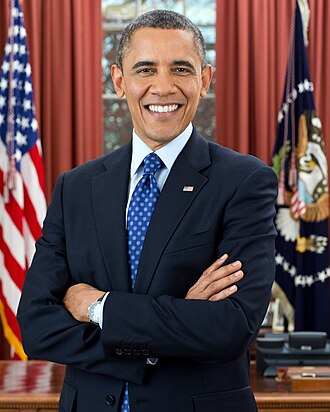 Barack Obamab. 196144th President of the United States (2009–2017)Source: Wikidata (citizenship)
 Donald Trumpb. 1946President of the United States (2017–2021; since 2025)Source: Wikidata (citizenship)
 Michael Jackson1958 – 2009American singer, songwriter, record producer, and dancer (1958–2009)Source: Wikidata (citizenship)
 Albert Einstein1879 – 1955German-born theoretical physicist (1879–1955)Source: Wikidata (citizenship)
 Ronald Reagan1911 – 2004President of the United States from 1981 to 1989 and actor (1911–2004)Source: Wikidata (citizenship)
 Abraham Lincoln1809 – 1865President of the United States from 1861 to 1865 (1809-1865)Source: Wikidata (citizenship)
 George W. Bushb. 194643rd President of the United States (2001–2009)Source: Wikidata (citizenship)
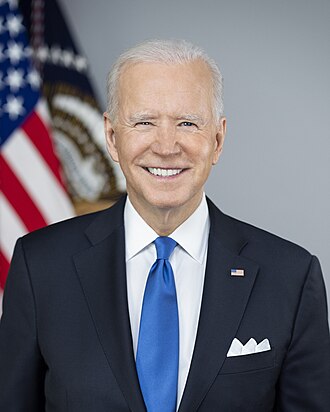 Joe Bidenb. 194246th President of the United States (2021–2025)Source: Wikidata (citizenship)
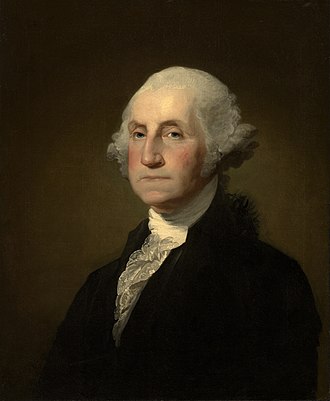 George Washington1732 – 1799Founding Father and first U.S. president (1732–1799)Source: Wikidata (citizenship)
 Thomas Edison1847 – 1931American inventor and businessman (1847–1931)Source: Wikidata (citizenship)
 Mark Twain1835 – 1910American author and humorist (1835–1910)Source: Wikidata (citizenship)
 John F. Kennedy1917 – 1963President of the United States from 1961 to 1963 (1917–1963)Source: Wikidata (citizenship)
 Martin Luther King Jr.1929 – 1968American Baptist minister and civil rights leader (1929–1968)Source: Wikidata (citizenship)
 Franklin Delano Roosevelt1882 – 1945President of the United States from 1933 to 1945 (1882–1945)Source: Wikidata (citizenship)
 Bill Gatesb. 1955American businessman, investor, and philanthropist (born 1955)Source: Wikidata (citizenship)
 Marilyn Monroe1926 – 1962American actress and model (1926–1962)Source: Wikidata (citizenship)
 Jimmy Walesb. 1966Co-founder of Wikipedia (born 1966)Source: Wikidata (citizenship)
 Steve Jobs1955 – 2011American entrepreneur; co-founder of Apple Inc. (1955–2011)Source: Wikidata (citizenship)
 Thomas Jefferson1743 – 1826Founding Father, U.S. president from 1801 to 1809 (1743–1826)Source: Wikidata (citizenship)
 Edgar Allan Poe1809 – 1849American writer and literary critic (1809–1849)Source: Wikidata (citizenship)
 Corbin Bleub. 1989American actor (born 1989)Source: Wikidata (citizenship)
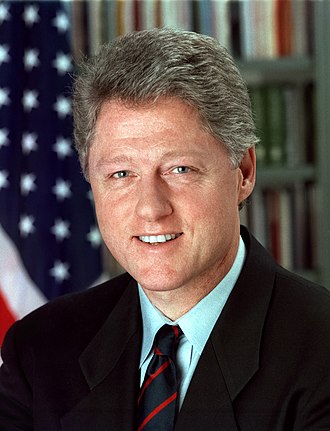 Bill Clintonb. 194642nd President of the United States (1993–2001)Source: Wikidata (citizenship)
 Neil Armstrong1930 – 2012American astronaut and lunar explorer (1930–2012)Source: Wikidata (citizenship)
 Nikola Tesla1856 – 1943Serbian-American engineer and inventor (1856-1943)Source: Wikidata (citizenship)
 Walt Disney1901 – 1966American animator, producer, director, screenwriter, voice actor and entrepreneur, founder of The Walt Disney Company (1901–1966)Source: Wikidata (citizenship)
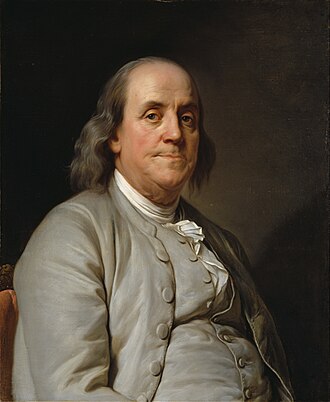 Benjamin Franklin1706 – 1790American polymath and statesman (1706–1790)Source: Wikidata (citizenship)
 Elvis Presley1935 – 1977American singer and actor (1935–1977)Source: Wikidata (citizenship)
 Ernest Hemingway1899 – 1961American author and journalist (1899–1961)Source: Wikidata (citizenship)
 Marlene Dietrich1901 – 1992German and American actress and singer (1901–1992)Source: Wikidata (citizenship)
 Elon Muskb. 1971American businessman (born 1971)Source: Wikidata (citizenship)
 Henry Ford1863 – 1947American business magnate (1863–1947)Source: Wikidata (citizenship)
 Jimmy Carter1924 – 2024President of the United States from 1977 to 1981 (1924–2024)Source: Wikidata (citizenship)
 Harry S. Truman1884 – 1972President of the United States from 1945 to 1953; politician (1884–1972)Source: Wikidata (citizenship)
 Lady Gagab. 1986American singer-songwriter and actress (born 1986)Source: Wikidata (citizenship)
 Hillary Clintonb. 1947American politician and diplomat (born 1947)Source: Wikidata (citizenship)
 George H. W. Bush1924 – 201841st President of the United States (1989–1993)Source: Wikidata (citizenship)
 Kamala Harrisb. 1964Vice President of the United States from 2021 to 2025Source: Wikidata (citizenship)
 Madonnab. 1958American singer, songwriter, and actress (born 1958)Source: Wikidata (citizenship)
 Theodore Roosevelt1858 – 191926th President of the United States from 1901 to 1909 (1858–1919)Source: Wikidata (citizenship)
 Dwight D. Eisenhower1890 – 1969President of the United States from 1953 to 1961 (1890–1969)Source: Wikidata (citizenship)
 Woodrow Wilson1856 – 192428th President of the United States (1913–1921)Source: Wikidata (citizenship)
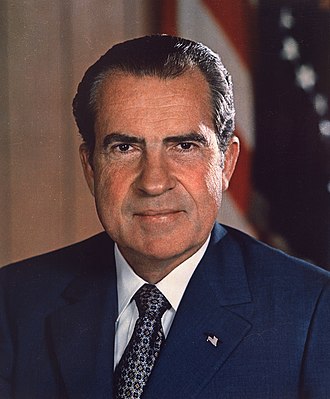 Richard Nixon1913 – 1994President of the United States from 1969 to 1974 (1913–1994)Source: Wikidata (citizenship)
 Alfred Hitchcock1899 – 1980British filmmaker (1899–1980)Source: Wikidata (citizenship)
 Noam Chomskyb. 1928American linguist and activist (born 1928)Source: Wikidata (citizenship)
 John Adams1735 – 1826Founding Father, U.S. president from 1797 to 1801 (1735–1826)Source: Wikidata (citizenship)
 Bob Dylanb. 1941American singer-songwriter (born 1941)Source: Wikidata (citizenship)
 Muhammad Ali1942 – 2016American boxer (1942–2016)Source: Wikidata (citizenship)
 Louis Armstrong1901 – 1971American jazz musician, trumpeter and singer (1901–1971)Source: Wikidata (citizenship)
Showing the 48 best-known of 200 people.
Everything that happened
Showing the 200 best-known of 318 events.
- 1636 – 1638Pequot WarNew EnglandThe Pequot War was a conflict that took place in 1636 and ended in 1638 in New England, between the Pequot nation and a joint effort of the English colonists from the Massachusetts Bay, Plymouth, and Saybrook colonies and their allies from the Narragansett and Mohegan nations. The war concluded with the decisive defeat of the Pequot.Source: Wikidata (country)
- 1688 – 1697Nine Years' WarEuropeThe Nine Years' War was a European great power conflict from 1688 to 1697 between France and the Grand Alliance. Fought primarily in Europe, related conflicts include the Williamite war in Ireland, and King William's War in North America.Source: Wikidata (country)
- 1688 – 1697King William's WarNorth AmericaKing William's War was the North American theater of the Nine Years' War (1688–1697). It was the first of six colonial wars (see the four French and Indian Wars, Father Rale's War and Father Le Loutre's War) fought between New France and New England along with their respective Native allies before France ceded its remaining mainland territories in North America east of the Mississippi River in 1763.Source: Wikidata (country)
- 16891689 Boston revoltBostonThe 1689 Boston revolt was a popular uprising on April 18, 1689, against the rule of Sir Edmund Andros, the governor of the Dominion of New England. A well-organized "mob" of provincial militia and citizens formed in the town of Boston, the capital of the dominion, and arrested dominion officials.Source: Wikidata (country)
- 1702 – 1713Queen Anne's WarNorth AmericaQueen Anne's War (1702–1713) was the second in a series of French and Indian Wars fought in North America involving the colonial empires of Great Britain, France, and Spain. In the United States, it is regarded as a standalone conflict. Elsewhere it is viewed as the American theater of the War of the Spanish Succession. It is also known as the Third Indian War. In France it was known as the Second Intercolonial War.Source: Wikidata (country)
- 1754 – 1763French and Indian WarNorth AmericaThe French and Indian War (1754–1763) was a conflict in North America between Great Britain and France, along with their respective Indigenous allies. Historians generally consider it part of the global Seven Years' War, which lasted from 1756 to 1763, although in the United States it is often viewed as a distinct conflict unassociated with any larger European war.Source: Wikidata (country)
- 1754Battle of Jumonville GlenUniontownThe Battle of Jumonville Glen, also known as the Jumonville affair, was the opening battle of the French and Indian War, fought on May 28, 1754, near present-day Hopwood and Uniontown in Fayette County, Pennsylvania.Source: Wikidata (country)
- 1755Battle of the MonongahelaFort DuquesneThe Battle of the Monongahela (also known as the Battle of Braddock's Field and the Battle of the Wilderness) took place on July 9, 1755, at the beginning of the French and Indian War at Braddock's Field in present-day Braddock, Pennsylvania, 10 miles (16 km) east of Pittsburgh.Source: Wikidata (country)
- 1757Siege of Fort William HenryLake GeorgeThe siege of Fort William Henry (3–9 August 1757, French: Bataille de Fort William Henry) was conducted by a French and Indian force led by Louis-Joseph de Montcalm against the British-held Fort William Henry.Source: Wikidata (country)
- 1758Battle of CarillonTiconderogaThe Battle of Carillon, also known as the Battle of Ticonderoga, was fought on July 8, 1758, during the French and Indian War (which was part of the Seven Years' War). It was fought near Fort Carillon (now known as Fort Ticonderoga) on the shore of Lake Champlain in the frontier area between the British colony of New York and the French colony of New France.Source: Wikidata (country)
- 1765 – 1783American RevolutionThirteen ColoniesThe American Revolution (1765–1789) was a political movement in the Thirteen Colonies of Great Britain. It began as a colonial rebellion and turned into a revolution eventually resulting into the creation of the United States, which was the outcome of the associated American Revolutionary War (1775–1783).Source: Wikidata (country)
- 1770Boston MassacreBostonThe Boston Massacre, known in Great Britain as the Incident on King Street, was a confrontation on March 5, 1770, in the prelude to the American Revolution in Boston, in what was then the colony of the Province of Massachusetts Bay.Source: Wikidata (country)
- 1775Battle of Bunker HillCharlestownThe Battle of Bunker Hill was fought on June 17, 1775, during the siege of Boston in the first stage of the American Revolutionary War. The battle is named after Bunker Hill in Charlestown, Massachusetts, which was peripherally involved. It was the original objective of both the colonial and British troops, though the majority of combat took place on the adjacent hill, which became known as Breed's Hill.Source: Wikidata (country)
- 1775Battles of Lexington and ConcordMiddlesex CountyThe Battles of Lexington and Concord on April 19, 1775, were the first major military actions between the British Army and Patriot militias from British America's Thirteen Colonies during the American Revolutionary War.Source: Wikidata (country)
- 1775Capture of Fort TiconderogaTiconderogaThe capture of Fort Ticonderoga occurred during the American Revolutionary War on May 10, 1775, when a small force of Green Mountain Boys led by Ethan Allen and Colonel Benedict Arnold surprised and captured the fort's small British garrison.Source: Wikidata (country)
- 1775 – 1776Siege of BostonBostonThe siege of Boston (April 19, 1775 – March 17, 1776) was the opening phase of the American Revolutionary War. In the siege, American patriot militia led by newly-installed Continental Army commander George Washington prevented the British Army, which was garrisoned in Boston, from moving by land. Both sides faced resource, supply, and personnel challenges during the siege.Source: Wikidata (country)
- 1776US Declaration of IndependencePhiladelphiaThirteen American colonies declare independence from Britain.Source: Wikidata (country)
- 1776Battle of Fort WashingtonNew York CityThe Battle of Fort Washington was fought in New York on November 16, 1776, during the American Revolutionary War between the United States and Great Britain. It was a British victory that gained the surrender of the remnant of the garrison of Fort Washington near the north end of Manhattan. It was one of the worst Patriot defeats of the war.Source: Wikidata (country)
- 1776Battle of Long IslandBrooklynThe Battle of Long Island, also known as the Battle of Brooklyn and the Battle of Brooklyn Heights, was an action of the American Revolutionary War fought on August 27, 1776, at and near the western edge of Long Island in present-day Brooklyn. The British defeated the Continental Army and gained access to the strategically important Port of New York, which they held for the rest of the war.Source: Wikidata (country)
- 1776Battle of TrentonTrentonThe Battle of Trenton was a short but pivotal American Revolutionary War battle on the morning of December 26, 1776, in Trenton, New Jersey. After General George Washington's crossing of the Delaware River north of Trenton the previous night, Washington led the main body of the Continental Army against Hessian auxiliaries garrisoned at Trenton.Source: Wikidata (country)
- 1776Battle of Valcour IslandValcour IslandThe Battle of Valcour Island, also known as the Battle of Valcour Bay, was a naval engagement that took place on October 11, 1776, on Lake Champlain. The main action took place in Valcour Bay, a narrow strait between the New York mainland and Valcour Island. The battle is generally regarded as one of the first naval battles of the American Revolutionary War, and one of the first fought by the Continental Navy.Source: Wikidata (country)
- 1776Battle of White PlainsWhite PlainsThe Battle of White Plains took place during the New York and New Jersey campaign of the American Revolutionary War on October 28, 1776, near White Plains, New York. Following the retreat of George Washington's Continental Army northward from New York City, British General William Howe landed troops in Westchester County, intending to cut off Washington's escape route.Source: Wikidata (country)
- 1777Battle of BrandywineChadds Ford TownshipThe Battle of Brandywine, also known as the Battle of Brandywine Creek, was fought between the American Continental Army of General George Washington and the British Army of General Sir William Howe on September 11, 1777, as part of the American Revolutionary War (1775–1783). The forces met near Chadds Ford, Pennsylvania. More troops fought at Brandywine than at any other battle of the American Revolution.Source: Wikidata (country)
- 1777Battle of GermantownGermantownThe Battle of Germantown was a major engagement in the Philadelphia campaign of the American Revolutionary War. It was fought on October 4, 1777, at Germantown, Pennsylvania, between the British Army led by General Sir William Howe and the American Continental Army under General George Washington.Source: Wikidata (country)
- 1777Battle of PrincetonPrinceton BattlefieldThe Battle of Princeton was a battle of the American Revolutionary War, fought near Princeton, New Jersey on January 3, 1777, and ending in a small victory for the Colonials. General Lord Cornwallis had left 1,400 British troops under the command of Lieutenant Colonel Charles Mawhood in Princeton.Source: Wikidata (country)
- 1777Battles of SaratogaStillwaterThe Battles of Saratoga were fought September 19 and October 7, 1777 over the same ground by the American Continental Army and the British Army near Saratoga, New York during the American Revolutionary War. The second battle ended with a decisive American victory, and the surrender of the British army there. The outcome greatly affected the course of the war, persuading France to enter the war as an American ally.Source: Wikidata (country)
- 1778Battle of MonmouthFreeholdThe Battle of Monmouth, also known as the Battle of Monmouth Court House, was fought near the Village of Monmouth Court House in modern-day Freehold Borough, New Jersey and Manalapan, on June 28, 1778, during the American Revolutionary War. It pitted the Continental Army, commanded by General George Washington, against the British Army in North America, commanded by General Sir Henry Clinton.Source: Wikidata (country)
- 1780Battle of CamdenCamdenThe Battle of Camden, also known as the Battle of Camden Court House, was fought on August 16, 1780, as part of the Southern theater of the American Revolutionary War. A British army of 2,100 regulars and militia under Lieutenant-general Lord Cornwallis engaged an American army of 4,000 regulars and militia under Major General Horatio Gates four miles north of Camden, South Carolina.Source: Wikidata (country)
- 1781Siege of YorktownYorktownThe Siege of Yorktown, also known as the Battle of Yorktown and the surrender at Yorktown, took place in 1781 and was the final major land engagement of the American Revolutionary War.Source: Wikidata (country)
- 1781Battle of CowpensCowpensThe Battle of Cowpens was a military engagement of the American Revolutionary War fought on January 17, 1781, near the town of Cowpens, South Carolina. An American army of nearly 2,000 regulars and militia under Brigadier general Daniel Morgan defeated a force of about 1,000 British and Loyalist troops commanded by Lieutenant-colonel Banastre Tarleton.Source: Wikidata (country)
- 1785 – 1795Northwest Indian WarNorthwest TerritoryThe Northwest Indian War was an armed conflict for control of the Northwest Territory between the United States and a loose confederation of Native American peoples who called themselves the United Indian Nations but are better known today as the Northwestern Confederacy. The United States Army considers the conflict to be the first of the American Indian Wars.Source: Wikidata (country of the location)
- 1786 – 1787Shays's RebellionUnited StatesShays's Rebellion was an armed uprising in Western Massachusetts and Worcester in response to a debt crisis among the citizenry and in opposition to the state government's increased efforts to collect taxes on both individuals and their trades. The fighting took place in the areas around Springfield during 1786 and 1787.Source: Wikidata (country)
- 1794Jay TreatyLondonThe Treaty of Amity, Commerce, and Navigation, Between His Britannic Majesty and the United States of America, commonly known as the Jay Treaty, and also as Jay's Treaty, was a 1794 treaty between the United States and Great Britain that averted war, resolved issues remaining since the 1783 Treaty of Paris (which ended the American Revolutionary War), and facilitated ten years of peaceful trade between Americans and…Source: Wikidata (country)
- 1811Battle of TippecanoeBattle GroundThe Battle of Tippecanoe ( TIP-ə-kə-NOO) was fought on November 7, 1811, in Battle Ground, Indiana, between American forces led by then Governor William Henry Harrison of the Indiana Territory and tribal forces associated with Shawnee leader Tecumseh and his brother Tenskwatawa (commonly known as "The Prophet"), leaders of a confederacy of various tribes who opposed European-American settlement of the American…Source: Wikidata (country)
- 1812 – 1815War of 1812Atlantic OceanThe War of 1812 was a conflict initiated by the United States against the United Kingdom and its allies fought mainly in North America and at sea during the wider Napoleonic Wars. The United States declared war on Britain on 18 June 1812.Source: Wikidata (country)
- 1813 – 1814Creek WarSouthern United StatesThe Creek War (also the Red Stick War or the Creek Civil War) was a regional conflict between opposing Native American factions, European powers, and the United States during the early 19th century. The Creek War began as a conflict within the tribes of the Muscogee, but the United States quickly became involved.Source: Wikidata (country of the location)
- 1814Battle of BaltimoreBaltimoreThe Battle of Baltimore took place between British and American forces on September 12–14, 1814, during the War of 1812. Defending American forces repulsed sea and land invasions off the busy major port city of Baltimore, Maryland, by British forces preventing the United States' third largest city at the time from falling to British forces and ending the British Chesapeake campaign.Source: Wikidata (country)
- 1815Battle of New OrleansJean Lafitte National Historical Park and PreserveThe Battle of New Orleans was fought on January 8, 1815, between the British Army under Major General Sir Edward Pakenham and the United States Army under Brevet Major General Andrew Jackson, roughly 5 miles (8 km) southeast of the French Quarter of New Orleans, in the current suburb of Chalmette, Louisiana.Source: Wikidata (country)
- 1821Adams–Onís TreatyWashington, D.C.The Adams–Onís Treaty was an agreement between Spain and the United States, signed February 22, 1819, by John Quincy Adams and Luis de Onís respectively. The United States acquired Florida while renouncing claims to Spanish Texas and establishing its first transcontinental boundary.Source: Wikidata (country)
- 1832Black Hawk WarIllinoisThe Black Hawk War was a conflict between the United States and Native Americans led by Black Hawk, a Sauk leader. The war erupted after Black Hawk and a group of Sauks, Meskwakis (Fox), and Kickapoos, known as the "British Band", crossed the Mississippi River, to the U.S. state of Illinois, from Iowa Indian Territory in April 1832.Source: Wikidata (country)
- 1835Battle of GonzalesGonzalesThe Battle of Gonzales was the first military engagement of the Texas Revolution. It was fought near Gonzales, Texas, on October 2, 1835, between rebellious Texian settlers and a detachment of Mexican Army soldiers. In 1831, Green DeWitt asked the Mexican authorities to lend the Gonzales colonists a cannon to help protect them from frequent Comanche raids.Source: Wikidata (country)
- 1835 – 1836Toledo WarMichigan TerritoryThe Toledo War (1835–1836), also known as the Michigan–Ohio War or Ohio–Michigan War, was a boundary dispute between the state of Ohio and the adjoining Michigan Territory over the Toledo Strip. Control of the Maumee River's mouth was seen by both parties as a valuable economic asset, due to the inland shipping opportunities that it offered and the good farmland to the west.Source: Wikidata (country of the location)
- 1836Battle of San JacintoSpring BranchThe Battle of San Jacinto (Spanish: Batalla de San Jacinto), fought on April 21, 1836, in present-day La Porte and Deer Park, Texas, was the final and decisive battle of the Texas Revolution. Led by General Sam Houston, the Texian Army engaged and defeated General Antonio López de Santa Anna's Mexican army in a fight that lasted just 18 minutes.Source: Wikidata (country)
- 1843Treaty of the BogueBogueThe Treaty of the Bogue (Chinese: 虎門條約) was an unequal treaty between the United Kingdom and China, concluded in October 1843 to supplement the previous Treaty of Nanking. The treaty's key provisions granted extraterritoriality and most favoured nation status to Britain.Source: Wikidata (country of the location)
- 1846 – 1848Mexican–American WarMexicoThe Mexican–American War, also known in the United States as the Mexican War and in Mexico as the United States intervention in Mexico, (April 25, 1846 – February 2, 1848) was an invasion of Mexico by the United States.Source: Wikidata (country)
- 1846Oregon TreatyUnited StatesThe Oregon Treaty between the United Kingdom and the United States was signed on June 15, 1846, in Washington, D.C. The treaty brought an end to the Oregon boundary dispute by settling competing American and British claims to the Oregon Country through partition. The area had been jointly occupied by both Britain and the U.S. since the Treaty of 1818.Source: Wikidata (country)
- 1848Seneca Falls ConventionSeneca FallsThe Seneca Falls Convention was the first women's rights convention. Its organizers advertised it as "a convention to discuss the social, civil, and religious condition and rights of woman". Held in the Wesleyan Chapel of the town of Seneca Falls, New York, it spanned two days over July 19–20, 1848.Source: Wikidata (country of the location)
- 1849 – 1924Apache WarsSouthwestern United StatesThe Apache Wars were a series of armed conflicts between the United States Army and various Apache tribal confederations fought in the southwest between 1849 and 1886, though minor hostilities continued until as late as 1924. After the Mexican–American War in 1846, the United States annexed conflicted territory from Mexico which was the home of both settlers and Apache tribes.Source: Wikidata (country)
- 1853Gadsden PurchaseUnited StatesThe Gadsden Purchase (Spanish: Venta de La Mesilla, lit. 'La Mesilla sale'), also known as the Treaty of Mesilla, is the acquisition of a 29,640-square-mile (76,800 km2) region of present-day southern Arizona and southwestern New Mexico by the United States from Mexico. The first draft was signed on December 31, 1853, by James Gadsden, US Minister to Mexico, and by Antonio López de Santa Anna, president of Mexico.Source: Wikidata (country)
- 1857 – 1858Utah WarUtah TerritoryThe Utah War (1857–1858), also known as the Utah Expedition, the Utah Campaign, Buchanan's Blunder, the Mormon War, or the Mormon Rebellion, was an armed confrontation between the armed forces of the US government and the Mormon settlers in the Utah Territory. The confrontation lasted from May 1857 to July 1858.Source: Wikidata (country)
- 1859Pig WarSan Juan IslandsThe Pig War was a confrontation in 1859 between the United States and the United Kingdom over the British–U.S. border in the San Juan Islands, between Vancouver Island (present-day Canada) and the Washington Territory (present-day State of Washington).Source: Wikidata (country of the location)
- 1861Battle of Fort SumterFort SumterThe Battle of Fort Sumter (also the Attack on Fort Sumter or the Fall of Fort Sumter) (April 12–13, 1861) was the bombardment of Fort Sumter near Charleston, South Carolina, by the South Carolina militia. It ended with the surrender of the fort by the United States Army, beginning the American Civil War.Source: Wikidata (country)
- 1861Battle of Wilson's CreekGreene CountyThe Battle of Wilson's Creek, also known as the Battle of Oak Hills, was the first major battle of the Trans-Mississippi Theater of the American Civil War. It was fought on August 10, 1861, near Springfield, Missouri.Source: Wikidata (country)
- 1861First Battle of Bull RunFairfax CountyThe First Battle of Bull Run, called the Battle of First Manassas by Confederate forces, was the first major battle of the American Civil War. The battle was fought on July 21, 1861, in Prince William County, Virginia, just north of what is now the city of Manassas and about thirty miles west-southwest of Washington, D.C.Source: Wikidata (country)
- 1862Battle of AntietamWashington CountyThe Battle of Antietam ( an-TEE-təm), also called the Battle of Sharpsburg (particularly in the Southern United States) took place during the American Civil War on September 17, 1862, near Antietam Creek and Sharpsburg, Maryland, between the Army of Northern Virginia, led by Confederate General Robert E. Lee, and the Army of the Potomac, led by Union Major General George B. McClellan.Source: Wikidata (country)
- 1862Battle of Fort DonelsonFort DonelsonThe Battle of Fort Donelson was fought from February 11–16, 1862, in the Western Theater of the American Civil War. The Union capture of the Confederate fort near the Tennessee–Kentucky border opened the Cumberland River, an important avenue for the invasion of the South. The Union's success also elevated Brig. Gen. Ulysses S.Source: Wikidata (country)
- 1862Battle of Fort HenryStewart CountyThe Battle of Fort Henry was fought on February 6, 1862, in Stewart County, Tennessee, during the American Civil War. It was the first important victory for the Union and Brig. Gen. Ulysses S. Grant in the Western Theater.Source: Wikidata (country)
- 1862Battle of FredericksburgSpotsylvania CountyThe Battle of Fredericksburg was fought December 11–15, 1862, in and around Fredericksburg, Virginia, in the eastern theater of the American Civil War. The combat between the Union Army of the Potomac commanded by Maj. Gen. Ambrose Burnside and the Confederate Army of Northern Virginia under Gen. Robert E.Source: Wikidata (country)
- 1862Battle of Hampton RoadsHampton RoadsThe Battle of Hampton Roads, also referred to as the Battle of the Monitor and Merrimack or the Battle of Ironclads, was a naval battle during the American Civil War.Source: Wikidata (country)
- 1862Battle of Seven PinesHenrico CountyThe Battle of Seven Pines, also known as the Battle of Fair Oaks or Fair Oaks Station, took place on May 31 and June 1, 1862, in Henrico County, Virginia, as part of the Peninsula campaign of the American Civil War.Source: Wikidata (country)
- 1862Battle of ShilohHardin CountyThe Battle of Shiloh, also known as the Battle of Pittsburg Landing, was a major battle in the American Civil War fought on April 6–7, 1862. The fighting took place in southwestern Tennessee, which was part of the war's western theater. The battlefield is located between a small, undistinguished church named Shiloh and Pittsburg Landing on the Tennessee River.Source: Wikidata (country)
- 1862Dakota War of 1862MinnesotaThe Dakota War of 1862, also known as the U.S.-Dakota War of 1862, the Sioux Uprising, the Dakota Uprising, the Sioux Outbreak of 1862, the Dakota Conflict, or Little Crow's War, was an armed conflict between the United States and several eastern bands of Dakota collectively known as the Santee Sioux.Source: Wikidata (country)
- 1862Jackson's Valley campaignShenandoah ValleyJackson's Valley campaign, also known as the Shenandoah Valley campaign of 1862, was Confederate Maj. Gen. Thomas J. "Stonewall" Jackson's spring 1862 campaign through the Shenandoah Valley in Virginia during the American Civil War.Source: Wikidata (country)
- 1862Northern Virginia campaignVirginiaThe Northern Virginia Campaign, also known as the Second Bull Run Campaign or Second Manassas Campaign, was a series of battles fought in Virginia during August and September 1862 in the eastern theater of the American Civil War. Confederate general Robert E. Lee followed up his successes of the Seven Days Battles in the Peninsula campaign by moving north toward Washington, D.C., and defeating Maj. Gen.Source: Wikidata (country)
- 1862Peninsula campaignVirginia PeninsulaThe Peninsula campaign (also known as the Peninsular campaign) of the American Civil War was a major Union operation launched in southeastern Virginia from March to July 1862, the first large-scale offensive in the Eastern Theater. The operation, commanded by Major General George B.Source: Wikidata (country)
- 1862Second Battle of Bull RunPrince William CountyThe Second Battle of Bull Run or Battle of Second Manassas was fought August 28–30, 1862, in Prince William County, Virginia, as part of the American Civil War. It was the culmination of the Northern Virginia campaign waged by Confederate Gen. Robert E. Lee's Army of Northern Virginia against Union Maj. Gen.Source: Wikidata (country)
- 1862Seven Days BattlesHanover CountyThe Seven Days Battles were a series of seven battles over seven days from June 25 to July 1, 1862, near Richmond, Virginia, during the American Civil War. Confederate General Robert E. Lee drove the Union army's Army of the Potomac, commanded by Maj. Gen. George B. McClellan, away from Richmond and into a retreat down the Virginia Peninsula.Source: Wikidata (country)
- 1862 – 1863Vicksburg campaignVicksburgThe Vicksburg campaign was a series of maneuvers and battles in the Western Theater of the American Civil War directed against Vicksburg, Mississippi, a fortress city that dominated the last Confederate-controlled section of the Mississippi River. The Union Army of the Tennessee under Major General Ulysses S. Grant gained control of the river by capturing this stronghold and defeating Lieutenant General John C.Source: Wikidata (country)
- 1863Battle of GettysburgAdams CountyThe Battle of Gettysburg (locally ) (July 1–3, 1863) was fought in the American Civil War between the Union and Confederate armies in and around Gettysburg, Pennsylvania. The battle, won by the Union, is widely considered the Civil War's turning point, leading to an ultimate victory of the Union and the preservation of the nation.Source: Wikidata (country)
- 1863Gettysburg AddressGettysburgThe Gettysburg Address is a dedication speech delivered by Abraham Lincoln, the 16th U.S. president, following the Battle of Gettysburg during the American Civil War. The speech has come to be viewed as one of the most famous, enduring, and historically significant speeches in American history.Source: Wikidata (country)
- 1863Battle of ChancellorsvilleSpotsylvania CountyThe Battle of Chancellorsville, April 30 – May 6, 1863, was a major battle of the American Civil War (1861–1865), and the principal engagement of the Chancellorsville campaign.Source: Wikidata (country)
- 1863Battle of ChickamaugaCatoosa CountyThe Battle of Chickamauga, fought on September 18–20, 1863, between the United States Army, or Union Army, and Confederate forces in the American Civil War, marked the end of a U.S. Army offensive, the Chickamauga Campaign, in southeastern Tennessee and northwestern Georgia.Source: Wikidata (country)
- 1863Chattanooga campaignChattanoogaThe Chattanooga campaign was a series of maneuvers and battles in October and November 1863, during the American Civil War. Following the defeat of Maj. Gen. William S. Rosecrans's Union Army of the Cumberland at the Battle of Chickamauga in September, the Confederate Army of Tennessee under Gen. Braxton Bragg besieged Rosecrans and his men by occupying key high terrain around Chattanooga, Tennessee. Maj. Gen.Source: Wikidata (country)
- 1863Pickett's ChargeGettysburgPickett's Charge was an infantry assault on July 3, 1863, during the Battle of Gettysburg. It was ordered by Confederate General Robert E. Lee as part of his plan to break through Union lines and achieve a decisive victory in the North. The charge was named after Major General George Pickett, one of the Confederate Army's division commanders.Source: Wikidata (country)
- 1863Siege of VicksburgVicksburgThe siege of Vicksburg (May 18 – July 4, 1863) was the final major military action in the Vicksburg campaign of the American Civil War. In a series of maneuvers, Union major general Ulysses S. Grant and his Army of the Tennessee crossed the Mississippi River and drove the Confederate Army of Mississippi, led by Lieutenant General John C.Source: Wikidata (country)
- 1864Atlanta campaignNorth GeorgiaThe Atlanta campaign was a series of battles fought in the western theater of the American Civil War throughout northwest Georgia and the area around Atlanta during the summer of 1864. Union Major General William T. Sherman invaded Georgia from the vicinity of Chattanooga, Tennessee, beginning in May 1864, opposed by the Confederate general Joseph E. Johnston.Source: Wikidata (country)
- 1864Battle of AtlantaFulton CountyThe Battle of Atlanta took place during the Atlanta campaign of the American Civil War on July 22, 1864, just southeast of Atlanta, Georgia. Continuing their summer campaign to seize the important rail and supply hub of Atlanta, Union forces commanded by William T. Sherman overwhelmed and defeated Confederate forces defending the city under John B. Hood. Union Major General James B.Source: Wikidata (country)
- 1864Battle of Cold HarborHanover CountyThe Battle of Cold Harbor was fought during the American Civil War near Mechanicsville, Virginia, from May 31 to June 12, 1864, with the most significant fighting occurring on June 3. It was one of the final battles of Union Lt. Gen. Ulysses S. Grant's Overland Campaign. Thousands of Union soldiers were killed or wounded in the frontal assault of June 3 against the fortified positions of Confederate Gen. Robert E.Source: Wikidata (country)
- 1864Battle of NashvilleNashvilleThe Battle of Nashville was a two-day battle in the Franklin–Nashville campaign that represented the end of large-scale fighting west of the coastal states in the American Civil War. It was fought at Nashville, Tennessee, on December 15–16, 1864, between the Confederate Army of Tennessee under Lieutenant General John Bell Hood and the Union Army of the Cumberland (Dept.Source: Wikidata (country)
- 1864Battle of Spotsylvania Court HouseSpotsylvania CountyThe Battle of Spotsylvania Court House, sometimes more simply referred to as the Battle of Spotsylvania (or the 19th-century spelling Spottsylvania), was the second major battle in Lt. Gen. Ulysses S. Grant and Maj. Gen. George G. Meade's 1864 Overland Campaign of the American Civil War. Following the bloody but inconclusive Battle of the Wilderness, Grant's army disengaged from Confederate General Robert E.Source: Wikidata (country)
- 1864Battle of the WildernessSpotsylvania CountyThe Battle of the Wilderness was fought on May 5–7, 1864, during the American Civil War. It was the first battle of Lieutenant General Ulysses S. Grant's 1864 Virginia Overland Campaign against General Robert E. Lee and the Confederate Army of Northern Virginia. The fighting occurred in a wooded area near Locust Grove, Virginia, about 20 miles (32 km) west of Fredericksburg.Source: Wikidata (country)
- 1864Sand Creek massacreSand Creek Massacre National Historic SiteThe Sand Creek massacre (also known as the Chivington massacre, the battle of Sand Creek or the massacre of Cheyenne Indians) was a massacre of Cheyenne and Arapaho people by the U.S. Army in the American Indian Wars that occurred on November 29, 1864, when a 675-man force of the Third Colorado Cavalry under the command of U.S.Source: Wikidata (country)
- 1864Sherman's March to the SeaEastern GeorgiaSherman's March to the Sea, officially known as the Savannah campaign, or simply Sherman's March, was a military campaign of the American Civil War conducted through Georgia from November 15 until December 21, 1864, by United States Army major general William T. Sherman.Source: Wikidata (country)
- 1864 – 1865Siege of PetersburgPetersburgThe Richmond–Petersburg campaign was a series of battles around Petersburg, Virginia, fought from June 9, 1864, to March 25, 1865, during the American Civil War. Although it is more popularly known as the siege of Petersburg, it was not a classic military siege, in which a city is encircled with fortifications blocking all routes of ingress and egress, nor was it strictly limited to actions against Petersburg.Source: Wikidata (country)
- 1865Assassination of Abraham LincolnFord's TheatreOn April 14, 1865, Abraham Lincoln, the 16th president of the United States, was shot in the head while attending a play at Ford's Theatre in Washington, D.C.. He died the following day, six weeks into his second term and a month before the conclusion of the American Civil War.Source: Wikidata (country)
- 1865Battle of Appomattox Court HouseAppomattox Court House National Historical ParkThe Battle of Appomattox Court House, fought in Appomattox County, Virginia, on the morning of April 9, 1865, was one of the last, and ultimately one of the most consequential, battles of the American Civil War (1861–1865). It was the final push of Confederate general in chief Robert E.Source: Wikidata (country)
- 1865Battle of Five ForksPetersburgThe Battle of Five Forks was fought on April 1, 1865, southwest of Petersburg, Virginia, around the road junction of Five Forks, Dinwiddie County, at the end of the Siege of Petersburg, near the conclusion of the American Civil War.Source: Wikidata (country)
- 1867Alaska PurchaseWashington, D.C.The Alaska Purchase in 1867 resulted in the transfer of Russian America to the United States for $7.2 million (equivalent to $132 million in 2024). On April 9 of that year, the United States Senate ratified a bilateral treaty that had been signed on March 30, and American sovereignty became legally effective across the territory on October 18.Source: Wikidata (country)
- c. 1870 – 1900Gilded AgeUnited StatesIn United States history, the Gilded Age is the period from about the late 1870s to the late 1890s, which occurred between the Reconstruction era and the Progressive Era. It was named by 1920s historians after Mark Twain's 1873 novel The Gilded Age: A Tale of Today.Source: Wikidata (country)
- 1876Battle of the Little BighornLittle Bighorn RiverThe 1876 Battle of the Little Bighorn, commonly referred to as Custer's Last Stand and known to the Lakota and other Plains Indians as the Battle of the Greasy Grass, was an armed engagement between combined forces of the Lakota Sioux, Northern Cheyenne, and Arapaho tribes and the 7th Cavalry Regiment of the United States Army.Source: Wikidata (country)
- 1876 – 1877Great Sioux War of 1876Montana TerritoryThe Great Sioux War of 1876, also known as the Black Hills War, was a series of battles and negotiations that occurred in 1876 and 1877 in an alliance of Lakota Sioux and Northern Cheyenne against the United States. The cause of the war was the desire of the US government to obtain ownership of the Black Hills.Source: Wikidata (country)
- 1884International Meridian ConferenceWashington, D.C.The International Meridian Conference was a conference held in October 1884 in Washington, D.C., in the United States, to determine a prime meridian for international use. The conference was held at the request of U.S. president Chester A. Arthur. The subject to discuss was the choice of "a meridian to be employed as a common zero of longitude and standard of time reckoning throughout the world".Source: Wikidata (country)
- 1886Haymarket affairHaymarket SquareThe Haymarket affair was a bombing that took place at a labor demonstration on May 4, 1886, at Haymarket Square in Chicago. The rally began peacefully in support of workers striking for an eight-hour work day; it was held the day after a May 3 rally at a McCormick Harvesting Machine Company plant on the West Side of Chicago, during which police killed two strikers by opening fire at the crowd as it surged to the…Source: Wikidata (country)
- 1890Wounded Knee MassacreWounded Knee CreekThe Wounded Knee Massacre, also known as the Battle of Wounded Knee, was an 1890 armed conflict between Native Americans and the United States Army. It was part of the U.S. Army’s Pine Ridge Campaign. Between 250 and 300 Lakota people were killed, and 51 were wounded (four men and 47 women and children, some of whom died later). Twenty-five U.S.Source: Wikidata (country)
- 1901Assassination of William McKinleyTemple of MusicWilliam McKinley, the 25th president of the United States, was shot on the grounds of the Pan-American Exposition in the Temple of Music in Buffalo, New York, on September 6, 1901, six months into his second term. He was shaking hands with the public when an anarchist, Leon Czolgosz, shot him twice in the abdomen. McKinley died on September 14 of gangrene caused by the wounds.Source: Wikidata (country)
- 1903Hay–Bunau-Varilla TreatyWashington, D.C.The Hay–Bunau-Varilla Treaty (Spanish: Tratado Hay-Bunau Varilla) was a treaty signed on November 18, 1903, by the United States and Panama, which established the Panama Canal Zone and the subsequent construction of the Panama Canal. It was named after its two primary negotiators, Philippe-Jean Bunau-Varilla, the French diplomatic representative of Panama, and United States secretary of state John Hay.Source: Wikidata (country)
- 1903Iroquois Theatre fireColonial TheatreThe Iroquois Theatre fire was a catastrophic building fire in Chicago, Illinois, that broke out on December 30, 1903, during a performance attended by 1,700 people. The fire caused 602 deaths and 250 non-fatal injuries. It ranks as the worst theater fire in the United States, surpassing the carnage of the Brooklyn Theatre fire of 1876, which claimed at least 278 lives.Source: Wikidata (country)
- 19061906 San Francisco earthquakeSan FranciscoA magnitude 7.9 earthquake struck the coast of Northern California at 05:12 am Pacific Standard Time on Wednesday, April 18, 1906. With a maximum Mercalli intensity of XI (Extreme), it created high-intensity shaking from Eureka on the North Coast to the Salinas Valley, an agricultural region to the south of the San Francisco Bay Area.Source: Wikidata (country)
- 1911Triangle Shirtwaist Factory fireBrown BuildingThe Triangle Shirtwaist Factory fire occurred in the Greenwich Village neighborhood of Manhattan, a borough of New York City, on Saturday, March 25, 1911. The fire was the deadliest industrial disaster in the history of the city, and one of the deadliest in U.S. history.Source: Wikidata (country)
- 1914Ludlow MassacreUnited StatesThe Ludlow Massacre was a mass killing perpetrated by anti-striker militia during the Colorado Coalfield War. Soldiers from the Colorado National Guard and private guards employed by Colorado Fuel and Iron Company (CF&I) attacked a tent colony of roughly 1,200 striking coal miners and their families in Ludlow, Colorado, on April 20, 1914. Approximately 21 people were killed, primarily miners' wives and children.Source: Wikidata (country)
- 1919Great Molasses FloodBostonThe Great Molasses Flood, also known as the Boston Molasses Disaster, was a disaster that occurred on January 15, 1919, in the North End neighborhood of Boston, Massachusetts.Source: Wikidata (country)
- 1921 – 1922Washington Naval TreatyWashington, D.C.The Washington Naval Treaty, also known as the Five-Power Treaty, was signed during 1922 among the major Allies of World War I, who agreed to prevent an arms race by limiting naval construction.Source: Wikidata (country)
- 1929Wall Street CrashNew YorkThe US stock market collapses, and the Great Depression spreads around the world.Source: Wikidata (country)
- 1929Saint Valentine's Day MassacreLincoln ParkThe Saint Valentine's Day Massacre was the murder of seven members and associates of Chicago's North Side Gang on Saint Valentine's Day 1929. The men were gathered at a Lincoln Park, Chicago, garage when between four and six men entered, two of whom were disguised as police officers.Source: Wikidata (country)
- 1930 – 1931Castellammarese WarNew York CityThe Castellammarese War (Italian pronunciation: [kaˌstɛllammaˈreːze, -eːse]) was a bloody power struggle for control of the American Mafia between partisans of Joe "The Boss" Masseria and Salvatore Maranzano in New York City from February 26, 1930, until April 15, 1931. The feud was named after the Sicilian town of Castellammare del Golfo, Maranzano's birthplace.Source: Wikidata (country)
- 1930London Naval TreatyLondonThe London Naval Treaty, officially the Treaty for the Limitation and Reduction of Naval Armament, was an agreement between the United Kingdom, Japan, France, Italy, and the United States that was signed on 22 April 1930.Source: Wikidata (country)
- 1935Roerich PactWashington, D.C.The Treaty on the Protection of Artistic and Scientific Institutions and Historic Monuments or Roerich Pact is an inter-American treaty. The most important idea of the Roerich Pact is the legal recognition that the defense of cultural objects is more important than the use or destruction of that culture for military purposes, and the protection of culture always has precedence over any military necessity.Source: Wikidata (country)
- 1937Hindenburg disasterNaval Air Engineering Station LakehurstThe Hindenburg disaster was a airship accident that occurred on May 6, 1937, in Manchester Township, New Jersey, United States. The LZ 129 Hindenburg (Luftschiff Zeppelin #129; Registration: D-LZ 129) was a Nazi German commercial passenger-carrying rigid airship, the lead ship of the Hindenburg class, the longest class of flying machine and the largest airship by envelope volume.Source: Wikidata (country)
- 1939 – 1945Battle of the AtlanticAtlantic OceanThe Battle of the Atlantic, the longest continuous military campaign in World War II, ran from 1939 to the defeat of Nazi Germany in 1945, covering a major part of the naval history of World War II. At its core was the Allied naval blockade of Germany, announced the day after the declaration of war, and Germany's subsequent counterblockade. The campaign peaked from mid-1940 to the end of 1943.Source: Wikidata (country of the location)
- 1941Attack on Pearl HarborPearl HarborThe Empire of Japan launched a surprise military attack on the US Pacific Fleet at its naval base at Pearl Harbor in Oahu, Hawaii, on December 7, 1941. At the time, the US was a neutral country in World War II. The air raid on Pearl Harbor, which was launched from aircraft carriers, prompted the US to declare war on Japan the next day.Source: Wikidata (country)
- 1941 – 1942Arcadia ConferenceWashington, D.C.The First Washington Conference, also known as the Arcadia Conference (ARCADIA was the code name used for the conference), was held in Washington, D.C., from December 22, 1941, to January 14, 1942. President Roosevelt of the United States and Prime Minister Churchill of the United Kingdom attended the conference.Source: Wikidata (country)
- 1941Battle of GuamGuamThe Battle of Guam was an engagement during the Pacific War in World War II that took place from 8 to 10 December 1941 on Guam in the Mariana Islands between Japan and the United States. The American garrison was defeated by Japanese forces on 10 December, which resulted in an occupation until the Second Battle of Guam in 1944.Source: Wikidata (country)
- 1941Battle of Wake IslandWake IslandThe Battle of Wake Island was a battle of the Pacific campaign of World War II, fought on Wake Island. The assault was one of five simultaneous assaults on American naval and air bases in the Pacific on the morning of 8 December 1941 (7 December in Hawaii), with the Battle of Wake Island ending on 23 December, with the surrender of American forces to the Empire of Japan.Source: Wikidata (country)
- 1942Battle of MidwayMidway AtollThe Battle of Midway was a major naval battle in the Pacific Theater of World War II that took place on 4–7 June 1942, six months after Japan's attack on Pearl Harbor and one month after the Battle of the Coral Sea. The Japanese Combined Fleet under the command of Isoroku Yamamoto suffered a decisive defeat by two carrier strike groups of the U.S.Source: Wikidata (country)
- 1942Battle of Los AngelesLos AngelesThe Battle of Los Angeles, also known as the Great Los Angeles Air Raid, is the name given by contemporary sources to a rumored attack on the continental United States by Imperial Japan and the subsequent anti-aircraft artillery barrage which took place from late February 24, to early February 25, 1942, over Los Angeles, California.Source: Wikidata (country)
- 1942Declaration by United NationsWashington, D.C.The Declaration by United Nations was the main treaty that formalized the Allies of World War II and was signed by 47 national governments between 1942 and 1945. On 1 January 1942, during the Arcadia Conference in Washington D.C., the Allied "Big Four"—the United States, the United Kingdom, the Soviet Union, and China—signed a short document which later came to be known as the United Nations Declaration, and the day…Source: Wikidata (country)
- 1943Battle of AttuAttu IslandThe Battle of Attu (codenamed Operation Landcrab), which took place on 11–30 May 1943, was fought between forces of the United States, aided by Canadian reconnaissance and fighter-bomber support, and Japan on Attu Island off the coast of the Territory of Alaska as part of the Aleutian Islands campaign during the American Theater and the Pacific Theater. Attu was the only land battle fought on U.S.Source: Wikidata (country)
- 1943Washington ConferenceWashington, D.C.The Third Washington Conference (codenamed Trident) was held in Washington, D.C from May 12 to May 25, 1943. It was a World War II strategic meeting between the heads of government of the United Kingdom and the United States. It was the third conference of the 20th century (1941, 1942, 1943), but the second conference that took place during the US involvement in the Second World War.Source: Wikidata (country)
- 1944Bretton Woods systemBretton WoodsThe Bretton Woods system of monetary management established the rules for commercial relations among 44 countries, including the United Kingdom, United States, Canada, European countries, and Australia, after the 1944 Bretton Woods Agreement until the Jamaica Accords in 1976.Source: Wikidata (country of the location)
- 1944Battle of EniwetokEnewetak AtollThe Battle of Eniwetok was a battle of the Pacific campaign of World War II, fought from 17 to 23 February 1944 on Enewetak Atoll in the Marshall Islands. The invasion of Eniwetok followed the American success in the Battle of Kwajalein to the southeast. Capture of Eniwetok would provide an airfield and harbor to support attacks on the Mariana Islands to the northwest.Source: Wikidata (country)
- 1944Battle of GuamGuamThe Battle of Guam (21 July – 10 August 1944) was the American recapture of the Japanese-held island of Guam, an American territory in the Mariana Islands captured by the Japanese in the First Battle of Guam in 1941 during the Pacific campaign of World War II. The battle was a critical component of Operation Forager.Source: Wikidata (country)
- 1944Battle of SaipanSaipanThe Battle of Saipan was an amphibious assault launched by the United States against the Empire of Japan during the Pacific campaign of World War II between 15 June and 9 July 1944. The initial invasion triggered the Battle of the Philippine Sea, which effectively destroyed Japanese carrier-based airpower, and the battle resulted in the American capture of the island.Source: Wikidata (country)
- 1944Battle of TinianTinianThe Battle of Tinian was part of the Pacific campaign of World War II. It was fought between the United States and Japan on the island of Tinian in the Mariana Islands from 24 July until 1 August 1944. The battle saw napalm used for the first time.Source: Wikidata (country)
- 1944Dumbarton Oaks ConferenceDumbarton OaksThe Dumbarton Oaks Conference, or, more formally, the Washington Conversations on International Peace and Security Organization, was an international conference at which proposals for the establishment of a "general international organization", which was to become the United Nations, were formulated and negotiated.Source: Wikidata (country of the location)
- 1945United Nations foundedSan FranciscoFifty nations sign the UN Charter in June 1945 to prevent another world war.Source: Wikidata (country)
- 1951ANZUSSan FranciscoThe Australia, New Zealand, United States Security Treaty (ANZUS or ANZUS Treaty) is a collective security agreement between Australia, New Zealand, and the United States that was signed in 1951, and from which New Zealand has been partially suspended since 1986. It firstly recommits the parties to the purposes of the United Nations, prohibiting the use of force or threats except in self-defence.Source: Wikidata (country)
- 1953Korean Armistice AgreementPanmunjomThe Korean Armistice Agreement (Korean: 한국정전협정; Hanja: 韓國停戰協定) is an armistice that brought about a cessation of hostilities of the Korean War. It was signed by United States Army Lieutenant General William Harrison Jr. and General Mark W.Source: Wikidata (country)
- 19581958 Lituya Bay earthquake and megatsunamiLituya BayAn earthquake occurred in Lituya Bay, Alaska, on July 9, 1958, at 22:15:58 PST (July 10 at 06:15:58 UTC) with a moment magnitude of 7.8 to 8.3 and a maximum Mercalli intensity of XI (Extreme). The strike-slip earthquake took place on the Fairweather Fault and triggered a rockslide of 30 million cubic meters (40 million cubic yards) and about 90 million tons into the narrow inlet of the bay.Source: Wikidata (country)
- 1960Treaty of Mutual Cooperation and Security between the United States and JapanWashington, D.C.The Treaty of Mutual Cooperation and Security between the United States and Japan, more commonly known as the U.S.–Japan Security Treaty in English and as the Anpo jōyaku or just Anpo in Japanese, is a treaty that permits the presence of U.S. military bases on Japanese soil, and commits the two nations to defend each other if one or the other is attacked "in the territories under the administration of Japan".Source: Wikidata (country)
- 1961Single Convention on Narcotic DrugsNew York CityThe Single Convention on Narcotic Drugs, 1961 (also called the Single Convention, 1961 Convention, or C61) is an international treaty that controls activities (cultivation, production, supply, trade, transport) involving specific narcotic drugs and lays down a system of regulations (licenses, measures for treatment, research, etc.) for their medical and scientific uses, concluded under the auspices of the United…Source: Wikidata (country)
- 1963Assassination of John F. KennedyDealey PlazaOn Friday, November 22, 1963, John F. Kennedy, the 35th president of the United States, was assassinated while riding in a presidential motorcade through Dallas, Texas. Kennedy was in the vehicle with First Lady Jacqueline Kennedy, Texas governor John Connally, and Connally's wife Nellie, when he was fatally shot from the nearby Texas School Book Depository by Lee Harvey Oswald, a former U.S. Marine.Source: Wikidata (country)
- 1963Partial Nuclear Test Ban TreatyMoscowThe Partial Test Ban Treaty (PTBT), formally known as the 1963 Treaty Banning Nuclear Weapon Tests in the Atmosphere, in Outer Space and Under Water, prohibited all test detonations of nuclear weapons except for those conducted underground.Source: Wikidata (country)
- 19641964 Alaska earthquakePrince William SoundThe 1964 Alaska earthquake, also known as the Great Alaska earthquake and Good Friday earthquake, occurred at 5:36 PM AKST on Good Friday, March 27, 1964. Across south-central Alaska, ground fissures, collapsing structures, and tsunamis resulting from the earthquake caused about 139 deaths.Source: Wikidata (country)
- 1965Selma to Montgomery marchesUnited StatesThe Selma to Montgomery marches were three protest marches, held in 1965, along the 54-mile (87 km) highway from Selma, Alabama, to the state capital of Montgomery. The marches were organized by nonviolent activists to demonstrate the desire of African-American citizens to exercise their constitutional right to vote, in defiance of segregationist repression; they were part of a broader voting rights movement…Source: Wikidata (country)
- 1966First Optional Protocol to the International Covenant on Civil and Political RightsNew York CityThe First Optional Protocol to the International Covenant on Civil and Political Rights is an international treaty establishing an individual complaint mechanism for the International Covenant on Civil and Political Rights (ICCPR). It was adopted by the UN General Assembly on 16 December 1966, and entered into force on 23 March 1976. As of July 2024, it had 116 state parties and 35 signatories.Source: Wikidata (country)
- 1967Outer Space TreatyWashington, D.C.The Outer Space Treaty, formally called the Treaty on Principles Governing the Activities of States in the Exploration and Use of Outer Space, including the Moon and Other Celestial Bodies, is a multilateral treaty that forms the basis of international space law.Source: Wikidata (country of the location)
- 1968Treaty on the Non-Proliferation of Nuclear WeaponsWashington, D.C.The Treaty on the Non-Proliferation of Nuclear Weapons, commonly known as the Non-Proliferation Treaty or NPT, is an international treaty, the objective of which is to prevent the spread of nuclear weapons and weapons technology, to promote cooperation in the peaceful uses of nuclear energy, and to further the goal of achieving nuclear disarmament and general and complete disarmament.Source: Wikidata (country of the location)
- 1968Assassination of Martin Luther King Jr.National Civil Rights MuseumOn April 4, 1968, at 6:01 p.m. CST, Martin Luther King Jr., an American civil rights activist, was fatally shot at the Lorraine Motel in Memphis, Tennessee. He was rushed to St. Joseph's Hospital, where he was pronounced dead with mortal injuries at 7:05 p.m. at age 39.Source: Wikidata (country)
- 1968Assassination of Robert F. KennedyAmbassador HotelOn June 5, 1968, Robert F. Kennedy was shot by 24-year-old Sirhan Sirhan at the Ambassador Hotel in Los Angeles, California. Medical teams attempted to treat him, but he died the following day at the age of 42.Source: Wikidata (country)
- 1970Kent State shootingsKentThe Kent State shootings (also known as the Kent State massacre) were the killing of four and wounding of nine unarmed college students by the Ohio National Guard on the Kent State University campus in Kent, Ohio, United States.Source: Wikidata (country)
- 1970Patent Cooperation TreatyWashington, D.C.The Patent Cooperation Treaty (PCT) is an international patent law treaty, concluded in 1970. It provides a unified procedure for filing patent applications to protect inventions in each of its contracting states. A patent application filed under the PCT is called an international application, or PCT application.Source: Wikidata (country)
- 1972Anti-Ballistic Missile TreatyMoscowThe Anti-Ballistic Missile Treaty, also known as the ABM Treaty or ABMT, was a 1972 arms control treaty between the United States and the Soviet Union on the limitation of the anti-ballistic missile (ABM) systems used in defending areas against strategic ballistic missiles, which are used to deliver nuclear weapons It was intended to reduce pressures to build more nuclear weapons to maintain deterrence.Source: Wikidata (country)
- 1972Biological Weapons ConventionWashington, D.C.The Biological Weapons Convention (BWC), or Biological and Toxin Weapons Convention (BTWC), is a disarmament treaty that effectively bans biological and toxin weapons by prohibiting their development, production, acquisition, transfer, stockpiling and use.Source: Wikidata (country of the location)
- 1973Conservative Political Action ConferenceNational HarborThe Conservative Political Action Conference (CPAC SEE-pak) is an annual political conference attended by conservative activists and officials from across the United States. CPAC is hosted by the American Conservative Union (ACU). The first CPAC took place in 1974.Source: Wikidata (country)
- 1978Camp David AccordsCamp DavidThe Camp David Accords were a pair of political agreements signed by Egyptian president Anwar Sadat and Israeli prime minister Menachem Begin on 17 September 1978, following twelve days of secret negotiations at Camp David, the country retreat of the president of the United States in Maryland. The two framework agreements were signed at the White House and were witnessed by President Jimmy Carter.Source: Wikidata (country of the location)
- 1979Egypt–Israel peace treatyWashington, D.C.Egypt becomes the first Arab state to sign a peace treaty with Israel, following the 1978 Camp David Accords. Israel returns the Sinai by 1982.Source: Wikidata (country of the location)
- 1979Moon TreatyNew York CityThe Agreement Governing the Activities of States on the Moon and Other Celestial Bodies, better known as the Moon Treaty or Moon Agreement, is a multilateral treaty that turns jurisdiction of all celestial bodies (including the orbits around such bodies) over to the participant countries. Thus, all activities would conform to international law, including the United Nations Charter.Source: Wikidata (country)
- 1979 – 1989Operation CycloneUnited StatesOperation Cyclone was the code name for the United States Central Intelligence Agency (CIA) program to arm and finance the Afghan mujahideen in Afghanistan from 1979 to 1992, prior to and during the military intervention by the Soviet Union in support of the Democratic Republic of Afghanistan. The mujahideen were also supported by Britain's MI6, who conducted their own separate covert actions.Source: Wikidata (country)
- c. 1980Compact of Free AssociationPalauThe Compacts of Free Association (COFA) are international agreements establishing and governing the relationships of free association between the United States and the three Pacific Island sovereign states: Federated States of Micronesia (FSM), the Republic of the Marshall Islands (RMI), and the Republic of Palau. As a result, these countries are sometimes known as the Freely Associated States (FASs).Source: Wikidata (country)
- 19841984 Summer OlympicsLos Angeles Memorial ColiseumThe 1984 Summer Olympics (officially the Games of the XXIII Olympiad and commonly known as Los Angeles 1984) were an international multi-sport event held from July 28 to August 12, 1984, in Los Angeles, California, United States. It was the second time that Los Angeles had hosted the Games, with the first in 1932. California was the home state of the incumbent U.S.Source: Wikidata (country)
- 1984TEDUnited StatesTED Conferences, LLC (Technology, Entertainment, Design) is an American-Canadian nonprofit media organization that posts international talks online for free distribution under the slogan "Ideas Change Everything" (previously "Ideas Worth Spreading").Source: Wikidata (country)
- 19891989 Loma Prieta earthquakeUnited StatesOn October 17, 1989, at 5:04 p.m. PDT, the Loma Prieta earthquake occurred on the Central Coast of California. The shock was centered in The Forest of Nisene Marks State Park in Santa Cruz County, approximately 10 miles (16 km) northeast of Santa Cruz on a section of the San Andreas Fault System and was named for the nearby Loma Prieta Peak in the Santa Cruz Mountains.Source: Wikidata (country)
- 1993Waco siegeMount Carmel CenterThe Waco siege, also known as the Waco massacre, was the siege by US federal government and Texas state law enforcement officials of a compound belonging to the religious cult known as the Branch Davidians, between February 28 and April 19 of 1993, which resulted in the deaths of 86 people, including 28 children.Source: Wikidata (country)
- 19941994 FIFA World CupRobert F. Kennedy Memorial StadiumThe 1994 FIFA World Cup was the 15th FIFA World Cup, the world championship for men's national soccer teams. It was hosted by the United States and took place from June 17 to July 17, 1994, at nine venues across the country. The United States was chosen as the host by FIFA on July 4, 1988.Source: Wikidata (country)
- 19941994 Northridge earthquakeResedaThe 1994 Northridge earthquake affected Greater Los Angeles, California, United States, on January 17, 1994, at 04:30:55 PST. The epicenter of the moment magnitude 6.7 (Mw) blind thrust earthquake was beneath the San Fernando Valley. The shock lasted approximately 8 seconds and achieved a peak ground acceleration of over 1.7 g.Source: Wikidata (country)
- 1995Oklahoma City bombingAlfred P. Murrah Federal BuildingOn April 19, 1995, American anti-government extremist Timothy McVeigh, assisted by Terry Nichols, detonated a makeshift bomb stored in a rental truck parked in front of the Alfred P. Murrah Federal Building in Oklahoma City, Oklahoma, in an act of domestic terrorism. The explosion killed 167 people, injured 684, and destroyed more than a third of the building.Source: Wikidata (country)
- 1995 – 2023E3Los Angeles Convention CenterE3 (short for Electronic Entertainment Expo) was an annual trade event for the video game industry organized and presented by the Entertainment Software Association (ESA). It was held principally in Los Angeles from 1995 to 2019, with its final iteration held virtually in 2021.Source: Wikidata (country)
- 1996Comprehensive Nuclear-Test-Ban TreatyNew York CityThe Comprehensive Nuclear-Test-Ban Treaty (CTBT) is a multilateral treaty to ban nuclear weapons test explosions and any other nuclear explosions, for both civilian and military purposes, in all environments. It was adopted by the United Nations General Assembly on 10 September 1996, but has not entered into force, as it has not been ratified by all the required states.Source: Wikidata (country)
- 1999 – 2025National Novel Writing MonthUnited StatesNational Novel Writing Month, often shortened to NaNoWriMo ( NAN-oh-RY-moh), was an annual creative writing challenge that took place in November of each year. Participants were tasked with writing a 50,000-word novel draft by the end of the month, aiming for an average of 1,667 words each day.Source: Wikidata (country)
- 1999Optional Protocol to the Convention on the Elimination of All Forms of Discrimination Against WomenNew York CityThe Optional Protocol to the Convention on the Elimination of All Forms of Discrimination against Women (OP-CEDAW) is an international treaty which establishes complaint and inquiry mechanisms for the Convention on the Elimination of All Forms of Discrimination Against Women (CEDAW).Source: Wikidata (country)
- 20002000 Camp David SummitCamp DavidThe 2000 Camp David Summit was a summit meeting at Camp David between United States president Bill Clinton, Israeli prime minister Ehud Barak and Palestinian Authority chairman Yasser Arafat. The summit took place between 11 and 25 July 2000 and was an effort to end the Israeli–Palestinian conflict.Source: Wikidata (country)
- 2001American Airlines Flight 111 World Trade CenterAmerican Airlines Flight 11 was an American domestic passenger flight from Logan International Airport in Boston to Los Angeles International Airport in California that was hijacked by five al-Qaeda terrorists on the morning of September 11, 2001, as part of the September 11 attacks.Source: Wikidata (country)
- 2001Battle of the AlamoSan AntonioThe Battle of the Alamo (February 23 – March 6, 1836) was a pivotal event and military engagement in the Texas Revolution. Following a 13-day siege, Mexican troops under President General Antonio López de Santa Anna reclaimed the Alamo Mission near San Antonio de Béxar (now San Antonio).Source: Wikidata (country)
- 2001September 11 attacksNew York and WashingtonHijacked planes strike the World Trade Center and the Pentagon, killing nearly 3,000 people.Source: Wikidata (country)
- 20012001 anthrax attacksWashington, D.C.The 2001 anthrax attacks, also known as Amerithrax (a portmanteau of "America" and "anthrax", from its FBI case name), occurred in the United States over the course of several weeks beginning on September 18, 2001, one week after the September 11 attacks.Source: Wikidata (country)
- 2001American Airlines Flight 77The PentagonAmerican Airlines Flight 77 was an American domestic passenger flight from Dulles International Airport in Northern Virginia to Los Angeles International Airport in California that was hijacked by five al-Qaeda terrorists on the morning of September 11, 2001, as part of the September 11 attacks.Source: Wikidata (country)
- 2001United Airlines Flight 175Two World Trade CenterUnited Airlines Flight 175 was an American domestic passenger flight from Logan International Airport in Boston to Los Angeles International Airport in California that was hijacked by five al-Qaeda terrorists on the morning of September 11, 2001, as part of the September 11 attacks.Source: Wikidata (country)
- 2001United Airlines Flight 93ShanksvilleUnited Airlines Flight 93 was an American domestic passenger flight from Newark International Airport in New Jersey to San Francisco International Airport in California that was hijacked by four al-Qaeda terrorists on the morning of September 11, 2001, as part of the September 11 attacks.Source: Wikidata (country)
- 2004Abu Ghraib torture and prisoner abuseBaghdad Central PrisonDuring the early stages of the Iraq War, members of the United States Army and the Central Intelligence Agency committed a series of human rights violations and war crimes against detainees in Abu Ghraib prison in Iraq. These abuses included physical abuse, sexual humiliation, physical and psychological torture, and rape, as well as the killing of Manadel al-Jamadi and the desecration of his body.Source: Wikidata (country)
- 2005BlizzConAnaheimBlizzCon is an annual gaming convention held by Blizzard Entertainment to promote its major franchises including Warcraft, StarCraft, Diablo, Overwatch, Hearthstone, and Heroes of the Storm.Source: Wikidata (country)
- 2006Anti-Counterfeiting Trade AgreementTokyoThe Anti-Counterfeiting Trade Agreement (ACTA) is a multilateral treaty for the purpose of establishing international standards for intellectual property rights enforcement that did not enter into force.Source: Wikidata (country of the location)
- 20112011 Virginia earthquakeUnited StatesOn August 23, 2011, a magnitude 5.8 earthquake hit the Piedmont region of the U.S. state of Virginia at 1:51:04 p.m. EDT. The epicenter, in Louisa County, was 38 mi (61 km) northwest of Richmond and 5 mi (8 km) south-southwest of the town of Mineral. It was an intraplate earthquake with a maximum perceived intensity of VIII (Severe) on the Mercalli intensity scale.Source: Wikidata (country)
- 2011 – 2021New STARTPragueNew START was a nuclear arms reduction treaty between the United States and Russia with the formal name of Measures for the Further Reduction and Limitation of Strategic Offensive Arms. It was signed on 8 April 2010 in Prague, and after ratification it entered into force on 5 February 2011.Source: Wikidata (country)
- 2013Boston Marathon bombingBostonThe Boston Marathon bombing, sometimes referred to as simply the Boston bombing, was an Islamist domestic terrorist attack that took place during the 117th annual Boston Marathon on April 15, 2013. Four hours into the race, Tamerlan Tsarnaev and Dzhokhar Tsarnaev detonated two homemade pressure cooker bombs containing explosives and steel shrapnel.Source: Wikidata (country)
- 2013 – 2016Western African Ebola epidemicWest AfricaThe 2013–2016 epidemic of Ebola virus disease, centered in West Africa, was the most widespread outbreak of the disease in history. It caused major loss of life and socioeconomic disruption in the region, mainly in Guinea, Liberia and Sierra Leone. The first cases were recorded in Guinea in December 2013; the disease spread to neighbouring Liberia and Sierra Leone, with minor outbreaks occurring in Nigeria and Mali.Source: Wikidata (country)
- 2015Paris AgreementParisThe Paris Agreement (also called the Paris Accords or Paris Climate Accords) is an international treaty on climate change that was signed in 2016. The treaty covers climate change mitigation, adaptation, and finance. The Paris Agreement was negotiated by 196 parties at the 2015 United Nations Climate Change Conference near Paris, France.Source: Wikidata (country of the location)
- 2016Pulse nightclub shootingPulseOn June 12, 2016, 29-year-old Omar Mateen shot and killed 49 people and wounded 58 in a mass shooting at Pulse, a gay nightclub in Orlando, Florida, United States. Pulse was hosting a "Latin Night", and most of the victims were of Latino descent.Source: Wikidata (country)
- 20172017 Las Vegas shootingLas Vegas VillageOn October 1, 2017, a mass shooting occurred when 64-year-old Stephen Paddock opened fire on the crowd attending the Route 91 Harvest music festival on the Las Vegas Strip in Nevada from his 32nd-floor suites in the Mandalay Bay hotel. He fired more than 1,000 rounds, killing 58 people on site and wounding at least 413 others. The ensuing panic brought the total number of injured to about 867.Source: Wikidata (country)
- 2017Treaty on the Prohibition of Nuclear WeaponsNew York CityThe Treaty on the Prohibition of Nuclear Weapons (TPNW), or the Nuclear Weapon Ban Treaty, is the first legally binding international agreement to comprehensively prohibit nuclear weapons, with the ultimate goal being their total elimination. It was adopted on 7 July 2017, opened for signature on 20 September 2017, and entered into force on 22 January 2021.Source: Wikidata (country)
- 20172017 New York City truck attackLower ManhattanOn October 31, 2017, Sayfullo Habibullaevic Saipov drove a rented pickup truck into cyclists and runners for about one mile (1.6 kilometers) of the Hudson River Park's bike path alongside West Street from Houston Street south to Chambers Street in Lower Manhattan, New York City. The vehicle-ramming attack killed eight people, six of whom were foreign tourists, and injured thirteen others.Source: Wikidata (country)
- 2017March for ScienceUnited StatesThe March for Science (formerly known as the Scientists' March on Washington) was an international series of rallies and marches held on Earth Day. The inaugural march was held on April 22, 2017, in Washington, D.C., and more than 600 other cities across the world. According to organizers, the march was a non-partisan movement to celebrate science and the role it plays in everyday lives.Source: Wikidata (country)
- 2017Unite the Right rallyCharlottesvilleThe Unite the Right rally was a white supremacist rally that took place in Charlottesville, Virginia, from August 11 to 12, 2017. Marchers included members of the alt-right, neo-Confederates, neo-fascists, white nationalists, white supremacists, neo-Nazis, Klansmen, and far-right militias.Source: Wikidata (country)
- 20182018 United States pipe bomb mailingsUnited StatesFrom October 22 to November 1, 2018, 16 packages found to contain pipe bombs were mailed via the U.S. Postal Service to several Democratic Party politicians and other prominent critics of U.S. President Donald Trump. Targets included former U.S. President Barack Obama, former U.S. Vice President Joe Biden, and former Secretary of State Hillary Clinton.Source: Wikidata (country)
- 2018March for Our LivesWashington, D.C.March for Our Lives (MFOL) is a student-led American organization which leads demonstrations in support of gun control legislation. The first demonstration took place in Washington, D.C., on March 24, 2018, with over 880 sibling events throughout the United States and around the world, and was planned by Never Again MSD in collaboration with the nonprofit organization Everytown for Gun Safety.Source: Wikidata (country)
- 20192019 Ridgecrest earthquakesRidgecrestEarthquakes occurred north and northeast of the town of Ridgecrest, California, located in Kern County and west of Searles Valley (approximately 200 km [122 mi] north-northeast of Los Angeles) on July 4-5, 2019. They included two initial main shocks of Mw magnitudes 6.4 and 7.1, and many perceptible aftershocks, mainly within the area of the Naval Air Weapons Station China Lake.Source: Wikidata (country)
- 2020COVID-19 pandemicWorldwideA new coronavirus spreads worldwide. Lockdowns, remote work and fast-developed vaccines reshape daily life.Source: Wikidata (country)
- 2020George Floyd protestsUnited StatesProtests, riots, and demonstrations against police brutality began in Minneapolis in the United States on May 26, 2020 as reactions to the murder of George Floyd, a 46-year-old unarmed African American man, by city police during an arrest. They spread nationally and internationally.Source: Wikidata (country)
- 2020Abraham AccordsWashington, D.C.The Abraham Accords are a set of agreements that established Arab–Israeli normalization between Israel and several Arab states, beginning with the United Arab Emirates (UAE) and Bahrain. Announced in August and September 2020 and signed in Washington, D.C. on September 15, 2020, the Accords were mediated by the United States under President Donald Trump.Source: Wikidata (country)
- 2020Capitol Hill Occupied ProtestCapitol HillThe Capitol Hill Occupied Protest (CHOP), also known as the Capitol Hill Organized Protest, originally known as Free Capitol Hill and later as the Capitol Hill Autonomous Zone (CHAZ), was an occupation protest and self-declared autonomous zone in the Capitol Hill neighborhood of Seattle, Washington.Source: Wikidata (country)
- 2020GameStop short squeezeUnited StatesIn January 2021, a short squeeze of the stock of the American video game retailer GameStop and other securities took place, causing major financial consequences for certain hedge funds and large losses for short sellers. Approximately 140 percent of GameStop's public float had been sold short, and the rush to buy shares to cover those positions as the price rose caused it to rise even further.Source: Wikidata (country)
- 2021January 6 United States Capitol attackUnited States CapitolOn January 6, 2021, the United States Capitol in Washington, D.C., was attacked by a mob of supporters of President Donald Trump. Academic debate exists about whether to characterize the event as an attempted coup, an attempted self-coup, or neither. The attack happened two months after Trump's defeat in the 2020 presidential election.Source: Wikidata (country)
- 2021Surfside condominium collapseChamplain Towers SouthOn June 24, 2021, at approximately 1:22 a.m. EDT, Champlain Towers South, a 12-story beachfront condominium in the Miami suburb of Surfside, Florida, United States, partially collapsed, causing the deaths of 98 people. Four people were rescued from the rubble, but one of them died of injuries shortly after arriving at the hospital. Eleven others were injured.Source: Wikidata (country)
- 20222022 Buffalo shootingTops supermarket, Buffalo, New YorkOn May 14, 2022, a mass shooting occurred in Buffalo, New York, United States, at a Tops Friendly Markets supermarket in the East Side neighborhood. Ten people, all of whom were black, were murdered, and three people were injured. The perpetrator, 18-year-old Payton Gendron, livestreamed part of the attack on Twitch until the livestream was shut down by the service in under two minutes.Source: Wikidata (country)
- 20232023–2026 mpox epidemicAfricaAn epidemic of a new variant of clade I mpox (formerly known as monkeypox), called clade 1b, began in Central Africa at least as early as September 2023. As of September 2024, more than 29,000 cases have been reported, with over 800 fatalities (~3% fatality rate), nearly all in the Democratic Republic of the Congo.Source: Wikidata (country)
- 20232023 Chinese balloon incidentairspaceFrom January 28 to February 4, 2023, a high-altitude balloon originating from China drifted across North American airspace, including Alaska, western Canada, and the contiguous United States. On February 4, the U.S. Air Force shot down the balloon over U.S. territorial waters off the coast of South Carolina near the city of Myrtle Beach.Source: Wikidata (country)
- 2024Killing of Brian ThompsonNew York Hilton MidtownOn December 4, 2024, Brian Robert Thompson, the CEO of the American health insurance company UnitedHealthcare, was shot and killed by 26-year-old Luigi Mangione outside the New York Hilton Midtown in Manhattan, New York City, where Thompson was heading to attend an investors' meeting.Source: Wikidata (country)
- 2025Assassination of Charlie KirkUtah Valley UniversityOn September 10, 2025, Charlie Kirk, an American right-wing political activist, was assassinated at Utah Valley University in Orem, Utah, while speaking at an outdoor campus debate planned by Turning Point USA, the conservative youth organization he co-founded and led. Kirk had been a close ally of US president Donald Trump and a highly influential figure in the MAGA movement.Source: Wikidata (country)
- 2025January 2025 Southern California wildfiresLos Angeles CountyFrom January 7 to 31, 2025, 14 destructive wildfires affected the Los Angeles metropolitan area and San Diego County in California, United States. The fires were exacerbated by drought conditions, low humidity, a buildup of vegetation from the previous winter, and hurricane-force Santa Ana winds, which in some places reached 100 miles per hour (160 km/h; 45 m/s).Source: Wikidata (country)
- 20262026 Iran warTehranSince 28 February 2026, the United States and Israel have been at war with Iran and its regional allies. The war follows the Twelve-Day War in June 2025 and sporadic fighting during the Middle Eastern crisis sparked by the Gaza war, which began in 2023.Source: Wikidata (country of the location)
- 2026First 48-team World CupUSA, Canada and MexicoThe tournament grows to 48 teams and 104 matches, spread across three host countries for the first time.Source: Wikidata (country)