Country · 218 BCE – today
Switzerland
49 events
Switzerland, officially the Swiss Confederation, is a landlocked country located at the intersection of Central, Western, and Southern Europe. It is bordered by Germany to the north, France to the west, Austria and Liechtenstein to the east, and Italy to the south.
Text from the Wikipedia article Switzerland, CC BY-SA 4.0
Built from Wikidata: an event or person is listed when Wikidata links them to this page, as shown next to each one. Many aren’t recorded there, so this list is incomplete.
Showing 2,581 years
Key people
 Albert Einstein1879 – 1955German-born theoretical physicist (1879–1955)Source: Wikidata (citizenship)
 Jean-Jacques Rousseau1712 – 1778Genevan philosopher, writer, and composer (1712-1778)Source: Wikidata (country of birthplace)
 Richard Wagner1813 – 1883German composer (1813–1883)Source: Wikidata (citizenship)
 Le Corbusier1887 – 1965Swiss-French architect, designer, urbanist, and writer (1886–1965)Source: Wikidata (citizenship)
 Leonhard Euler1707 – 1783Swiss mathematician, physicist, and engineer (1707–1783)Source: Wikidata (country of birthplace)
 Igor Stravinsky1882 – 1971Russian, French, and American composer (1882–1971)Source: Wikidata (citizenship)
 Hermann Hesse1877 – 1962Nobel Prize winning German-Swiss poet, novelist and painter (1877–1962)Source: Wikidata (citizenship)
 Roger Federerb. 1981Swiss tennis player (born 1981)Source: Wikidata (citizenship)
- Carl Jung1875 – 1961Swiss psychiatrist and psychotherapist (1875–1961)Source: Wikidata (citizenship)
 Percy Bysshe Shelley1792 – 1822British Romantic poet (1792–1822)Source: Wikidata (citizenship)
 Alain Delon1935 – 2024French actor (1935–2024)Source: Wikidata (citizenship)
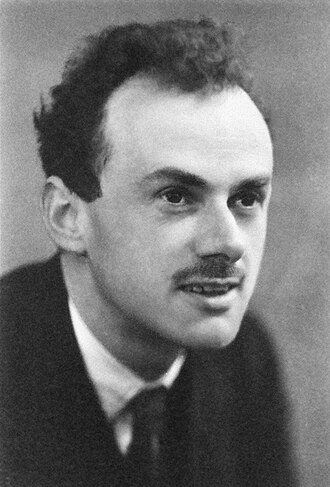 Paul Dirac1902 – 1984British theoretical physicist (1902–1984)Source: Wikidata (citizenship)
 Tina Turner1939 – 2023American-born Swiss singer and songwriter (1939–2023)Source: Wikidata (citizenship)
 Henry Dunant1828 – 1910Swiss businessman and co-founder of the Red Cross (1828-1910)Source: Wikidata (citizenship)
 Paracelsus1493 – 1541Swiss physician, philosopher, theologian, and alchemist (c. 1493–1541)Source: Wikidata (citizenship)
 Erich Fromm1900 – 1980German-American sociologist and psychoanalyst (1900–1980)Source: Wikidata (citizenship)
 Jean Piaget1896 – 1980Swiss psychologist, biologist, logician, philosopher and academic (1896–1980)Source: Wikidata (citizenship)
 Theodor W. Adorno1903 – 1969German philosopher, sociologist and theorist (1903–1969)Source: Wikidata (citizenship)
 Huldrych Zwingli1484 – 1531Protestant Reformation leader in Switzerland, Swiss Reformed Church founder (1484-1531)Source: Wikidata (country of birthplace)
 Karl Jaspers1883 – 1969German-Swiss psychiatrist and philosopher (1883–1969)Source: Wikidata (citizenship)
 Isabelle de Charrière1740 – 1805Dutch French-language writer and composer (1740-1805)Source: Wikidata (citizenship)
 Paul Klee1879 – 1940German-Swiss artist (1879–1940)Source: Wikidata (citizenship)
 Jean-Luc Godard1930 – 2022French and Swiss film director (1930–2022)Source: Wikidata (citizenship)
 Carl Spitteler1845 – 1924Swiss writer (1845–1924)Source: Wikidata (citizenship)
 Sepp Blatterb. 19368th President of the International Federation of Association FootballSource: Wikidata (citizenship)
 Friedrich Wilhelm Joseph Schelling1775 – 1854German philosopher (1775–1854)Source: Wikidata (citizenship)
 Daniel Bernoulli1700 – 1782Swiss mathematician and physicist (1700-1782)Source: Wikidata (citizenship)
 Jean-Paul Marat1743 – 1793Politician and journalist during the French Revolution (1743-1793)Source: Wikidata (country of birthplace)
 Charles Édouard Guillaume1861 – 1938Swiss physicist (1861-1938)Source: Wikidata (citizenship)
 Herbert Marcuse1898 – 1979German philosopher, sociologist, and political theorist (1898–1979)Source: Wikidata (citizenship)
 Friedrich Dürrenmatt1921 – 1990Swiss author and dramatist (1921–1990)Source: Wikidata (citizenship)
 Rudolf Steiner1861 – 1925Austrian social reformer, occultist and esotericist (1861–1925)Source: Wikidata (citizenship)
 Gianni Infantinob. 1970Swiss-Italian-Lebanese football administratorSource: Wikidata (citizenship)
 Martina Hingisb. 1980Swiss tennis playerSource: Wikidata (citizenship)
 Alexander Herzen1812 – 1870Russian author, philosopher, and revolutionary (1812–1870)Source: Wikidata (citizenship)
 Ivan Rakitićb. 1988Croatian footballerSource: Wikidata (citizenship)
 Felix Bloch1905 – 1983Swiss physicist (1905-1983)Source: Wikidata (citizenship)
 Albert Hofmann1906 – 2008Swiss chemist (1906–2008)Source: Wikidata (citizenship)
 Jacob Bernoulli1655 – 1705Swiss mathematician (1655-1705)Source: Wikidata (citizenship)
 Hermann Weyl1885 – 1955German mathematician (1885–1955)Source: Wikidata (citizenship)
 Karl Barth1886 – 1968Swiss Protestant theologian (1886-1968)Source: Wikidata (citizenship)
 Maximilian Schell1930 – 2014Swiss and Austrian film and stage actor (1930–2014)Source: Wikidata (citizenship)
 Hans-Adam II, Prince of Liechtensteinb. 1945Monarch of Liechtenstein (born 1945)Source: Wikidata (country of birthplace)
 Alfred Werner1866 – 1919Swiss chemist Nobel laureate (1866-1919)Source: Wikidata (citizenship)
 Heinrich Rohrer1933 – 2013Swiss physicist (1933-2013)Source: Wikidata (citizenship)
 Johann Bernoulli1667 – 1748Swiss mathematician (1667-1748)Source: Wikidata (citizenship)
 Yul Brynner1920 – 1985Russian-born American actor (1920–1985)Source: Wikidata (citizenship)
 Max Frisch1911 – 1991Swiss playwrighter and novelist (1911–1991)Source: Wikidata (citizenship)
Showing the 48 best-known of 125 people.
Everything that happened
- 218 BCEBattle of the Rhône CrossingRhôneThe Battle of the Rhône Crossing was a battle during the Second Punic War in September of 218 BC. Hannibal marched on the Italian Alps, and an army of Gallic Volcae attacked the Carthaginian army on the east bank of the Rhône. The Roman army camped near Massalia. The Volcae tried to prevent the Carthaginians from crossing the Alps and invading Italy.Source: Wikidata (country of the location)
- 218 BCEBattle of TicinusTicinoThe Battle of Ticinus was fought between the Carthaginian forces of Hannibal and a Roman army under Publius Cornelius Scipio in late November 218 BC as part of the Second Punic War. It took place in the flat country on the right bank of the river Ticinus, to the west of modern Pavia in northern Italy.Source: Wikidata (country of the location)
- 203 BCEBattle of InsubriaInsubriaThe Battle of Insubria in 203 BC was the culmination of a major war, carried out by the Carthaginian commander Mago, brother of Hannibal Barca, at the end of the Second Punic War between Rome and Carthage in what is now northwestern Italy.Source: Wikidata (country)
- 57 BCE – 56 BCEBattle of OctodurusMartignyThe battle of Octodurus took place in the winter of 57–56 BC in the Gallic town of Octodurus in what is now Martigny, Valais, Switzerland. The battle resulted from a Roman attempt to open the Great St. Bernard Pass over the Alps. It was a Roman victory, but the ferocity of the fighting ended with the Roman legion moving back out of the Alps.Source: Wikidata (country)
- 406 CECrossing of the RhineRhineThe crossing of the Rhine by a mixed group of Germanic and Sarmatian tribes which included Vandals, Alans and Suebi is traditionally considered to have occurred on 31 December 406. The crossing transgressed one of the Late Roman Empire's most secure limes or boundaries; as such, it has been considered a climactic moment in the decline of the empire.Source: Wikidata (country of the location)
- 1315Battle of MorgartenOberägeriThe Battle of Morgarten took place on 15 November 1315, when troops of Schwyz, supported by their allies of Uri and Unterwalden, ambushed an Austrian army under the command of Leopold I, Duke of Austria on the shores of Lake Ägeri, in the territory of Schwyz.Source: Wikidata (country)
- 1339Battle of LaupenLaupenThe Battle of Laupen was fought in June 1339, between Bern and its allies on one side, and Freiburg together with feudal landholders from the County of Burgundy and Habsburg territories on the other. Bern was victorious, consolidating its position in the region. As a consequence of the conflict, the relations of Bern and the Swiss Confederacy tightened, resulting in Bern's permanent accession in 1353.Source: Wikidata (country)
- 13561356 Basel earthquakeSwitzerlandThe 1356 Basel earthquake is the most significant seismological event to have occurred in Central Europe in recorded history and had a moment magnitude in the range of 6.0–7.1. This earthquake, which occurred on 18 October 1356, is also known as the Sankt-Lukas-Tag Erdbeben (English: Saint Luke's Day Earthquake), as 18 October is the feast day of Saint Luke the Evangelist.Source: Wikidata (country)
- 1386Battle of SempachSempachThe Battle of Sempach was fought on 9 July 1386, between Leopold III, Duke of Austria and the Old Swiss Confederacy. The battle was a decisive Swiss victory in which Duke Leopold and numerous Austrian nobles died. The victory helped turn the loosely allied Swiss Confederation into a more unified nation and is seen as a turning point in the growth of Switzerland.Source: Wikidata (country)
- 1388Battle of NäfelsNäfelsThe Battle of Näfels was fought on 9 April 1388 between the Swiss canton of Glarus, supported by its allies of the Old Swiss Confederation, and the Duchy of Austria ruled by the House of Habsburg. It was a decisive victory for Glarus and led to its independence from Habsburg rule. The battle was the last of the Swiss-Austrian conflicts that stretched through most of the 14th century.Source: Wikidata (country)
- 1422Battle of ArbedoArbedo-CastioneThe Battle of Arbedo was fought on 30 June 1422 between the Duchy of Milan and the Swiss Confederation, and ended with a Milanese victory.Source: Wikidata (country)
- 1476Battle of GrandsonGrandsonThe Battle of Grandson was fought on 2 March 1476, during the Burgundian Wars, and resulted in a major defeat for Charles the Bold, Duke of Burgundy, at the hands of the Old Swiss Confederacy.Source: Wikidata (country of the location)
- 1476Battle of MoratMurtenThe Battle of Morat ((French: Bataille de Morat; German: Schlacht bei Murten) took place during the Burgundian Wars (1474–1477) that was fought on 22 June 1476 between Charles the Bold, the Duke of Burgundy, and a Swiss Confederation army at Morat (Murten), about 30 kilometres from Bern. It was the second major engagement of the Burgundian Wars, and ended in a crippling defeat for Charles the Bold.Source: Wikidata (country)
- 1499Battle of DornachDornachThe Battle of Dornach was fought on 22 July 1499 between the troops of Emperor Maximilian I and the Old Swiss Confederacy, close to the Swiss village of Dornach. The battle ended in a decisive defeat for Maximilian, and concluded the Swabian War between the Swiss and the Swabian League.Source: Wikidata (country)
- 1499Swabian WarSwitzerlandThe Swabian War of 1499 (Alemannic German: Schwoobechrieg; spelling depending on dialect), called Schwabenkrieg or Schweizerkrieg ("Swiss War") in Germany and Engadiner Krieg ("War of the Engadin") in Austria, was the last major armed conflict between the Old Swiss Confederacy and the House of Habsburg.Source: Wikidata (country)
- 1531Second War of KappelSwitzerlandThe Second War of Kappel (German: Zweiter Kappelerkrieg) was an armed conflict in 1531 between the Catholic and the Protestant cantons of the Old Swiss Confederacy during the Reformation in Switzerland.Source: Wikidata (country)
- 1618 – 1639Bündner WirrenGrison AlpsThe Bündner Wirren (Romansh: Scumbigls grischuns/Scumpigls grischuns/Sgurdins grischuns, French: Troubles des Grisons, Italian: Torbidi grigionesi, English: Graubünden disturbances or Revolt of the Leagues) was a conflict that lasted between 1618 and 1639 in what is now the Swiss canton of Graubünden.Source: Wikidata (country of the location)
- 1798 – 1802War of the Second CoalitionItalian PeninsulaThe War of the Second Coalition (French: Guerre de la Deuxième Coalition) (1798–1802) was the second war between revolutionary France and a coalition of European monarchies, led by Britain, Austria and Russia, and including the Ottoman Empire, Portugal, Naples and various German monarchies. Prussia did not join the coalition, while Spain supported France.Source: Wikidata (country)
- 1798 – 1799French invasion of SwitzerlandOld Swiss ConfederacyThe French invasion of Switzerland (German: Franzoseneinfall) occurred from January to May 1798 as part of the French Revolutionary Wars. The independent Old Swiss Confederacy collapsed from the invasion and simultaneous internal revolts called the "Helvetic Revolution".Source: Wikidata (country of the location)
- 1799Battle of WinterthurWinterthurThe Battle of Winterthur (27 May 1799) was an important action between elements of the Army of the Danube and elements of the Habsburg army, commanded by Friedrich Freiherr von Hotze, during the War of the Second Coalition, part of the French Revolutionary Wars. The small town of Winterthur lies 18 kilometers (11 mi) northeast of Zürich, in Switzerland.Source: Wikidata (country)
- 1799First Battle of ZurichZurichThe First Battle of Zurich, from 4 to 7 June 1799, forced French General André Masséna to yield the city of Zurich to the Austrians, under Archduke Charles, and to retreat beyond the Limmat, where he managed to fortify his positions, which resulted in a stalemate.Source: Wikidata (country)
- 1799Second Battle of ZurichZurichThe Second Battle of Zurich (25–26 September 1799) was a key victory by the Republican French army in Switzerland led by André Masséna over a Russian force commanded by Alexander Rimsky-Korsakov near Zürich, as it broke the stalemate that had resulted from the First Battle of Zurich three months earlier and led to the withdrawal of Russia from the Second Coalition.Source: Wikidata (country)
- 1859Treaty of ZürichZurichThe Treaty of Zurich was signed by the Austrian Empire, the French Empire, and the Kingdom of Sardinia on 10 November 1859. The agreement was a reaffirmation of the terms of the preliminarySource: Wikidata (country)
- 1864First Geneva ConventionGenevaThe Geneva Convention (I) for the Amelioration of the Condition of the Wounded in Armies in the Field (French: Convention pour l'amélioration du sort des blessés et des malades dans les forces armées en campagne), more commonly referred to as the First Geneva Convention or Geneva Convention I and abbreviated as GCI, is the first of the four treaties of the 1949 Geneva Conventions.Source: Wikidata (country)
- 1874Treaty of BernBernThe Treaty of Bern (formally the Treaty concerning the formation of a General Postal Union), signed on 9 October 1874, established the General Postal Union, which is today known as the Universal Postal Union. Named for the Swiss city of Bern, where it was signed, the treaty was the result of an international conference convened by the Swiss Government on 15 September 1874.Source: Wikidata (country)
- 1886Berne ConventionBernThe Berne Convention for the Protection of Literary and Artistic Works, usually known as the Berne Convention, was an international assembly held in 1886 in the Swiss city of Bern by ten European countries with the goal of agreeing on a set of legal principles for the protection of original work and intellectual property.Source: Wikidata (country)
- 1915Zimmerwald ConferenceZimmerwaldThe Zimmerwald Conference, held in Zimmerwald, Switzerland, from September 5 to 8, 1915, was the first of three international conferences convened by anti-militarist socialists in response to the outbreak of World War I and the resulting virtual collapse of the Second International. Those participating in this and later conferences at Kienthal and Stockholm are known as the Zimmerwald movement.Source: Wikidata (country)
- 1922 – 19231922–1923 Lausanne ConferenceLausanneThe Conference of Lausanne was a peace conference held in Lausanne, Switzerland between Allies and Turkey during 1922 and 1923 following the Turkish victory and the defeat of Allies in the Turkish War of Liberation and the following Armistice of Mudanya.Source: Wikidata (country)
- 1925Locarno TreatiesLocarnoThe Locarno Treaties, known collectively as the Locarno Pact, were seven post–World War I agreements negotiated amongst Germany, France, the United Kingdom, Belgium, Italy, Poland and Czechoslovakia in late 1925. In the main treaty, the five western European nations pledged to guarantee the inviolability of the borders between Germany and France and Germany and Belgium as defined in the Treaty of Versailles.Source: Wikidata (country)
- 1925Geneva ProtocolGenevaThe Protocol for the Prohibition of the Use in War of Asphyxiating, Poisonous or other Gases, and of Bacteriological Methods of Warfare, usually called the Geneva Protocol, is a treaty prohibiting the use of chemical and biological weapons in international armed conflicts. It was signed at Geneva on 17 June 1925 and entered into force on 8 February 1928.Source: Wikidata (country)
- 19261926 Slavery ConventionGenevaThe 1926 Slavery Convention or the Convention to Suppress the Slave Trade and Slavery is an international treaty created under the auspices of the League of Nations and first signed on 25 September 1926. It was registered in League of Nations Treaty Series on 9 March 1927, the same day it went into effect.Source: Wikidata (country)
- 1929Geneva Convention on Prisoners of WarGenevaThe Geneva Convention on Prisoners of War was signed at Geneva on 27 July 1929. Its official name is the Convention relative to the Treatment of Prisoners of War. It entered into force on 19 June 1931. It is this version of the Geneva Conventions which covered the treatment of prisoners of war during World War II. It is the predecessor of the Third Geneva Convention signed in 1949.Source: Wikidata (country)
- 1934Baltic EntenteGenevaThe Baltic Entente was based on Treaty of Good-Understanding and Co-operation signed between Lithuania, Latvia, and Estonia on 12 September 1934 in Geneva. The main objective of the agreement was joint action in foreign policy. It also included commitments to support one another politically and to give diplomatic support in international communication.Source: Wikidata (country)
- 1947General Agreement on Tariffs and TradeGenevaThe General Agreement on Tariffs and Trade (GATT) is a legal agreement between many countries, whose overall purpose was to promote international trade by reducing or eliminating trade barriers such as tariffs or quotas. According to its preamble, its purpose was the "substantial reduction of tariffs and other trade barriers and the elimination of preferences, on a reciprocal and mutually advantageous basis".Source: Wikidata (country)
- 1949Fourth Geneva ConventionGenevaThe Geneva Convention (IV) relative to the Protection of Civilian Persons in Time of War (French: Convention relative à la protection des personnes civiles en temps de guerre), more commonly referred to as the Fourth Geneva Convention or Geneva Convention IV (abbreviated as GCIV), is one of the four treaties of the 1949 Geneva Conventions. It was adopted on 12 August 1949, and came into force in October 1950.Source: Wikidata (country of the location)
- 1949Second Geneva ConventionGenevaThe Geneva Convention (II) for the Amelioration of the Condition of Wounded, Sick and Shipwrecked Members of Armed Forces at Sea (French: Convention pour l'amélioration du sort des blessés, des malades et des naufragés des forces armées sur mer), more commonly referred to as the Second Geneva Convention or Geneva Convention II and abbreviated as GCII, is one of the four treaties of the 1949 Geneva Conventions.Source: Wikidata (country)
- 1949Third Geneva ConventionGenevaThe Geneva Convention (III) relative to the Treatment of Prisoners of War, more commonly referred to as the Third Geneva Convention or Geneva Convention III and abbreviated as GCIII, is one of the four treaties of the 1949 Geneva Conventions. It was first adopted in 1929, but was significantly revised at the 1949 conference on 12 August 1949. GCIII defines humanitarian protections for prisoners of war.Source: Wikidata (country of the location)
- 1952Universal Copyright ConventionGenevaUniversal Copyright Convention (UCC) is an international instrument which was drawn up in 1952 under the auspices of UNESCO. The UCC was adopted in Geneva, Switzerland, in 1952, and enforced in 1955. It is one of the two principal international conventions protecting copyright; the other is the Berne Convention.Source: Wikidata (country)
- 19541954 FIFA World CupWankdorf StadiumThe 1954 FIFA World Cup was the fifth edition of the FIFA World Cup, the quadrennial international football tournament for senior men's national teams of the nations affiliated to FIFA. It was held in Switzerland from 16 June to 4 July. Switzerland was selected as the host country in July 1946.Source: Wikidata (country)
- 19541954 Geneva ConferenceGenevaThe Geneva Conference was intended to settle outstanding issues resulting from the Korean War and the First Indochina War and involved several nations. It took place in Geneva, Switzerland, from 26 April to 21 July 1954. The part of the conference on the Korean question ended without adopting any declarations or proposals and so is generally considered less relevant.Source: Wikidata (country)
- 1956Supplementary Convention on the Abolition of SlaveryGenevaThe Supplementary Convention on the Abolition of Slavery, the full title of which is the Supplementary Convention on the Abolition of Slavery, the Slave Trade, and Institutions and Practices Similar to Slavery, is a 1956 United Nations treaty which builds upon the 1926 Slavery Convention, which is still operative and which proposed to secure the abolition of slavery and of the slave trade, and the Forced Labour…Source: Wikidata (country)
- 1970Swissair Flight 330WürenlingenSwissair Flight 330 (SR330/SWR330) was a regularly scheduled passenger flight from Kloten, Switzerland, to Hong Kong (then a British colony) with an intermediate stopover in Tel Aviv, Israel. On 21 February 1970, a bomb exploded soon after takeoff, causing the plane to crash, killing all 47 passengers and crew.Source: Wikidata (country)
- 1996WIPO Copyright TreatyGenevaThe World Intellectual Property Organization Copyright Treaty (WIPO Copyright Treaty or WCT) is an international treaty on copyright law adopted by the member states of the World Intellectual Property Organization (WIPO) in 1996. It provides additional protections for copyright to respond to advances in information technology since the formation of previous copyright treaties before it.Source: Wikidata (country)
- 1996WIPO Performances and Phonograms TreatyGenevaThe WIPO Performances and Phonograms Treaty (or WPPT) is an international treaty adopted in Geneva on 20 December 1996. It came into effect on 20 May 2002. The treaty deals with the rights of two kinds of beneficiaries, particularly in the digital environment: performers (actors, singers, musicians, etc.); and producers of phonograms (persons or legal entities that take the initiative and have the responsibility for…Source: Wikidata (country)
- 2006Anti-Counterfeiting Trade AgreementTokyoThe Anti-Counterfeiting Trade Agreement (ACTA) is a multilateral treaty for the purpose of establishing international standards for intellectual property rights enforcement that did not enter into force.Source: Wikidata (country of the location)
- 2009Durban Review ConferenceGenevaThe Durban Review Conference is the official name of the 2009 United Nations World Conference Against Racism (WCAR), also known as Durban II. The conference ran from Monday 20 April to Friday 24 April 2009, and took place at the United Nations Office in Geneva, Switzerland.Source: Wikidata (country)
- 2020COVID-19 pandemicWorldwideA new coronavirus spreads worldwide. Lockdowns, remote work and fast-developed vaccines reshape daily life.Source: Wikidata (country)
- 20212021 European floodsEuropeIn July 2021, several European countries were affected by severe floods. Some were catastrophic, causing deaths and widespread damage. The floods started in the United Kingdom as flash floods causing some property damage and inconvenience. Later floods affected several river basins across Europe including Austria, Belgium, Croatia, Germany, Italy, Luxembourg, the Netherlands, and Switzerland.Source: Wikidata (country)
- 20262026 Crans-Montana bar fireSwitzerlandOn 1 January 2026 at 01:26 (CET), during New Year celebrations, a fire broke out at Le Constellation bar in the ski-resort town of Crans-Montana, Valais, Switzerland. Forty-one people died in the fire, and 115 others were injured, with 83 initially being treated for severe burns.Source: Wikidata (country)