Shia Islam
1 event
Shia Islam is the second-largest branch of Islam. It is rooted in the belief that the Islamic prophet Muhammad explicitly designated his cousin and son-in-law Ali ibn Abi Talib (r. 656–661) as his rightful political successor (caliph) and the divinely guided spiritual leader of the Muslim community (imam). Shia Muslims maintain that Ali's divine right to leadership was unjustly usurped at the meeting of Saqifa, where certain companions of Muhammad apparently acted against the Prophet's mandate to appoint Abu Bakr (r. 632–634) as caliph.
Text from the Wikipedia article Shia Islam, CC BY-SA 4.0
Built from Wikidata: an event or person is listed when Wikidata links them to this page, as shown next to each one. Many aren’t recorded there, so this list is incomplete.
Key people
 Ali Khamenei1939 – 2026Supreme Leader of Iran from 1989 to 2026Source: Wikidata (religion)
 Ferdowsi940 CE – 1020Persian poet, author of Shahnameh (940–1020)Source: Wikidata (religion)
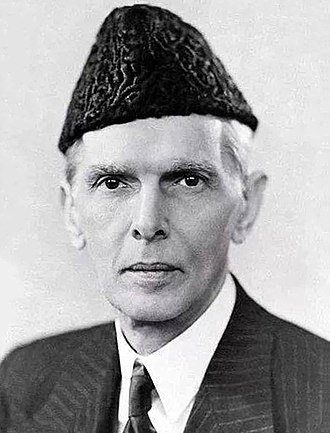 Mohammad Ali Jinnah1876 – 1948Politician and the founder of Pakistan (1876–1948)Source: Wikidata (religion)
 Farabi870 CE – 951 CE10th century Persian philosopher and juristSource: Wikidata (religion)
 Jabir ibn Hayyan721 CE – 815 CE8th-century Islamic alchemist and authorSource: Wikidata (religion)
 Hasan Nasrallah1960 – 2024Leader of Hezbollah (1960-2024)Source: Wikidata (religion)
 Zulfikar Ali Bhutto1928 – 19794th President and 9th Prime Minister of Pakistan (1928–1979)Source: Wikidata (religion)
 Heydar Aliyev1923 – 20033rd President of the Republic of Azerbaijan (1923–2003)Source: Wikidata (religion)
 Fuzuli1494 – 155616th-century Azerbaijani poetSource: Wikidata (religion)
 Abbas the Great1571 – 1629Shah of Safavid Iran (1587–1629)Source: Wikidata (religion)
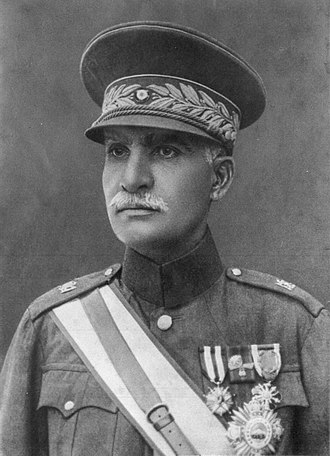 Reza Shah1878 – 1944Shah of Iran from 1925 to 1941 and founder of the Pahlavi DynastySource: Wikidata (religion)
 Akbar Hashemi Rafsanjani1934 – 2017Iranian politician (1934–2017)Source: Wikidata (religion)
 Nasir al-Din al-Tusi1201 – 1274Persian astronomer (1201–1274)Source: Wikidata (religion)
 Al-Mas'udi896 CE – 957 CE10th-century Arab historian, geographer, and travellerSource: Wikidata (religion)
 Mohammad Mosaddegh1882 – 1967Former Prime Minister of Iran (1882–1967)Source: Wikidata (religion)
 Mumtaz Mahal1593 – 1631Mughal empressSource: Wikidata (religion)
 Ayub Khan1907 – 1974President of Pakistan from 1958 to 1969Source: Wikidata (religion)
 Mohammad-Ali Rajai1933 – 1981Iranian Prime Minister and President of Iran (1933-1981)Source: Wikidata (religion)
 Fath-Ali Shah Qajar1772 – 1834Second Qajar shah of Iran (1797–1834).Source: Wikidata (religion)
 Ali Larijani1958 – 2026Iranian politician and military officer (1958–2026)Source: Wikidata (religion)
 Maurice Béjart1927 – 2007French-born Swiss ballet dancer and choreographer (1927–2007)Source: Wikidata (religion)
 Nimr al-Nimr1959 – 2016Saudi Shia Sheikh in al-Awamiyah in Saudi Arabia's Eastern ProvinceSource: Wikidata (religion)
 Nasir Khusraw1004 – 108811th-century Persian Isma'ili poet, scholar, philosopher, and missionarySource: Wikidata (religion)
 Ahmad Shah Qajar1898 – 1930The seventh and last Shah of Iran Qajar (1909–1925)Source: Wikidata (religion)
Everything that happened
- 874 CEOccultation—Occultation (Arabic: غيبة, ghayba) refers to the eschatological belief in Shia Islam that the Islamic messianic and eschatological figure Mahdi has already been born, subsequently concealed, and will reemerge in the End Times. Although Sunni Islam does not hold that the Mahdi has already been born and is in occultation, the signs of his reappearance are common in both Shia and Sunni branches.Source: Wikidata (religion)