Former state · 1681 – 1922
Russian Empire
27 events
The Russian Empire was an empire that extended across northern Eurasia from 1721 until the proclamation of the Russian Republic in 1917, forming the final era of Tsarist Russia and the wider Russian monarchy. At its height in the late 19th century, it covered about 22,800,000 km2 (8,800,000 sq mi), roughly one-sixth of the world's landmass, making it the third-largest empire in history, behind only the British and Mongol empires.
Text from the Wikipedia article Russian Empire, CC BY-SA 4.0
Built from Wikidata: an event or person is listed when Wikidata links them to this page, as shown next to each one. Many aren’t recorded there, so this list is incomplete.
Showing 277 years
Key people
 Vladimir Lenin1870 – 1924Founding leader of the Soviet Union (1870–1924)Source: Wikidata (citizenship)
 Leo Tolstoy1828 – 1910Russian author (1828–1910)Source: Wikidata (citizenship)
 Joseph Stalin1878 – 1953Politician and leader of the Union of Soviet Socialist Republics from 1924 to 1953Source: Wikidata (citizenship)
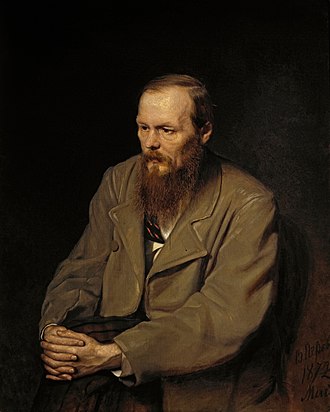 Fyodor Dostoyevsky1821 – 1881Russian novelist (1821–1881)Source: Wikidata (citizenship)
 Marie Curie1867 – 1934Polish-born French physicist and chemist (1867–1934)Source: Wikidata (citizenship)
 Alexander Pushkin1799 – 1837Russian poet, playwright, and novelist (1799–1837)Source: Wikidata (citizenship)
 Anton Chekhov1860 – 1904Russian dramatist and author (1860–1904)Source: Wikidata (citizenship)
 Frédéric Chopin1810 – 1849Polish composer and pianist (1810–1849)Source: Wikidata (citizenship)
 Pyotr Ilyich Tchaikovsky1840 – 1893Russian composer (1840–1893)Source: Wikidata (citizenship)
 Leonhard Euler1707 – 1783Swiss mathematician, physicist, and engineer (1707–1783)Source: Wikidata (citizenship)
 Rosa Luxemburg1871 – 1919Polish-German Marxist revolutionary (1871–1919)Source: Wikidata (citizenship)
 Leon Trotsky1879 – 1940Russian Marxist revolutionary (1879–1940)Source: Wikidata (citizenship)
 Maxim Gorky1868 – 1936Russian and Soviet writer (1868–1936)Source: Wikidata (citizenship)
 Dmitri Mendeleev1834 – 1907Russian chemist (1834–1907)Source: Wikidata (citizenship)
 Nikita Khrushchev1894 – 1971Leader of the Soviet Union from 1953 to 1964Source: Wikidata (citizenship)
 Igor Stravinsky1882 – 1971Russian, French, and American composer (1882–1971)Source: Wikidata (citizenship)
 Nikolai Gogol1809 – 1852Russian writer of Ukrainian origin (1809–1852)Source: Wikidata (citizenship)
 Catherine II of Russia1729 – 1796Eighth Emperor of Russia, called the Great, r. 1762–1796 (lived 1729-1796)Source: Wikidata (citizenship)
 Ivan Turgenev1818 – 1883Russian writer (1818–1883)Source: Wikidata (citizenship)
 Vladimir Nabokov1899 – 1977Russian-American novelist, lepidopterist, professor (1899–1977)Source: Wikidata (citizenship)
 Sergei Eisenstein1898 – 1948Soviet filmmaker (1898–1948)Source: Wikidata (citizenship)
 Mikhail Bakunin1814 – 1876Russian revolutionary anarchist and philosopher (1814–1876)Source: Wikidata (citizenship)
 L. L. Zamenhof1859 – 1917Polish-Jewish physician and inventor of Esperanto (1859-1917)Source: Wikidata (citizenship)
 Boris Pasternak1890 – 1960Russian writer (1890–1960)Source: Wikidata (citizenship)
 Henryk Sienkiewicz1846 – 1916Polish writer, novelist, journalist, philanthropist and Nobel Prize laureate (1846–1916)Source: Wikidata (citizenship)
 Leonid Brezhnev1906 – 1982General Secretary of the Communist Party of the Soviet Union (1906–1982)Source: Wikidata (citizenship)
 Taras Shevchenko1814 – 1861Ukrainian poet and artist (1814–1861)Source: Wikidata (citizenship)
 Nicholas II of Russia1868 – 191814th and last Emperor of Russia (1894–1917)Source: Wikidata (citizenship)
 Golda Meir1898 – 1978Prime Minister of Israel from 1969 to 1974Source: Wikidata (country of birthplace)
 David Ben-Gurion1886 – 1973Israeli politician, Zionist leader, prime minister of Israel (1948–1953, 1955–1963) - (born1886–1973)Source: Wikidata (citizenship)
 Anna Akhmatova1889 – 1966Russian poet (1889–1966)Source: Wikidata (citizenship)
 Adam Mickiewicz1798 – 1855Polish national poet, dramatist, essayist, publicist, translator, and political activist (1798-1855)Source: Wikidata (citizenship)
 Joseph Conrad1857 – 1924Polish-British writer (1857–1924)Source: Wikidata (citizenship)
 Mikhail Lermontov1814 – 1841Russian writer, poet and painter (1814–1841)Source: Wikidata (citizenship)
 Ayn Rand1905 – 1982Russian-born American writer and public philosopher (1905–1982)Source: Wikidata (citizenship)
 Emma Goldman1869 – 1940Russian-born American anarchist (1869–1940)Source: Wikidata (citizenship)
 Ivan Bunin1870 – 1953Russian writer and poet (1870–1953)Source: Wikidata (citizenship)
 Vladimir Mayakovsky1893 – 1930Russian and Soviet poet (1893–1930)Source: Wikidata (citizenship)
 Ivan Pavlov1849 – 1936Russian physiologist (1849–1936)Source: Wikidata (citizenship)
 Peter Kropotkin1842 – 1921Russian revolutionary socialist and philosopher (1842–1921)Source: Wikidata (citizenship)
 Viktor Yanukovychb. 1950President of Ukraine from 2010 to 2014Source: Wikidata (country of birthplace)
 Mikhail Bulgakov1891 – 1940Russian author (1891–1940)Source: Wikidata (citizenship)
 Mikhail Sholokhov1905 – 1984Soviet writer (1905-1984)Source: Wikidata (citizenship)
 Yuri Andropov1914 – 1984General Secretary of the Communist Party of the Soviet Union (1914–1984)Source: Wikidata (citizenship)
 Isaac Bashevis Singer1904 – 1991Polish-American writer (1904–1991)Source: Wikidata (citizenship)
 Alexander I of Russia1777 – 1825The tenth Emperor of Russia (1777–1825)Source: Wikidata (citizenship)
 Sergei Yesenin1895 – 1925Russian poet (1895–1925)Source: Wikidata (citizenship)
 Mikhail Lomonosov1711 – 1765Russian polymath (1711-1765)Source: Wikidata (citizenship)
Showing the 48 best-known of 200 people.
Everything that happened
- 1787 – 1791Russo-Turkish WarEastern EuropeThe Russo-Turkish War of 1787–1792 involved an unsuccessful attempt by the Ottoman Empire to regain lands lost to the Russian Empire in the course of the previous Russo-Turkish War (1768–1774). It took place concomitantly with the Austro-Turkish War (1788–1791), the Russo-Swedish War (1788–1790), and the Theatre War.Source: Wikidata (country)
- 1812French invasion of RussiaRussian EmpireThe French invasion of Russia, also known as the Russian campaign, the Second Polish War, and in Russia as the Patriotic War of 1812, was initiated by Napoleon with the aim of forcing the Russian Empire to comply with the continental blockade of the United Kingdom.Source: Wikidata (country of the location)
- 1812Fire of MoscowMoscowDuring the French occupation of Moscow, a fire persisted from 14 to 18 September 1812 and destroyed the city. The Russian troops and most of the remaining civilians had abandoned the city on 14 September 1812 just ahead of French Emperor Napoleon's troops entering the city after the Battle of Borodino.Source: Wikidata (country)
- 1825Decembrist revoltSenate SquareThe Decembrist revolt (Russian: Восстание декабристов, romanized: Vosstaniye dekabristov, lit. 'Uprising of the Decembrists') was a failed coup d'état led by liberal military and political dissidents against the Russian Empire. It took place in Saint Petersburg on 26 December [O.S. 14 December] 1825, following the death of Emperor Alexander I.Source: Wikidata (country)
- 1830 – 1831November UprisingCongress PolandThe November Uprising (Polish: powstanie listopadowe), also known as the Polish–Russian War of 1830–31 or the Cadet Revolution, was an armed rebellion in the heartland of partitioned Poland against the Russian Empire. The uprising began on 29 November 1830 in Warsaw when young Polish officers from the military academy of the Army of Congress Poland revolted.Source: Wikidata (country of the location)
- 1837 – 1847Kenesary's RebellionRussian EmpireKenesary's Rebellion (Kazakh: Кенесары көтерілісі, romanized: Kenesary köterılısı) was the longest uprising of the Kazakh people on the territory of modern Kazakhstan under the leadership of Khan Kenesary Qasymov against the Russian Empire.Source: Wikidata (country)
- 1854Battle of BalaclavaBalaklavaThe Battle of Balaclava, fought on 25 October 1854 during the Crimean War, was part of the Siege of Sevastopol (1854–55), an attempt by the British, French and Ottoman allies to capture the port and fortress of Sevastopol, Russia's principal naval base on the Black Sea.Source: Wikidata (country)
- 1854Siege of PetropavlovskPetropavlovsk-KamchatskyThe Siege of Petropavlovsk was a military operation in the Pacific theatre of the Crimean War in which British and French naval forces unsuccessfully attempted to capture the Russian port of Petropavlovsk on the Kamchatka peninsula.Source: Wikidata (country)
- 1855Battle of the ChernayaChorna RiverThe Battle of the Chernaya (also Tchernaïa; Russian: Сражение у Черной речки, Сражение у реки Черной, literally: Battle of the Black River) was fought at the Traktir Bridge on the Chernaya River during the Crimean War on August 16, 1855. The battle was fought between Russian, French, Piedmontese and Ottoman troops. The Chernaya River is on the outskirts of Sevastopol, near the line of the allies' siege of the city.Source: Wikidata (country)
- 1860Convention of PekingBeijingThe Convention of Peking or First Convention of Peking is an agreement comprising three distinct unequal treaties concluded between the Qing dynasty of China and Great Britain, France, and the Russian Empire in 1860.Source: Wikidata (country)
- 1863 – 1864January UprisingCongress PolandThe January Uprising was an insurrection against Russian imperial rule in the Congress Kingdom of Poland and adjacent lands of the former Polish–Lithuanian Commonwealth. Sparked by nationalist aspirations, political repressions, religious differences and opposition to conscription, it was organized by the clandestine Central National Committee and subsequently by the revolutionary Polish National Government.Source: Wikidata (country of the location)
- 1876Reichstadt AgreementZákupy CastleOn the occasion of the Balkan crisis, Emperor Franz Joseph I of Austria-Hungary and Russian Tsar Alexander II met on 8 July 1876 for secret talks, the results of which were later termed the Reichstadt Agreement (also: Reichstadt Convention) by historians for the sake of brevity. Both emperors were in an alliance with each other and the German Empire in the League of the Three Emperors, or Dreikaiserbund.Source: Wikidata (country)
- 1905 – 1907Russian Revolution of 1905RussiaThe Russian Revolution of 1905, also known as the First Russian Revolution, was a revolution in the Russian Empire which began on 22 January 1905 and led to the establishment of a constitutional monarchy under the Russian Constitution of 1906, the country's first.Source: Wikidata (country)
- 1905 – 1906Armenian–Tatar massacres of 1905–1906CaucasusThe Armenian–Tatar massacres (also known as the Armenian–Tatar war, the Armenian–Muslim war, Armenian–Azerbaijani war) was the bloody inter-ethnic confrontation between Armenians and Caucasian Tatars, later known as Azerbaijanis throughout the Russian Caucasus in 1905–1906. The massacres started during the Russian Revolution of 1905.Source: Wikidata (country)
- 1905 – 1907Revolution in the Kingdom of PolandRussian EmpireA major part of the Russian Revolution of 1905 took place in the Russian Partition of Poland and lasted until 1907 (see Congress Poland and Privislinsky Krai). It was the largest wave of strikes and widest emancipatory movement that Poland had ever seen until the 1970s and the 1980s. One of the major events of that period was the insurrection in Łódź in June 1905.Source: Wikidata (country of the location)
- 1907Coup of June 1907Russian EmpireThe Coup of June 1907, sometimes known as the Stolypin Coup, was a coup d'état by the cabinet of Pyotr Stolypin and Tsar Nicholas II against the State Duma of the Russian Empire. During the coup, the government dissolved the Second State Duma, arrested dozens of its members and altered the electoral laws regarding elections to the Duma.Source: Wikidata (country)
- 1915Battle of the Gulf of RigaGulf of RigaThe Battle of the Gulf of Riga was a World War I naval operation of the German High Seas Fleet against the Russian Baltic Fleet in the Gulf of Riga in the Baltic Sea in August 1915. The operation's objective was to destroy the Russian naval forces in the Gulf in preparation for landing German troops to facilitate the fall of Riga in the later stages of the Central Powers' offensive on the Eastern Front in 1915.Source: Wikidata (country)
- 1915Treaty of KyakhtaKyakhtaThe Treaty of Kyakhta (Mongolian: Хиагтын гэрээ; Russian: Кяхтинский договор; Chinese: 中俄蒙協約) was a tri-party treaty signed on 25 May 1915 among Russia, Mongolia, and China.Source: Wikidata (country)
- 1917February RevolutionSaint PetersburgThe February Revolution (Russian: Февральская революция), known in Soviet historiography as the February Bourgeois Democratic Revolution, and sometimes as the March Revolution, was the first of two revolutions which took place in Russia in 1917.Source: Wikidata (country)
- 1917 – 1922Russian Civil WarRussian RepublicThe Russian Civil War was a multi-party civil war in the former Russian Empire, lasting from 1917 to 1922, sparked by the overthrowing of the Russian Provisional Government in the October Revolution, as many factions vied to determine Russia's political future. It resulted in the formation of the Russian Socialist Federative Soviet Republic and later the Soviet Union in most of its territory.Source: Wikidata (country)
- 1917Russian RevolutionRussiaRevolutions in February and October end the rule of the tsars and bring the Bolsheviks, led by Lenin, to power.Source: Wikidata (country)
- 1917Central Asian revolt of 1916Central AsiaThe Central Asian revolt of 1916, also known as the Semirechye Revolt and as Urkun in Kyrgyzstan, was an anti-Russian uprising by the indigenous inhabitants of Russian Turkestan sparked by the conscription of Muslims into the Russian military for service on the Eastern Front during World War I.Source: Wikidata (country)
- 1917Christmas BattlesDoblen CountyThe Christmas Battles (Latvian: Ziemassvētku kaujas; German: Aa-Schlachten; Russian: Митавская операция) were offensive operations conducted by the Imperial Russian Army and Latvian Riflemen during World War I in the area of Jelgava, Latvia, by the Russian 12th Army of the Northern Front.Source: Wikidata (country)
- 1917July DaysSaint PetersburgThe July Days (Russian: Июльские дни) were a period of unrest in Petrograd, Russia, between 16–20 July [O.S. 3–7 July] 1917. It was characterised by spontaneous armed demonstrations by soldiers, sailors, and industrial workers engaged against the Russian Provisional Government. The demonstrations were angrier and more violent than those during the February Revolution months earlier.Source: Wikidata (country)
- 1917Kerensky–Krasnov uprisingSaint Petersburg GovernorateThe Kerensky–Krasnov uprising was an attempt by Alexander Kerensky to crush the October Revolution and regain power after the Bolsheviks overthrew his government in Petrograd. It took place between 8 and 13 November 1917 [O.S. 26 and 31 October].Source: Wikidata (country)
- 1918Finnish Civil WarFinlandThe Finnish Civil War was fought in 1918 for the leadership and control of recently independent Finland (formerly part of Russia) between White Finland and the Finnish Socialist Workers' Republic (Red Finland). The clashes took place in the context of the national, political, and social turmoil caused by World War I (Eastern Front) in Europe.Source: Wikidata (country)
- 1918Battle of KrutyKrutyThe Battle of Kruty (Ukrainian: Бій під Крутами, romanized: Bii pid Krutamy) took place on January 29 or 30, 1918, near Kruty railway station (today the village of Pamiatne, Nizhyn Raion, Chernihiv Oblast), about 130 kilometres (81 miles) northeast of Kiev, Ukraine, which at the time was part of Nizhyn Povit of Chernihiv Governorate.Source: Wikidata (country)