Country · 800 CE – today
Republic of Ireland
14 events
Ireland (Irish: Éire [ˈeːɾʲə] ), also known as the Republic of Ireland (Poblacht na hÉireann), is a country in Northwestern Europe. It consists of 26 of the 32 counties of the island of Ireland, with a population of about 5.4 million. Its capital and largest city is Dublin, on the eastern side of the island, with a population of over 1.5 million. The sovereign state shares its only land border with Northern Ireland, which is part of the United Kingdom.
Text from the Wikipedia article Republic of Ireland, CC BY-SA 4.0
Built from Wikidata: an event or person is listed when Wikidata links them to this page, as shown next to each one. Many aren’t recorded there, so this list is incomplete.
Showing 1,410 years
Key people
 Oscar Wilde1854 – 1900Irish poet, playwright, and aesthete (1854-1900)Source: Wikidata (citizenship)
 James Joyce1882 – 1941Irish novelist and poet (1882–1941)Source: Wikidata (citizenship)
 Jonathan Swift1667 – 1745Anglo-Irish satirist and essayist (1667–1745)Source: Wikidata (country of birthplace)
 William Butler Yeats1865 – 1939Irish poet and playwright (1865–1939)Source: Wikidata (country of birthplace)
 Samuel Beckett1906 – 1989Irish writer (1906–1989)Source: Wikidata (citizenship)
 Edmund Burke1729 – 1797Anglo-Irish statesman, political theorist and conservative philosopher (1729–1797)Source: Wikidata (country of birthplace)
 Mel Gibsonb. 1956American actor, director, producer and screenwriter (born 1956)Source: Wikidata (citizenship)
 Enyab. 1961Irish singer (born 1961)Source: Wikidata (citizenship)
 Robert Boyle1627 – 1691Anglo-Irish natural philosopher, chemist, physicist, and inventor (1627-1691)Source: Wikidata (country of birthplace)
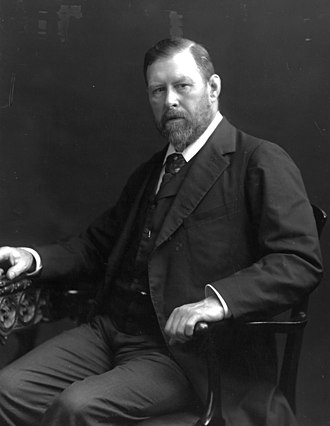 Bram Stoker1847 – 1912Irish novelist and short story writer (1847–1912)Source: Wikidata (citizenship)
 Seamus Heaney1939 – 2013Irish poet, playwright, translator, lecturer (1939–2013)Source: Wikidata (citizenship)
 Pierce Brosnanb. 1953Irish actor (born 1953)Source: Wikidata (citizenship)
 Peter O'Toole1932 – 2013British-Irish actor (1932–2013)Source: Wikidata (citizenship)
 Arthur Wellesley, 1st Duke of Wellington1769 – 1852British Field Marshal, Prime Minister of the United Kingdom, 1828–1830, 1834 (1769-1852)Source: Wikidata (country of birthplace)
 Daniel Day-Lewisb. 1957British actorSource: Wikidata (citizenship)
 Liam Neesonb. 1952Actor from Northern Ireland (born 1952)Source: Wikidata (citizenship)
 Bonob. 1960Irish singerSource: Wikidata (citizenship)
 Mark Carneyb. 196524th prime minister of Canada since 2025Source: Wikidata (citizenship)
 Cillian Murphyb. 1976Irish actor (born 1976)Source: Wikidata (citizenship)
 Michael D. Higginsb. 1941President of Ireland (2011–2018; 2018–2025)Source: Wikidata (citizenship)
 William Rowan Hamilton1805 – 1865Irish mathematician and astronomer (1805-1865)Source: Wikidata (country of birthplace)
 Oliver Goldsmith1728 – 1774Anglo-Irish writer, poet, and physician (d. 1774)Source: Wikidata (country of birthplace)
 Ernest Walton1903 – 1995Irish physicist and Nobel laureate (1903-1995)Source: Wikidata (citizenship)
 Mary Robinsonb. 1944Former President of Ireland and former United Nations High Commissioner for Human RightsSource: Wikidata (citizenship)
 John le Carré1931 – 2020British novelist and spy (1931–2020)Source: Wikidata (citizenship)
 Olivia Wildeb. 1984American actress and film director (born 1984)Source: Wikidata (citizenship)
- Iris Murdoch1919 – 1999Irish-born British writer and philosopher (1919–1999)Source: Wikidata (citizenship)
 Laurence Sterne1713 – 1768Anglo-Irish novelist and Anglican cleric (1713–1768)Source: Wikidata (country of birthplace)
 Colin Farrellb. 1976Irish actor (born 1976)Source: Wikidata (citizenship)
 Saoirse Ronanb. 1994Irish-American actress (born 1994)Source: Wikidata (citizenship)
 Ernest Shackleton1874 – 1922Anglo-Irish Antarctic explorer (1874–1922)Source: Wikidata (country of birthplace)
 Éamon de Valera1882 – 1975Irish statesman (1882–1975)Source: Wikidata (citizenship)
 Angela Lansbury1925 – 2022British actress (1925–2022)Source: Wikidata (citizenship)
 Conor McGregorb. 1988Irish boxer and mixed martial arts fighterSource: Wikidata (citizenship)
 Dolores O'Riordan1971 – 2018Irish musician (1971–2018)Source: Wikidata (citizenship)
 Martin Sheenb. 1940American actor (born 1940)Source: Wikidata (citizenship)
 Michael Fassbenderb. 1977German-Irish actor (born 1979)Source: Wikidata (citizenship)
 Leo Varadkarb. 1979Taoiseach from 2017 to 2020, and from 2022 to 2024.Source: Wikidata (citizenship)
 Michael Collins1890 – 1922Irish revolutionary and politician (1890–1922)Source: Wikidata (country of birthplace)
 Sam Neill1947 – 2026New Zealand actor (1947–2026)Source: Wikidata (citizenship)
 Richard Harris1930 – 2002Irish actor and singer (1930–2002)Source: Wikidata (citizenship)
 Francis Bacon1909 – 1992Irish-born British figurative painter (1909–1992)Source: Wikidata (citizenship)
 Mary McAleeseb. 19518th President of IrelandSource: Wikidata (citizenship)
 Michael Gambon1940 – 2023Irish and English actor (1940–2023)Source: Wikidata (citizenship)
 Veronica Guerin1959 – 1996Irish crime reporter (1958-1996)Source: Wikidata (citizenship)
 Thomas Moore1779 – 1852Irish poet, singer and songwriter (1779–1852)Source: Wikidata (country of birthplace)
 Robbie Keaneb. 1980Irish association football player and managerSource: Wikidata (citizenship)
 Roy Keaneb. 1971Irish football managerSource: Wikidata (citizenship)
Showing the 48 best-known of 80 people.
Everything that happened
- 1014Battle of ClontarfClontarfThe Battle of Clontarf (Irish: Cath Chluain Tarbh) took place on 23 April 1014 at Clontarf, near Dublin, on the east coast of Ireland. It pitted an army led by Brian Boru, High King of Ireland, against a Norse-Irish alliance comprising the forces of Sigtrygg Silkbeard, King of Dublin; Máel Mórda mac Murchada, King of Leinster; and a Viking army from abroad led by Sigurd of Orkney and Brodir of Mann.Source: Wikidata (country)
- 1558 – 1583Livonian WarNorthern EuropeThe Livonian War (1558–1583) concerned the control of Old Livonia (in the territory of present-day Estonia and Latvia). The Tsardom of Russia faced a varying coalition of the Dano-Norwegian Realm, the Kingdom of Sweden, and the Union (later Commonwealth) of the Grand Duchy of Lithuania and the Kingdom of Poland.Source: Wikidata (country of the location)
- 1593 – 1603Nine Years' WarIrelandThe Nine Years' War (May 1593 – 30 March 1603) was a conflict in Ireland between a confederacy of Irish lords (with Spanish support) and the English-led government. The war was primarily a response to the English Crown's advances into territory traditionally owned by the Gaelic nobility. It was also part of the broader Anglo-Spanish War and the European wars of religion.Source: Wikidata (country of the location)
- 1601 – 1602Siege of KinsaleKinsaleThe siege of Kinsale (Irish: Léigear Chionn tSáile), also known as the battle of Kinsale, was the ultimate battle in England's conquest of Gaelic Ireland, commencing in October 1601, near the end of the reign of Queen Elizabeth I, and at the climax of the Nine Years' War—a campaign by Hugh O'Neill, Hugh Roe O'Donnell and other Irish lords against English rule.Source: Wikidata (country)
- 1641 – 1653Irish Confederate WarsKingdom of IrelandThe Irish Confederate Wars took place from 1641 to 1653. The conflict began with the Irish rising of 1641 and evolved into a prolonged struggle over Ireland's future, as Irish forces sought to defend their land, political rights and autonomy against foreign control, plantation policies and continued encroachment on Irish self-government.Source: Wikidata (country)
- 1641Irish Rebellion of 1641IrelandThe Irish Rebellion of 1641 began on 23 October 1641. Initiated by Irish gentry and military officers, the rebellion sought to end English domination of Ireland, restore lands confiscated through the plantations of Ireland, and secure Irish control over the country's government and affairs.Source: Wikidata (country)
- 1690Battle of the BoyneDroghedaThe Battle of the Boyne (Irish: Cath na Bóinne IPA: [ˈkah n̪ˠə ˈbˠoːn̠ʲə]) took place in 1690 between the forces of the deposed King James II, and those of King William III who, with his wife Queen Mary II (his cousin and James's daughter), had acceded to the Crowns of England, Scotland and Ireland in 1689.Source: Wikidata (country)
- 1796French expedition to IrelandBantry BayThe French expedition to Ireland, known in French as the Expédition d'Irlande (French pronunciation: [ɛkspedisjɔ̃ diʁlɑ̃d], "Expedition to Ireland"), was an unsuccessful attempt by the French Republic to assist the outlawed Society of United Irishmen in their planned rebellion against British rule during the War of the First Coalition.Source: Wikidata (country of the location)
- 1798Irish Rebellion of 1798IrelandThe Irish Rebellion of 1798 (Irish: Éirí Amach 1798; Ulster Scots: "The Turn Out"/"The Hurries") was a popular insurrection against the British Crown in what was then the separate, but subordinate, Kingdom of Ireland. The main organising force was the Society of United Irishmen.Source: Wikidata (country)
- 1916Easter RisingDublinThe Easter Rising (Irish: Éirí Amach na Cásca), also known as the Easter Rebellion, was an armed insurrection in Ireland during Easter Week in April 1916. The Rising was launched by Irish republicans against British rule in Ireland with the aim of establishing an independent Irish Republic while the United Kingdom was fighting the First World War.Source: Wikidata (country)
- 1920Bloody SundayCroke ParkBloody Sunday (Irish: Domhnach na Fola) was a day of violence in Dublin on 21 November 1920, during the Irish War of Independence. More than 30 people were killed or fatally wounded.Source: Wikidata (country)
- 1922Battle of DublinDublinThe Battle of Dublin was a week of street battles in Dublin from 28 June to 5 July 1922 that marked the beginning of the Irish Civil War. Six months after the Anglo-Irish Treaty ended the recent Irish War of Independence, it was fought between the forces of the new Provisional Government and a section of the Irish Republican Army (IRA) that opposed the Treaty.Source: Wikidata (country)
- 1941 – 1945Eastern FrontSoviet UnionThe Eastern Front, also known as the Great Patriotic War, or the German–Soviet War, was a theatre of World War II fought between the European Axis powers and Allies, including the Soviet Union (USSR) and Poland. It encompassed Central Europe, Eastern Europe, Northeast Europe (Baltics), and Southeast Europe (Balkans), and lasted from 22 June 1941 to 9 May 1945.Source: Wikidata (country of the location)
- 2020COVID-19 pandemicWorldwideA new coronavirus spreads worldwide. Lockdowns, remote work and fast-developed vaccines reshape daily life.Source: Wikidata (country)