Republic of China
23 events
The Republic of China established its governance over mainland China on 1 January 1912 following the Xinhai Revolution, which overthrew the Manchu-led Qing dynasty and ended China's imperial history. The Beiyang government in Beijing was the internationally recognized government of the ROC from 1912 to 1928, with regional warlords occupying parts of the country after the death of Beiyang leader Yuan Shikai in 1916. In 1926, the Kuomintang (KMT) launched the Northern Expedition, which eventually reunified the country in 1928.
Text from the Wikipedia article Republic of China (1912–1949), CC BY-SA 4.0
Built from Wikidata: an event or person is listed when Wikidata links them to this page, as shown next to each one. Many aren’t recorded there, so this list is incomplete.
Countries on this land today
Key people
 Mao Zedong1893 – 19761st chairman of the Chinese Communist Party and founder of the People's Republic of China (1893–1976)Source: Wikidata (citizenship)
 Sun Yat-sen1866 – 1925Chinese politician, physician, and revolutionary (1866–1925)Source: Wikidata (citizenship)
 Deng Xiaoping1904 – 1997Chinese politician and paramount leader from 1978 to 1989Source: Wikidata (citizenship)
 Lu Xun1881 – 1936Chinese novelist and essayist (1881–1936)Source: Wikidata (citizenship)
 Hu Jintaob. 1942Former General Secretary of the Chinese Communist PartySource: Wikidata (citizenship)
 Jiang Zemin1926 – 2022Former General Secretary of the Chinese Communist Party (1926–2022)Source: Wikidata (citizenship)
 Zhou Enlai1898 – 19761st Premier of the People's Republic of ChinaSource: Wikidata (citizenship)
 Tu Youyoub. 1930Chinese medical scientistSource: Wikidata (citizenship)
 Chen-ning Yang1922 – 2025Chinese physicist (1922–2025)Source: Wikidata (citizenship)
 Puyi1906 – 1967Last Emperor of Qing dynasty and Manchukuo (1906–1967)Source: Wikidata (citizenship)
 Tsung-Dao Lee1926 – 2024Chinese-American physicist (1926–2024)Source: Wikidata (citizenship)
 Zhao Ziyang1919 – 2005Former General Secretary of the Chinese Communist Party (CCP)Source: Wikidata (citizenship)
 Chien-Shiung Wu1912 – 1997Chinese-American physicist (1912–1997) (death at 85 years)Source: Wikidata (citizenship)
 Liu Shaoqi1898 – 19692nd President of the People's Republic of China (1898–1969)Source: Wikidata (citizenship)
 Yuan Shikai1859 – 1916Chinese military and government official (1859–1916)Source: Wikidata (citizenship)
- Zhu Rongji1928 – 20265th Premier of the People's Republic of China from 1998 to 2003 (1928–2026)Source: Wikidata (citizenship)
 Yo-Yo Mab. 1955American cellist (born 1955)Source: Wikidata (citizenship)
 Soong Ching-ling1893 – 1981Former Vice President of the People's Republic of China and third wife of Sun Yat-sen (1893–1981)Source: Wikidata (citizenship)
 Jiang Qing1914 – 1991Chinese political figure and wife of Mao Zedong (1914–1991)Source: Wikidata (citizenship)
 Soong May-ling1898 – 2003Chiang Kai-shek's wife, First Lady of the Republic of China (1898–2003)Source: Wikidata (citizenship)
 Lee Teng-hui1923 – 20207-9th President of Republic of China(Taiwan) (1923-2020)Source: Wikidata (citizenship)
 Li Peng1928 – 20194th Premier of the People's Republic of China (1928–2019)Source: Wikidata (citizenship)
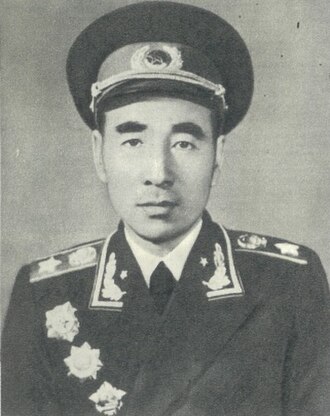 Lin Biao1907 – 1971Chinese Communist military commander and politicianSource: Wikidata (citizenship)
 Chiang Ching-kuo1910 – 19886th and 7th President of Republic of ChinaSource: Wikidata (citizenship)
 Lin Yutang1895 – 1976Chinese inventor, novelist and philosopher (1895–1976)Source: Wikidata (citizenship)
 Edmond H. Fischer1920 – 2021American biochemist (1920–2021)Source: Wikidata (country of birthplace)
 Zhu De1886 – 1976Marshal of the People's Republic of China (1886-1976)Source: Wikidata (citizenship)
Everything that happened
- 1911 – 19121911 RevolutionQing dynastyThe 1911 Revolution, also known as the Xinhai Revolution or Hsinhai Revolution, culminated in the end of China's last imperial dynasty, the Qing dynasty, and led to the establishment of the Republic of China (ROC). The revolution was the culmination of a decade of agitation, revolts, and uprisings.Source: Wikidata (country)
- 1915Treaty of KyakhtaKyakhtaThe Treaty of Kyakhta (Mongolian: Хиагтын гэрээ; Russian: Кяхтинский договор; Chinese: 中俄蒙協約) was a tri-party treaty signed on 25 May 1915 among Russia, Mongolia, and China.Source: Wikidata (country)
- 1917Manchu RestorationBeijingThe Manchu Restoration or Dingsi Restoration (Chinese: 丁巳復辟), also known as Zhang Xun Restoration (simplified Chinese: 张勋复辟; traditional Chinese: 張勳復辟), or Xuantong Restoration (simplified Chinese: 宣统复辟; traditional Chinese: 宣統復辟), was an attempt to restore the Chinese monarchy by General Zhang Xun, whose army seized Beijing and briefly reinstalled the last emperor of the Qing dynasty, Puyi, to the throne.Source: Wikidata (country)
- 19241924 Beijing CoupBeijingThe Beijing Coup (Chinese: 北京政變; pinyin: Běijīng Zhèngbiàn) was the October 1924 coup d'état by Feng Yuxiang against Chinese President Cao Kun, leader of the Zhili warlord faction. Feng called it the Capital Revolution (Chinese: 首都革命; pinyin: Shǒudū Gémìng).Source: Wikidata (country)
- 1926Canton CoupGuangzhouThe Canton Coup of 20 March 1926, also known as the Zhongshan Incident or the March 20th Incident, was a purge of Chinese Communist Party elements of the National Revolutionary Army in Guangzhou (then romanized as "Canton") undertaken by Chiang Kai-shek. The incident solidified Chiang's power immediately before the successful Northern Expedition, turning him into the paramount leader of the country.Source: Wikidata (country)
- 1927Autumn Harvest UprisingRepublic of ChinaThe Autumn Harvest Uprising was an insurrection that took place in Hunan and Jiangxi provinces of China, on September 7, 1927, led by Mao Zedong, who established a short-lived Hunan Soviet.Source: Wikidata (country)
- 1927Nanchang UprisingNanchangThe Nanchang Uprising of August 1927 was the point at which conflict between the Chinese Communist Party and the Nationalist Party of China (Kuomintang) became an outright rebellion. This began the Chinese Civil War. It was initiated by the Communists in response to the massacre of their party comrades in Shanghai by the Kuomintang four months before.Source: Wikidata (country)
- 1927Shanghai massacreShanghaiThe Shanghai massacre of 12 April 1927, the April 12 Purge or the April 12 Incident as it is commonly known in China, was the violent suppression of Chinese Communist Party (CCP) organizations and leftist elements in Shanghai by forces supporting General Chiang Kai-shek and conservative factions in the Kuomintang (Chinese Nationalist Party or KMT).Source: Wikidata (country)
- 1928Jinan incidentJinanThe Jinan incident (traditional Chinese: 濟南慘案; simplified Chinese: 济南惨案; Japanese: 済南事件; formerly romanised Tsinan) or 3 May Tragedy (traditional Chinese: 五三慘案; simplified Chinese: 五三惨案; pinyin: Wǔsān Cǎn'àn) began as a 3 May 1928 dispute between Chiang Kai-shek's National Revolutionary Army (NRA) and Japanese soldiers and civilians in Jinan, the capital of Shandong province in China, which then escalated into an…Source: Wikidata (country)
- 1931Mukden incidentShenyangThe Mukden incident was a false flag event staged by Japanese military personnel as a pretext for the 1931 Japanese invasion of Manchuria. On September 18, 1931, Lieutenant Suemori Kawamoto of the Independent Garrison Unit of the 29th Japanese Infantry Regiment detonated a small quantity of dynamite close to a railway line owned by Japan's South Manchuria Railway near Mukden (now Shenyang).Source: Wikidata (country)
- 1933Battle of ReheJeholThe Battle of Rehe (simplified Chinese: 热河战役; traditional Chinese: 熱河戰役; pinyin: Rèhé zhànyì, sometimes called the Battle of Jehol) was the second part of Operation Nekka, a campaign by which the Empire of Japan successfully captured the Inner Mongolian province of Rehe from the Chinese warlord Zhang Xueliang and annexed it to the new state of Manchukuo. The battle was fought from February 21 to March 1, 1933.Source: Wikidata (country)
- 1935Zunyi ConferenceRepublic of ChinaThe Zunyi Conference (simplified Chinese: 遵义会议; traditional Chinese: 遵義會議; pinyin: Zūnyì huìyì) was a meeting of the Chinese Communist Party (CCP) in January 1935 during the Long March. The power struggle displaced the triumvirate led by Bo Gu and Otto Braun and was replaced by the faction headed by Mao Zedong, who took over military command and become the leader of the Communist Party.Source: Wikidata (country)
- 1937Marco Polo Bridge incidentLugou BridgeThe Marco Polo Bridge incident, also known as the Lugou Bridge incident or the July 7 incident, was a three-day battle that began on 7 July 1937 in the district of Beijing between the 29th Army of the National Revolutionary Army of the Republic of China and the Imperial Japanese Army.Source: Wikidata (country)
- 1937 – 1938Nanjing MassacreRepublic of ChinaThe Nanjing Massacre or the Rape of Nanjing (formerly romanized as Nanking) was the mass rape and murder, between December 1937 and March 1938, of Chinese civilians, noncombatants, and prisoners of war by the Imperial Japanese Army in Nanjing, the capital of the Republic of China. It took place immediately after the Battle of Nanjing and retreat of the National Revolutionary Army during the Second Sino-Japanese War.Source: Wikidata (country)
- 1937Battle of Beiping–TianjinPei-p'ingThe Battle of Beiping–Tianjin (simplified Chinese: 平津作战; traditional Chinese: 平津作戰; pinyin: Píng Jīn Zùozhàn), also known as the Battle of Beiping, Battle of Peiping, Battle of Beijing, Battle of Peiking, the Peiking–Tientsin Operation, and by the Japanese as the North China Incident (北支事変, Hokushi jihen) (25–31 July 1937) was a series of battles of the Second Sino-Japanese War fought in the proximity of Beiping…Source: Wikidata (country of the location)
- 1937Battle of NankingNan-chingThe Battle of Nanking (or Nanjing) was fought in early December 1937 during the Second Sino-Japanese War between the Chinese National Revolutionary Army and the Imperial Japanese Army for control of Nanjing (Chinese: 南京; pinyin: Nánjīng), the capital of the Republic of China.Source: Wikidata (country of the location)
- 1937Defense of Sihang WarehouseSihang WarehouseThe Defense of Sihang Warehouse (Chinese: 四行倉庫保衛戰) took place from October 27 to October 31, 1937, and marked the beginning of the end of the three-month Battle of Shanghai in the opening phase of the Second Sino-Japanese War. Defenders of the warehouse held out against numerous waves of Japanese forces to cover Chinese forces retreating west during the Battle of Shanghai.Source: Wikidata (country)
- 1939 – 1945World War IIWorldwideThe deadliest conflict in history, fought between the Allies and the Axis powers. It ends with the surrender of Germany and Japan in 1945.Source: Wikidata (country of the location)
- 1941Battle of ChangshaChangshaThe (Second) Battle of Changsha (6 September – 8 October 1941; Chinese: 第二次長沙會戰) was Japan's second attempt at taking the city of Changsha, China, the capital of Hunan Province, as part of the Second Sino-Japanese War.Source: Wikidata (country)
- 1944 – 1949Ili RebellionSinkiang ProvinceThe Ili Rebellion (simplified Chinese: 伊宁事变; traditional Chinese: 伊寧事變; pinyin: Yīníng Shìbiàn) was a separatist uprising by the Turkic peoples of northern Xinjiang (East Turkestan) against the Kuomintang government of the Republic of China, from 1944 to 1946.Source: Wikidata (country)
- 1947February 28 incidentTaiwan IslandThe February 28 incident (also called the February 28 massacre, the 228 incident, or the 228 massacre) was an anti-government uprising in Taiwan in 1947 that was violently suppressed by the Kuomintang–led Nationalist government of the Republic of China (ROC). Directed by provincial governor Chen Yi and president Chiang Kai-shek, thousands of civilians were killed beginning on February 28.Source: Wikidata (country)
- 1949Battle of GuningtouKinmen CountyThe Battle of Guningtou (古寧頭之役), also known as the Battle of Kuningtou or the Battle of Kinmen (Chinese: 金門戰役), was fought in October 1949 on the island of Kinmen (Quemoy), located in the Taiwan Strait, during the final stages of the Chinese Civil War.Source: Wikidata (country)
- 1949Retreat of the government of the Republic of China to TaiwanTaiwan IslandThe remnants of the government of the Republic of China (ROC), alongside many refugees, retreated to the island of Taiwan (Formosa) on December 7, 1949. The members of the Kuomintang (KMT), its officers, and approximately 2 million ROC troops took part in the retreat, in addition to many civilians and refugees, fleeing the advance of the People's Liberation Army (PLA) of the Chinese Communist Party (CCP).Source: Wikidata (country)