Norway
33 events
Norway, officially the Kingdom of Norway, is a Nordic country comprising the western and northernmost parts of the Scandinavian Peninsula in Northern Europe, the remote Arctic island Jan Mayen and the archipelago Svalbard. Bouvet Island, located in the Subantarctic, is a dependency, and not a part of the Kingdom; Norway also claims the Antarctic territories of Peter I Island and Queen Maud Land. Norway has a population of approximately 5.6 million, and a total area of 385,207 square kilometres (148,729 sq mi). Its capital and largest city is Oslo.
Text from the Wikipedia article Norway, CC BY-SA 4.0
Built from Wikidata: an event or person is listed when Wikidata links them to this page, as shown next to each one. Many aren’t recorded there, so this list is incomplete.
Key people
 Roald Amundsen1872 – 1928Norwegian explorer; first person to reach the South Pole (1872–1928)Source: Wikidata (citizenship)
 Henrik Ibsen1828 – 1906Norwegian playwright and theatre director (1828–1906)Source: Wikidata (citizenship)
 Knut Hamsun1859 – 1952Norwegian novelist (1859–1952)Source: Wikidata (citizenship)
 Bjørnstjerne Bjørnson1832 – 1910Norwegian writer (1832–1910)Source: Wikidata (citizenship)
 Willy Brandt1913 – 1992German politician (SPD), chancellor of West Germany (1969–1974) and Nobel Peace Prize laureateSource: Wikidata (citizenship)
 Edvard Munch1863 – 1944Norwegian painter (1863–1944)Source: Wikidata (citizenship)
 Sigrid Undset1882 – 1949Norwegian writer (1882–1949)Source: Wikidata (citizenship)
 Fridtjof Nansen1861 – 1930Norwegian polar explorer (1861–1930)Source: Wikidata (citizenship)
 Edvard Grieg1843 – 1907Norwegian composer and pianist (1843–1907)Source: Wikidata (citizenship)
 Magnus Carlsenb. 1990Norwegian chess player (born 1990)Source: Wikidata (citizenship)
 Roald Dahl1916 – 1990British writer and poet (1916–1990)Source: Wikidata (citizenship)
 Harald V of Norway1937 – 2026King of Norway from 1991 to 2026 (1937–2026)Source: Wikidata (citizenship)
 Jens Stoltenbergb. 1959Norwegian politician (born 1959)Source: Wikidata (citizenship)
 Erling Haalandb. 2000Norwegian footballer (born 2000)Source: Wikidata (citizenship)
 Niels Henrik Abel1802 – 1829Norwegian mathematician (1802–1829)Source: Wikidata (citizenship)
 Gro Harlem Brundtlandb. 193929th Prime Minister of NorwaySource: Wikidata (citizenship)
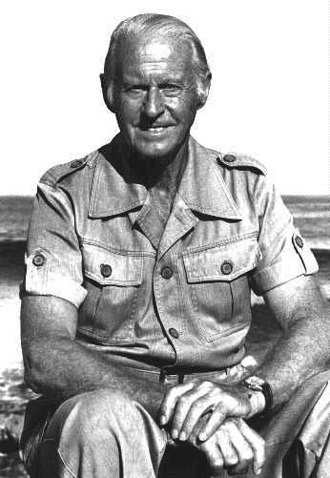 Thor Heyerdahl1914 – 2002Norwegian anthropologist and adventurer (1914-2002)Source: Wikidata (citizenship)
 Erna Solbergb. 1961Prime Minister of Norway from 2013 to 2021Source: Wikidata (citizenship)
 Trygve Lie1896 – 19681st Secretary-General of the United Nations (1896–1968)Source: Wikidata (citizenship)
 Jostein Gaarderb. 1952Norwegian author (born 1952)Source: Wikidata (citizenship)
 Jon Fosseb. 1959Norwegian writer, playwright, and translator (born 1959)Source: Wikidata (citizenship)
 Haakon VIII of Norwayb. 1973King of Norway since 2026Source: Wikidata (citizenship)
 May-Britt Moserb. 1963Norwegian psychologist and neuroscientistSource: Wikidata (citizenship)
 Alexander Rybakb. 1986Norwegian singer, actor, violinist, composer, pianistSource: Wikidata (citizenship)
 Haakon VII of Norway1872 – 1957King of Norway from 1905 to 1957 (1872–1957)Source: Wikidata (citizenship)
 Ragnar Frisch1895 – 1973Norwegian economist (1895–1973)Source: Wikidata (citizenship)
 Vidkun Quisling1887 – 1945Norwegian politician and Nazi collaborator (1887–1945)Source: Wikidata (citizenship)
 Liv Ullmannb. 1938Norwegian actress, director, and screenwriter (born 1938)Source: Wikidata (citizenship)
 Ivar Giæver1929 – 2025Norwegian-American physicistSource: Wikidata (citizenship)
 Lars Onsager1903 – 1976American physical chemist and theoretical physicist (1903-1976)Source: Wikidata (citizenship)
 Olav V of Norway1903 – 1991King of Norway (1957–1991)Source: Wikidata (citizenship)
 Erik the Red950 CE – 1003Explorer and founder of the first viking settlement in GreenlandSource: Wikidata (citizenship)
 Anni-Frid Lyngstadb. 1945Swedish singer (born 1945)Source: Wikidata (country of birthplace)
 Ole Gunnar Solskjærb. 1973Norwegian association football managerSource: Wikidata (citizenship)
 Martin Ødegaardb. 1998Norwegian footballer (born 1998)Source: Wikidata (citizenship)
 Varg Vikernesb. 1973Norwegian black metal musicianSource: Wikidata (citizenship)
 Ivar Andreas Aasen1813 – 1896Norwegian linguist and poet, dubbed the father of Nynorsk (1813 – 1896)Source: Wikidata (citizenship)
 Christian I of Denmark1426 – 1481Scandinavian monarch under the Kalmar Union (1426-1481)Source: Wikidata (citizenship)
 Jo Nesbøb. 1960Norwegian novelist, musician and economistSource: Wikidata (citizenship)
 Harald III of Norway1015 – 1066King of Norway from 1046 to 1066Source: Wikidata (country of birthplace)
 Sonja Henie1912 – 1969Norwegian figure skater and actress (1912–1969)Source: Wikidata (citizenship)
 Ludvig Holberg1684 – 1754Danish-Norwegian writer, philosopher and historian (1684–1754)Source: Wikidata (citizenship)
 Thorstein Veblen1857 – 1929American economist and sociologist (1857–1929)Source: Wikidata (citizenship)
 Christian II of Denmark1481 – 1559King of Denmark, Norway and SwedenSource: Wikidata (citizenship)
 Jonas Gahr Støreb. 1960Prime Minister of Norway since 2021Source: Wikidata (citizenship)
 Odd Hassel1897 – 1981Norwegian physical chemist and Nobel Laureate (1897–1981)Source: Wikidata (citizenship)
 John Arne Riiseb. 1980Norwegian association football playerSource: Wikidata (citizenship)
 Edvard Moserb. 1962Norwegian psychologist and neuroscientistSource: Wikidata (citizenship)
Showing the 48 best-known of 58 people.
Everything that happened
- 872 CEBattle of HafrsfjordHafrsfjordThe Battle of Hafrsfjord (Norwegian: Slaget i Hafrsfjord) was a naval battle fought in Hafrsfjord sometime between 872 and 900 that resulted in the unification of Norway, later known as the Kingdom of Norway. After the battle, the victorious Viking chief Harald Fairhair proclaimed himself the first king of the Norwegians, merging several petty kingdoms under a single monarch for the first time.Source: Wikidata (country of the location)
- 961 CEBattle of FitjarFitjar MunicipalityThe Battle of Fitjar (Norwegian: Slaget ved Fitjar på Stord) took place in 961 in Fitjar on the island Stord in the county of Hordaland, Norway.Source: Wikidata (country)
- 984 CEBattle of HjörungavágrSunnmøreThe Battle of Hjǫrungavágr (Norwegian: Slaget ved Hjørungavåg) is a semi-legendary naval battle that took place in the late 10th century between the Jarls of Lade and a Danish invasion fleet led by the fabled Jomsvikings. This battle played an important role in the struggle by Haakon Sigurdsson (c. 937 – 995) to unite his rule over Norway. Traditionally, the battle has been set during the year 986.Source: Wikidata (country)
- 1030Battle of StiklestadStiklestadThe Battle of Stiklestad (Norwegian: Slaget på Stiklestad; Old Norse: Stiklastaðaorrusta) in 1030 is one of the most famous battles in the history of Norway. In this battle, King Olaf II of Norway was killed. During the pontificate of Pope Alexander III, the Roman Catholic Church declared Olaf a saint in 1164.Source: Wikidata (country)
- 1665Battle of LowestoftNorth SeaThe Battle of Lowestoft took place on 13 June [O.S. 3 June] 1665 during the Second Anglo-Dutch War. A fleet of more than a hundred ships of the United Provinces commanded by Lieutenant-Admiral Jacob van Wassenaer, Lord Obdam, attacked an English fleet of equal size commanded by James, Duke of York, forty miles east of the port of Lowestoft in Suffolk.Source: Wikidata (country of the location)
- 1665Battle of VågenBergenThe Battle of Vågen was a naval battle between a Dutch merchant and treasure fleet and an English flotilla of warships on 2 August 1665 as part of the Second Anglo-Dutch War. The battle took place in Vågen (meaning "the bay, voe" in Norwegian), the main port area of neutral Bergen, Norway.Source: Wikidata (country)
- 1665 – 1667Second Anglo-Dutch WarNorth SeaThe Second Anglo-Dutch War began on 4 March 1665 and concluded with the signing of the Treaty of Breda on 31 July 1667. It was the second in a series of naval wars fought between England and the Dutch Republic and it was driven largely by commercial rivalry, competition over maritime trade, and disputes over overseas colonies and trading posts.Source: Wikidata (country of the location)
- 1672 – 1674Third Anglo-Dutch WarNorth SeaThe Third Anglo-Dutch War, began on 27 March 1672, and concluded on 19 February 1674. A naval conflict between the Dutch Republic and England, in alliance with France, it is considered a related conflict of the wider 1672 to 1678 Franco-Dutch War.Source: Wikidata (country of the location)
- 1780 – 1784Fourth Anglo-Dutch WarNorth SeaThe Fourth Anglo-Dutch War (Dutch: Vierde Engels-Nederlandse Oorlog; 1780–1784) was a conflict between the Kingdom of Great Britain and the Dutch Republic. The war, contemporary with the American Revolutionary War (1775–1783), broke out over British and Dutch disagreements on the legality and conduct of Dutch trade with Britain's enemies in that war.Source: Wikidata (country of the location)
- 1797Battle of CamperdownNorth SeaThe Battle of Camperdown (Dutch: Zeeslag bij Kamperduin) was fought on 11 October 1797 between the Royal Navy's North Sea Fleet under Admiral of the Blue Adam Duncan and a Batavian Navy fleet led by Vice-admiral Jan Willem de Winter.Source: Wikidata (country of the location)
- 1807 – 1814Gunboat WarNorth SeaThe Gunboat War (1807–1814) was a naval conflict between Denmark–Norway and Great Britain supported by Sweden during the Napoleonic Wars. The war's name is derived from the Danish tactic of employing small gunboats against the materially superior Royal Navy. In Scandinavia it is seen as the later stage of the English Wars, whose commencement is accounted as the First Battle of Copenhagen in 1801.Source: Wikidata (country of the location)
- 1852Kautokeino rebellionKautokeinoThe Sámi revolt in Guovdageaidnu, also known as the Kautokeino uprising, was a revolt in the village of Kautokeino in Kautokeino Municipality in northern Norway in 8th November 1852 by a group of Sámi who attacked representatives of the Norwegian authorities and other locals.Source: Wikidata (country)
- 1915Battle of Dogger BankNorth SeaThe Battle of Dogger Bank (24 January 1915) was a naval engagement during the First World War near the Dogger Bank in the North Sea, between squadrons of the British Grand Fleet and the Kaiserliche Marine (High Seas Fleet). The British had intercepted and decoded German wireless transmissions, gaining advance knowledge that a German raiding squadron was heading for the Dogger Bank.Source: Wikidata (country of the location)
- 1916Battle of JutlandNorth SeaThe Battle of Jutland (German: Skagerrakschlacht, lit. 'Battle of the Skagerrak') was a naval battle between Britain's Royal Navy Grand Fleet, under Admiral Sir John Jellicoe, and the Imperial German Navy's High Seas Fleet, under Vice-Admiral Reinhard Scheer, during the First World War.Source: Wikidata (country of the location)
- 1920Svalbard TreatyParisThe Svalbard Treaty (originally the Spitsbergen Treaty) recognises the sovereignty of Norway over the Arctic archipelago of Svalbard, at the time called Spitsbergen. The exercise of sovereignty is, however, subject to certain stipulations, and not all Norwegian law applies. The treaty restricts military uses of the archipelago, but it is not demilitarized.Source: Wikidata (country)
- 1939 – 1945Battle of the AtlanticAtlantic OceanThe Battle of the Atlantic, the longest continuous military campaign in World War II, ran from 1939 to the defeat of Nazi Germany in 1945, covering a major part of the naval history of World War II. At its core was the Allied naval blockade of Germany, announced the day after the declaration of war, and Germany's subsequent counterblockade. The campaign peaked from mid-1940 to the end of 1943.Source: Wikidata (country of the location)
- 1940Altmark incidentJøssingfjordenThe Altmark incident (Norwegian: Altmark-affæren; German: Altmark-Zwischenfall) was a naval incident of World War II between British destroyers and the German tanker Altmark, which happened on 16–17 February 1940. It took place in what were neutral Norwegian waters.Source: Wikidata (country)
- 1940Battle of Drøbak SoundDrøbak SoundThe Battle of Drøbak Sound took place in Drøbak Sound, the northernmost part of the outer Oslofjord in south-eastern Norway, on 9 April 1940. It marked the end of the "Phoney War" and the beginning of World War II in Western Europe.Source: Wikidata (country)
- 1940Battles of NarvikNarvikThe Battles of Narvik were fought from 9 April to 8 June 1940, as a naval battle in Ofotfjord and as a land battle in the mountains surrounding the north Norwegian town of Narvik, as part of the Norwegian campaign of the Second World War.Source: Wikidata (country)
- 1940 – 1944Norwegian heavy water sabotageVemorkThe Norwegian heavy water sabotage (Bokmål: Tungtvannsaksjonen; Nynorsk: Tungtvassaksjonen) was a series of Allied-led efforts to halt Nazi German heavy water (deuterium) production via hydroelectric plants in German-occupied Norway during World War II, involving both Norwegian commandos and Allied bombing raids.Source: Wikidata (country)
- 1940Operation WikingerNorth SeaOperation Viking (German: Unternehmen Wikinger) was a German naval sortie into the North Sea by six destroyers of the Kriegsmarine on 22 February 1940 during the Second World War. Poor inter-service communication and co-operation between the Kriegsmarine and the Luftwaffe resulted in the loss of two German warships through friendly fire bombing and German or British mines.Source: Wikidata (country of the location)
- 1941 – 1945Arctic convoys of World War IINorwegian SeaThe Arctic convoys of World War II were 78 convoys that sailed from the United Kingdom, Iceland and North America, most to Arkhangelsk (Archangel) and Murmansk in the northern Soviet Union. The first convoy series was Convoy PQ 1 to Convoy PQ 18 (outbound) and Convoy QP 1 to Convoy QP 15 (inbound). The second series was Convoy JW 51 to Convoy JW 67 (outbound) and Convoy RA 51 to Convoy RA 67 (inbound).Source: Wikidata (country of the location)
- 1941Operation EFKirkenesOperation EF (1941) (the Raid on Kirkenes and Petsamo) took place on 30 July 1941, during the Second World War. After Operation Barbarossa, the German invasion of the Soviet Union, began on 22 June 1941, Fleet Air Arm aircraft flew from the aircraft carriers HMS Victorious and Furious to attack merchant vessels in the northern Norwegian port of Kirkenes and the Finnish port of Liinakhamari in Petsamo.Source: Wikidata (country)
- 1941Operation GauntletSvalbardOperation Gauntlet was an Allied Combined Operation from 25 August until 3 September 1941, during the Second World War. Canadian, British and Norwegian armed forces in exile (Utefronten, Outside Front) landed on the Norwegian island of Spitzbergen in the Svalbard Archipelago, 650 mi (1,050 km) south of the North Pole.Source: Wikidata (country of the location)
- 1941Operation Silver FoxSápmiOperation Silver Fox (German: Silberfuchs; Finnish: Hopeakettu) or the Murmansk operation (Russian: Мурманская операция) from 29 June to 17 November 1941, was a joint German–Finnish military operation during the Continuation War on the Eastern Front of World War II against the Soviet Union.Source: Wikidata (country of the location)
- 1943Battle of the North CapeNorth CapeThe Battle of the North Cape was a Second World War naval battle on 26 December 1943, part of the Arctic campaign. The German battleship Scharnhorst sailed to implement Operation Ostfront, an attack on Arctic convoys carrying supplies from the western Allies to the Soviet Union. Scharnhorst was brought to battle and sunk by the battleship HMS Duke of York and its cruisers and destroyers.Source: Wikidata (country)
- 1943Operation SourceAltafjordOperation Source was a series of attacks to neutralise the heavy German warships – Tirpitz, Scharnhorst, and Lützow – based in northern Norway, using X-class midget submarines.Source: Wikidata (country of the location)
- 1944Operation TungstenKåfjordenOperation Tungsten was a Second World War air raid by the Fleet Air Arm of the Royal Navy against the German battleship Tirpitz. The operation sought to damage or destroy Tirpitz at her base in Kaafjord in the far north of Norway before she could become fully operational again following a period of repairs.Source: Wikidata (country of the location)
- 1944Petsamo–Kirkenes offensiveArcticThe Petsamo–Kirkenes offensive was a major military offensive during World War II, mounted by the Red Army against the Wehrmacht in 1944 in the Petsamo region, ceded to the Soviet Union by Finland in accordance with the Moscow Armistice, and Norway. The offensive defeated the Wehrmacht's forces in the Arctic, driving them back into Norway, and was called the "Tenth Shock" by Stalin.Source: Wikidata (country)
- 1993Oslo AccordsWashington, D.C.Israel and the Palestine Liberation Organization recognize each other and agree to limited Palestinian self-rule, creating the Palestinian Authority.Source: Wikidata (country)
- 20112011 Norway attacksOsloOn 22 July 2011, 32-year-old far-right extremist Anders Behring Breivik committed two domestic terrorist attacks in Norway against the government, the civilian population, and a Workers' Youth League (AUF) summer camp, in which a total of 77 people were killed. Breivik’s Utøya shooting spree is the deadliest mass shooting by a lone gunman in modern history.Source: Wikidata (country)
- 2020COVID-19 pandemicWorldwideA new coronavirus spreads worldwide. Lockdowns, remote work and fast-developed vaccines reshape daily life.Source: Wikidata (country)
- 20222022 Oslo shootingLondon PubThe 2022 Oslo shooting, commonly known in Norway as the Pride Shooting in Oslo (Pride-skyting i Oslo), occurred on 25 June 2022, when two people were killed and twenty-one people were wounded in a mass shooting in Oslo, Norway. Police declared the incident as an "act of Islamist terrorism".Source: Wikidata (country)