Former state · 1626 – 1838
Kingdom of Great Britain
11 events
Great Britain, officially the Kingdom of Great Britain, was a sovereign state in Western Europe from 1707 to the end of 1800. The state was created by the 1706 Treaty of Union and ratified by the Acts of Union 1707, which united the Kingdom of England (including Wales) and the Kingdom of Scotland to form a single kingdom encompassing the whole island of Great Britain and its outlying islands, with the exception of the Isle of Man and the Channel Islands.
Text from the Wikipedia article Kingdom of Great Britain, CC BY-SA 4.0
Built from Wikidata: an event or person is listed when Wikidata links them to this page, as shown next to each one. Many aren’t recorded there, so this list is incomplete.
Showing 244 years
Key people
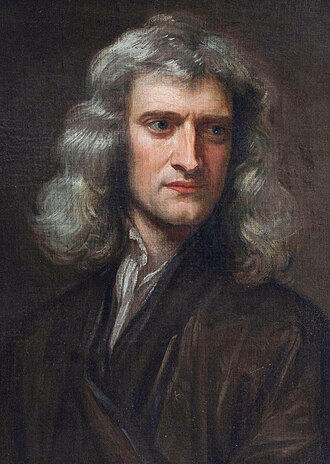 Isaac Newton1642 – 1727English mathematician and physicist (1642–1727)Source: Wikidata (citizenship)
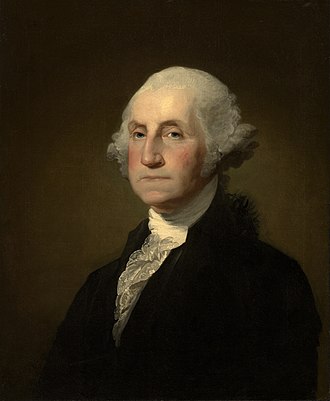 George Washington1732 – 1799Founding Father and first U.S. president (1732–1799)Source: Wikidata (citizenship)
 Adam Smith1723 – 1790Scottish moral philosopher and political economist (1723–1790)Source: Wikidata (citizenship)
 Lord Byron1788 – 1824English Romantic poet and lyricist (1788–1824)Source: Wikidata (citizenship)
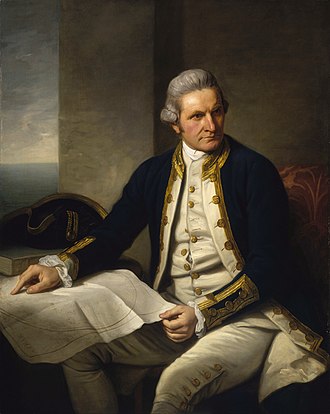 James Cook1728 – 1779British explorer, cartographer and naval officer (1728–1779)Source: Wikidata (citizenship)
 Michael Faraday1791 – 1867British scientist (1791–1867)Source: Wikidata (citizenship)
 William Blake1757 – 1827English poet and artist (1757–1827)Source: Wikidata (citizenship)
 George Frideric Handel1685 – 1759German-British Baroque composer (1685–1759)Source: Wikidata (citizenship)
 David Hume1711 – 1776Scottish philosopher, economist, and historian (1711-1776)Source: Wikidata (citizenship)
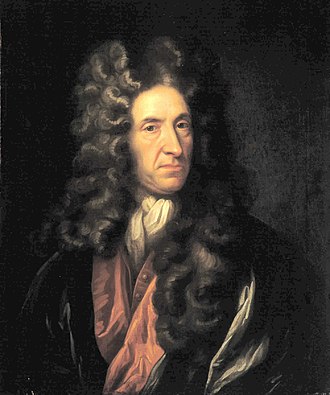 Daniel Defoe1660 – 1731English trader, writer, and journalist (1660–1731)Source: Wikidata (citizenship)
 Percy Bysshe Shelley1792 – 1822British Romantic poet (1792–1822)Source: Wikidata (citizenship)
 William Wordsworth1770 – 1850English Romantic poet (1770–1850)Source: Wikidata (citizenship)
 Walter Scott1771 – 1832Scottish novelist, poet and playwright (1771–1832)Source: Wikidata (citizenship)
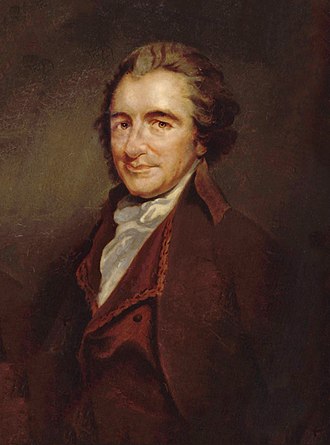 Thomas Paine1737 – 1809American Founding Father, philosopher, and political activist (1737–1809)Source: Wikidata (citizenship)
 Samuel Johnson1709 – 1784English writer and lexicographer (1709–1784)Source: Wikidata (citizenship)
 Mary Shelley1797 – 1851English writer (1797–1851)Source: Wikidata (citizenship)
 Mary Wollstonecraft1759 – 1797English writer and intellectual (1759–1797)Source: Wikidata (citizenship)
 Robert Burns1759 – 1796Scottish poet and lyricist (1759–1796)Source: Wikidata (citizenship)
 Samuel Taylor Coleridge1772 – 1834English poet, literary critic and philosopher (1772–1834)Source: Wikidata (citizenship)
 Alexander Pope1688 – 1744English poet (1688–1744)Source: Wikidata (citizenship)
 Thomas Carlyle1795 – 1881Scottish essayist, historian and philosopher (1795–1881)Source: Wikidata (citizenship)
 William Herschel1738 – 1822German-born British astronomer and composer (1738–1822)Source: Wikidata (citizenship)
 George III of Great Britain1738 – 1820King of Great Britain and Ireland from 1760 to 1820 (1738–1820)Source: Wikidata (citizenship)
 Thomas Robert Malthus1766 – 1834British political economist (1766–1834)Source: Wikidata (citizenship)
 Jeremy Bentham1748 – 1832British philosopher, jurist, and social reformer (1748–1832)Source: Wikidata (citizenship)
 Horatio Nelson, 1st Viscount Nelson1758 – 1805British admiral (1758–1805)Source: Wikidata (citizenship)
 Edward Gibbon1737 – 1794English historian and politician (1737–1794)Source: Wikidata (citizenship)
 Humphry Davy1778 – 1829British chemistSource: Wikidata (citizenship)
 Edmond Halley1656 – 1742English astronomer, mathematician, geophysicist, meteorologist and physicist (1656–1742)Source: Wikidata (citizenship)
 David Ricardo1772 – 1823British banker, classical economist and politician (1772-1823)Source: Wikidata (citizenship)
 William IV1765 – 1837King of the United Kingdom and Hanover from 1830 to 1837Source: Wikidata (citizenship)
 Anne of Great Britain1665 – 1714Queen of Great Britain and Ireland from 1702 to 1714 (1665–1714)Source: Wikidata (citizenship)
 George IV of the United Kingdom1762 – 1830King of the United Kingdom and Hanover from 1820 to 1830Source: Wikidata (citizenship)
 Robert Walpole1676 – 1745British statesman and art collector, 1st Earl of Orford (1676–1745)Source: Wikidata (citizenship)
 Henry Cavendish1731 – 1810English natural philosopher, and scientist (1731–1810)Source: Wikidata (citizenship)
 George II of Great Britain1683 – 1760King of Great Britain and Ireland from 1727 to 1760 (1683-1760)Source: Wikidata (citizenship)
 J. M. W. Turner1775 – 1851English painter and draftsman (c.1775–1851)Source: Wikidata (citizenship)
 Christopher Wren1632 – 1723English architect (1632–1723)Source: Wikidata (citizenship)
 George I of Great Britain1660 – 1727King of Great Britain and Ireland from 1714 to 1727Source: Wikidata (citizenship)
 William Pitt the Younger1759 – 1806British statesman (1759–1806)Source: Wikidata (citizenship)
 William Hogarth1697 – 1764English painter, printmaker, pictorial satirist, social critic and editorial cartoonist (1697-1764)Source: Wikidata (citizenship)
 Henry Fielding1707 – 1754English novelist and dramatist (1707–1754)Source: Wikidata (citizenship)
 Laurence Sterne1713 – 1768Anglo-Irish novelist and Anglican cleric (1713–1768)Source: Wikidata (citizenship)
 Robert Peel1788 – 1850Former Prime Minister of the United Kingdom (1788–1850)Source: Wikidata (citizenship)
 John Wesley1703 – 1791British cleric and founder of the Methodist movement (1703-1791)Source: Wikidata (citizenship)
 William Godwin1756 – 1836English journalist, political philosopher and novelist (1756–1836)Source: Wikidata (citizenship)
 Thomas Babington Macaulay, 1st Baron Macaulay1800 – 1859British historian and politician (1800–1859)Source: Wikidata (citizenship)
 John Constable1776 – 1837English painter (1776-1837)Source: Wikidata (citizenship)
Showing the 48 best-known of 87 people.
Everything that happened
- 1715Battle of SheriffmuirSheriffmuirThe Battle of Sheriffmuir (Scottish Gaelic: Blàr Sliabh an t-Siorraim, [pl̪ˠaɾ ˈʃʎiəv əɲ ˈtʲʰirˠəm]) was an engagement in 1715 at the height of the Jacobite rising in Scotland. The battlefield has been included in the Inventory of Historic Battlefields in Scotland and protected by Historic Scotland under the Scottish Historical Environment Policy of 2009.Source: Wikidata (country)
- 1717Triple AllianceDutch RepublicThe Triple Alliance was a defence pact signed on 4 January 1717 in The Hague between the Dutch Republic, France and Great Britain, against Bourbon Spain in an attempt to maintain the agreements of the 1713–15 Peace of Utrecht. The three states were concerned about Spain becoming a superpower in Europe. As a result, militarisation took place and caused great havoc to civilians.Source: Wikidata (country)
- 1719Battle of Glen ShielGlen ShielThe Battle of Glen Shiel, 10 June 1719, was the decisive military engagement of the Jacobite rising of 1719. Fought near Glen Shiel in the Scottish Highlands, a Jacobite army composed of Highland levies and Spanish marines was defeated by British government troops.Source: Wikidata (country)
- 1721 – 1757Gin CrazeKingdom of Great BritainIn the first half of the 18th century, the consumption of gin increased rapidly in Great Britain, especially in London. This so-called Gin Craze was the result of legislation that encouraged domestic gin production and restricted brandy imports. As gin production and consumption spread, public drunkenness and alcoholism became major public concerns.Source: Wikidata (country)
- 1745Battle of PrestonpansEdinburghThe Battle of Prestonpans, 21 September 1745, took place near Prestonpans, in East Lothian. It was the first significant engagement of the Jacobite rising of 1745.Source: Wikidata (country)
- 1746Battle of CullodenCullodenThe Battle of Culloden took place on 16 April 1746, near Inverness, in the Scottish Highlands. A Jacobite army under Charles Edward Stuart was decisively defeated by a British government force commanded by the Duke of Cumberland, thereby ending the Jacobite rising of 1745.Source: Wikidata (country)
- 1756Battle of MinorcaMenorcaThe Battle of Minorca was a fleet action fought on 20 May 1756 between the French and British navies during the Seven Years' War. Fought off Minorca shortly after the war began, it was the opening naval battle of the war's European theatre and resulted in a French strategic victory.Source: Wikidata (country)
- 1779 – 1783Great Siege of GibraltarGibraltarThe Great Siege of Gibraltar was an unsuccessful attempt by Spain and France to capture Gibraltar from Britain during the American Revolutionary War. It was the largest battle in the war by number of combatants.Source: Wikidata (country)
- 1781Zong massacreKingdom of Great BritainThe Zong massacre was a mass killing of more than 130 enslaved African people by the crew of the British slave ship Zong over several days from 29 November 1781. The William Gregson slave-trading syndicate, based in Liverpool, owned the ship as part of the Atlantic slave trade. As was common business practice, they had taken out insurance on the lives of the enslaved Africans as cargo.Source: Wikidata (country)
- 1794Jay TreatyLondonThe Treaty of Amity, Commerce, and Navigation, Between His Britannic Majesty and the United States of America, commonly known as the Jay Treaty, and also as Jay's Treaty, was a 1794 treaty between the United States and Great Britain that averted war, resolved issues remaining since the 1783 Treaty of Paris (which ended the American Revolutionary War), and facilitated ten years of peaceful trade between Americans and…Source: Wikidata (country)
- 1838Treaty of Balta LimanBaltalimanıThe 1838 Treaty of Balta Liman, or the Anglo-Ottoman Treaty, was a formal trade agreement signed between the Sublime Porte of the Ottoman Empire and Great Britain. The trade policies imposed upon the Ottoman Empire, after the Treaty of Balta Liman, were some of the most liberal, open market settlements that had ever been enacted.Source: Wikidata (country)