Topic timeline · 1917 – today
Israeli–Palestinian conflict
39 events
A long-running conflict between Israelis and Palestinians over land, statehood, security and refugees. Its modern roots go back to the end of Ottoman rule and the British Mandate after World War I.
This topic is contested. Event names and summaries follow Wikipedia, and each event links to its source article.
Showing 125 years
Key people
 Yasser Arafat1929 – 2004Palestinian political leader (1929-2004) and Former President of the Palestinian National Authority (1994-2004)
 Mahmoud Abbasb. 1935President of the Palestinian Authority since 2005
 David Ben-Gurion1886 – 1973Israeli politician, Zionist leader, prime minister of Israel (1948–1953, 1955–1963) - (born1886–1973)
 Golda Meir1898 – 1978Prime Minister of Israel from 1969 to 1974
 Menachem Begin1913 – 1992Israeli politician and former Prime Minister (1913–1992)
 Yitzhak Rabin1922 – 1995Israeli politician, statesman and general (1922–1995)
 Ariel Sharon1928 – 2014Prime Minister of Israel from 2001 to 2006 (1928-2014)
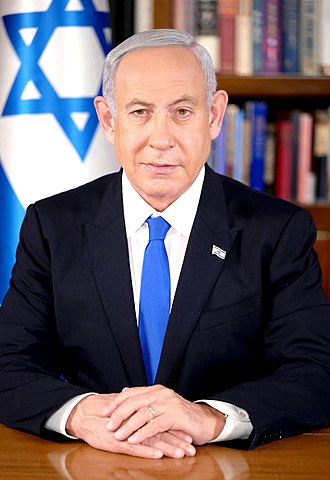 Benjamin Netanyahub. 1949Prime Minister of Israel (born 1949), (1996–1999; 2009–2021; 2022–present)
 Ahmad Yasin1937 – 2004Palestinian political and religious leader (1937–2004)
 Gamal Abdel Nasser1918 – 1970President of Egypt from 1956 to 1970
 Anwar Sadat1918 – 1981President of Egypt from 1970 to 1981
Everything that happened
- 1917Balfour Declaration—The Balfour Declaration (2 November 1917) was a public statement issued by the British Government in 1917 during the First World War announcing its support for the establishment of a "national home for the Jewish people" in Palestine, then an Ottoman region with a small Jewish minority among an overwhelming Arab majority, mostly Muslim but also including Christians.
- 19201920 Nebi Musa riotsOccupied Enemy Territory AdministrationThe 1920 Nebi Musa riots or 1920 Jerusalem riots took place in the British-controlled part of Occupied Enemy Territory Administration from 4 to 7 April 1920 in and around the Old City of Jerusalem. Five Jews were killed and several hundred injured; four Arabs were killed and 18 injured; seven Britons were injured.
- 19291929 Palestine riotsMandatory PalestineThe 1929 Palestine riots, also known as the Western Wall Riots, the Buraq Uprising (Arabic: ثورة البراق, Thawrat al-Burāq) or the Events of 1929 (Hebrew: מאורעות תרפ"ט, Meora'ot Tarpat, lit. Events of 5689 Anno Mundi), were a series of demonstrations and riots in Mandatory Palestine in late August 1929 regarding access to the Western Wall in Jerusalem.
- 1936 – 19391936–1939 Arab revolt in PalestineMandatory PalestineA popular uprising by Palestinian Arabs in Mandatory Palestine against the British administration, known as the Great Revolt, and later the Great Palestinian Revolt or the Palestinian Revolution, lasted from 1936 until 1939. The movement sought independence from British colonial rule and the end of British support for Zionism, including Jewish immigration and land sales to Jews.
- 1947United Nations Partition Plan for Palestine—The United Nations Partition Plan for Palestine was a proposal developed by the United Nations for the future government of Mandatory Palestine following the termination of the British Mandate. Drafted by the UN Special Committee on Palestine (UNSCOP) on 3 September 1947, the Plan was adopted by the UN General Assembly on 29 November 1947 as Resolution 181 (II).
- 1948 – 19491948 Arab–Israeli WarIsrael and PalestineIsrael declares independence on 14 May 1948 as the British Mandate ends, and neighboring Arab states go to war. About 700,000 Palestinians flee or are expelled from their homes, an event Palestinians call the Nakba (“catastrophe”).
- 1948Israeli Declaration of IndependencePalestineThe Israeli Declaration of Independence, formally the Declaration of the Establishment of the State of Israel (Hebrew: הכרזה על הקמת מדינת ישראל), was proclaimed at the Tel Aviv Museum on 14 May 1948 (5 Iyar 5708), at the end of the civil war phase and beginning of the Arab–Israeli War of the 1948 Palestine war, by the Va'ad Leumi led by David Ben-Gurion, the executive head of the World Zionist Organization and…
- 1948NakbaMandatory PalestineThe Nakba (Arabic: النَّكْبَة, romanized: an-Nakba, lit. 'the catastrophe') is the ethnic cleansing of Palestinian Arabs by Zionists through their violent displacement and dispossession of land, property, and belongings, along with the destruction of their society and the suppression of their culture, identity, political rights, and national aspirations.
- 1948Deir Yassin massacreDeir YassinThe Deir Yassin massacre took place on 9 April 1948, when Zionist paramilitaries attacked the village of Deir Yassin near Jerusalem, then part of Mandatory Palestine, killing at least 107 Palestinian Arab villagers, including women and children. The attack was conducted primarily by the Irgun and Lehi, who were supported by the Haganah and Palmach.
- 1956Suez CrisisSinai PeninsulaThe Suez Crisis, also known as the second Arab–Israeli war, the Tripartite Aggression in the Arab world and the Sinai War in Israel, was a British–French–Israeli invasion of Egypt in 1956. Israel invaded on 29 October, with the primary objective of re-opening the Straits of Tiran and the Gulf of Aqaba as the recent tightening of the eight-year-long Egyptian blockade prevented Israeli passage.
- 1956Kafr Qasim massacreKafr QasimThe Kafr Qasim massacre (Arabic: مذبحة كفر قاسم, Hebrew: טבח כפר קאסם) was the killing by the Israel Border Police of 49 Palestinian civilians, including 19 men, 6 women and 23 children, in the Israeli Arab village of Kafr Qasim on 29 October 1956, the eve of the Sinai War.
- 1967Six-Day WarMiddle EastIn six days in June 1967, Israel defeats Egypt, Jordan and Syria and takes control of the West Bank, East Jerusalem, Gaza, the Sinai Peninsula and the Golan Heights.
- 1968Battle of KaramehKaramehThe Battle of Karameh (Arabic: معركة الكرامة) was a 15-hour military engagement between Israel and the combined forces of Jordan and the Palestine Liberation Organization (PLO) in the Jordanian border town of Karameh during the War of Attrition on 21 March 1968.
- 1972Munich massacreOlympic Village, MunichThe Munich massacre was a terrorist attack during the 1972 Summer Olympics in Munich, West Germany, carried out by eight members of the Palestinian militant organisation Black September. The militants infiltrated the Olympic Village, killed two members of the Israeli Olympic team, and took nine other Israeli team members hostage. Those hostages were later also killed by the militants during a failed rescue attempt.
- 1973October (Yom Kippur) WarSinai and Golan HeightsEgypt and Syria launch a surprise attack in October 1973 to win back land lost in 1967. The war also triggers an Arab oil embargo against Western supporters of Israel.
- 1978Camp David AccordsCamp DavidThe Camp David Accords were a pair of political agreements signed by Egyptian president Anwar Sadat and Israeli prime minister Menachem Begin on 17 September 1978, following twelve days of secret negotiations at Camp David, the country retreat of the president of the United States in Maryland. The two framework agreements were signed at the White House and were witnessed by President Jimmy Carter.
- 1979Egypt–Israel peace treatyWashington, D.C.Egypt becomes the first Arab state to sign a peace treaty with Israel, following the 1978 Camp David Accords. Israel returns the Sinai by 1982.
- 1982 – 19851982 Lebanon WarLebanonThe 1982 Lebanon War, also called the Second Israeli invasion of Lebanon, began on 6 June 1982, when Israel invaded southern Lebanon. The invasion followed a series of attacks and counter-attacks between the Palestine Liberation Organization (PLO) operating in southern Lebanon and the Israel Defense Forces (IDF), which had caused civilian casualties on both sides of the border.
- 1982Sabra and Shatila massacreShatila refugee campFrom 16 to 18 September 1982, between 1,300 and 3,500 civilians—mostly Palestinians and Lebanese Shias—were killed in Beirut's Sabra neighbourhood and the adjacent Shatila refugee camp by the Lebanese Forces, one of the main Christian militias in Lebanon, with the support of the Israel Defense Forces (IDF).
- 1987 – 1993First IntifadaGaza and West BankA Palestinian uprising against Israeli occupation begins in Gaza in December 1987 and spreads to the West Bank.
- 1991Madrid Conference of 1991Salón de Columnas del Palacio Real de MadridThe Madrid Conference of 1991 was a peace conference, held from 30 October to 1 November 1991 in Madrid, hosted by Spain and co-sponsored by the Soviet Union and the United States. It was an attempt by the international community to revive the Israeli–Palestinian peace process through negotiations, involving Israel and the Palestinians as well as Arab countries, including Jordan, Lebanon, Syria, and Egypt.
- 1993Oslo AccordsWashington, D.C.Israel and the Palestine Liberation Organization recognize each other and agree to limited Palestinian self-rule, creating the Palestinian Authority.
- 1993Oslo I AccordIsraelThe Oslo I Accord or Oslo I, officially called the Declaration of Principles on Interim Self-Government Arrangements or short Declaration of Principles (DOP), was an attempt in 1993 to set up a framework that would lead to the resolution of the ongoing Israeli–Palestinian conflict. It was the first face-to-face agreement between the government of Israel and the Palestine Liberation Organization (PLO).
- 1994Cave of the Patriarchs massacreHebronOn 25 February 1994, Baruch Goldstein, an American-Israeli physician and member of the far-right ultra-Zionist Kach movement, carried out a mass shooting of Palestinians who were praying in the Ibrahimi Mosque (Cave of the Patriarchs) in Hebron. Goldstein, dressed in Israeli army uniform, opened fire with an assault rifle and killed 29 people, including children as young as 12, and wounded 125 others.
- 1995Assassination of Yitzhak RabinTel AvivYitzhak Rabin, the prime minister of Israel, was assassinated on 4 November 1995 at 21:30, at the end of a rally in support of the Oslo Accords at Kings of Israel Square in Tel Aviv. The assailant was Yigal Amir, an Israeli law student and far-right ultranationalist who radically opposed the Oslo Accords and Rabin's peace initiative more broadly.
- 20002000 Camp David SummitCamp DavidThe 2000 Camp David Summit was a summit meeting at Camp David between United States president Bill Clinton, Israeli prime minister Ehud Barak and Palestinian Authority chairman Yasser Arafat. The summit took place between 11 and 25 July 2000 and was an effort to end the Israeli–Palestinian conflict.
- c. 2000Blockade of the Gaza StripGaza StripThe restrictions on movement and goods in the Gaza Strip imposed by Israel date to the early 1990s, during its military occupation of the Gaza Strip (1967–2005). After Hamas took over in 2007, Israel significantly intensified existing movement restrictions and imposed a blockade on the movement of goods and people in and out of the Gaza Strip. In the same year, Egypt closed the Rafah border crossing.
- 2000Killing of Muhammad al-DurrahGaza StripOn 30 September 2000, the second day of the Second Intifada, 12-year-old Muhammad al-Durrah (Arabic: محمد الدرة, romanized: Muḥammad ad-Durra) was killed at the Netzarim Junction in the Gaza Strip during widespread protests and riots across the Palestinian territories against Israeli military occupation.
- 2000 – 2005Second IntifadaIsrael, Gaza and West BankPeace talks collapse and a second, more violent uprising begins, with suicide bombings in Israel and Israeli military operations in the West Bank and Gaza.
- 2005Israeli disengagement from the Gaza StripGaza StripIn 2005, following the Second Intifada (2000–05), Israel withdrew its forces from the Gaza Strip and dismantled and evacuated the 21 settlements it built there during its occupation of the territory (1967–2005).
- 20062006 Palestinian legislative electionPalestineLegislative elections were held in the Palestinian territories on 25 January 2006 in order to elect the second Palestinian Legislative Council (PLC), the legislature of the Palestinian National Authority (PNA).
- 2007Battle of GazaGaza StripThe Battle of Gaza, also known as the Gaza civil war, was a brief civil war between Fatah and Hamas that took place in the Gaza Strip from 7 to 15 June 2007. It was a prominent event in the Fatah–Hamas conflict, centered on the struggle for power after the fall of the National Unity Government between Hamas and Fatah, which was dissolved shortly afterwards.
- 2008 – 2009Gaza WarGaza StripThe Gaza War, also known as the First Gaza War, Operation Cast Lead, or the Gaza Massacre, and referred to as the Battle of al-Furqan by Hamas, was a three-week armed conflict between Gaza Strip Palestinian paramilitary groups and the Israel Defense Forces (IDF) that began on 27 December 2008 and ended on 18 January 2009 with a unilateral ceasefire.
- 20142014 Gaza WarGaza StripThe 2014 Gaza War, also known as Operation Protective Edge (Hebrew: מִבְצָע צוּק אֵיתָן, romanized: Miv'tza Tzuk Eitan, lit. 'Operation Strong Cliff'), and Battle of the Withered Grain (Arabic: معركة العصف المأكول, romanized: Maʿrakat al-ʿAṣf al-Maʾkūl), was a military operation launched by Israel on 8 July 2014 in the Gaza Strip, a Palestinian territory governed by Hamas since 2007 and which was occupied by Israel…
- 20182018–2019 Gaza border protestsIsrael–Gaza Strip borderThe 2018–2019 Gaza border protests, also known as the Great March of Return (Arabic: مسیرة العودة الكبرى, romanized: Masīra al-ʿawda al-kubrā), were a series of demonstrations held each Friday in the Gaza Strip near the Gaza–Israel barrier from 30 March 2018 until 27 December 2019, in which Israel killed a total of 223 Palestinians.
- 20212021 Israel–Palestine crisisSouthern LevantA major outbreak of violence in the Israeli–Palestinian conflict, sometimes called the Unity Intifada, mainly commenced on 10 May 2021 and continued until a ceasefire came into effect on 21 May. It was marked by protests and police riot control, rocket attacks on Israel by Hamas and Palestinian Islamic Jihad (PIJ), and Israeli airstrikes in the Gaza Strip.
- 2022Killing of Shireen Abu AklehJenin Refugee CampOn 11 May 2022, Palestinian-American journalist Shireen Abu Akleh was shot and killed by Israel Defense Forces while covering a raid at the Jenin refugee camp. Witnesses, along with the Qatari media network Al Jazeera, for which Abu Akleh had worked for 25 years, reported that an Israeli soldier shot her in the head.
- 2023Gaza warLevantThe Gaza war is an armed conflict in the Gaza Strip and Israel, fought as part of the unresolved Israeli–Palestinian and Gaza–Israel conflicts. The war began on 7 October 2023, when Palestinian militant group Hamas led an attack on Israel, in which 1,195 Israelis and foreign nationals were killed and 251 were taken hostage.
- 2023October 7 attack and Gaza warIsrael and GazaHamas-led militants attack southern Israel on 7 October 2023, killing about 1,200 people and taking about 250 hostages. Israel launches a war in Gaza. Gaza’s health ministry reports tens of thousands of Palestinians killed, and most of Gaza’s population is displaced.