Iraq
117 events
Iraq, officially the Republic of Iraq, is a country in West Asia. Located within the Middle East, it is bordered by Saudi Arabia to the south, Turkey to the north, Iran to the east, the Persian Gulf and Kuwait to the southeast, Jordan to the southwest, and Syria to the west. The country covers an area of 438,317 square kilometres (169,235 sq mi) and has a population of over 46 million, making it the 58th largest country by area and the 31st most populous in the world. Baghdad, home to over 8 million people, is the capital city and the largest in the country.
Text from the Wikipedia article Iraq, CC BY-SA 4.0
Built from Wikidata: an event or person is listed when Wikidata links them to this page, as shown next to each one. Many aren’t recorded there, so this list is incomplete.
Key people
 Saddam Hussein1937 – 2006Iraqi politician and revolutionary, president of Iraq from 1979 to 2003Source: Wikidata (citizenship)
 Saladin1138 – 1193Sultan of Egypt and founder of the Ayyubid dynasty (1137–1193)Source: Wikidata (country of birthplace)
 Hammurabi1,810 BCE – 1,750 BCESixth king of Babylon (r. 1792–1750 BCE)Source: Wikidata (country of birthplace)
 Ibn al-Haytham965 CE – 1039Arab physicist, mathematician and astronomer (c. 965 – c. 1040)Source: Wikidata (country of birthplace)
 Nadia Muradb. 1993Yazidi human rights activist from Iraq and winner of the 2018 Nobel Peace PrizeSource: Wikidata (citizenship)
 Abu Bakr al-Baghdadi1971 – 2019Leader of the Islamic State (1971-2019)Source: Wikidata (country of birthplace)
 Nebuchadnezzar II642 BCE – 561 BCEKing of BabylonSource: Wikidata (country of birthplace)
- Zaha Hadid1950 – 2016Iraqi British architect, designer and painter (1950–2016)Source: Wikidata (citizenship)
 Abū Ḥanīfa699 CE – 767 CE8th-century Sunni theologian and juristSource: Wikidata (country of birthplace)
- Al-Kindi801 CE – 870 CEMuslim Arab philosopher, mathematician and physician (c.801–873)Source: Wikidata (country of birthplace)
- Ahmad ibn Hanbal780 CE – 855 CEMuslim jurist and theologian (780–855)Source: Wikidata (country of birthplace)
 Sargon of Akkadc. 2,350 BCE – 2,300 BCEFounder of the Akkadian EmpireSource: Wikidata (country of birthplace)
 Ashurbanipal685 BCE – 631 BCEAssyrian rulerSource: Wikidata (country of birthplace)
 Mani216 CE – 274 CE3rd century prophet and founder of ManichaeismSource: Wikidata (country of birthplace)
 Al-Mas'udi896 CE – 957 CE10th-century Arab historian, geographer, and travellerSource: Wikidata (country of birthplace)
 Jalal Talabani1933 – 2017Iraqi politician (1933-2017)Source: Wikidata (citizenship)
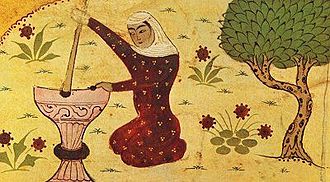 Rabia of Basric. 710 CE – 801 CEIraqi sufi and poetSource: Wikidata (country of birthplace)
 Mansur Al-Hallaj858 CE – 922 CEPersian mystic, poet and Sufi teacher (c.858–922)Source: Wikidata (country of birthplace)
 Khosrow II570 CE – 628 CEThe 24th Sassanid emperor (590–628)Source: Wikidata (country of birthplace)
 Nouri al-Malikib. 1950Prime Minister of Iraq from 2006 to 2014Source: Wikidata (citizenship)
 al-Maʾmun786 CE – 833 CEAbbasid caliph (786–833, r. 813–833)Source: Wikidata (country of birthplace)
 Al-Jahiz775 CE – 868 CEArabic writer (776–869)Source: Wikidata (country of birthplace)
 Ali Larijani1958 – 2026Iranian politician and military officer (1958–2026)Source: Wikidata (country of birthplace)
 al-Jazari1136 – 1206Mathematician and engineer from Jazira, Artuqid State (1164–1206)Source: Wikidata (country of birthplace)
- Ahmad ibn Fadlan879 CE – 922 CE10th-century Arab traveller and ethnographerSource: Wikidata (country of birthplace)
 Barham Salihb. 1960President of Iraq (2018-2022)Source: Wikidata (citizenship)
 Fuad Masumb. 19387th President of the Republic of IraqSource: Wikidata (citizenship)
 Tariq Aziz1936 – 2015Iraqi Foreign Minister under Saddam Hussein (1936-2015)Source: Wikidata (citizenship)
 Masoud Barzanib. 19461st president of Iraqi Kurdistan (2005-17)Source: Wikidata (citizenship)
 Ahmed Hassan al-Bakr1914 – 1982Iraqi president (1914–1982)Source: Wikidata (citizenship)
 Muqtada al-Sadrb. 1974Iraqi Shia scholar, politician and militia leader (born 1974)Source: Wikidata (citizenship)
 Faisal II of Iraq1935 – 1958King of Iraq from 4 April 1939 until 1958Source: Wikidata (country of birthplace)
 Haider Al-Abadib. 1952Prime Minister of Iraq from 2014 to 2018Source: Wikidata (citizenship)
Everything that happened
- c. 2,100 BCEEpic of GilgameshMesopotamiaThe Epic of Gilgamesh is an epic from ancient Mesopotamia that is the world's oldest surviving example of narrative literature. The literary history of Gilgamesh begins with five Sumerian poems about Gilgamesh, king of Uruk, some of which may date to the Third Dynasty of Ur (c. 2100 BCE). These independent stories were later used as source material for a combined epic in Akkadian.Source: Wikidata (country of the location)
- 612 BCEFall of NinevehNinevehThe Fall of Nineveh, also called the Battle of Nineveh, was a major battle that marked the climax of the Conquest of the Assyrian Empire in 612 BC. After the Assyrian defeat at the Fall of Assur, an allied army which involved the combined forces of Medes and the Babylonians besieged Nineveh (in modern-day Mosul) and took what was, at that time, one of the greatest cities in the world.Source: Wikidata (country)
- 539 BCEBattle of OpisOpisThe Battle of Opis was the last major military engagement between the Achaemenid Empire and the Neo-Babylonian Empire, which took place in September 539 BC, during the Persian invasion of Mesopotamia. At the time, Babylonia was the last major power in Western Asia that was not yet under Persian control.Source: Wikidata (country)
- 539 BCEFall of BabylonBabylonThe fall of Babylon occurred in 539 BCE, when the Achaemenid Empire conquered the Neo-Babylonian Empire. The success of the Persian campaign, led by Cyrus the Great, brought an end to the reign of the last native dynasty of Mesopotamia and gave the Persians control over the rest of the Fertile Crescent.Source: Wikidata (country)
- 401 BCEBattle of CunaxaCunaxaThe Battle of Cunaxa was fought in the late summer of 401 BC between the Persian king Artaxerxes II and his brother Cyrus the Younger for control of the Achaemenid throne. The great battle of the revolt of Cyrus took place 70 km north of Babylon, at Cunaxa (Greek: Κούναξα), on the left bank of the Euphrates. The main source is Xenophon, a Greek soldier who participated in the fighting.Source: Wikidata (country)
- 331 BCEBattle of GaugamelaGaugamelaThe Battle of Gaugamela ( GAW-gə-MEE-lə; Ancient Greek: Γαυγάμηλα, romanized: Gaugámēla, lit. 'the Camel's House'), also called the Battle of Arbela (Ἄρβηλα, Árbēla), took place in 331 BC between the forces of the Army of Macedon under Alexander the Great and the Persian Army under King Darius III.Source: Wikidata (country)
- 311 BCE – 309 BCEBabylonian WarBabylonThe Babylonian War was a conflict fought between 311–309 BC between Antigonus I Monophthalmus and Seleucus I Nicator, ending in a victory for Seleucus. This conflict ended any possibility of restoration of the former empire of Alexander the Great, a result confirmed in the Battle of Ipsus.Source: Wikidata (country)
- 36 BCEAntony's Atropatene campaignAnatoliaAntony's Atropatene campaign, also known as Antony's Parthian campaign, was a military campaign by Mark Antony, the eastern triumvir of the Roman Republic, against the Parthian Empire under Phraates IV.Source: Wikidata (country of the location)
- c. 190 CELimes ArabicusSyriaThe Limes Arabicus was a desert frontier of the Roman Empire, running north from its start in the province of Arabia Petraea. It ran northeast from the Gulf of Aqaba for about 1,500 kilometers (930 mi) at its greatest extent, reaching northern Syria and forming part of the wider Roman limes system. It had several forts and watchtowers.Source: Wikidata (country)
- 244 CEBattle of MisicheAnbarThe Battle of Misiche (Greek: Μισιχή), Mesiche, or Massice (Middle Persian: 𐭬𐭱𐭩𐭪 mšyk; Parthian: 𐭌𐭔𐭉𐭊 mšyk) (dated between January 13 and March 14, 244 AD) was fought between the Sasanians and the Romans in Misiche, Mesopotamia.Source: Wikidata (country)
- 344 CEBattle of SingaraSingaraThe Battle of Singara was fought in 344 between Roman and Sasanian Persian forces. The Romans were led in person by Emperor Constantius II, while the Persian army was led by King Shapur II of Persia. It is the only one of the nine pitched battles recorded to have been fought in a war of over twenty years, marked primarily by indecisive siege warfare, of which any details have been preserved.Source: Wikidata (country)
- 363 CEBattle of CtesiphonCtesiphonThe Battle of Ctesiphon took place on 29 May 363 between the armies of Roman Emperor Julian and an army of the Sasanian Empire (during Shapur II's reign) outside the walls of the Persian capital Ctesiphon. The battle resulted in a Roman victory, but eventually the Roman forces found themselves unable to continue their campaign as they were too far from their supply lines.Source: Wikidata (country)
- 363 CEBattle of SamarraSamarraThe Battle of Samarra took place in June 363, during the invasion of the Sasanian Empire by the Roman emperor Julian. After marching his army to the gates of Ctesiphon and failing to take the city, Julian, realizing his army was low on provisions and in enemy territory, started marching towards Samarra.Source: Wikidata (country)
- 502 CE – 506 CEAnastasian WarOsroeneThe Anastasian War was fought from 502 to 506 between the Byzantine Empire and the Sasanian Empire. It was the first major conflict between the two powers since 440, and would be the prelude to a long series of destructive conflicts between the two empires over the next century.Source: Wikidata (country of the location)
- 526 CE – 532 CEIberian WarKingdom of IberiaThe Iberian War was fought from 526 to 532 between the Byzantine Empire and the Sasanian Empire over the eastern Georgian kingdom of Iberia—a Sasanian client state that defected to the Byzantines. Conflict erupted among tensions over tribute and the spice trade.Source: Wikidata (country of the location)
- 572 CE – 591 CEByzantine–Sasanian War of 572–591MesopotamiaThe Byzantine–Sasanian War of 572–591 was a war fought between the Sasanian Empire of Persia and the Byzantine Empire. It was triggered by pro-Byzantine revolts in areas of the Caucasus under Persian hegemony, although other events also contributed to its outbreak. The fighting was largely confined to the southern Caucasus and Mesopotamia, although it also extended into eastern Anatolia, Syria, and northern Iran.Source: Wikidata (country of the location)
- 602 CE – 628 CEByzantine–Sasanian War of 602–628MesopotamiaThe Byzantine–Sasanian War of 602–628, also called the Last Great War of Antiquity, was fought between the Byzantine Empire and the Sasanian Empire. It was the final and most devastating conflict of the Roman–Persian wars (54 BC – AD 628). The previous war between the two powers had ended in 591 after the emperor Maurice helped the Sasanian king Khosrow II regain his throne.Source: Wikidata (country of the location)
- 609 CEBattle of Dhu QarDhi Qar GovernorateThe Battle of Dhu Qar (Arabic: يوم ذي قار), also known as the War of the Camel's Udder, was a pre-Islamic battle fought between Arab tribes and the Persian Sasanian Empire in Southern Iraq between 604 and 611 AD. The battle is remembered as a turning point in Arab-Persian relations, and a blow to Persian control over Eastern Arabia, though the battle may have been no more than a skirmish.Source: Wikidata (country of the location)
- 627 CEBattle of NinevehNinevehThe Battle of Nineveh was the climactic battle of the Byzantine–Sasanian War of 602–628.Source: Wikidata (country)
- 633 CE – 654 CEMuslim conquest of PersiaArab IraqThe Muslim conquest of Persia, also known as the Arab conquest of Iran, occurred between 633 and 651 CE, when the Rashidun Caliphate conquered the Sasanian Empire as part of the early Muslim conquests, which began under the Islamic prophet Muhammad in 627/628.Source: Wikidata (country of the location)
- 633 CEBattle of al-AnbarIraqThe Battle of Al-Anbar (Arabic: معركة الأنبار) was between the Muslim Arab army under the command of Khalid ibn al-Walid and the Sasanian Empire. The battle took place at Anbar which is located approximately 80 miles from the ancient city of Babylon. Khalid besieged the Sassanian Persians in the city fortress, which had strong walls. Scores of Muslim archers were used in the siege.Source: Wikidata (country)
- 633 CEBattle of Ayn al-TamrAyn al-TamrThe Battle of Ayn al-Tamr (Arabic: معركة عين التمر) took place in modern-day Iraq (Mesopotamia) between the early Muslim Arab forces and the Sassanians along with their Arab Christian auxiliary forces. Ayn al-Tamr is located west of Anbar and was a frontier post which had been established to aid the Sassanids.Source: Wikidata (country)
- 633 CEBattle of HiraAl-HirahThe Battle of Hira (Arabic: معركة الحيرة) was fought between the Sasanian Empire and the Rashidun Caliphate in 633. It was one of the early battles of the Muslim conquest of Persia. The loss of the frontier city on the Euphrates River opened the way to the Sasanian capital, Ctesiphon, on the Tigris River.Source: Wikidata (country)
- 633 CEBattle of MuzayyahIraqBattle of Muzayyah (Arabic: معركة المصيخ) was between the Muslim Arab army and the Sasanian Empire. When Khalid ibn Walid left from Ayn al-Tamr to Dumat Al-Jandal for the help of Iyad ibn Ghanm, the Persian court believed that Khalid had returned to Arabia with a large part of his army.Source: Wikidata (country)
- 633 CEBattle of the RiverMesopotamiaThe Battle of the River, also known as Battle of Al Madhar, took place in Mesopotamia (Asoristan Province) between the forces of the Rashidun Caliphate and the Sasanian Empire. Muslims, under Khalid ibn al-Walid's command, defeated the numerically superior Sasanian army.Source: Wikidata (country of the location)
- 633 CEBattle of UllaisMesopotamiaThe Battle of Ullais (Arabic: معركة أليس) was fought between the forces of the Rashidun Caliphate and the Sasanian Persian Empire in the middle of June 633 AD in Iraq, and is sometimes referred to as the Battle of Blood River since, as a result of the battle, there were enormous amounts of Persian Sasanian and Arab Christian casualties.Source: Wikidata (country of the location)
- 633 CEBattle of WalajaMesopotamiaThe Battle of Walaja (Arabic: معركة الولجة) was fought in Mesopotamia in May 633 between the Rashidun Caliphate army under Khalid ibn al-Walid and Al-Muthanna ibn Haritha against the Sassanid Empire and its Arab allies.Source: Wikidata (country of the location)
- 634 CEBattle of FirazIraqThe Battle of Firaz (Arabic: مَعْرَكَة الْفِرَاض) also known as Battle of Firad, took place around January 634 between the Rashidun Caliphate and, reportedly, a combined force from the Byzantine Empire and Sasanian Empire.Source: Wikidata (country)
- 634 CEBattle of the BridgeKufaThe Battle of the Bridge or the Battle of al-Jisr (Arabic: معركة الجسر) was fought at the bank of the Euphrates between Arab Muslims, led by Abu Ubayd al-Thaqafi, and the Persian Sasanians, led by Bahman Jaduya. It is traditionally dated to the year 634 and was the only major Sasanian victory over the invading Rashidun Caliphate army.Source: Wikidata (country)
- 636 CEBattle of al-QadisiyyahAl-QādisiyyahThe Battle of al-Qadisiyyah (Arabic: مَعْرَكَة ٱلْقَادِسِيَّة, romanized: Maʿrakat al-Qādisīya; Persian: نبرد قادسیه, romanized: Nabard-i Qādisiya) took place between the armies of the Rashidun Caliphate and the Sasanian Empire in November 636.Source: Wikidata (country)
- 637 CEBattle of JalulaJalawlaThe Battle of Jalula was fought between the Sasanian Empire and the Rashidun Caliphate soon after the conquest of Ctesiphon by the latter.Source: Wikidata (country of the location)
- 637 CESiege of CtesiphonCtesiphonThe siege of Ctesiphon took place from January to March 637, shortly after the Rashidun Caliphate defeated the Sasanian Empire in the Battle of al-Qadisiyyah. As it had served as the Persian capital city since the Parthian period, the Rashidun victory at Ctesiphon was one of the most significant events of the Muslim conquest of Persia; Muslim rule was consolidated over all of Mesopotamia.Source: Wikidata (country)
- 656 CEBattle of the CamelBasraThe Battle of the Camel, also known as the Battle of Basra (Arabic: معركة الجمل, romanized: Maʿrakat al-Jamal), took place in 656 CE outside of Basra in Iraq. It was fought between the partisans of the fourth Rashidun caliph Ali and the Uthmaniyya led by Aisha, Talha, and Zubayr.Source: Wikidata (country)
- 659 CEBattle of NahrawanNahrawan CanalThe Battle of Nahrawan (Arabic: مَعْرَكَة النَّهْرَوَان, romanized: Ma'rakat an-Nahrawān) was fought between the Kufan forces of the fourth Rashidun caliph Ali ibn Abi Talib and the Kharijites, who were primarily composed of qurra originating from across Iraq, in July 658 CE (Safar 38 AH). The latter were a group of former allies of Ali during the First Fitna.Source: Wikidata (country of the location)
- 661 CEAssassination of AliGreat Mosque of KufaAli ibn Abi Talib, the fourth Rashidun caliph (r. 656–661) and the first Shia Imam, was assassinated during the morning prayer on 28 January 661 CE, equivalent to 19 Ramadan 40 AH. He died of his wounds about two days after the Kharijite dissident Ibn Muljim struck him over his head with a poison-coated sword at the Great Mosque of Kufa, located in Kufa, Iraq.Source: Wikidata (country of the location)
- 680 CEBattle of KarbalaKarbalaThe Battle of Karbala (Arabic: مَعْرَكَة كَرْبَلَاء, romanized: Maʿrakat Karbalāʾ) was fought on 10 October 680 (10 Muharram in the year 61 AH of the Islamic calendar) between the forces of the second Umayyad caliph Yazid I (r. 680–683), and a small army led by Husayn ibn Ali, second son of Ali and grandson of the Islamic prophet Muhammad, at Karbala, in modern-day southern Iraq.Source: Wikidata (country)
- 762 CEBaghdad foundedIraqThe Abbasid caliph al-Mansur builds a round city on the Tigris. Baghdad becomes a world center of science, translation and trade.Source: Wikidata (country)
- 762 CE – 763 CEAlid revolt of 762–763HejazThe Alid revolt of 762–763 or Revolt of Muhammad the Pure Soul was an uprising by the Hasanid branch of the Alids against the newly established Abbasid Caliphate. The Hasanids, led by the brothers Muhammad (called "the Pure Soul") and Ibrahim, rejected the legitimacy of the Abbasid family's claim to power.Source: Wikidata (country)
- 869 CE – 883 CEZanj RebellionAhvazThe Zanj Rebellion (Arabic: ثورة الزنج Thawrat al-Zanj / Zinj) was a major revolt against the Abbasid Caliphate, which took place from 869 until 883. Begun near the city of Basra in present-day southern Iraq and led by one Ali ibn Muhammad, the insurrection involved both enslaved and freed Africans (collectively termed "Zanj" in this case) exported in the Indian Ocean slave trade and transported to slavery in the…Source: Wikidata (country of the location)
- 1258Mongols sack BaghdadIraqHulagu Khan’s army captures Baghdad and kills the caliph al-Musta’sim, ending the Abbasid golden age in the city.Source: Wikidata (country)
- 1532 – 1555Ottoman–Safavid WarMesopotamiaThe Ottoman–Safavid War of 1532–1555 was one of the many military conflicts fought between the two arch rivals, the Ottoman Empire led by Suleiman the Magnificent, and the Safavid Empire led by Tahmasp I. Ottoman territorial gains were confirmed in the Peace of Amasya.Source: Wikidata (country of the location)
- 1534Capture of BaghdadBaghdadThe 1534 capture of Baghdad by the Ottoman Sultan Suleiman the Magnificent from the Safavid Shah Tahmasp I was part of his Campaign of the Two Iraqs during the Ottoman–Safavid War (1532–1555). The city was taken without resistance, the Safavid government having fled and leaving the city undefended.Source: Wikidata (country)
- 1578 – 1590Ottoman–Safavid WarMesopotamiaThe Ottoman–Safavid War of 1578–1590 was one of the many wars between the neighboring arch-rivals of the Safavid Empire and the Ottoman Empire.Source: Wikidata (country of the location)
- 1603 – 1618Ottoman–Safavid warAzerbaijan (Iran)The Ottoman–Safavid war of 1603–1612 consisted of two wars between Safavid Iran under Shah Abbas I and the Ottoman Empire under Mehmed III and his son Ahmed I. The first war began in 1603 and ended with a Safavid victory in 1612, when they regained and reestablished their suzerainty over the Caucasus and Western Iran, which had been lost at the Treaty of Constantinople in 1590.Source: Wikidata (country of the location)
- 1623 – 1639Ottoman–Safavid WarMesopotamiaThe Ottoman–Safavid War of 1623–1639 was a conflict fought between the Ottoman Empire and Safavid Iran, then the two major powers of Western Asia, over control of Mesopotamia.Source: Wikidata (country of the location)
- 1638Siege of BaghdadBaghdadThe siege of Baghdad (Persian: محاصره بغداد) in the winter of 1638 marked the re-establishment of Ottoman control over Iraq, following a prior period of Safavid rule. It was part of the Ottoman–Safavid War of 1623–1639.Source: Wikidata (country)
- 1743 – 1746Ottoman–Persian WarIraqThe Ottoman–Persian War of 1743–1746 or Ottoman–Iranian War of 1743–1746 was fought between the Ottoman Empire and Afsharid Iran.Source: Wikidata (country)
- 1775 – 1776Ottoman–Persian WarMesopotamiaThe Ottoman–Persian War of 1776–1779 or Ottoman–Iranian War of 1776–1779 was fought between the Ottoman Empire and Zand Iran. The Iranians, ruled by Karim Khan Zand and led by his brother Sadeq Khan Zand, invaded southern Iraq and after besieging Basra for a year, took the city from the Ottomans in 1776. The Ottomans, unable to send troops, were dependent on the Mamluk governors to defend that region.Source: Wikidata (country of the location)
- 1821Siege of BaghdadBaghdadThe Ottoman–Persian War of 1820–1823 was fought between the Ottoman Empire and Qajar Iran from 1820 to 1823.Source: Wikidata (country)
- 1914Battle of BasraBasraThe Battle of Basra was a battle of World War I which took place south of the city of Basra, in Ottoman Iraq, between British and Ottoman troops from November 11 to November 22, 1914. The battle resulted in the British capture of Basra.Source: Wikidata (country)
- 1914Fao LandingMesopotamiaThe Fao Landing occurred from 6 November to 8 November 1914 with British forces attacking the Ottoman stronghold of Fao and its fortress. The landing was met with little resistance from the Ottoman defenders who fled after intense shelling. It was the first military operation of the Mesopotamian Campaign, during the First World War, which was carried out to protect British oil supplies in the Persian Gulf.Source: Wikidata (country of the location)
- 1915Battle of CtesiphonCtesiphonThe Battle of Ctesiphon (Turkish: Selman-ı Pak Muharebesi) was fought in November 1915 by the British Empire, against the Ottoman Empire, within the Mesopotamian Campaign of World War I.Source: Wikidata (country)
- 1915 – 1916Siege of KutKutThe siege of Kut Al Amara (7 December 1915 – 29 April 1916), also known as the first battle of Kut, was the besieging of an 8,000-strong British Indian Army garrison in the town of Kut, 160 km (100 mi) south of Baghdad, by the Ottoman Army. In 1915, its population was around 6,500.Source: Wikidata (country)
- 1916Battle of WadiHanna defileThe Battle of Wadi, occurring on 13 January 1916, was an unsuccessful attempt by British forces fighting in Ottoman Iraq during World War I to relieve beleaguered forces under Sir Charles Townshend then under siege by the Ottoman Sixth Army at Kut-al-Amara.Source: Wikidata (country of the location)
- 1917Capture of BaghdadDiyala RiverThe capture of Baghdad (11 March 1917) occurred during the Mesopotamian campaign, fought between the forces of the British Empire and the Ottoman Empire in World War I.Source: Wikidata (country of the location)
- 1918 – 2003Iraqi–Kurdish conflictKurdistan Region of IraqThe Iraqi–Kurdish conflict consists of a series of wars, rebellions and disputes between the Kurds and the central authority of Iraq starting in the 20th century shortly after the defeat of the Ottoman Empire in World War I.Source: Wikidata (country of the location)
- 1921Kurdish–Turkish conflictTurkeyKurdish nationalist uprisings have periodically occurred in Turkey, beginning with the Turkish War of Independence and the consequent transition from the Ottoman Empire to the modern Turkish state and continuing to the present day with the current PKK–Turkey conflict.Source: Wikidata (country of the location)
- 1933Simele massacreSemelThe Simele massacre (Syriac: ܦܪܲܡܬܵܐ ܕܣܸܡܹܠܹܐ, romanized: Premta d'Simele, Arabic: مذبحة سميل, romanized: maḏbaḥat Simīl), also known as the Assyrian affair, was a massacre committed by the Kingdom of Iraq under the leadership of Kurdish army general Bakr Sidqi. The massacre was committed in August 1933 against the Assyrian population of Iraq in and around the village of Simele.Source: Wikidata (country)
- 195814 July RevolutionKingdom of IraqThe 14 July Revolution, also known as the 1958 Iraqi military coup, was a military coup that took place on 14 July 1958 in Iraq, resulting in the toppling of King Faisal II and the overthrow of the Hashemite-led Kingdom of Iraq. The Iraqi Republic established in its wake ended the Hashemite Arab Federation between Iraq and Jordan that had been established just six months earlier.Source: Wikidata (country of the location)
- 19591959 Mosul uprisingMosulThe 1959 Mosul Uprising started with an attempted coup by Arab nationalists in Mosul who wished to depose the then Iraqi Prime Minister Abdul-Karim Qasim, and install an Arab nationalist government which would then join the Republic of Iraq with the United Arab Republic.Source: Wikidata (country)
- 1978Kurdistan Workers' Party insurgencyEastern Anatolia RegionFrom 1978 until 2025, the Republic of Turkey was in an armed conflict with the Kurdistan Workers' Party (PKK) (Kurdish: Partiya Karkerên Kurdistanê) as well as its allied insurgent groups, both Kurdish and non-Kurdish. The initial core demand of the PKK was its separation from Turkey to create an independent Kurdistan.Source: Wikidata (country of the location)
- 1980 – 1988Iran–Iraq WarIranThe Iran–Iraq War, also called the First Imposed War, Eight-Year War, or Sacred Defense by Iran, began with the Iraqi invasion of Iran in September 1980. After eight years of conflict, both countries accepted a ceasefire deal brokered by the United Nations, which became effective in August 1988.Source: Wikidata (country of the location)
- 1980Iraqi invasion of IranIran–Iraq borderThe Iraqi invasion of Iran began on 22 September 1980, sparking the Iran–Iraq War, and lasted until 5 December 1980. Ba'athist Iraq believed that Iran would not respond effectively due to internal socio-political turmoil caused by the country's Islamic Revolution one year earlier. However, Iraqi troops faced fierce Iranian resistance, which stalled their advance into western Iran.Source: Wikidata (country of the location)
- 1981H-3 airstrikeIraqThe H-3 airstrike (Persian: عملیات اچ۳) was a surprise air attack by the Iranian Air Force during the Iran–Iraq War on 4 April 1981 against the Iraqi Air Force's H-3 Air Base in western Iraq. The Iranians destroyed at least 48 Iraqi aircraft on the ground with no losses of their own. Based on the results achieved, it is considered one of the most successful raids in the history of aerial warfare.Source: Wikidata (country)
- 1981Operation OperaBaghdadOperation Opera (Hebrew: מִבְצָע אוֹפֵּרָה), also known as Operation Babylon, was a surprise airstrike conducted by the Israeli Air Force on 7 June 1981, which destroyed an unfinished Iraqi nuclear reactor located 17 kilometres (11 miles) southeast of Baghdad, Iraq.Source: Wikidata (country)
- 1982Dujail massacreDujailThe Dujail massacre was the mass killing of Shia civilians by the Ba'athist Iraqi government between 8 July 1982 and 1985 in Dujail in Iraq. The mass killing was committed in retaliation for an assassination attempt by the Iranian-backed Islamic Dawa Party on the President of Iraq, Saddam Hussein.Source: Wikidata (country)
- 1986First Battle of al-FawAl-Faw PeninsulaThe First Battle of al-Faw was a battle of the Iran–Iraq War, fought on the al-Faw peninsula between 10 February and 10 March 1986. The Iranian operation is considered to be one of Iran's greatest achievements in the Iran–Iraq War. The Iranians were able to capture the al-Faw peninsula, cutting off Iraqi access to the Persian Gulf in the process; this in turn hardened Iraqi attitudes to prosecute the war.Source: Wikidata (country)
- 1987Siege of BasraBasra GovernorateThe siege of Basra, code-named Operation Karbala-5 or The Great Harvest (Arabic: الحصاد الأكبر), was an offensive operation carried out by Iran in an effort to capture the Iraqi port city of Basra in early 1987. This battle, known for its extensive casualties and ferocious conditions, was the biggest battle of the war and proved to be the last major Iranian offensive. The Iranians failed to reach their objective.Source: Wikidata (country)
- 1988Halabja massacreHalabjaThe Halabja massacre (Kurdish: کیمیابارانی ھەڵەبجە, romanized: Kêmyabarana Helebce) took place in Iraqi Kurdistan on 16 March 1988, when thousands of Kurds were killed by a large-scale Iraqi chemical attack. A targeted attack in Halabja, it was carried out during the Anfal campaign, which was led by Iraqi military officer Ali Hassan al-Majid.Source: Wikidata (country of the location)
- 1990 – 1991Invasion and liberation of KuwaitKuwaitIraq invades Kuwait on 2 August 1990. A US-led coalition liberates the country on 26 February 1991.Source: Wikidata (country of the location)
- 19911991 Iraqi uprisingsIraqThe 1991 Iraqi uprisings were ethnic and religious uprisings against Saddam Hussein's Ba'athist regime that were mainly led by Shia rebels and Kurds. The uprisings lasted from March to April 1991 after a ceasefire following the end of the Gulf War. The mostly uncoordinated insurgency was fueled by the perception that Iraqi President Saddam Hussein had become vulnerable to regime change.Source: Wikidata (country)
- 1991Amiriyah shelter bombingAl-A'amiriyaAn aerial bombing attack killed at least 408 civilians on 13 February 1991 during the Gulf War, when an air-raid shelter ("Public Shelter No. 25") in the Amiriyah neighborhood of Baghdad, Iraq, was destroyed by the U.S. Air Force with two GBU-27 Paveway III laser-guided bombs. Human Rights Watch characterised the bombing as a war crime.Source: Wikidata (country of the location)
- 1991Battle of 73 EastingIraqThe Battle of 73 Easting was fought on 26 February 1991, during the Gulf War, between Coalition armored forces (US VII Corps and UK 1st Armoured Division) and Iraqi armored forces (Republican Guard and Tawakalna Division).Source: Wikidata (country)
- 1992 – 2003Operation Southern WatchIraqOperation Southern Watch was an air-centric military operation conducted by the United States Department of Defense from August 1992 to March 2003.Source: Wikidata (country)
- 19981998 bombing of IraqIraqThe 1998 bombing of Iraq (code-named Operation Desert Fox) was a major bombing campaign against Iraqi targets, from 16 to 19 December 1998, by the United States and the United Kingdom. On 16 December 1998, U.S. President Bill Clinton announced that he had ordered strikes against Iraq.Source: Wikidata (country)
- 2003 – 2011Iraq WarIraqThe Iraq War (Arabic: حرب العراق, romanized: ḥarb al-ʿirāq), also referred to as the Second Gulf War (Gulf War II), was a protracted armed conflict in Iraq from 2003 to 2011. It began in March 2003 with the invasion by a United States–led coalition, which resulted in the overthrow of the Ba'athist government of Saddam Hussein.Source: Wikidata (country)
- 20032003 invasion of IraqIraqThe 2003 invasion of Iraq was the first stage of the Iraq War. The invasion began on 20 March 2003 and lasted just over one month, including 26 days of major combat operations. The invasion was conducted by a United States–led coalition of mainly American, British, Australian, and Polish troops.Source: Wikidata (country)
- 2003Battle of Al FawAl-FawThe Battle of Al Faw began on 20 March 2003 and continued for four days, as part of the 2003 invasion of Iraq.Source: Wikidata (country)
- 2003Battle of BaghdadBaghdadThe Battle of Baghdad (Arabic: مَعْرَكَةُ بَغْدَاد, romanized: Maʿrakatu baghdād), also known as the Fall of Baghdad (Arabic: سُقُوطُ بَغْدَاد, romanized: suqūṭu baghdād), was a military engagement that took place in Baghdad in early April 2003, as part of the invasion of Iraq.Source: Wikidata (country)
- 2003Battle of BasraBasraThe Battle of Basra lasted from 21 March to 6 April 2003 and was one of the first battles of the 2003 invasion of Iraq. The British 7 Armoured Brigade fought their way into Iraq's second-largest city, Basra, on 6 April coming under constant attack by the Iraqi Army 51st Division and Fedayeen Saddam, while elements of the British Parachute Regiment cleared the 'old quarter' of the city that was inaccessible to…Source: Wikidata (country)
- 2003Battle of NajafNajafThe Battle of Najaf was a major battle in the 2003 U.S. invasion of Iraq. The first stage of the battle was fought when the U.S. 3rd Infantry Division fought to surround the town. The second stage was fought when soldiers from the U.S. 101st Airborne Division fought to clear and secure the city.Source: Wikidata (country)
- 2003Battle of NasiriyahNasiriyahThe Battle of Nasiriyah was fought between the US 2nd Marine Expeditionary Brigade and Iraqi forces from 23 March to 2 April 2003 during the US-led invasion of Iraq. On the night of 24–25 March, the bulk of the Marines of Regimental Combat Team 1 passed through the city over the bridges and attacked north towards Baghdad.Source: Wikidata (country)
- 2003Battle of Umm QasrUmm QasrThe Battle of Umm Qasr was the first military confrontation in the Iraq War. At the start of the war, one of the first objectives was the port of Umm Qasr. On 21 March 2003, as allied forces advanced across Southern Iraq, an amphibious landing force captured the new port area of Umm Qasr. The assault was spearheaded by Royal Marines of the British 3 Commando Brigade, augmented by U.S.Source: Wikidata (country)
- 2003Capture of Saddam HusseinAd-DawrSaddam Hussein, the deposed president of Iraq, was captured by the United States military in the town of Ad-Dawr, Iraq, on 13 December 2003. The military operation to capture him was codenamed Operation Red Dawn, after the 1984 American film Red Dawn.Source: Wikidata (country of the location)
- 2003 – 2017Iraqi conflictIraqThe Iraqi conflict is a series of violent events that began with the 2003 American-led invasion of Iraq and deposition of Iraqi dictator Saddam Hussein, followed by a series of conflicts including the protracted Iraq War (2003–2011), the Iraqi insurgency (2011–2013), the War in Iraq (2013–2017), and most recently, the small-scale Islamic State insurgency in 4 provinces located in Northern Iraq since 2017.Source: Wikidata (country)
- 2004Abu Ghraib torture and prisoner abuseBaghdad Central PrisonDuring the early stages of the Iraq War, members of the United States Army and the Central Intelligence Agency committed a series of human rights violations and war crimes against detainees in Abu Ghraib prison in Iraq. These abuses included physical abuse, sexual humiliation, physical and psychological torture, and rape, as well as the killing of Manadel al-Jamadi and the desecration of his body.Source: Wikidata (country)
- 2004Battle of NajafNajafThe Battle of Najaf a battle during the Iraq War between United States-Iraqi government forces and the Shia insurgent Mahdi Army led by Muqtada al-Sadr in the Iraqi city of Najaf in April 2004 and conflict began again in August 2004.Source: Wikidata (country)
- 2004First Battle of FallujahFallujahThe First Battle of Fallujah, code-named Operation Vigilant Resolve, was an American-led operation of the Iraq War against militants in Fallujah as well as an attempt to apprehend or kill the perpetrators of the killing of four U.S. contractors in March 2004.Source: Wikidata (country)
- 2004Second Battle of FallujahFallujahThe Second Battle of Fallujah, initially codenamed Operation Phantom Fury, Operation al-Fajr (Arabic: الفجر, lit. 'The Dawn') was an American-led offensive of the Iraq War that began on 7 November 2004 and lasted about six weeks.Source: Wikidata (country)
- 2005Haditha massacreHadithaThe Haditha massacre was a series of killings on November 19, 2005, in which a group of United States Marines killed 25 unarmed Iraqi civilians. It occurred in the city of Haditha in Iraq's western province of Al Anbar. Among the dead were men, women, elderly people and children as young as one year old, who were shot multiple times at close range.Source: Wikidata (country)
- 2006Execution of Saddam HusseinCamp JusticeSaddam Hussein, the former president of Iraq, was executed on 30 December 2006. Saddam was sentenced to death by hanging, after being convicted of crimes against humanity by the Iraqi Special Tribunal for the Dujail massacre—the killing of 148 Iraqi Shi'ites in the town of Dujail, in 1982, in retaliation for a purported assassination attempt on Saddam.Source: Wikidata (country)
- 2007July 12, 2007, Baghdad airstrikeBaghdadOn July 12, 2007, a series of air-to-ground attacks were conducted by a team of two U.S. AH-64 Apache helicopters in Al-Amin al-Thaniyah, New Baghdad, during the Iraqi insurgency which followed the invasion of Iraq. On April 5, 2010, the attacks received worldwide coverage and controversy following the release of 39 minutes of classified gunsight footage by WikiLeaks.Source: Wikidata (country)
- 2007Nisour Square massacreNisour SquareThe Nisour Square massacre occurred on September 16, 2007, when employees of Blackwater Security Consulting (now Constellis), which was a private military company contracted by the United States government to provide security services in Iraq, shot at Iraqi civilians, killing 17 and injuring 20 in Nisour Square, Baghdad, while escorting a U.S. embassy convoy.Source: Wikidata (country)
- 20082008 Turkish incursion into northern IraqKurdistan Region of IraqThe 2008 Turkish incursion into northern Iraq, code-named Operation Sun (Turkish: Güneş Harekatı) by the Turkish Armed Forces, began on February 21, 2008, when the Turkish Army sent troops into northern Iraq to target the Kurdistan Workers' Party (PKK). The ground offensive was preceded by Turkish Air Force bombardments of PKK camps in northern Iraq, which began on December 16, 2007.Source: Wikidata (country of the location)
- 2008Battle of BasraBasraThe Battle of Basra began on 25 March 2008, when the Iraqi Army launched an operation (code-named Saulat al-Fursan, meaning Operation Charge of the Knights in Arabic) to drive the Mahdi Army militia out of the southern Iraqi city of Basra. The operation was the first major operation to be planned and carried out by the Iraqi Army since the invasion of 2003.Source: Wikidata (country)
- 2011Withdrawal of United States troops from IraqIraqThe withdrawal of the United States troops from Iraq began in December 2007 with the end of the Iraq War troop surge of 2007 and was mostly completed by December 2011, bringing an end to the Iraq War. The number of U.S. military forces in Iraq peaked at 170,300 in November 2007.Source: Wikidata (country)
- 2013 – 2014Anbar campaignAl Anbar GovernorateBeginning in December 2012, Sunnis in Iraq protested against the Maliki government. On 28 December 2013, a Sunni MP named Ahmed al-Alwani was arrested in a raid on his home in Ramadi. Alwani was a prominent supporter of the anti-government protests.Source: Wikidata (country)
- 2013 – 2014Fall of FallujahFallujahThe fall of Fallujah was a major battle in the city of Fallujah in western Iraq that took place from late 2013 to early 2014, in which Islamic State of Iraq and the Levant (ISIL) militants and other Sunni insurgents including Anbar tribal militias captured the city of Fallujah. It was one of the first Iraqi cities to fall out of the control of the Iraqi Government, and resulted in the Anbar campaign.Source: Wikidata (country)
- 2014Camp Speicher massacreCamp SpeicherThe Camp Speicher massacre was the mass killing of unarmed Shia cadets of the Iraqi Armed Forces by the Islamic State of Iraq and the Levant (ISIL), on 12 June 2014. It occurred in Tikrit, Iraq, which is near the cadets' military base, Camp Speicher. The confirmed death toll is between 1,095–1,566.Source: Wikidata (country)
- 2014Fall of MosulMosulThe fall of Mosul refers to a historical event in Iraq, occurring between 4 and 10 June 2014, when Islamic State of Iraq and the Levant (ISIL) and allied insurgents captured the city of Mosul from the Iraqi Army. The ISIL forces were initially led by Abu Abdulrahman al-Bilawi, while the Iraqi army's forces were led by Lieutenant General Mahdi al-Gharrawi.Source: Wikidata (country)
- 2014Islamic State invasion of IraqNineveh GovernorateIn June 2014, the Islamic State of Iraq and the Levant (also known as ISIL or ISIS), which had controlled a large portion of Northeastern Syria at that time during the Syrian civil war, launched a widespread offensive in Iraq, capturing a large swath of territory extending all the way from the Iraq–Syria border to the outskirts of the Iraqi capital city of Baghdad.Source: Wikidata (country)
- 2014 – 2026Operation Inherent ResolveIraqOperation Inherent Resolve (OIR) is the United States military's operational name for the international war against the Islamic State (IS) including both a campaign in Iraq and a campaign in Syria, with a closely related campaign in Libya.Source: Wikidata (country of the location)
- 2014Sinjar massacreSinjarThe Sinjar massacre (Kurdish: Fermana Şingalê or Komkujiya Şingalê) marked the beginning of the genocide of Yazidis by ISIL, the killing and abduction of thousands of Yazidi men, women and children. It took place in August 2014 in Sinjar city and Sinjar District in Iraq's Nineveh Governorate and was perpetrated by the Islamic State of Iraq and the Levant (ISIL).Source: Wikidata (country)
- 2015Second Battle of TikritTikritThe Second Battle of Tikrit was a battle in which Iraqi Security Forces recaptured the city of Tikrit (the provincial capital of the Saladin Governorate) from the Islamic State of Iraq and the Levant (ISIL).Source: Wikidata (country)
- 20162016 Karrada bombingKarradaOn 3 July 2016, Islamic State (IS) militants carried out coordinated bomb attacks in Baghdad that killed up to 1,000 civilians and injured hundreds more. A few minutes after midnight local time (2 July, 21:00 UTC), a suicide truck-bomb targeted the mainly Shia district of Karrada, busy with late night shoppers for Ramadan. A second roadside bomb was detonated in the suburb of Sha'ab, killing at least five.Source: Wikidata (country)
- 2016 – 2017Battle of MosulMosulThe Battle of Mosul (Arabic: معركة الموصل, Ma'rakat al-Mawṣil) was a major battle initiated by Iraq and allied forces to retake the city of Mosul from the Islamic State (IS), which had seized the city years prior in June 2014. It was the largest conventional land battle in the world since the capture of Baghdad in 2003.Source: Wikidata (country)
- 2016Third Battle of FallujahFallujahThe Third Battle of Fallujah, code-named Operation Breaking Terrorism (Arabic: عملية كسر الإرهاب) by the Iraqi government, was a military operation against ISIL launched to capture the city of Fallujah and its suburbs, located about 69 kilometres (43 mi) west of Baghdad, the capital of Iraq. The operation began on 22 May 2016, three months after the Iraqi forces had started the total siege of Fallujah.Source: Wikidata (country)
- 2017Battle of KirkukKirkuk GovernorateThe Battle of Kirkuk, codenamed Operation Enforcing Security of the 2017 Iraqi–Kurdish conflict, was a military deployment by the Iraqi Security Forces to retake Kirkuk Governorate from the Peshmerga after the latter ignored repeated warnings to withdraw, sparking clashes between the two forces.Source: Wikidata (country)
- 2019 – 2020Attack on the United States embassy in BaghdadEmbassy of the United States, BaghdadOn 29 December 2019, the United States conducted airstrikes against Kata'ib Hezbollah's weapons depots and command centers in Iraq and Syria, reportedly killing at least 25 militiamen and wounding 55 more. The U.S.Source: Wikidata (country)
- 2019 – 2020Persian Gulf crisisWest AsiaIran–United States relations during the first Trump administration (2017–2021) were marked by a sharp policy shift from Obama's engagement-oriented approach. Trump began with a travel ban affecting Iranian citizens, and withdrew from the Joint Comprehensive Plan of Action (JCPOA).Source: Wikidata (country)
- 2020COVID-19 pandemicWorldwideA new coronavirus spreads worldwide. Lockdowns, remote work and fast-developed vaccines reshape daily life.Source: Wikidata (country)
- 2020Assassination of Qasem SoleimaniBaghdad Airport RoadOn 3 January 2020, Qasem Soleimani, an Iranian major general, was assassinated by an American drone strike ordered by U.S. president Donald Trump near Baghdad International Airport in Iraq, while travelling to meet Iraqi prime minister Adil Abdul-Mahdi.Source: Wikidata (country)
- 2020Operation Martyr SoleimaniAl Asad AirbaseOn 8 January 2020, Iran's Islamic Revolutionary Guard Corps (IRGC) conducted Operation Martyr Soleimani (Persian: عملیات شهید سلیمانی), launching over 12 ballistic missiles against the United States Armed Forces at al-Asad Airbase in Al Anbar Governorate, Iraq, as well as another airbase in Erbil, in response to the assassination of Major General Qasem Soleimani by a U.S. drone strike.Source: Wikidata (country)
- 20212021 Baghdad hospital fireIbn al-Khatib HospitalOn the night of 24 to 25 April 2021, a fire at the Ibn al-Khatib hospital in Baghdad, Iraq, left at least 92 people dead and 110 others injured. The fire was started by the explosion of oxygen tanks designated for COVID-19 patients. A lack of fire detection and suppression systems contributed to the spread of the fire, and many died as a result of being taken off their ventilators to escape.Source: Wikidata (country)
- 20232023 Qaraqosh wedding fireBakhdidaOn 26 September 2023, at around 22:45 AST, a fire broke out at the Al Haytham Wedding Hall during an Assyrian wedding in Qaraqosh, Al-Hamdaniya District, Nineveh Governorate, Iraq. The fireworks accident was triggered by the ignition of the ceiling by pyrotechnic flares. Out of the estimated 1,000 people present, approximately 107 were killed, and 82 were injured.Source: Wikidata (country)
- 2023 – 2024Attacks on US bases during the Middle Eastern crisisIraqStarting on 17 October 2023, and in response to United States support for Israel in the Gaza war, Iran-backed militias initiated a coordinated series of more than 170 attacks on US military bases and assets in Syria, Iraq, and Jordan. These attacks resulted in injuries to dozens of US service members.Source: Wikidata (country)
- 2024April 2024 Iranian strikes on IsraelIsraelOn 13 April 2024, the Islamic Revolutionary Guards Corps (IRGC), a branch of the Iranian Armed Forces, in collaboration with the Islamic Resistance in Iraq, Lebanese militant group Hezbollah, and the Ansar Allah (Houthis), launched attacks against Israel and the Israeli-occupied Golan Heights with loitering munitions, cruise missiles, and ballistic missiles.Source: Wikidata (country of the location)