Hungary
32 events
Hungary is a landlocked country in Central Europe. Spanning much of the Carpathian Basin, it is bordered by Slovakia to the north, Ukraine to the northeast, Romania to the east and southeast, Serbia to the south, Croatia and Slovenia to the southwest, and Austria to the west. Hungary lies within the Danube River's drainage basin and is dominated by great lowland plains. It has a population of over 9.5 million, consisting mostly of ethnic Hungarians (Magyars) and a significant Romani minority. Hungarian is the official language and among the few in Europe outside the Indo-European family.
Text from the Wikipedia article Hungary, CC BY-SA 4.0
Built from Wikidata: an event or person is listed when Wikidata links them to this page, as shown next to each one. Many aren’t recorded there, so this list is incomplete.
Key people
 Nikola Tesla1856 – 1943Serbian-American engineer and inventor (1856-1943)Source: Wikidata (citizenship)
 Josip Broz Tito1892 – 1980Yugoslav revolutionary and statesman (1892−1980)Source: Wikidata (citizenship)
 John von Neumann1903 – 1957Hungarian and American mathematician and physicist (1903–1957)Source: Wikidata (citizenship)
 Viktor Orbánb. 1963Prime Minister of Hungary (1998–2002; 2010–2026) (born 1963)Source: Wikidata (citizenship)
 George Sorosb. 1930Hungarian-American investor and philanthropist (born 1930)Source: Wikidata (citizenship)
 Theodor Herzl1860 – 1904Father of modern political Zionism (1860–1904)Source: Wikidata (citizenship)
 Imre Kertész1929 – 2016Hungarian author (1929–2016)Source: Wikidata (citizenship)
 Béla Bartók1881 – 1945Hungarian composer and pianist (1881–1945)Source: Wikidata (citizenship)
 Sándor Petőfi1823 – 1849Hungarian poet and liberal revolutionary (1823–1849)Source: Wikidata (citizenship)
 Philipp Lenard1862 – 1947German physicist (1862–1947)Source: Wikidata (citizenship)
 Eugene Paul Wigner1902 – 1995Hungarian-American physicist and mathematician (1902–1995)Source: Wikidata (citizenship)
 Harry Houdini1874 – 1926Hungarian-born American illusionist, escapologist, and stunt performer (1874–1926)Source: Wikidata (country of birthplace)
 Shmuel Yosef Agnon1887 – 1970Ukrainian-born Israeli Hebrew writer, Nobel laureate in Literature (1888–1970)Source: Wikidata (citizenship)
 Ferenc Puskás1927 – 2006Hungarian association football player (1927–2006)Source: Wikidata (citizenship)
 Dennis Gabor1900 – 1979Nobel Prize-winning physicist and inventor of holographySource: Wikidata (citizenship)
 Zsa Zsa Gabor1917 – 2016Hungarian-American socialite and actress (1917–2016)Source: Wikidata (country of birthplace)
 Paul Erdős1913 – 1996Hungarian mathematician (1913–1996)Source: Wikidata (citizenship)
 Edward Teller1908 – 2003Hungarian-American Jewish nuclear physicist (1908–2003)Source: Wikidata (citizenship)
 Albert Szent-Györgyi1893 – 1986Hungarian biochemist, Nobel Prize laureate in Physiology or Medicine in 1937 (1896-1986)Source: Wikidata (citizenship)
 Joseph Pulitzer1847 – 1911Hungarian-American newspaper publisher and politician (1847-1911)Source: Wikidata (citizenship)
 Ignaz Semmelweis1818 – 1865Hungarian physician, early pioneer of antiseptic procedures (1818–1865)Source: Wikidata (citizenship)
 Charles VI, Holy Roman Emperor1685 – 174018th century Habsburg Holy Roman EmperorSource: Wikidata (citizenship)
 János Áderb. 1959President of Hungary from 2012 to 2022 (born 1959)Source: Wikidata (citizenship)
 Imre Nagy1896 – 1958Hungarian politician (1896-1958)Source: Wikidata (citizenship)
 Stephen I of Hungary975 CE – 103811th-century king of Hungary and saintSource: Wikidata (citizenship)
 Matthias Corvinus1443 – 1490King of Hungary and Bohemia, Duke of Austria (1443–1490)Source: Wikidata (citizenship)
 Sigismund1368 – 1437Monarch from the House of Luxemburg (1368-1437)Source: Wikidata (citizenship)
 Katalin Novákb. 1977President of Hungary from 2022 to 2024Source: Wikidata (citizenship)
 László Krasznahorkaib. 1954Hungarian novelist and screenwriterSource: Wikidata (citizenship)
 Arthur Koestler1905 – 1983Hungarian-British author and journalist (1905–1983)Source: Wikidata (citizenship)
 Katalin Karikób. 1955Hungarian biochemistSource: Wikidata (citizenship)
 Judit Polgárb. 1976Hungarian chess playerSource: Wikidata (citizenship)
 Péter Magyarb. 1981Hungarian lawyer and politician, Prime Minister of Hungary since 2026Source: Wikidata (citizenship)
 Georg Lukács1885 – 1971Hungarian marxist philosopher and literary critic (1885–1971)Source: Wikidata (citizenship)
 Johnny Weissmuller1904 – 1984American swimmer, water polo player, and actor (1904–1984)Source: Wikidata (citizenship)
 Miklós Horthy1868 – 1957Regent of Hungary from 1920 to 1944 (1868-1957)Source: Wikidata (citizenship)
 Bela Lugosi1882 – 1956Hungarian-American actor (1882–1956)Source: Wikidata (citizenship)
 Otto von Habsburg1912 – 2011Head of the House of Habsburg and German politicianSource: Wikidata (citizenship)
 Leó Szilárd1898 – 1964Hungarian-American Jewish physicist and inventor (1898–1964)Source: Wikidata (citizenship)
 Monica Selesb. 1973Yugoslav and American tennis playerSource: Wikidata (citizenship)
 Simon Wiesenthal1908 – 2005Jewish Austrian Holocaust survivor and Nazi hunter (1908–2005)Source: Wikidata (citizenship)
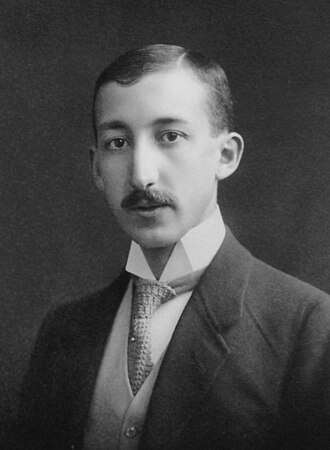 George de Hevesy1885 – 1966Hungarian chemist (1885–1966)Source: Wikidata (citizenship)
 János Kádár1912 – 1989Former General Secretary of the Hungarian Socialist Workers' PartySource: Wikidata (citizenship)
 Ferdinand III, Holy Roman Emperor1608 – 1657Emperor of the Holy Roman Empire (1608-1657)Source: Wikidata (citizenship)
 Robert Capa1913 – 1954American photographer (1913–1954)Source: Wikidata (citizenship)
 Lajos Kossuth1802 – 1894Hungarian politician (1802–1894)Source: Wikidata (citizenship)
 Amrita Sher-Gil1913 – 1941Hungarian-Indian painter (1913–1941)Source: Wikidata (country of birthplace)
 Béla Kun1886 – 1938Hungarian Communist revolutionary and politician, the de facto leader of the Hungarian Soviet Republic in 1919, People's Commissar of Foreign AffairsSource: Wikidata (citizenship)
Showing the 48 best-known of 88 people.
Everything that happened
- 1044Battle of MénfőMénfőThe Battle of Ménfő was an important battle in the early history of the Kingdom of Hungary. Fought in 1044 at Ménfő, near Győr, between an army of mostly Germans and Hungarians (Magyars), it was a victory for the Germans and thus for Westernising influences in Hungary.Source: Wikidata (country)
- 1241Battle of MohiMuhiThe Battle of Mohi (11 April 1241) was a pivotal conflict between the Mongol Empire and the Kingdom of Hungary during the Mongol invasion of Europe. The battle took place at Muhi (then Mohi), a town located in present-day Hungary, southwest of the Sajó River.Source: Wikidata (country)
- 1246Battle of the Leitha RiverLeithaThe Battle of the Leitha River was fought on 15 June 1246 near the banks of the Leitha river between the forces of the King Béla IV of Hungary and Duke Frederick II of Austria. The Hungarian army was routed, but Duke Frederick was killed, ending Austrian claims to the western counties of Hungary.Source: Wikidata (country)
- 1526Battle of MohácsSátorhelyThe Battle of Mohács took place on 29 August 1526 near Mohács, in the Kingdom of Hungary. It was fought between the forces of Hungary, led by King Louis II, and the invading Ottoman Empire, commanded by Suleiman the Magnificent and his grand vizier, Pargalı Ibrahim Pasha.Source: Wikidata (country)
- 1532Siege of KőszegKőszegThe siege of Kőszeg (Hungarian: Kőszeg ostroma) or siege of Güns (Turkish: Güns Kuşatması), also known as the German campaign (Turkish: Alman Seferi) was a siege of Kőszeg (German: Güns) in the Western Kingdom of Hungary which ruled by Ferdinand I, a Habsburg king, that took place in 1532.Source: Wikidata (country)
- 1540Treaty of NagyváradOradeaThe Treaty of Nagyvárad (or Treaty of Grosswardein) was a secret peace agreement between Emperor Ferdinand I and John Zápolya, rival claimants to the Kingdom of Hungary, signed in Grosswardein / Várad (modern-day Oradea, Romania) on February 24, 1538. In the treaty, they divided Hungary between them according to the actual possession.Source: Wikidata (country)
- 1541Siege of BudaBudaThe siege of Buda (4 May – 21 August 1541) ended with the capture of the city of Buda, the historical capital of the Kingdom of Hungary, by the Ottoman Empire, leading to about 150 years of Ottoman rule in parts of Hungary.Source: Wikidata (country)
- 1543Siege of EsztergomEsztergomThe siege of Esztergom occurred between 25 July and 10 August 1543, when the Ottoman army, led by Sultan Suleiman the Magnificent, besieged the city of Esztergom in modern Hungary. The city was captured by the Ottomans after two weeks.Source: Wikidata (country)
- 1552Siege of EgerEgerThe siege of Eger (Hungarian: Eger ostroma) occurred during the 16th century Ottoman wars in Europe. In 1552, the forces of the Ottoman Empire led by Kara Ahmed Pasha laid siege to the Castle of Eger, located in the northern part of the Kingdom of Hungary, but the defenders led by István Dobó repelled the attacks and defended the castle, despite being outnumbered approximately 17 to 1.Source: Wikidata (country)
- 1566Siege of SzigetvárSzigetvárThe siege of Szigetvár or the Battle of Szigeth (pronunciation: [ˈsiɡɛtvaːr]; Hungarian: Szigetvár ostroma; Croatian: Bitka kod Sigeta, Sigetska bitka; Turkish: Zigetvar Kuşatması) was an Ottoman siege of the fortress of Szigetvár in the Kingdom of Hungary. The fort had blocked Sultan Suleiman's line of advance towards Vienna in 1566.Source: Wikidata (country)
- 1593 – 1606Long Turkish WarHungaryThe Long Turkish War, or Thirteen Years' War, was an indecisive land war between the Holy Roman Empire (primarily the Habsburg monarchy) and the Ottoman Empire, primarily over the principalities of Wallachia, Transylvania, and Moldavia.Source: Wikidata (country)
- 1596Battle of KeresztesMezőkeresztesThe Battle of Keresztes (also known as the Battle of Mezőkeresztes) (Turkish: Haçova Muharebesi) took place on 24–26 October 1596. It was fought between a combined Habsburg-Transylvanian force and the Ottoman Empire near the village of Mezőkeresztes (Turkish: Haçova) in modern-day northern Hungary. The Ottomans routed the Habsburg-led army, but due to their own losses, they were unable to exploit their victory.Source: Wikidata (country)
- 1664Battle of Saint GotthardSzentgotthárdThe Battle of Saint Gotthard (Turkish: Saint Gotthard Muharebesi; German: Schlacht bei St. Gotthard; Hungarian: Szentgotthárdi csata), of the Austro-Turkish War (1663–1664), took place on 1 August 1664 on the Raab between Mogersdorf and the Cistercian monastery St. Gotthard in West Hungary (today Hungary).Source: Wikidata (country)
- 1683 – 1699Polish–Ottoman WarAustriaThe Polish–Ottoman War or the War of the Holy League was the Polish side of the conflict that is otherwise known as the Great Turkish War. The conflict began with a Polish victory at the Battle of Vienna in 1683 and ended with the Treaty of Karlowitz, which restored to the Polish–Lithuanian Commonwealth lands lost in the previous Polish–Ottoman War (1672–76)).Source: Wikidata (country of the location)
- 1684Siege of BudaBudaThe siege of Buda (14 July – 30 October 1684) was a siege by the Holy Roman Empire of the Ottoman fortress of Buda. After 109 days, the siege was abandoned.Source: Wikidata (country)
- 1686Siege of BudaBudaThe siege of Buda (Hungarian: Buda visszafoglalása, lit. 'Recapture of Buda') was a military engagement during the Great Turkish War, in which forces of the Holy League, led by the Habsburg Monarchy, recaptured the fortified city of Buda (now part of modern-day Budapest) from the Ottoman Empire.Source: Wikidata (country)
- 1687Battle of MohácsNagyharsányThe Second Battle of Mohács, also known as the Battle of Harsány Mountain, was fought on 12 August 1687 between the forces of Ottoman Sultan Mehmed IV, commanded by the Grand Vizier Sarı Süleyman Pasha, and the forces of Leopold I, Holy Roman Emperor, commanded by Charles of Lorraine. The result was a decisive victory for the Austrians.Source: Wikidata (country)
- 1809Battle of RaabGyőrThe Battle of Raab or Battle of Győr (Hungarian: győri csata) was fought on 14 June 1809 during the Napoleonic Wars, between Franco-Italian forces and Habsburg forces. Most of the Habsburg army consisted of poorly trained Landwehr and militia. The battle was fought near Győr (Raab in German), Kingdom of Hungary, and ended in a Franco-Italian victory.Source: Wikidata (country)
- 1848 – 1849Hungarian Revolution of 1848Kingdom of HungaryThe Hungarian Revolution of 1848, also known in Hungary as Hungarian Revolution and War of Independence of 1848–1849 (Hungarian: 1848–49-es forradalom és szabadságharc) was one of a number of European Revolutions of 1848 and was closely linked to other revolutions of 1848 in the Habsburg areas.Source: Wikidata (country)
- 1918 – 1920Hungarian–Romanian WarHungaryThe Hungarian–Romanian War (Hungarian: magyar–román háború; Romanian: războiul româno-ungar) was fought between Hungary and Romania from 13 November 1918 to 3 August 1919. The conflict had a complex background, with often contradictory motivations for the parties involved.Source: Wikidata (country)
- 1919 – 1921White TerrorKingdom of HungaryThe White Terror (Hungarian: Fehér Terror) was a two-year period (1919–1921) of repressive violence in Hungary carried out by counter-revolutionary soldiers against the real and alleged supporters of the short-lived Hungarian Soviet Republic and its Red Terror, especially against the Jews perceived as its main supporters. Tens of thousands were imprisoned without trial.Source: Wikidata (country)
- 1944Battle of DebrecenNyíregyházaThe Battle of Debrecen, called by the Red Army the Debrecen Offensive Operation, was a battle taking place from 6 to 29 October 1944 on the Eastern Front in Hungary during World War II.Source: Wikidata (country)
- 1944 – 1945Budapest offensiveBudapestThe Budapest offensive was the general attack by Soviet and Romanian armies against Hungary and its Axis ally Nazi Germany. The offensive lasted from 29 October 1944 until the fall of Budapest on 13 February 1945. The campaign was one of the most difficult and complicated offensives by the Soviet Army in Central Europe.Source: Wikidata (country)
- 1944German invasion of HungaryHungaryIn March 1944, Hungary was occupied by the Wehrmacht. This invasion was formally known as Operation Margarethe (Unternehmen Margarethe).Source: Wikidata (country)
- 1944Operation PanzerfaustBudapestOperation Panzerfaust (German: Unternehmen Panzerfaust, lit. 'Operation Armored Fist') was a military operation undertaken in October 1944 by the German Wehrmacht to ensure the Kingdom of Hungary would remain a German ally in World War II.Source: Wikidata (country of the location)
- 1944 – 1945Siege of BudapestBudapestThe Siege of Budapest or Battle of Budapest, was a major battle fought between Soviet and Romanian forces and Hungarian and German forces for the Hungarian capital of Budapest, near the end of World War II. The Budapest Offensive began on October 29 1944, while the siege lasted from December 26 1944 to February 13, 1945.Source: Wikidata (country)
- 1945Operation Spring AwakeningLake BalatonOperation Spring Awakening (German: Unternehmen Frühlingserwachen) was the last major German offensive of World War II. The operation was referred to in Germany as the Plattensee Offensive and in the Soviet Union as the Balaton Defensive Operation. It took place in Western Hungary on the Eastern Front and lasted from 6 March until 15 March 1945.Source: Wikidata (country of the location)
- 1956Hungarian Revolution of 1956Hungarian People's RepublicThe Hungarian Revolution of 1956 (23 October – 4 November 1956; Hungarian: 1956-os forradalom), also known as the Hungarian Uprising, was an attempted countrywide revolution against the government of the Hungarian People's Republic (1949–1989) and the policies caused by the government's subordination to the Union of Soviet Socialist Republics (USSR).Source: Wikidata (country)
- 1989Pan-European PicnicPan-European Picnic Memorial ParkThe Pan-European Picnic (German: Paneuropäisches Picknick; Hungarian: Páneurópai piknik; Slovak: Paneurópsky piknik; Czech: Panevropský piknik) was a peace demonstration held on the Austro-Hungarian border near Sopron, Hungary, on 19 August 1989.Source: Wikidata (country of the location)
- 1994Budapest MemorandumBudapestThe Budapest Memorandum on Security Assurances comprises four substantially identical political agreements signed at the Conference on Security and Co-operation in Europe (CSCE) in Budapest, Hungary, on 5 December 1994, to provide security assurances by its signatories relating to the accession of Belarus, Kazakhstan, and Ukraine to the Treaty on the Non-Proliferation of Nuclear Weapons (NPT).Source: Wikidata (country)
- 20022002 European floodsGermanyIn August 2002, a week of intense rainfall produced flooding across a large portion of Europe. It reached the Ukraine, Italy, Spain, Austria, Germany, Slovakia, Hungary, Romania, Bulgaria, Croatia, Czech Republic and Russia. The event killed 232 people and left €27.7 billion (US$27.115 billion) in damage. The flood was of a magnitude expected to occur roughly once a century. Flood heights unknown since St.Source: Wikidata (country of the location)
- 2020COVID-19 pandemicWorldwideA new coronavirus spreads worldwide. Lockdowns, remote work and fast-developed vaccines reshape daily life.Source: Wikidata (country)