Greece
151 events
Greece, officially the Hellenic Republic, is a country located mostly on the Balkan peninsula of Southeastern Europe, with thousands of islands extending geographically to Asia Minor. It has a population of around 10 million. With nine regions and up to 227 inhabited islands, it has the longest coastline on the Mediterranean basin. The Ionian Sea is west of the mainland, Albania northwest, and North Macedonia and Bulgaria north. Turkey is east both by land and the Aegean Sea. The capital, Athens, is the largest Greek city, followed by Thessaloniki and Patras.
Text from the Wikipedia article Greece, CC BY-SA 4.0
Built from Wikidata: an event or person is listed when Wikidata links them to this page, as shown next to each one. Many aren’t recorded there, so this list is incomplete.
Key people
 Aristotle384 BCE – 322 BCEGreek philosopherSource: Wikidata (country of birthplace)
 Platoc. 428 BCE – 348 BCE4th-century BCE Greek philosopherSource: Wikidata (country of birthplace)
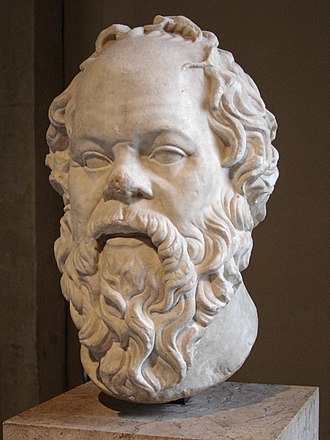 Socrates470 BCE – 399 BCE5th-century BCE Greek philosopherSource: Wikidata (country of birthplace)
 Alexander the Great356 BCE – 323 BCEKing of Macedonia and conqueror of Achaemenid Persia (356–323 BC)Source: Wikidata (country of birthplace)
 Mustafa Kemal Atatürk1881 – 1938Founding father of the Republic of Turkey (c. 1881–1938)Source: Wikidata (country of birthplace)
 Pythagorasc. 582 BCE – 490 BCEGreek philosopher and mathematician (c. 570 – c. 495 BC)Source: Wikidata (country of birthplace)
 Hippocrates460 BCE – 370 BCEAncient Greek physician (c. 460 – c. 370 BCE)Source: Wikidata (country of birthplace)
 Aesop620 BCE – 564 BCEAncient Greek storyteller (619 BC–563 BC)Source: Wikidata (country of birthplace)
 Plutarchc. 40 CE – 120 CEGreek philosopher and historian (c. AD 46 – after AD 119)Source: Wikidata (country of birthplace)
 Euripidesc. 480 BCE – 406 BCEClassical Athenian playwrightSource: Wikidata (country of birthplace)
 Aeschylus525 BCE – 456 BCEAncient Athenian playwrightSource: Wikidata (country of birthplace)
 Democritusc. 460 BCE – 360 BCEGreek philosopher (c. 460–c. 370 BC)Source: Wikidata (country of birthplace)
 Epicurus342 BCE – 270 BCEAncient Greek philosopherSource: Wikidata (country of birthplace)
 Sapphoc. 650 BCE – 570 BCEAncient Greek poet from Lesbos (c. 630-c. 570 BC)Source: Wikidata (country of birthplace)
 Tom Hanksb. 1956American actor and film producer (born 1956)Source: Wikidata (citizenship)
 Thucydidesc. 460 BCE – 395 BCE5th-century BC Athenian historian and generalSource: Wikidata (country of birthplace)
 Prince Philip, Duke of Edinburgh1921 – 2021Consort of Elizabeth II from 1952 to 2021 (1921-2021)Source: Wikidata (country of birthplace)
 Pericles494 BCE – 429 BCEAthenian statesman, orator and general (c. 495 – 429 BC)Source: Wikidata (country of birthplace)
 El Greco1541 – 1614Greek artist, painter, sculptor and architect (1541–1614)Source: Wikidata (country of birthplace)
 Protagoras490 BCE – 420 BCEPre-Socratic Greek philosopher (c.490–c.420 BC)Source: Wikidata (country of birthplace)
 Pindar517 BCE – 437 BCE5th-century BC Greek lyric poetSource: Wikidata (country of birthplace)
 Theophrastus371 BCE – 287 BCEGreek philosopher (c.371-c.287 BC)Source: Wikidata (country of birthplace)
 Giorgos Seferis1900 – 1971Greek poet and diplomat (1900-1971)Source: Wikidata (citizenship)
 Alexis Tsiprasb. 1974Prime Minister of Greece (2015; 2015–2019)Source: Wikidata (citizenship)
 Maria Meneghini Callas1923 – 1977American-Greek operatic soprano (1923–1977)Source: Wikidata (citizenship)
 Polybius200 BCE – 120 BCEAncient Greek historian and politician of the 2nd century BCSource: Wikidata (country of birthplace)
- Nikos Kazantzakis1883 – 1957Greek writer, poet and philosopher (1883-1957)Source: Wikidata (citizenship)
 Odysseas Elytis1911 – 1996Greek poet and art critic (1911–1996)Source: Wikidata (citizenship)
 Aristotle Onassis1906 – 1975Greek shipping magnate (1906–1975)Source: Wikidata (citizenship)
 Kyriakos Mitsotakisb. 1968Greek politician, prime Minister of Greece, President of New Democracy partySource: Wikidata (citizenship)
 Themistocles524 BCE – 459 BCEAthenian politician and general (c. 524–459 BC)Source: Wikidata (country of birthplace)
 Elia Kazan1909 – 2003American director and actor (1909–2003)Source: Wikidata (citizenship)
 Nâzım Hikmet1902 – 1963Turkish communist poet, playwright and novelist (1902–1963)Source: Wikidata (country of birthplace)
 Bayezid II1447 – 1512The eighth Sultan of the Ottoman Empire (1481–1512)Source: Wikidata (country of birthplace)
 Hayreddin Barbarossa1478 – 1546Turkish admiral (1478–1546)Source: Wikidata (country of birthplace)
 Katerina Sakellaropouloub. 1956Greek judge, former president of the Hellenic RepublicSource: Wikidata (citizenship)
 Vangelis1943 – 2022Greek composer (1943-2022)Source: Wikidata (citizenship)
 Ugo Foscolo1778 – 1827Italian writer and poet (1778–1827)Source: Wikidata (country of birthplace)
 Clement of Alexandria150 CE – 215 CEChristian theologian (c.150 – c.215)Source: Wikidata (country of birthplace)
 Constantine II of Greece1940 – 2023King of Greece from 1964 to 1973 (1940–2023)Source: Wikidata (citizenship)
 Muhammad Ali1769 – 1849Wali of Egypt and Sudan (1769–1849)Source: Wikidata (country of birthplace)
 Phidias500 BCE – 430 BCEGreek sculptor, painter and architect (c.480–430 BC)Source: Wikidata (country of birthplace)
 Cat Stevensb. 1948British musician (born 1948)Source: Wikidata (citizenship)
 Konstantinos P. Cavafy1863 – 1933Greek-Egyptian poet and journalist (1863–1933)Source: Wikidata (citizenship)
 Nana Mouskourib. 1934Greek singer (born 1934)Source: Wikidata (citizenship)
 I. Bartholomeosb. 1940Ecumenical Patriarch of Constantinople since 1991Source: Wikidata (citizenship)
 Giorgos Papandreoub. 1952Greek politician, president of the Socialist InternationalSource: Wikidata (citizenship)
 Archilochus of Paros688 BCE – 645 BCEAncient Greek lyric poetSource: Wikidata (country of birthplace)
Showing the 48 best-known of 103 people.
Everything that happened
- 776 BCEFirst recorded Olympic GamesOlympia, GreeceThe earliest recorded Games are held at Olympia. Greeks later count years in four-year Olympiads starting from this date.Source: Wikidata (country of the location)
- 743 BCE – 724 BCEFirst Messenian WarMessenia PrefectureThe First Messenian War was a war between Messenia and Sparta. It began in 743 BC and ended in 724 BC, according to the dates given by Pausanias.Source: Wikidata (country of the location)
- 710 BCE – 650 BCELelantine WarEuboeaThe Lelantine War was a military conflict between the two ancient Greek city states Chalcis and Eretria in Euboea which took place in the early Archaic period, between c. 710 and 650 BC. The reason for war was, according to tradition, the struggle for the fertile Lelantine Plain on the island of Euboea.Source: Wikidata (country of the location)
- 685 BCE – 668 BCESecond Messenian WarPeloponneseThe Second Messenian War was a war which occurred c. 660–650 BC between the ancient Greek states of Messenia and Sparta, with localized resistance possibly lasting until the end of the century. It started around 40 years after the end of the First Messenian War with a slave rebellion.Source: Wikidata (country of the location)
- 595 BCE – 585 BCEFirst Sacred WarCirrhaThe First Sacred War, or Cirraean War, was fought between the Amphictyonic League of Delphi and the city of Kirrha. At the beginning of the 6th century BC, the Pylaeo-Delphic Amphictyony, controlled by the Thessalians, attempted to take hold of the Sacred Land (or Kirrhaean Plain) of Apollo, resulting in this war.Source: Wikidata (country)
- 508 BCEClassical AthensClassical AthensAthens (Ancient Greek: Ἀθῆναι, Athênai) was a prominent polis (city-state) of ancient Greece, located in the peninsula of Attica. Athenian democracy was established in 508 BC and remained in place for almost two centuries except for a few brief interruptions.Source: Wikidata (country)
- 499 BCESiege of NaxosNaxos IslandThe siege of Naxos (499 BC) was a failed attempt by the Milesian tyrant Aristagoras, operating with support from, and in the name of the Persian Empire of Darius the Great, to conquer the island of Naxos. It was the opening act of the Greco-Persian Wars, which would ultimately last for 50 years.Source: Wikidata (country)
- 494 BCEBattle of SepeiaGrove of ArgusAt the Battle of Sepeia (Ancient Greek: Σήπεια; c. 494 BC), the Spartan forces of Cleomenes I defeated the Argives, fully establishing Spartan dominance in the Peloponnese. The Battle of Sepeia is infamous for having the highest number of casualties within a battle during the classical Greek period.Source: Wikidata (country of the location)
- 492 BCE – 490 BCEFirst Persian invasion of GreeceThraceThe first Persian invasion of Greece took place from 492 BC to 490 BC, as part of the Greco-Persian Wars. It ended with a decisive Athenian-led victory over the Achaemenid Empire during the Battle of Marathon.Source: Wikidata (country of the location)
- 490 BCEBattle of MarathonMarathonThe Battle of Marathon took place in 490 BCE during the first Persian invasion of Greece. It was fought between the citizens of Athens, aided by Plataea, against a Persian force commanded by Datis and Artaphernes. The battle was the culmination of the first attempt by Persia under King Darius I to subjugate Greece.Source: Wikidata (country)
- 490 BCESiege of EretriaEretriaThe siege of Eretria took place in 490 BC, during the first Persian invasion of Greece. The city of Eretria, on Euboea, was besieged by a strong Persian force under the command of Datis and Artaphernes.Source: Wikidata (country)
- 480 BCEBattle of ThermopylaeThermopylaeThe Battle of Thermopylae was fought in 480 BC at Thermopylae between the Achaemenid Persian Empire under Xerxes and an alliance of Greek city-states led by Sparta under Leonidas I. Lasting over the course of three days, it was one of the most prominent battles of both the second Persian invasion of Greece and the wider Greco-Persian Wars.Source: Wikidata (country)
- 480 BCEBattle of SalamisSalamis IslandThe Battle of Salamis ( SAL-ə-miss) was a naval battle fought in 480 BC, between an alliance of Greek city-states under Themistocles, and the Achaemenid Empire under King Xerxes. It resulted in a victory for the outnumbered Greeks.Source: Wikidata (country)
- 480 BCEBattle of ArtemisiumGreeceThe Battle of Artemisium or Artemision was a series of naval engagements over three days during the second Persian invasion of Greece. The battle took place simultaneously with the land battle at Thermopylae, in August or September 480 BC, off the coast of Euboea and was fought between an alliance of Greek city-states, including Sparta, Athens, Corinth and others, and the Persian Empire of Xerxes I.Source: Wikidata (country)
- 480 BCE – 479 BCESecond Persian invasion of GreeceGreeceThe second Persian invasion of Greece (480–479 BC) occurred during the Greco-Persian Wars, as King Xerxes I of Persia sought to conquer all of Greece. The invasion was a direct, if delayed, response to the defeat of the first Persian invasion of Greece (492–490 BC) at the Battle of Marathon, which ended Darius I's attempts to subjugate Greece.Source: Wikidata (country)
- 479 BCEBattle of PlataeaPlataeaThe Battle of Plataea was the final land battle during the second Persian invasion of Greece. It took place in August 479 BC near the city of Plataea in Boeotia, and was fought between an Achaemenid army led by Mardonius (allied with Boeotia, Thessaly, and Macedon) and the Spartan-led Hellenic alliance including Athens, Corinth, Tegea, Megara and other city-states.Source: Wikidata (country)
- 477 BCE – 449 BCEWars of the Delian LeagueGreeceThe Wars of the Delian League (477–449 BC) were a series of campaigns fought between the Delian League led by Athens and her allies, and the Achaemenid Empire. These conflicts represent the continuation of the Greco-Persian Wars, after the second Persian invasion of Greece.Source: Wikidata (country)
- 464 BCE464 BC Sparta earthquakeSpartaThe 464 BC Spartan earthquake occurred along the Sparta fault in the year 464 BC destroying much of what was Sparta and many other city-states in ancient Greece. Historical sources suggest that the death toll may have been as high as 20,000, although modern scholars suggest that this figure is likely an exaggeration.Source: Wikidata (country)
- 457 BCEBattle of OenophytaOinofytaThe Battle of Oenophyta took place between Athens and the Boeotian city-states in 457 BC during the First Peloponnesian War.Source: Wikidata (country)
- 457 BCEBattle of Tanagraancient TanagraThe Battle of Tanagra was a land battle that took place in Boeotia in 457 BC between Athens and Sparta during the First Peloponnesian War. Tension between Athens and Sparta had built up due the rebuilding of Athens' walls and Spartan rejection of Athenian military assistance. The Athenians were led by Myronides and held a strength of 14,000. The Spartans were led by Nicomedes and had a total of 11,500 soldiers.Source: Wikidata (country)
- 449 BCE – 448 BCESecond Sacred WarDelphiThe Second Sacred War was the Spartan defeat of the Phocians at Delphi and the restoration of Delphian self-government.Source: Wikidata (country)
- 447 BCEBattle of CoroneaKoroneiaThe Battle of Coronea (also known as the First Battle of Coronea) took place between the Athenian-led Delian League and the Boeotian League in 447 BC during the First Peloponnesian War.Source: Wikidata (country)
- 440 BCE – 439 BCESamian WarSamosThe Samian War (440–439 BC) was an Ancient Greek military conflict between Athens and Samos. The war was initiated by Athens's intervention in a dispute between Samos and Miletus. When the Samians refused to break off their attacks on Miletus as ordered, the Athenians easily drove out the oligarchic government of Samos and installed a garrison in the city, but the oligarchs soon returned, with Persian support.Source: Wikidata (country)
- 433 BCEBattle of SybotaSybota IslandsThe Battle of Sybota (Ancient Greek: Σύβοτα) took place in 433 BC between Corcyra (modern Corfu) and Corinth. It was one of the immediate catalysts for the Peloponnesian War.Source: Wikidata (country of the location)
- 432 BCEBattle of PotidaeaPotidaeaThe Battle of Potidaea was fought in 432 BC between Athens and a combined army from Corinth and Potidaea, along with their various allies. Along with the Battle of Sybota, it was one of the catalysts for the Peloponnesian War.Source: Wikidata (country)
- 431 BCE – 404 BCEPeloponnesian WarAncient GreeceThe Peloponnesian War was fought in the Eastern Mediterranean between the Athenian-led Delian League and the Spartan-led Peloponnesian League from 431 to 404 BC for hegemony over Ancient Greece. Initially inconclusive, the intervention of the Persian Empire in support of Sparta in 413 BC allowed the Spartan coalition to decisively defeat Athens, beginning a period of Spartan hegemony over Greece.Source: Wikidata (country of the location)
- 430 BCE – 426 BCEPlague of AthensClassical AthensThe Plague of Athens (Ancient Greek: Λοιμὸς τῶν Ἀθηνῶν, Loimos tôn Athênôn) was an epidemic that devastated the city-state of Athens in ancient Greece during the second year (430 BC) of the Peloponnesian War when an Athenian victory still seemed within reach.Source: Wikidata (country)
- 429 BCEBattle of NaupactusNafpaktosThe Battle of Naupactus was a naval battle in the Peloponnesian War. The battle, which took place a week after the Athenian victory at Rhium, set an Athenian fleet of twenty ships, commanded by Phormio, against a Peloponnesian fleet of seventy-seven ships, commanded by Cnemus.Source: Wikidata (country)
- 429 BCEBattle of SpartolosChalkidikiThe Battle of Spartolos took place in 429 BC between Athens and the Chalcidian League and their allies, in the early part of the Peloponnesian War.Source: Wikidata (country of the location)
- 426 BCEBattle of OlpaeOlpaeThe Battle of Olpae took place during the Peloponnesian War in 426 BC, between armies led by Athens and Sparta.Source: Wikidata (country)
- 426 BCEBattle of TanagraTanagraThe Battle of Tanagra took place during the Peloponnesian War in 426 BC between Athens, Tanagra and Thebes.Source: Wikidata (country)
- 425 BCEBattle of PylosPylosThe Battle of Pylos, fought at sea and land, took place in 425 BC during the Peloponnesian War at the peninsula of Pylos, on the present-day Bay of Navarino in Messenia, and was an Athenian victory over Sparta.Source: Wikidata (country)
- 425 BCEBattle of SphacteriaSphacteriaThe Battle of Sphacteria was a land battle of the Peloponnesian War, fought in 425 BC between Athens and Sparta. Following the Battle of Pylos and subsequent peace negotiations, which failed, a number of Spartans were stranded on the island of Sphacteria. An Athenian force under Cleon and Demosthenes attacked and forced them to surrender.Source: Wikidata (country)
- 424 BCEBattle of DeliumDeliumThe Battle of Delium (or Delion, a city in Boeotia) took place in 424 BC, during the Peloponnesian War. It was fought between the Athenians and the Boeotians, who were allies of the Spartans, and ended with the siege of Delium in the following weeks.Source: Wikidata (country)
- 422 BCEBattle of AmphipolisAmphipolisThe Battle of Amphipolis was fought in 422 BC during the Peloponnesian War between Athens and Sparta. It was the culmination of events that began in 424 BC with the capture of Amphipolis by the Spartans.Source: Wikidata (country)
- 418 BCEBattle of MantineaMantineiaThe first Battle of Mantinea was fought in 418 BC during the Peloponnesian War. In this battle, Sparta and its Peloponnesian allies defeated an allied army of Argos, Athens, Mantinea and several others.Source: Wikidata (country)
- 415 BCESiege of MelosMilosThe siege of Melos occurred in 416 BC, during the Peloponnesian War between Athens and Sparta, when the Athenians attacked Melos, an island in the Aegean Sea roughly 110 kilometres (68 miles) east of mainland Greece. Though the Melians had ancestral ties to Sparta, they were neutral in the war.Source: Wikidata (country)
- 411 BCEBattle of SymeSymiThe Battle of Syme was a naval battle in 411 BC between Sparta and Athens, during the Peloponnesian War. It took place near the island of Syme in the south-eastern Aegean Sea.Source: Wikidata (country)
- 395 BCEBattle of HaliartusHaliartosThe Battle of Haliartus was fought in 395 BC between Sparta and Athens. After the Athenian defeat at the Peloponnesian War, Athens tried to recover, but also gained the support of Boeotia. Dissatisfied with this situation, Sparta sent an army against Athens and was defeated by the Athenians and Boeotians. Lysander, one of Sparta's most successful generals, was killed in this battle.Source: Wikidata (country)
- 394 BCEBattle of CoroneaKoroneiaThe Battle of Coronea in 394 BC, also Battle of Coroneia, took place during the Corinthian War, in which the Spartans and their allies under King Agesilaus II defeated a force of Thebans and Argives that was attempting to block their march back into the Peloponnese.Source: Wikidata (country)
- 394 BCEBattle of NemeaNemeaThe Battle of Nemea of 394 BC, also known in ancient Athens as the Battle of Corinth, was a battle in the Corinthian War, between Sparta and the coalition of Argos, Athens, Corinth, and Thebes. The battle was fought in Corinthian territory, at the dry bed of the Nemea River.Source: Wikidata (country)
- 391 BCEBattle of LechaeumCorinthThe Battle of Lechaeum (391 BC) was fought between the Athenians and the Spartans during the Corinthian War; it ended in an Athenian victory. During the battle, the Athenian general Iphicrates took advantage of the situation when a Spartan hoplite regiment operating near Corinth was marching through open terrain without the protection of any missile throwing troops.Source: Wikidata (country)
- 379 BCE – 371 BCEBoeotian WarBoeotiaThe Theban–Spartan War of 378–362 BC was a series of military conflicts fought between Sparta and Thebes for hegemony over Greece. In 378 BC, led by General Epaminondas, Thebes revolted against its Spartan garrison and successfully repelled Spartan offensives.Source: Wikidata (country of the location)
- 376 BCEBattle of NaxosNaxos IslandAt the Battle of Naxos (376 BC) the new Athenian fleet of Chabrias decisively defeated the Spartans. This was the beginning of Athens's recovery of its Aegean hegemony following its loss in the Peloponnesian War. The victory was decided by Phocion's courageous and skillful action on the left wing. In western waters another great Athenian commander, Timotheus, won the battle of Alyzia against Sparta in 374 BC.Source: Wikidata (country)
- 375 BCEBattle of TegyraTegyraThe Battle of Tegyra (375 BC) (also known as the Battle of Tegyrae) was an ancient Greek battle between Theban and Spartan hoplite forces. In the battle, a Theban army under Pelopidas was challenged by a substantially larger Spartan force while retreating from an abortive attack on Orchomenus, but successfully attacked and routed the Spartans.Source: Wikidata (country)
- 371 BCEBattle of LeuctraLeuctraThe Battle of Leuctra (Ancient Greek: Λεῦκτρα, Ancient Greek: [lêu̯k.tra]) was fought on 6 July 371 BC between the Boeotians led by the Thebans, and the Spartans along with their allies. The battle occurred in the context of the King's Peace, or Peace of Antalcidas, which had ended the Corinthian War in 386 BC.Source: Wikidata (country)
- 364 BCEBattle of CynoscephalaeThessalyThe Battle of Cynoscephalae was a military engagement in 364 BC between the forces of Thebes and its Thessalian allies, led by Pelopidas, against the army of Alexander of Pherae. Pelopidas's army defeated Alexander's much larger force, ending Alexander's attempts to secure hegemony in Thessaly, though Pelopidas himself was killed.Source: Wikidata (country)
- 362 BCEBattle of MantineaMantineiaThe Battle of Mantinea was fought on 4 July 362 BC between the Thebans, led by Epaminondas and supported by the Arcadians, Argives, Messenians, Thessalians, Euboeans and the Boeotian league against the Spartans, Eleans, Athenians, and Mantineans. The battle was to determine which of the two alliances would dominate Greece.Source: Wikidata (country)
- 357 BCE – 355 BCESocial WarAegean SeaThe Social War, also known as the War of the Allies, was fought from 357 BC to 355 BC between Athens with the Second Athenian League and the allied city-states of Chios, Rhodes, Cos and Byzantion.Source: Wikidata (country of the location)
- 356 BCE – 346 BCEThird Sacred WarPhocisThe Third Sacred War (356–346 BC) was fought between the forces of the Delphic and Amphictyonic Leagues, principally represented by Thebes, and latterly by Philip II of Macedon, and the Phocians.Source: Wikidata (country of the location)
- 353 BCEBattle of Crocus FieldThessalyThe Battle of Crocus Field (Krokion pedion) (353 BC or 352 BC) was a battle in the Third Sacred War, fought between the armies of Phocis, under Onomarchos, and the combined Thessalian and Macedonian army under Philip II of Macedon. The Phocians were decisively defeated by Philip's forces.Source: Wikidata (country)
- 338 BCEBattle of ChaeroneaChaeroneaThe Battle of Chaeronea was fought in 338 BC, near the city of Chaeronea in Boeotia, between Macedonia under Philip II and an alliance of Greek city-states led by Athens and Thebes. The battle was the culmination of Philip's final campaigns in 339–338 BC and resulted in a decisive victory for the Macedonians and their allies.Source: Wikidata (country)
- 335 BCEBattle of ThebesThebesThe Battle of Thebes took place between the army of Alexander the Great and the Greek city of Thebes in 335 BC immediately outside of and in the city proper in Boeotia. After succeeding his father as the hegemon of the Hellenic League, Alexander had marched to the north to deal with revolts in Illyria and Thrace.Source: Wikidata (country)
- 331 BCEBattle of MegalopolisMegalopolisThe Battle of Megalopolis was fought in 331 BC between Spartan-led forces and Macedonia. Alexander's regent Antipater led the Macedonians to victory over King Agis III. Alexander, warring in Asia at the time, called it a "battle of mice" (Ancient Greek: μυομαχίᾱ), according to Plutarch.Source: Wikidata (country)
- 323 BCE – 322 BCELamian WarGreeceThe Lamian War or the Hellenic War (323–322 BC), was an unsuccessful attempt by Athens and a large coalition of Greek states to end the hegemony of Macedonia over Greece just after the death of Alexander the Great. It was the last time Athens played a significant role as an independent power.Source: Wikidata (country)
- 322 BCEBattle of CrannonCranonThe Battle of Crannon (322 BC), fought between the Macedonian forces of Antipater and Craterus and the forces of a coalition of cities including Athens and the Aetolian League, was the decisive battle of the Lamian War. The Macedonian victory, though militarily unspectacular, convinced the other Greeks to sue for peace.Source: Wikidata (country)
- 305 BCE – 304 BCESiege of RhodesRhodesThe siege of Rhodes in 305–304 BC was one of the most notable sieges of antiquity, when Demetrius Poliorcetes, son of Antigonus I, besieged Rhodes in an attempt to make it abandon its neutrality and end its close relationship with Ptolemy I.Source: Wikidata (country)
- 267 BCE – 261 BCEChremonidean WarGreeceThe Chremonidean War (Ancient Greek: Χρεμωνίδειος Πόλεμος) (267–261 BC) was fought by a coalition of Greek city-states and Ptolemaic Egypt against Antigonid Macedonia. It ended in a Macedonian victory that confirmed Antigonid control over Greece.Source: Wikidata (country)
- 261 BCEBattle of CosKosThe Battle of Cos was fought in c. 261 BC, or as late as 255 BC, between an Antigonid fleet and a Ptolemaic fleet. Antigonus II Gonatas led his forces to victory, possibly over Patroclus, admiral of Ptolemy II. It has been widely assumed that the battle severely damaged Ptolemaic control of the Aegean, but this has been contested After the battle, Antigonus dedicated his flagship to Apollo.Source: Wikidata (country of the location)
- 246 BCEBattle of AndrosAndrosThe Battle of Andros was an obscure naval battle during the Third Syrian War. Despite its numerical superiority, the Egyptian fleet, probably commanded by Sophron of Ephesus, lost to a Macedonian fleet led by Antigonus II Gonatas. The Egyptian captain Ptolemy Andromachou, an illegitimate half-brother of the Pharaoh, lost his ship and crew, barely escaping to Ephesus.Source: Wikidata (country of the location)
- 229 BCE – 222 BCECleomenean WarPeloponneseThe Cleomenean War (229/228–222 BC) was fought between Sparta and the Achaean League for the control of the Peloponnese. Under the leadership of king Cleomenes III, Sparta initially had the upper hand, which forced the Achaean League to call for help the Macedonian king Antigonos Doson, who decisively defeated Cleomenes in the battle of Sellasia in 222.Source: Wikidata (country)
- 226 BCE226 BC Rhodes earthquakeRhodesThe Rhodes earthquake of 226 BC, which affected the island of Rhodes, Greece, is famous for having toppled the large statue known as the Colossus of Rhodes. Following the earthquake, the statue lay in place for nearly eight centuries before being sold off by invaders. While 226 BC is most often cited as the date of the quake, sources variously cite 226 or 227 BC as dates when it occurred.Source: Wikidata (country)
- 222 BCEBattle of SellasiaSellasiaThe Battle of Sellasia took place during the summer of 222 BC between Macedon and the Achaean League, led by Antigonus III Doson, and Sparta under the command of King Cleomenes III. The battle was fought at Sellasia, on the northern frontier of Laconia and ended in a Macedonian-Achaean victory.Source: Wikidata (country)
- 220 BCE – 217 BCESocial WarPeloponneseThe Social War, also War of the Allies and the Aetolian War, was fought from 220 BC to 217 BC between the Hellenic League under Philip V of Macedon and the Aetolian League, Sparta and Elis. It was ended with the Peace of Naupactus.Source: Wikidata (country)
- 207 BCEBattle of MantineaMantineiaThe Battle of Mantinea was fought in 207 BC between Sparta under the tyrant Machanidas, as part of the Aetolian League, and the Achaean League whose forces were led by Philopoemen. Both sides were supplemented by mercenaries.Source: Wikidata (country)
- 205 BCE – 200 BCECretan WarCreteThe Cretan War (205–200 BC) was fought by King Philip V of Macedon, the Aetolian League, many Cretan cities (of which Olous and Hierapytna were the most important) and Spartan pirates against the forces of Rhodes and later Attalus I of Pergamum, Byzantium, Cyzicus, Athens, and Knossos.Source: Wikidata (country of the location)
- 201 BCEBattle of ChiosChiosThe Battle of Chios was fought in 201 BC between the fleet of Philip V of Macedon and the combined fleet of Rhodes, Pergamum, Byzantium and Cyzicus.Source: Wikidata (country)
- 200 BCE – 197 BCESecond Macedonian WarGreeceThe Second Macedonian War (200–197 BC) was fought between Macedon, led by Philip V of Macedon, and Rome, allied with Pergamon, Rhodes, Athens, Athamania, Dardania, Illyria and since 199 BC, the Aetolian League. Philip V and the king of the Seleucid Empire Antiochus the Great had previously made a pact against the Ptolemaic kingdom (after the death of Ptolemy IV).Source: Wikidata (country)
- 197 BCEBattle of CynoscephalaeThessalyThe Battle of Cynoscephalae (Greek: Μάχη τῶν Κυνὸς Κεφαλῶν) was an encounter battle fought in Thessaly in June 197 BC between the Roman-Aetolian army, led by Titus Quinctius Flamininus, and Antigonid Macedon, led by Philip V, during the Second Macedonian War. It was a decisive Roman victory and marked the end of the conflict.Source: Wikidata (country)
- 195 BCEWar against NabisLaconia prefectureThe Laconian War of 195 BC was fought between the Greek city-state of Sparta and a coalition composed of Rome, the Achaean League, Pergamon, Rhodes, and Macedon.Source: Wikidata (country of the location)
- 192 BCE – 188 BCERoman–Seleucid warGreeceThe Roman–Seleucid war (192–188 BC), also called the Aetolian war, Antiochene war, Syrian war, and Syrian-Aetolian war was a military conflict between two coalitions, one led by the Roman Republic and the other led by the Seleucid king Antiochus III. The fighting took place in modern-day southern mainland Greece, the Aegean Sea, and Asia Minor.Source: Wikidata (country)
- 191 BCEBattle of ThermopylaeThermopylaeThe Battle of Thermopylae took place on 24 April 191 BC. It was fought as part of the Roman–Seleucid War, pitting forces of the Roman Republic led by the consul Manius Acilius Glabrio against a Seleucid-Aetolian army of Antiochus III the Great.Source: Wikidata (country)
- 171 BCEBattle of CallinicusLarissaThe Battle of Callinicus (Greek: μάχη του Καλλίνικου) was fought in 171 BC between Macedonia and the Roman Republic near a hill called Callinicus, close to the Roman camp at Tripolis Larisaia, five kilometres north of Larissa, the capital of Thessaly. It was fought during the first year of the Third Macedonian War (171-168 BC).Source: Wikidata (country)
- 168 BCEBattle of PydnaPydnaThe Battle of Pydna took place in 168 BC between Rome and Macedon during the Third Macedonian War. The battle saw the further ascendancy of Rome in the Hellenistic world and the end of the Antigonid line of kings, whose power traced back to Alexander the Great's Diadochi Antigonus Monophthalmus.Source: Wikidata (country)
- 148 BCEBattle of PydnaPydnaThe Battle of Pydna was fought in 148 BC between Rome and the forces of the Macedonian leader Andriscus. The Roman force was led by Quintus Caecilius Metellus, and was victorious. The battle played an important role in deciding the outcome of the Fourth Macedonian War, and saw the annihilation of the last military-political force of Macedon.Source: Wikidata (country)
- 146 BCEBattle of CorinthIsthmus of CorinthThe Battle of Corinth of 146 BC, also known as the Battle of Leucapetra or the Battle of Lefkopetra, was a decisive engagement fought between the Roman Republic and the Greek city-state of Corinth and its allies in the Achaean League.Source: Wikidata (country)
- 86 BCEBattle of ChaeroneaChaeroneaThe Battle of Chaeronea was fought by the Roman forces of Lucius Cornelius Sulla and Mithridates' general, Archelaus, near Chaeronea, in Boeotia, in 86 BC during the First Mithridatic War. The battle ended with a complete rout of the Pontic army and a decisive victory for the Romans.Source: Wikidata (country)
- 86 BCEBattle of OrchomenusOrchomenusThe Battle of Orchomenus was fought in autumn 86 BC between Rome and the forces of Mithridates VI of Pontus. The Roman army was led by Lucius Cornelius Sulla, while Mithridates' army was led by Archelaus. The Roman force was victorious, and Archelaus later defected to Rome. The battle ended the Mithridatic invasion of Europe. Information on the battle is included in Plutarch's Life of Sulla, chapters 20–21.Source: Wikidata (country)
- 48 BCEBattle of PharsalusFarsalaThe Battle of Pharsalus was the decisive battle of Caesar's Civil War fought on 9 August 48 BC near Pharsalus in Central Greece. Julius Caesar and his allies formed up opposite the army of the Roman Republic under the command of Pompey. Pompey had the backing of a majority of Roman senators and his army significantly outnumbered the veteran Caesarian legions.Source: Wikidata (country)
- 42 BCEBattle of PhilippiPhilippiThe Battle of Philippi was the final battle in the Liberators' civil war between the forces of Mark Antony and Octavian (of the Second Triumvirate) and the leaders of Julius Caesar's assassination, Brutus and Cassius, in 42 BC, at Philippi in Macedonia.Source: Wikidata (country)
- 31 BCEBattle of ActiumIonian SeaThe Battle of Actium was a naval battle fought between Octavian's maritime fleet, led by Marcus Agrippa, and the combined fleets of Mark Antony and Cleopatra. The battle took place on 2 September 31 BC in the Ionian Sea, near the former Roman colony of Actium, Greece, and was the climax of over a decade of rivalry between Octavian and Mark Antony.Source: Wikidata (country of the location)
- 115 CE – 117 CEDiaspora RevoltEastern MediterraneanThe Diaspora Revolt (115–117 CE), sometimes known as the Second Jewish–Roman War, was a series of uprisings launched by Jewish diaspora communities in several eastern provinces of the Roman Empire during the final years of Emperor Trajan's reign. Hostilities began while Trajan was engaged in his Parthian campaign in Mesopotamia, creating a favorable opportunity for rebellion.Source: Wikidata (country of the location)
- 365 CE365 Crete earthquakeGreeceThe 365 Crete earthquake occurred at about sunrise on 21 July 365 in the Eastern Mediterranean, with an assumed epicentre near Crete. Geologists today estimate the undersea earthquake to have been a moment magnitude 8.5 or higher. It caused widespread destruction in the central and southern Diocese of Macedonia (modern Greece), Africa Proconsularis (northern Libya), Egypt, Cyprus, Sicily, and Hispania (Spain).Source: Wikidata (country)
- 390 CEMassacre of ThessalonicaThessalonikiThe Massacre of Thessalonica in Macedonia, Greece, was a massacre of local civilians by Roman troops which is believed to have occurred around 390. According to Sozomen, in June of that year, Butheric, a Roman general stationed in Thessalonica as a magister militum, was lynched in an urban riot by an angry mob in the circus after having a famous circus charioteer arrested for pederasty, and refusing the people's…Source: Wikidata (country)
- 602 CE – 628 CEByzantine–Sasanian War of 602–628MesopotamiaThe Byzantine–Sasanian War of 602–628, also called the Last Great War of Antiquity, was fought between the Byzantine Empire and the Sasanian Empire. It was the final and most devastating conflict of the Roman–Persian wars (54 BC – AD 628). The previous war between the two powers had ended in 591 after the emperor Maurice helped the Sasanian king Khosrow II regain his throne.Source: Wikidata (country of the location)
- 904 CESack of ThessalonicaThessalonikiThe sack of Thessalonica was the capture and subsequent sack of the Byzantine city of Thessalonica by the Abbasid Caliphate and Tulunids in the year 904, led by Leo of Tripoli, a privateer and Muslim convert.Source: Wikidata (country)
- 997 CEBattle of SpercheiosSpercheiosThe Battle of Spercheios (Bulgarian: Битка при Сперхей, Greek: Μάχη του Σπερχειού) took place in 997 AD, on the shores of the Spercheios river near the city of Lamia in central Greece. It was fought between a Bulgarian army led by Tsar Samuil, which in the previous year had penetrated south into Greece, and a Byzantine army under the command of General Nikephoros Ouranos.Source: Wikidata (country of the location)
- 1014Battle of KleidionBelasicaThe Battle of Kleidion (Ancient Greek: Κλειδίον; or Clidium, after the medieval name of the village of Klyuch, lit. 'key'; also known as the Battle of Belasitsa) took place on 29 July 1014, between the Byzantine Empire and the Bulgarian Empire. It was the culmination of the nearly half-century struggle between the Byzantine Emperor Basil II and the Bulgarian emperor Samuel in the late 10th and early 11th centuries.Source: Wikidata (country of the location)
- 1263Battle of SettepozziSpetsesThe Battle of Settepozzi was fought in the first half of 1263 off the Greek island of Settepozzi (the medieval Italian name for Spetses) between a Genoese–Byzantine fleet and a smaller Venetian fleet.Source: Wikidata (country)
- 1311Battle of HalmyrosAlmyrosThe Battle of Halmyros, known by earlier scholars as the Battle of the Cephissus or Battle of Orchomenos, was fought on 15 March 1311, between the forces of the Frankish Duchy of Athens and its vassals under Walter of Brienne against the mercenaries of the Catalan Company, resulting in a decisive victory for the mercenaries.Source: Wikidata (country)
- 1348 – 1349Byzantine–Genoese WarAegean SeaThe Byzantine–Genoese War of 1348–1349 was fought over control over custom dues through the Bosphorus. The Byzantines attempted to break their dependence for food and maritime commerce on the Genoese merchants of Galata, and also to rebuild their own naval power. Their newly constructed navy however was captured by the Genoese, and a peace agreement was concluded.Source: Wikidata (country of the location)
- 1371Battle of MaritsaOrmenioThe Battle of Maritsa, also known as the Battle of Chernomen (Serbian: Marička bitka / Маричка битка; Turkish: Çirmen Muharebesi, İkinci Meriç Muharebesi; "Second Battle of Maritsa"), was fought on 26 September 1371 near the Maritsa River, close to the village of Chernomen (present-day Ormenio, Greece).Source: Wikidata (country)
- 1422 – 1430Siege of ThessalonicaThessalonikiThe siege of Thessalonica between 1422 and 1430 saw the Ottoman Empire, under Sultan Murad II, capture the city of Thessalonica. Afterwards, the city remained in Ottoman hands for the next five centuries until it became part of the Kingdom of Greece in 1912.Source: Wikidata (country)
- 1463 – 1479Ottoman–Venetian WarFriuliThe First Ottoman–Venetian War was fought between the Republic of Venice with its allies and the Ottoman Empire from 1463 to 1479. Fought shortly after the capture of Constantinople and the remnants of the Byzantine Empire by the Ottomans, it resulted in the loss of several Venetian holdings in Albania and Greece, most importantly the island of Negroponte (Euboea), which had been a Venetian protectorate for…Source: Wikidata (country of the location)
- 1470Siege of NegroponteChalkídaThe siege of Negroponte was fought between the forces of the Ottoman Empire, led by Sultan Mehmed II in person, and the garrison of the Venetian colony of Negroponte (Chalcis), the capital of the Venetian possession of Euboea in Central Greece. The Ottoman sultan Mehmed II laid siege to the fortress at Negroponte.Source: Wikidata (country)
- 1480Siege of RhodesRhodesThe Siege of Rhodes of 1480 was the first and failed attempt by the Ottoman Empire to seize the island stronghold of the Knights of Rhodes from Rhodes, despite about 70,000 troops, they successfully defended the island.Source: Wikidata (country)
- 1499Battle of ZonchioPylosThe naval Battle of Zonchio (Turkish: Sapienza Deniz Muharebesi, also known as the Battle of Sapienza or the First Battle of Lepanto) took place on four separate days: 12, 20, 22, and 25 August 1499. It was a part of the Ottoman–Venetian War of 1499–1503.Source: Wikidata (country)
- 1499 – 1503Ottoman–Venetian WarAdriatic SeaThe Second Ottoman–Venetian War was fought from 1499 to 1503 between the Ottoman Empire and the Republic of Venice for control of contested lands in the Aegean Sea, the Ionian Sea, and the Adriatic Sea. The Ottomans, under the command of Admiral Kemal Reis, were victorious and forced the Venetians to recognize their gains at the end of the war.Source: Wikidata (country of the location)
- 1522Siege of RhodesRhodesThe siege of Rhodes of 1522 was the second and ultimately successful attempt by the Ottoman Empire to expel the Knights of Rhodes from their island stronghold and thereby secure Ottoman control of the Eastern Mediterranean. The first siege in 1480 had been unsuccessful. Despite very strong defenses, the walls were demolished over the course of six months by Turkish artillery and mines.Source: Wikidata (country)
- 1538Battle of PrevezaPrevezaThe Battle of Preveza (also known as Prevesa) was a naval engagement that occurred on 28 September 1538 near Preveza in the Ionian Sea in northwest Greece, in the same area as the Battle of Actium in 31 BC. The battle was between an Ottoman fleet, led by Kapudan Pasha Hayreddin Barbarossa, and a Holy League of Venetian and Hispano-Imperial composition, led by Genoese admiral Andrea Doria.Source: Wikidata (country)
- 1571Battle of LepantoNafpaktosThe Battle of Lepanto was a naval engagement that took place on 7 October 1571 when a fleet of the Holy League, a coalition of Catholic states arranged by Pope Pius V and led by the navies of the Spanish Empire and the Republic of Venice, inflicted a major defeat on the fleet of the Ottoman Empire in the Gulf of Patras.Source: Wikidata (country)
- 1645 – 1669Cretan WarDalmatiaThe Cretan War, also known as the War of Candia or the fifth Ottoman–Venetian war, was a conflict between the Republic of Venice and her allies (chief among them the Knights of Malta, the Papal States and France) against the Ottoman Empire and the Barbary States largely fought over the island of Crete, Venice's largest and richest overseas possession.Source: Wikidata (country)
- 1648 – 1669Siege of CandiaHeraklionIn the siege of Candia (now Heraklion, Crete), Ottoman forces besieged the Venetian-ruled capital city of the Kingdom of Candia. It lasted from 1648 to 1669 (a total of 21 years) and is one of the longest sieges in history. It ended with an Ottoman victory, but the effort and cost of the siege contributed to the decline of the Ottoman Empire, especially after the Great Turkish War.Source: Wikidata (country)
- 1684 – 1699Morean WarPeloponneseThe Morean war (Italian: Guerra di Morea), also known as the Sixth Ottoman–Venetian War, was fought between 1684–1699 as part of the wider conflict known as the "Great Turkish War", between the Republic of Venice and the Ottoman Empire. Military operations ranged from Dalmatia to the Aegean Sea, but the war's major campaign was the Venetian conquest of the Morea (Peloponnese) peninsula in Southern Greece.Source: Wikidata (country of the location)
- 1714 – 1718Ottoman–Venetian WarPeloponneseThe Seventh Ottoman–Venetian War (also called the Second Morean War, the Small War or, in Croatia, the War of Sinj) was fought between the Republic of Venice and the Ottoman Empire between 1714 and 1718. It was the last conflict between the two powers, and ended with an Ottoman victory and the loss of Venice's major possession in the Greek peninsula, the Peloponnese (Morea).Source: Wikidata (country of the location)
- 1717Battle of MatapanCape MatapanThe Battle of Matapan, also known as the Battle of Cape Matapan, was a naval battle in the Laconian Gulf, an arm of the Mediterranean Sea, fought between the Kingdom of Portugal and the Ottoman Empire on 19 July 1717, off Cape Matapan in southern Greece. It was part of the Seventh Ottoman-Venetian War of 1714 – 1718.Source: Wikidata (country of the location)
- 1770Battle of ChesmaChiosThe Battle of Chesma (also known as the Battle of Chesme, Battle of Cheshme or Battle of Cesme Bay) took place on 5–7 July 1770 in and near Çeşme, in the area between the western tip of Anatolia and the island of Chios, which was the site of a number of past naval battles between the Ottoman Empire and the Republic of Venice.Source: Wikidata (country of the location)
- 1821Battle of AlamanaThermopylaeThe Battle of Alamana was fought between the Greeks and the Ottoman Empire on 22 April 1821, during the Greek War of Independence.Source: Wikidata (country)
- 1821Battle of Gravia InnGraviaThe Battle of Gravia Inn (Greek: Μάχη στο Χάνι της Γραβιάς) was fought between Greek revolutionaries and the Ottoman Empire during the Greek War of Independence. The Greek leaders Odysseas Androutsos, Yannis Gouras and Angelis Govios, with a group of c. 120 men, repulsed an Ottoman army numbering 8,000 to 9,000 men and artillery under the command of Omer Vrioni and Köse Mehmed.Source: Wikidata (country)
- 1821Constantinople massacre of 1821ConstantinopleThe Constantinople massacre of 1821 was orchestrated by the authorities of the Ottoman Empire against the Greek community of Constantinople following the outbreak of the Greek War of Independence (1821–1830).Source: Wikidata (country)
- 1821Siege of TripolitsaTripoliThe siege of Tripolitsa or fall of Tripolitsa (Greek: Άλωση της Τριπολιτσάς, romanized: Álosi tis Tripolitsás, Greek pronunciation: [ˈalosi tis tripoliˈt͡sas]), also known as the Tripolitsa massacre (Turkish: Tripoliçe katliamı), was an early victory of the revolutionary Greek forces in the summer of 1821 during the Greek War of Independence, which had begun earlier that year, against the Ottoman Empire.Source: Wikidata (country)
- 1822Battle of PetaArtaThe Battle of Peta or Battle of Petta was fought between the Greeks (with Philhellenes) led by Alexandros Mavrokordatos with Markos Botsaris and the Ottomans led by Omer Vrioni on 16 July 1822 (4 July Julian calendar). The conflict occurred on a hillside near the village of Peta in Epirus.Source: Wikidata (country)
- 1822Chios massacreChiosThe Chios massacre (Greek: Η σφαγή της Χίου, pronounced [i sfaˈʝi tis ˈçi.u]) was a catastrophe that resulted in the death, enslavement, and flight of about four-fifths of the total population of Greeks on the island of Chios by Ottoman troops during the Greek War of Independence in 1822. It is estimated that up to 100,000 people were killed or enslaved during the massacre, while up to 20,000 escaped as refugees.Source: Wikidata (country)
- 1824Destruction of PsaraPsaraThe Destruction of Psara (in Greek: Καταστροφή των Ψαρών, Katastrofí ton Psarón) was the killing of thousands of Greeks on the island of Psara by Ottoman troops during the Greek War of Independence in 1824.Source: Wikidata (country)
- 1825 – 1826Third siege of MissolonghiMissolonghiThe third siege of Missolonghi (Greek: Τρίτη Πολιορκία του Μεσολογγίου, often erroneously referred to as the second siege) was fought in the Greek War of Independence, between the Ottoman Empire and the Greek rebels, from 15 April 1825 to 10 April 1826.Source: Wikidata (country)
- 1826Battle of ArachovaArachovaThe Battle of Arachova (Greek: Μάχη της Αράχωβας), took place between 18 and 24 November 1826 (N.S.). It was fought between an Ottoman Empire force under the command of Mustafa Bey and Greek rebels under Georgios Karaiskakis. After receiving intelligence of the Ottoman army's maneuvers, Karaiskakis prepared a surprise attack in vicinity of the village of Arachova, in central Greece.Source: Wikidata (country)
- 1827Battle of NavarinoPylosThe Battle of Navarino was a naval battle fought on 20 October (O.S. 8 October) 1827, during the Greek War of Independence (1821–1829), in Navarino Bay (modern Pylos), on the west coast of the Peloponnese peninsula, in the Ionian Sea.Source: Wikidata (country)
- 18433 September 1843 RevolutionSyntagma SquareThe 3 September 1843 Revolution (Greek: Επανάσταση της 3ης Σεπτεμβρίου 1843; N.S. 15 September) was an uprising by the Hellenic Army in Athens, supported by large sections of the people, against the autocratic rule of King Otto. The rebels, led by veterans of the Greek War of Independence, demanded the granting of a constitution and the departure of the Bavarian officials that dominated the government.Source: Wikidata (country of the location)
- 18961896 Summer OlympicsAthensThe 1896 Summer Olympics, officially known as the Games of the I Olympiad, and commonly known as Athens 1896 (Greek: Αθήνα 1896), were the first international Olympic Games held in modern history. Organised by the International Olympic Committee (IOC), which had been created by French aristocrat Pierre de Coubertin, the event was held in Athens, Greece, from 6 to 15 April 1896.Source: Wikidata (country of the location)
- 1897Battle of DomokosDomokosThe Battle of Domokos (Turkish: Dömeke muharebesi) took place between the Ottoman Empire and the Kingdom of Greece. This battle was a part of the Greco-Turkish War (1897). The battle resulted in an Ottoman victory, and prompted European powers to intervene on behalf of Greece to prevent further Ottoman advances into Greek territory.Source: Wikidata (country)
- 1897Greco-Turkish WarGreeceThe Greco-Turkish War of 1897 or the Ottoman-Greek War of 1897 was fought between the Kingdom of Greece and the Ottoman Empire. Its immediate cause involved the status of the Ottoman province of Crete, whose Greek-majority population had long desired union with Greece.Source: Wikidata (country)
- 1909Goudi coupGreeceThe Goudi coup (Greek: κίνημα στο Γουδί, romanized: kinima sto Goudi) was a military coup d'état by a group of military officers that took place on the night of 28 August [O.S. 15 August] 1909, at the barracks in Goudi, located on the eastern outskirts of Athens, Greece. The coup was pivotal in modern Greek history, ending the old political system and ushering in a new period for Greece.Source: Wikidata (country)
- 1912Battle of SarantaporoSarantaporoThe Battle of Sarantaporo, also variously transliterated as Sarantaporon or Sarandaporon (Greek: Μάχη του Σαρανταπόρου, Turkish: Sarandapor Muharebesi), took place on 9–10 October, 1912. It was the first major battle fought between Greek forces under Crown Prince Constantine and Ottoman forces under General Hasan Tahsin Pasha during the First Balkan War.Source: Wikidata (country)
- 1912Battle of YenidjeGiannitsaThe Battle of Yenidje, also transliterated as Yenice (Greek: Μάχη των Γιαννιτσών, Battle of Giannitsa), was a major battle between Greek forces under Crown Prince Constantine and Ottoman forces under General Hasan Tahsin Pasha and took place between October 19–20 (O.S.), 1912 during the First Balkan War.Source: Wikidata (country)
- 1913Battle of BizaniBizani municipalityThe Battle of Bizani (Greek: Μάχη του Μπιζανίου, Máchi tou Bizaníou; Turkish: Bizani Muharebesi) took place in Epirus on 4–6 March [O.S. 19–21 February] 1913. The battle was fought between Greek and Ottoman forces during the last stages of the First Balkan War, and revolved around the forts of Bizani, which covered the approaches to Ioannina, the largest city in the region.Source: Wikidata (country)
- 1913Battle of LemnosLemnosThe Naval Battle of Lemnos (Greek: Ναυμαχία της Λήμνου, Turkish: Mondros Deniz Muharebesi), fought on 18 January [O.S. 5 January] 1913, was a naval battle during the First Balkan War, in which the Greeks defeated the second and last attempt of the Ottoman Empire to break the Greek naval blockade of the Dardanelles and reclaim supremacy over the Aegean Sea.Source: Wikidata (country)
- 1913Treaty of AthensAthensThe Treaty of Athens between the Ottoman Empire and the Kingdom of Greece, signed on 14 November 1913, formally ended hostilities between them after the two Balkan Wars and ceded Macedonia—including the major city of Thessaloniki— most of Epirus, and many Aegean islands to Greece.Source: Wikidata (country)
- 1916Battle of DoiranDojran LakeAt the beginning of August 1916, three French and one British division with 45,000 men and 400 guns launched an offensive against the Bulgarian positions at Doiran Lake, defended by the 2nd Thracian Infantry Division. The attack began on 9 August with heavy artillery fire on the positions of the 27th Chepino Regiment and 9th Plovdiv Regiment.Source: Wikidata (country)
- 1916Battle of KaymakchalanKajmakčalanThe Battle of Kaymakchalan was fought between Serbian and Bulgarian troops on the Macedonian front during World War I.Source: Wikidata (country)
- 1916Battle of Malka NidzheVoras MountainsThe Battle of Malka Nidzhe (Bulgarian: Боят на Малка Нидже), also known as the Battle of Gornichevo, was the opening battle of the Monastir Offensive. It lasted for three days and ended in victory for the Entente forces.Source: Wikidata (country)
- 1916NoemvrianaAthensThe Noemvriana (Greek: Νοεμβριανά, "November Events") was an armed confrontation in Athens in December [O.S. November] 1916 between the Kingdom of Greece and the Allied Powers, arising from a dispute over Greece's neutrality in World War I, and followed by reprisals and riots against Greek supporters of the Allies.Source: Wikidata (country)
- 1918Battle of DoiranDojran LakeThe Third Battle of Doiran was fought from 18 to 19 September 1918, with the British and the Greeks assaulting the positions of the Bulgarian First Army near Doiran Lake. The battle was part of World War I and took place in the Balkan Theatre. The battle ended with the Bulgarians repulsing all attacks.Source: Wikidata (country of the location)
- 192211 September 1922 RevolutionGreeceThe 11 September 1922 Revolution (Greek: Επανάσταση της 11ης Σεπτεμβρίου 1922) was an uprising by the Greek Army and Navy against the government in Athens, which installed a "Revolutionary Committee" in its place. The uprising took place on 24 September 1922, although the date was "11 September" on the Julian calendar still in use at the time in Greece.Source: Wikidata (country)
- 1940 – 1941Greco-Italian WarAlbaniaThe Greco-Italian War, also called the Italo-Greek War, took place between Italy and Greece from 28 October 1940 to 23 April 1941. This conflict began the Balkans campaign of World War II between the Axis powers and the Allies, and eventually turned into the Battle of Greece with British and German involvement. On 10 June 1940, Italy declared war on France and the United Kingdom.Source: Wikidata (country of the location)
- 1941Battle of CreteCreteThe Battle of Crete (German: Luftlandeschlacht um Kreta, Greek: Μάχη της Κρήτης), codenamed Operation Mercury (German: Unternehmen Merkur), was a major Axis airborne and amphibious operation during World War II to capture the island of Crete.Source: Wikidata (country)
- 1941Battle of Cape MatapanCape MatapanThe Battle of Cape Matapan (Greek: Ναυμαχία του Ταινάρου) was a naval battle during the Second World War between the Allies, represented by the navies of the United Kingdom and Australia, and the Royal Italian Navy, from 27 to 29 March 1941. Cape Matapan is on the south-western coast of the Peloponnesian peninsula of Greece.Source: Wikidata (country)
- 1941Battle of ThermopylaeThermopylaeThe Battle of Thermopylae, on 24–25 April 1941, was part of the German invasion of Greece during World War II.Source: Wikidata (country)
- 1941German invasion of GreeceKingdom of GreeceThe German invasion of Greece or Operation Marita (German: Unternehmen Marita), were the attacks on Greece by Italy and Germany during World War II. The Italian invasion in October 1940, which is usually known as the Greco-Italian War, was followed by the German invasion in April 1941. German landings on the island of Crete (May 1941) came after Allied forces had been defeated in mainland Greece.Source: Wikidata (country)
- 1941Massacre of KondomariKondomariThe Massacre of Kondomari (Greek: Σφαγή στο Κοντομαρί) was the execution of male civilians from the village of Kondomari in Crete by an ad hoc firing squad consisting of German paratroopers on 2 June 1941 during World War II.Source: Wikidata (country)
- 1941Raid on Souda BaySouda BayThe Raid on Souda Bay was an attack by the Decima MAS (X-MAS), a specialist unit of the Regia Marina that used unconventional weapons. Decima MAS used explosive boats (MTM) against British ships lying in Souda Bay, Crete, during the early hours of 26 March 1941. The MTM explosive boats had been ferried from Astypalaia by the destroyers Francesco Crispi and Quintino Sella and launched at the approaches to the bay.Source: Wikidata (country of the location)
- 1943Kalavryta massacreKalavrytaThe Kalavryta massacre (Greek: Σφαγή των Καλαβρύτων), or the Holocaust of Kalavryta (Ολοκαύτωμα των Καλαβρύτων), was the near-extermination of the male population and the total destruction of the town of Kalavryta, Axis-occupied Greece, by the 117th Jäger Division (Wehrmacht) during World War II, on 13 December 1943.Source: Wikidata (country)
- 1943Massacre of the Acqui DivisionCephaloniaThe Massacre of the Acqui Division, also known as the Cephalonia massacre, was a war crime by German soldiers against POWs of the Italian 33rd Infantry Division "Acqui" on the island of Cephalonia, Greece, in September 1943, following the Armistice of Cassibile during the Second World War. About 5,000 soldiers were executed, and around 3,000 more drowned.Source: Wikidata (country)
- 1944 – 1945DekemvrianaAthensThe Dekemvriana (Greek: Δεκεμβριανά, lit. 'December events') was a series of clashes fought during World War II in Athens, Greece, from 3 December 1944 to 11 January 1945.Source: Wikidata (country)
- 1953Balkan PactAnkaraThe Balkan Pact (Greek: Βαλκανικό Σύμφωνο, Macedonian: Балкански пакт, Serbo-Croatian: Balkanski pakt / Балкански пакт, Slovene: Balkanski pakt, Turkish: Balkan Paktı) of 1953, officially known as the Agreement of Friendship and Cooperation, was a treaty signed by Greece, Turkey and Yugoslavia on 28 February 1953. It was signed in Ankara.Source: Wikidata (country)
- 1968El Al Flight 253runwayThe El Al Flight 253 attack was a terrorist attack against a Boeing 707 passenger plane by the Popular Front for the Liberation of Palestine (PFLP). The attack took place while the plane was on a layover in Athens en route from Tel Aviv, Israel, to New York City, United States in 1968.Source: Wikidata (country)
- 1973Athens Polytechnic uprisingNational Technical University of AthensThe Athens Polytechnic uprising occurred in November 1973 as a massive student demonstration of popular rejection of the Greek military junta of 1967–1974. It began on 14 November 1973, escalated to an open anti-junta revolt, and ended in bloodshed in the early morning of 17 November after a series of events starting with a tank crashing through the gates of the Athens Polytechnic.Source: Wikidata (country)
- 19991999 Athens earthquakeGreeceThe 1999 Athens earthquake occurred on September 7 at 14:56:51 local time near Mount Parnitha in Greece with a moment magnitude of 6.0 and a maximum Mercalli intensity of IX (Violent). The proximity to the Athens metropolitan area resulted in widespread structural damage, mainly to the nearby suburban towns of Ano Liosia, Acharnes, Fyli, Thrakomakedones, Kifissia, Metamorfosi, Kamatero and Nea Filadelfeia.Source: Wikidata (country)
- 20172017 Aegean Sea earthquakeAegean SeaOn 21 July 2017, a large earthquake measuring 6.6 on the moment magnitude scale struck close to the tourist locations of Kos in Greece and Bodrum in Turkey, killing 2 people and injuring hundreds. Mostly referenced as the 2017 Bodrum–Kos earthquake, this earthquake generated a tsunami which was one of the largest tsunamis in the Mediterranean Sea region.Source: Wikidata (country)
- 2018Prespa AgreementPrespes MunicipalityThe Prespa Agreement, also known as the Treaty of Prespa, the Prespes deal or the Prespa accord, is an agreement reached in 2018 between Greece and the then-Republic of Macedonia, under the auspices of the United Nations, resolving a long-standing naming dispute between the two countries.Source: Wikidata (country of the location)
- 2020COVID-19 pandemicWorldwideA new coronavirus spreads worldwide. Lockdowns, remote work and fast-developed vaccines reshape daily life.Source: Wikidata (country)
- 20202020 Aegean Sea earthquakeAegean SeaAn earthquake with a moment magnitude of 7.0 occurred on 30 October 2020 about 14 km (8.7 mi) northeast of the Greek island of Samos. Although Samos was closest to the epicentre, it was the large Turkish city İzmir, 70 km (43 mi) northeast that was heavily affected—more than 700 residential and commercial structures were seriously damaged or destroyed.Source: Wikidata (country)