Egypt
69 events
Egypt, officially the Arab Republic of Egypt, is a country spanning the northeast corner of Africa and southwest corner of Asia via the Sinai Peninsula. It is bordered by the Mediterranean Sea to the north, Palestine and Israel to the northeast, the Red Sea to the east, Sudan and the Sahara to the south, and Libya to the west. The Gulf of Aqaba in the northeast separates Egypt from Jordan and Saudi Arabia. Cairo is the capital, largest city, and leading cultural centre, while Alexandria is the second-largest city and an important hub of industry and tourism.
Text from the Wikipedia article Egypt, CC BY-SA 4.0
Built from Wikidata: an event or person is listed when Wikidata links them to this page, as shown next to each one. Many aren’t recorded there, so this list is incomplete.
Earlier states here
Key people
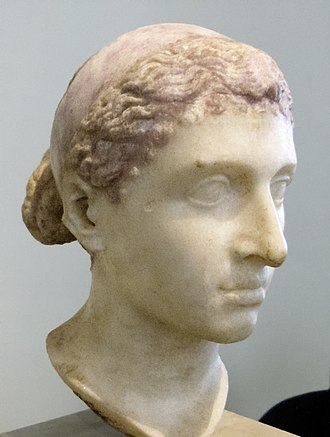 Cleopatra69 BCE – 30 BCEQueen of Ptolemaic Kingdom of Egypt from 51 to 30 BCESource: Wikidata (country of birthplace)
 Naguib Mahfouz1911 – 2006Egyptian writer (1911–2006)Source: Wikidata (citizenship)
 Yasser Arafat1929 – 2004Palestinian political leader (1929-2004) and Former President of the Palestinian National Authority (1994-2004)Source: Wikidata (country of birthplace)
 Hosni Mubarak1928 – 2020President of Egypt from 1981 to 2011Source: Wikidata (citizenship)
 Gamal Abdel Nasser1918 – 1970President of Egypt from 1956 to 1970Source: Wikidata (country of birthplace)
 Anwar Sadat1918 – 1981President of Egypt from 1970 to 1981Source: Wikidata (citizenship)
 Mohamed Morsi1951 – 2019President of Egypt from 2012 to 2013Source: Wikidata (citizenship)
 Hypatia360 CE – 415 CEGreek Neoplatonist philosopherSource: Wikidata (country of birthplace)
 Tutankhamun1,343 BCE – 1,324 BCE14th century BCE (18th dynasty) Egyptian pharaohSource: Wikidata (country of birthplace)
 Umm Kulthum1898 – 1975Egyptian singer and actress (1886–1975)Source: Wikidata (citizenship)
 Nefertiti1,370 BCE – 1,330 BCEEgyptian queen and Great Royal Wife (chief consort) of Akhenaten, an Egyptian PharaohSource: Wikidata (country of birthplace)
 Abdel Fattah el-Sisib. 1954President of Egypt since 2014Source: Wikidata (citizenship)
 Dorothy Hodgkin1910 – 1994British chemistSource: Wikidata (country of birthplace)
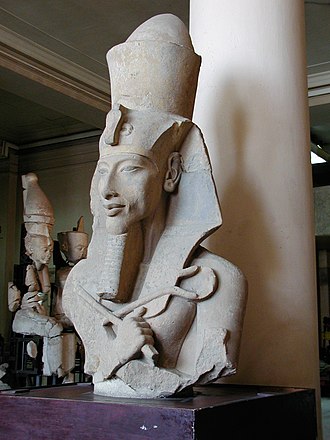 Akhenatenc. 1,400 BCE – 1,336 BCEEgyptian pharaoh in 18th DynastySource: Wikidata (country of birthplace)
 Mohamed Salahb. 1992Egyptian association football player (born 1992)Source: Wikidata (citizenship)
 Plotinus205 CE – 270 CEHellenistic Platonist philosopher and founder of Neoplatonism (c. 204/5–270)Source: Wikidata (country of birthplace)
 Hatshepsut1,507 BCE – 1,458 BCE5th Pharaoh of the Eighteenth Dynasty of Egypt (c. 1479 BC - 1458 BC)Source: Wikidata (country of birthplace)
 Ayman al-Zawahiri1951 – 2022Al-Qaeda terrorist leader (1951–2022), Muslim jurist and theologian (Sunni), surgeonSource: Wikidata (citizenship)
 Boutros Boutros-Ghali1922 – 2016Secretary-General of the United Nations from 1992 to 1996Source: Wikidata (citizenship)
 Omar Sharif1932 – 2015Egyptian actor (1932–2015)Source: Wikidata (citizenship)
 Rudolf Hess1894 – 1987German Nazi leader and Reich Minister without Portfolio (1894–1987)Source: Wikidata (country of birthplace)
 Athanasius of Alexandria296 CE – 373 CEPope of Alexandria from 328 to 373 (296–373)Source: Wikidata (country of birthplace)
 Mohamed ElBaradeib. 1942Egyptian law scholar and diplomat, 4th Director General of the International Atomic Energy Agency, and Nobel Peace Prize recipientSource: Wikidata (citizenship)
 Origen185 CE – 254 CEChristian scholar, ascetic, and theologian (c. 185 – c. 253)Source: Wikidata (country of birthplace)
 Diophantus of Alexandria200 CE – 284 CE3rd century Alexandrian Greek mathematicianSource: Wikidata (country of birthplace)
 Rami Malekb. 1981American actor (born 1981)Source: Wikidata (citizenship)
 Hero of Alexandria10 CE – 75 CEAncient Greek mathematician and engineerSource: Wikidata (country of birthplace)
 Anthony the Great251 CE – 357 CEEgyptian Christian monk, hermit, and saint (died 356)Source: Wikidata (country of birthplace)
 Ahmed Zewail1946 – 2016Egyptian chemistSource: Wikidata (citizenship)
- Eric Hobsbawm1917 – 2012British academic historian and Marxist historiographer (1917–2012)Source: Wikidata (country of birthplace)
 Imhotepc. 2,800 BCE – 2,700 BCEEgyptian architect, physician, astronomer, and god of medicine in ancient Egyptian mythology.Source: Wikidata (country of birthplace)
 Philo of Alexandria15 BCE – 50 CEHellenistic Jewish philosopher who lived in Alexandria (c. 20 BCE-c. 50 CE)Source: Wikidata (country of birthplace)
 Nawal El Saadawi1931 – 2021Egyptian feminist writer (1931–2021)Source: Wikidata (citizenship)
 Dalida1933 – 1987Egyptian-French singer and actress (1933-1987)Source: Wikidata (citizenship)
 Konstantinos P. Cavafy1863 – 1933Greek-Egyptian poet and journalist (1863–1933)Source: Wikidata (citizenship)
 Filippo Tommaso Marinetti1876 – 1944Italian poet and editor, founder of the Futurist movement (1876-1944)Source: Wikidata (country of birthplace)
 Appian95 CE – 165 CEGreco-Roman historian (c. 95 – c.165)Source: Wikidata (country of birthplace)
 Amenhotep III1,400 BCE – 1,351 BCENinth Pharaoh of the Eighteenth dynasty of EgyptSource: Wikidata (country of birthplace)
 Apollonius of Rhodes295 BCE – 215 BCE3rd century BC Greek epic poetSource: Wikidata (country of birthplace)
 Demis Roussos1946 – 2015Greek singer (1946–2015)Source: Wikidata (country of birthplace)
 Sayyid Qutb1906 – 1966Egyptian political theorist and revolutionary (1906–1966)Source: Wikidata (citizenship)
 Farouk I of Egypt1920 – 1965King of Egypt 1936 to 1952Source: Wikidata (country of birthplace)
 Mohamed Naguib1901 – 19841st President of the Republic of Egypt (1901–1984)Source: Wikidata (citizenship)
 Stephan El Shaarawyb. 1992Italian association football player (born 1992)Source: Wikidata (citizenship)
- Athenaeusc. 170 CE – 223 CELate 2nd/early 3rd century Greek rhetorician and grammarianSource: Wikidata (country of birthplace)
 Muhammad Abduh1849 – 1905Egyptian Islamic jurist, religious scholar and liberal reformer (1849-1905)Source: Wikidata (country of birthplace)
 Claudian370 CE – 404 CE5th century Roman Latin poetSource: Wikidata (country of birthplace)
 Yusuf al-Qaradawi1926 – 2022Egyptian Islamic theologian based in Doha, Qatar (1926-2022)Source: Wikidata (citizenship)
Showing the 48 best-known of 62 people.
Everything that happened
- c. 2,560 BCEGreat Pyramid of GizaGiza, EgyptBuilt as a tomb for the pharaoh Khufu, it remained the tallest human-made structure on Earth for roughly 3,800 years.Source: Wikidata (country)
- 1,346 BCE – 1,336 BCEAmarna PeriodAmarnaThe Amarna Period was an era of Egyptian history during the later half of the Eighteenth Dynasty when the royal residence of the pharaoh and his queen shifted from the old capital of Thebes (Waset) to Akhetaten (literally "Horizon of the Aten") in what is now modern Amarna.Source: Wikidata (country of the location)
- 1,178 BCEBattle of the DeltaNile DeltaThe Battle of the Delta was a sea battle between Egypt and the Sea Peoples, circa 1175 BC, when the Egyptian pharaoh Ramesses III repelled a major sea invasion. The conflict occurred on the shores of the eastern Nile Delta and on the border of the Egyptian Empire in Syria, although precise locations of the battles are unknown.Source: Wikidata (country)
- 525 BCEBattle of PelusiumPelusiumThe Battle of Pelusium was the first major battle between the Achaemenid Empire and Egypt. This decisive battle transferred the throne of the Pharaohs to Cambyses II of Persia, marking the beginning of the Achaemenid Twenty-seventh Dynasty of Egypt. It was fought in 525 BC near Pelusium, an important city in the eastern extremes of Egypt's Nile Delta, 30 km to the south-east of the modern Port Said.Source: Wikidata (country)
- 217 BCEBattle of RaphiaRafahThe Battle of Raphia was fought on 22 June 217 BC near modern Rafah between the forces of Ptolemy IV Philopator, king and pharaoh of Ptolemaic Egypt and Antiochus III the Great of the Seleucid Empire during the Syrian Wars. It was one of the largest battles of the Hellenistic kingdoms and of the ancient world, and determined the sovereignty of Coele-Syria.Source: Wikidata (country)
- 47 BCEBattle of the NileNile DeltaThe Battle of the Nile in early 47 BC saw the combined Roman–Egyptian armies of Julius Caesar and Cleopatra VII defeat those of the rival Queen Arsinoe IV and King Ptolemy XIII and secure the throne of Egypt.Source: Wikidata (country)
- 47 BCESiege of AlexandriaAlexandriaThe siege of Alexandria was a series of skirmishes and battles occurring between the forces of Julius Caesar, Cleopatra VII, Arsinoe IV, and Ptolemy XIII, between 48 and 47 BC. During this time Caesar was engaged in a civil war against remaining Republican forces.Source: Wikidata (country)
- 30 BCEDeath of CleopatraAlexandria, EgyptCleopatra VII, the last ruler of Ptolemaic Egypt, dies after her defeat by Octavian. Egypt becomes a Roman province.Source: Wikidata (country of the location)
- 640 CEBattle of HeliopolisHeliopolisThe Battle of Heliopolis or Ayn Shams was a decisive battle in 640 between Arab Muslim armies and Byzantine Empire forces for the control of Egypt. Though there were several major skirmishes after this battle, it effectively decided the fate of the Byzantine rule in Egypt, and opened the door for the Muslim conquest of the Roman Exarchate of Africa.Source: Wikidata (country)
- 646 CEBattle of NikiouZawyat RazinThe Battle of Nikiou took place between Arab Muslim troops under General Amr ibn al-A'as and the Byzantine Empire in Egypt in May of 646.Source: Wikidata (country of the location)
- 1147 – 1149Second CrusadeIberian PeninsulaThe Second Crusade (1147–1149) was the second major crusade launched from Europe. The Second Crusade was started in response to the fall of the County of Edessa in 1144 to the Seljuk forces of Zengi. The county had been founded during the First Crusade (1096–1099) by Baldwin in 1098. While it was the first Crusader state to be founded, it was also the first to fall.Source: Wikidata (country)
- 1153Siege of AscalonAshkelonThe siege of Ascalon took place from 25 January to 22 August 1153, in the time period between the Second and Third Crusades, and resulted in the capture of the Fatimid Egyptian fortress by the Kingdom of Jerusalem.Source: Wikidata (country)
- 1218 – 1219Siege of DamiettaDamiettaThe siege of Damietta of 1218–1219 was part of the Fifth Crusade in which the Crusaders attacked the Egyptian port city of Damietta. The city was besieged in 1218 and taken by the Crusaders in 1219.Source: Wikidata (country)
- 1249Siege of DamiettaDamiettaThe siege of Damietta occurred in 1249 and was part of the Seventh Crusade.Source: Wikidata (country)
- 1250Battle of FariskurEgyptThe Battle of Fariskur was the last major battle of the Seventh Crusade. The battle was fought on 6 April 1250, between the Crusaders led by King Louis IX of France (later Saint Louis) and Egyptian forces led by Turanshah of the Ayyubid dynasty.Source: Wikidata (country)
- 1250Battle of MansurahMansouraThe Battle of Mansurah was fought from 8 to 11 February 1250, between Crusaders led by Louis IX, King of France, and Ayyubid forces led by Egypt's Sultana Shajar al-Durr, vizier Fakhr al-Din ibn al-Shaykh, Qutuz, Faris al-Din Aktay and Baybars . It was fought in present-day Mansoura, Egypt. The Crusader force was enticed into entering the town where it was set upon by the Muslim force.Source: Wikidata (country)
- 1516 – 1517Ottoman–Mamluk WarAnatoliaThe Ottoman–Mamluk War of 1516–1517 was the second major conflict between the Egypt-based Mamluk Sultanate and the Ottoman Empire, which led to the Fall of the Mamluk Sultanate and the incorporation of the Levant, Egypt, and the Hejaz as provinces of the Ottoman Empire.Source: Wikidata (country)
- 1517Battle of RidaniyaEgyptThe Battle of Ridaniya or Battle of Ridanieh (Arabic: معركة الريدانية; Turkish: Ridaniye Muharebesi) was fought on January 22, 1517, in Egypt. The Ottoman forces of Selim I defeated the Mamluk forces under Al-Ashraf Tuman bay II. The Turks marched into Cairo, and the severed head of Tuman bay II, Egypt’s last Mamluk Sultan, was hung over an entrance gate in the Al Ghourieh quarter of Cairo.Source: Wikidata (country)
- 1798Battle of the NileAbu Qir BayThe Battle of the Nile (also known as the Battle of Aboukir Bay; French: Bataille d'Aboukir) was fought between the Royal Navy and the French Navy at Aboukir Bay in Egypt between 1 and 3 August 1798. It was the climax of the Mediterranean campaign of 1798, which had started three months earlier after a large French fleet sailed from Toulon to Alexandria carrying an expeditionary force under Napoleon.Source: Wikidata (country)
- 1798Battle of the PyramidsImbabaThe Battle of the Pyramids (French: Bataille des Pyramides), also known as the Battle of Embabeh (bataille d'Embabech), was fought on 21 July 1798 during the French invasion of Egypt and Syria. Occurring near the village of Embabeh, Ottoman Egypt, the battle was named by Napoleon after the distant Great Pyramid of Giza.Source: Wikidata (country)
- 1798 – 1801French invasion of Egypt and SyriaEgyptThe French invasion of Egypt and Syria (1798–1801) was a military expedition to Ottoman-held Egypt and Syria led by Napoleon Bonaparte during the French Revolutionary Wars. The campaign aimed to undermine British trade routes, expand French influence, and establish a scientific and administrative presence in Egypt.Source: Wikidata (country)
- 1798Battle of Shubra KhitShubra KhitThe Battle of Shubra Khit (also known as the Battle of Chobrakit or the Battle of Chebreïss) was the second major engagement of the French invasion of Egypt and Syria and took place on 13 July 1798. On their march to Cairo, the French army encountered an Ottoman army consisting of Mamluk cavalry and drafted Fellahins under Murad Bey.Source: Wikidata (country of the location)
- 1799Battle of AbukirAbu QirThe Battle of Abukir (also known as the Battle of Aboukir or Battle of Abu Qir) was fought on 25 July 1799 between the French Army of the Orient under Napoleon Bonaparte and an Ottoman army under Mustafa Pasha during the French invasion of Egypt and Syria. It is considered the first pitched battle with this name, as there already had been a naval battle on 1 August 1798, the Battle of the Nile.Source: Wikidata (country)
- 1800Battle of HeliopolisHeliopolisThe Battle of Heliopolis was fought between the French Army of the Orient under the command of General Jean-Baptiste Kléber and an Ottoman army at Heliopolis on 20 March 1800. The French were victorious, inflicting over 9,000 casualties on the Ottomans while suffering only 600 killed or wounded.Source: Wikidata (country)
- 1801Battle of AbukirAbu QirThe Battle of Abukir of 8 March 1801 was the second pitched battle of the French invasion of Egypt and Syria to be fought at Abu Qir on the Mediterranean coast, near the Nile Delta. The landing of the British expeditionary force under Lieutenant-General Sir Ralph Abercromby was intended to defeat or drive out an estimated 21,000 remaining French troops in Egypt.Source: Wikidata (country)
- 1801Battle of AlexandriaAlexandriaThe Battle of Alexandria (also known as the Battle of Canope/Canopus) was fought on 21 March 1801, where the British army and naval forces repelled an assault by the French army as part of the French invasion of Egypt and Syria.Source: Wikidata (country)
- 1801Siege of AlexandriaAlexandriaThe siege of Alexandria (17 August – 2 September 1801) was fought during the French Revolutionary Wars between French and British forces. It was the last action of the French invasion of Egypt and Syria (1798–1801). The French had occupied Alexandria, a major fortified harbour city on the Nile Delta in northern Egypt, since 2 July 1798, and the garrison there surrendered on 2 September 1801.Source: Wikidata (country)
- 1882Anglo-Egyptian WarEgyptThe British conquest of Egypt, also known as the 2nd Anglo-Egyptian War (Arabic: الحرب الإنجليزية المصرية, romanised: al-Ḥarb al-Injlīzīyah al-Miṣrīyah), occurred in 1882 between mostly Egyptian and Sudanese forces under Ahmed ‘Urabi and the United Kingdom.Source: Wikidata (country)
- 1882Battle of Tell El KebirEgyptThe Battle of Tel El Kebir (often spelled Tel-El-Kebir), fought on 13 September 1882 at Tell El Kebir in Egypt, 110 km north-north-east of Cairo, proved the decisive engagement of the Anglo-Egyptian War of 1882. A British army led by Lieutenant General Sir Garnet Wolseley approached under cover of darkness and defeated an entrenched Egyptian force under the command of Ahmed ʻUrabi in a sudden assault.Source: Wikidata (country)
- 1916Battle of MagdhabaSinai PeninsulaThe Battle of Magdhaba took place on 23 December 1916 during the Defence of Egypt section of the Sinai and Palestine Campaign in the First World War. The attack by the Anzac Mounted Division took place against an entrenched Ottoman Army garrison to the south and east of Bir Lahfan in the Sinai desert, some 18–25 miles (29–40 km) inland from the Mediterranean coast.Source: Wikidata (country of the location)
- 1916Battle of RomaniSinai PeninsulaThe Battle of Romani was the last ground attack of the Central Powers on the Suez Canal at the beginning of the Sinai and Palestine campaign during the First World War. The battle was fought between 3 and 5 August 1916 near the Egyptian town of Romani and the site of ancient Pelusium on the Sinai Peninsula, 23 mi (37 km) east of the Suez Canal.Source: Wikidata (country)
- 19191919 Egyptian revolutionSultanate of EgyptThe 1919 Egyptian revolution (Arabic: ثورة 1919, Thawra 1919) was a nation-wide revolution in the Sultanate of Egypt against British occupation that lasted from November 1918 to July 1919.Source: Wikidata (country of the location)
- 1921Cairo ConferenceCairoThe 1921 Cairo Conference, described in its official minutes as the Middle East Conference held in Cairo and Jerusalem, March 12 to 30, 1921, was a series of meetings held by British officials to examine and discuss problems in the Middle East and to frame a common policy. The secret conference of British experts created the blueprint for British control in both Iraq and the Transjordan region.Source: Wikidata (country)
- 1940 – 1941Operation CompassSidi BarraniOperation Compass (also Italian: Battaglia della Marmarica) was the first large British military operation of the Western Desert Campaign (1940–1943) during the Second World War. British metropolitan, Imperial and Commonwealth forces attacked the Italian and Libyan forces of the 10th Army (Marshal Rodolfo Graziani) in western Egypt and Cyrenaica, the eastern province of Libya, from December 1940 to February 1941.Source: Wikidata (country of the location)
- 1941Operation BrevityLibyaOperation Brevity was an attack in mid-May 1941, during the Western Desert Campaign of the Second World War. Conceived by the commander-in-chief of the British Middle East Command, General Archibald Wavell, Brevity was intended to be a rapid blow against weak Axis front-line forces in the Sollum–Capuzzo–Bardia area of the border between Egypt and Libya.Source: Wikidata (country)
- 1941Operation CrusaderEgyptOperation Crusader (18 November – 30 December 1941) was a military operation of the Western Desert campaign during World War II by the British Eighth Army (with Commonwealth, Indian and Allied contingents) against the Axis forces (German and Italian) in North Africa commanded by Generalleutnant (Lieutenant-General) Erwin Rommel.Source: Wikidata (country of the location)
- 1941Raid on AlexandriaAlexandriaThe Raid on Alexandria (Operazione EA 3) was carried out on 19 December 1941 by Royal Italian Navy (Regia Marina) divers of the Decima Flottiglia MAS (Decima Flottiglia Motoscafi Armati Siluranti), who attacked and severely damaged two Royal Navy battleships at their moorings and damaged an oil tanker and a destroyer in the harbour of Alexandria, Egypt, using Siluro Lenta Corsa, manned torpedoes.Source: Wikidata (country)
- 1942First Battle of El AlameinEl AlameinThe First Battle of El Alamein (1–27 July 1942) was a battle of the Western Desert campaign of World War II, fought in Egypt between Axis (German and Italian) forces of the Panzer Army Africa—which included the Afrika Korps under Field Marshal Erwin Rommel—and Allied (British Empire and Commonwealth) forces of the Eighth Army under General Claude Auchinleck.Source: Wikidata (country)
- 1942Second Battle of El AlameinEl AlameinThe Second Battle of El Alamein (23 October – 4 November 1942) was a battle of the Second World War that took place near the Egyptian railway halt of El Alamein. The First Battle of El Alamein and the Battle of Alam el Halfa had prevented the Axis from advancing further into Egypt.Source: Wikidata (country)
- 1942Battle of Alam el HalfaEl AlameinThe Battle of Alam el Halfa took place between 30 August and 5 September 1942 south of El Alamein during the Western Desert Campaign of the Second World War. Panzerarmee Afrika (Generalfeldmarschall Erwin Rommel), attempted an envelopment of the British Eighth Army (Lieutenant-General Bernard Montgomery).Source: Wikidata (country)
- 1943Cairo ConferenceEgyptThe Cairo Conference (codenamed Sextant), also known as the First Cairo Conference, was one of fourteen summit meetings during World War II, which took place on 22–26 November 1943. The Conference was held at Cairo in Egypt between China, the United Kingdom, and the United States.Source: Wikidata (country)
- 1943Second Cairo ConferenceCairoThe Second Cairo Conference of December 4–6, 1943 (codenamed Sextant), held in Cairo, Egypt, addressed Turkey's possible contribution to the Allies in World War II. The meeting was attended by President Franklin D. Roosevelt of the United States, Prime Minister Winston Churchill of the United Kingdom, and President İsmet İnönü of the Republic of Turkey.Source: Wikidata (country)
- 1948 – 19491948 Arab–Israeli WarIsrael and PalestineIsrael declares independence on 14 May 1948 as the British Mandate ends, and neighboring Arab states go to war. About 700,000 Palestinians flee or are expelled from their homes, an event Palestinians call the Nakba (“catastrophe”).Source: Wikidata (country of the location)
- 1956Suez CrisisSinai PeninsulaThe Suez Crisis, also known as the second Arab–Israeli war, the Tripartite Aggression in the Arab world and the Sinai War in Israel, was a British–French–Israeli invasion of Egypt in 1956. Israel invaded on 29 October, with the primary objective of re-opening the Straits of Tiran and the Gulf of Aqaba as the recent tightening of the eight-year-long Egyptian blockade prevented Israeli passage.Source: Wikidata (country of the location)
- 1956Operation MusketeerSuez CanalOperation Musketeer (French: Opération Mousquetaire) was the Anglo-French plan for the invasion of the Suez Canal Zone to capture the Suez Canal during the Suez Crisis in 1956.Source: Wikidata (country)
- 1967 – 1970War of AttritionSinai PeninsulaThe War of Attrition (Arabic: حرب الاستنزاف, romanized: Ḥarb al-Istinzāf; Hebrew: מלחמת ההתשה, romanized: Milḥemet haHatashah) involved fighting between Israel and Egypt, Jordan, the Palestine Liberation Organisation (PLO) and their allies from 1967 to 1970.Source: Wikidata (country of the location)
- 1967Operation FocusSinai PeninsulaOperation Focus (Hebrew: מבצע מוקד, Mivtza Moked) was the opening airstrike by Israel at the start of the Six-Day War in 1967. It is sometimes referred to as the "Sinai Air Strike". At 07:45 on 5 June 1967, the Israeli Air Force (IAF) under Maj. Gen. Mordechai Hod launched a massive airstrike that destroyed the majority of the Egyptian Air Force on the ground.Source: Wikidata (country of the location)
- 1969 – 1987Cairo AgreementCairoThe Cairo Agreement, or Cairo Accord, was an agreement reached on 2 November 1969 during talks between Yasser Arafat and the Lebanese army commander, General Emile Bustani. Egyptian President Gamal Abdel Nasser helped to broker the deal.Source: Wikidata (country)
- 1973Battle of BaltimDamiettaThe Battle of Baltim (also Battle of Damietta, Battle of Baltim–Damietta, Battle of Damietta–Baltim or Battle of Damietta – El Burelos) was fought between the Israeli Navy and the Egyptian Navy on 8–9 October, 1973, during the Yom Kippur War. It took place off the Nile Delta, between Baltim and Damietta.Source: Wikidata (country)
- 1973Battle of the Chinese FarmEgyptThe Battle of the Chinese Farm took place during October 15 to October 17, 1973 between the Egyptian Army and the Israel Defense Forces (IDF), as part of the Yom Kippur War. It was fought in the Sinai Peninsula, north of the Great Bitter Lake and just east of the Suez Canal, near an Egyptian agricultural research station.Source: Wikidata (country)
- 1973October (Yom Kippur) WarSinai and Golan HeightsEgypt and Syria launch a surprise attack in October 1973 to win back land lost in 1967. The war also triggers an Arab oil embargo against Western supporters of Israel.Source: Wikidata (country)
- 1973Operation BadrSinai PeninsulaOperation Badr (Arabic: عملية بدر ʻAmaliyat Badr), also known as Plan Badr (خطة بدر Khitat Badr), was an Egyptian military offensive and operation across the Suez Canal that destroyed the Bar-Lev Line, a chain of Israeli fortifications along the frontline of the Israeli-occupied Sinai Peninsula, on 6 October 1973.Source: Wikidata (country of the location)
- 1979Egypt–Israel peace treatyWashington, D.C.Egypt becomes the first Arab state to sign a peace treaty with Israel, following the 1978 Camp David Accords. Israel returns the Sinai by 1982.Source: Wikidata (country)
- 1981Assassination of Anwar SadatCairoOn 6 October 1981, Anwar Sadat, the 3rd president of Egypt, was assassinated during the annual victory parade held in Cairo to celebrate the victory over Israel in the Yom Kippur War. The assassination was undertaken by members of the Egyptian Islamic Jihad.Source: Wikidata (country)
- 1994International Conference on Population and DevelopmentCairoThe United Nations coordinated an International Conference on Population and Development (ICPD) in Cairo, Egypt, on 5–13 September 1994. Its resulting Programme of Action is the steering document for the United Nations Population Fund (UNFPA). After two years of preparation, 179 nations met in Cairo in September 1994 and adopted a 20-year Programme of Action.Source: Wikidata (country)
- 1997Luxor massacreDeir el-BahariThe Luxor massacre was a terrorist attack that occurred on 17 November 1997 in Egypt. It was perpetrated by al-Jama'a al-Islamiyya and resulted in the deaths of 62 people, most of whom were tourists. It took place at Dayr al-Bahri, an archaeological site located across the Nile from the city of Luxor.Source: Wikidata (country)
- 20112011 Egyptian revolutionEgyptThe 2011 Egyptian revolution, also known as the 25 January Revolution (Arabic: ثورة ٢٥ يناير, romanized: Thawrat khamsa wa-ʿišrūn yanāyir), began on 25 January 2011 and spread across Egypt. The date was set by various youth groups to coincide with National Police Day as a statement against increasing police brutality during the later years of Hosni Mubarak's presidency.Source: Wikidata (country)
- 2012Port Said Stadium riotPort Said StadiumThe Port Said Stadium riot was a riot which occurred at Port Said Stadium in Port Said, Egypt on 1 February, 2012, following an Egyptian Premier League football match between Al Masry and Al Ahly. Seventy-four people were killed and more than 500 injured after thousands of Al Masry fans invaded the pitch following a 3–1 victory by their club.Source: Wikidata (country)
- 20132013 Egyptian coup d'étatPort SaidOn July 3, 2013, then-President of Egypt Mohamed Morsi was overthrown by a coup d'etat led by Egyptian army chief General Abdel Fattah el-Sisi, who led a coalition to remove Morsi from power and suspend the Egyptian constitution of 2012. The move came after an ultimatum that the government "resolve its differences" with protesters during widespread national protests.Source: Wikidata (country)
- 2013Rabaa massacreCairoOn 14 August 2013, the Egyptian police and to a lesser extent the armed forces, under the command of then-Defense Minister Abdel Fattah el-Sisi, used lethal force to clear two camps of protesters in Cairo. Estimates of those killed vary from 600 to 2,600.Source: Wikidata (country)
- 2015Metrojet Flight 9268North Sinai GovernorateMetrojet Flight 9268 was an international chartered passenger flight operated by Russian airline Kogalymavia (branded as Metrojet). On 31 October 2015, at 06:13 EST (04:13 UTC), the Airbus A321 operating the flight exploded above the northern Sinai Peninsula following its departure from Sharm El Sheikh International Airport, Egypt, en route to Pulkovo Airport, Saint Petersburg, Russia.Source: Wikidata (country)
- 20172017 Minya bus attackMinya GovernorateOn 26 May 2017, masked gunmen opened fire on a convoy carrying Copts from Maghagha in Egypt's Minya Governorate to the Monastery of Saint Samuel the Confessor, killing at least 33 people and injuring 22 others.Source: Wikidata (country)
- 20172017 Sinai mosque attackAl Rawda MosqueAt 1:50 PM EET on 24 November 2017, the al-Rawda mosque was attacked by roughly 40 gunmen during Friday prayers. The mosque is located in the village of Al-Rawda east of the town of Bir al-Abed in Egypt's North Sinai Governorate. It is one of the main mosques associated with the Jaririya Sufi order, one of the largest Sufi orders in North Sinai.Source: Wikidata (country)
- 2020COVID-19 pandemicWorldwideA new coronavirus spreads worldwide. Lockdowns, remote work and fast-developed vaccines reshape daily life.Source: Wikidata (country)
- 2021Pharaohs' Golden ParadeEl-FustatThe Pharaohs' Golden Parade was held in Cairo, Egypt, on the 3rd of April 2021. It was a means to encourage tourism in Egypt again. It involved the transportation of twenty-two ancient Egyptian mummies from the Egyptian Museum in Tahrir Square to the National Museum of Egyptian Civilization in Fustat. The mummies included in the parade were all Kings and Queens of the New Kingdom.Source: Wikidata (country)
- 2023 – 2025Operation Prosperity GuardianRed SeaOperation Prosperity Guardian was a United States-led military operation by a multinational coalition formed in December 2023 to respond to Houthi-led attacks on shipping in the Red Sea.Source: Wikidata (country of the location)
- 2023Red Sea crisisMiddle EastThe Red Sea crisis is an ongoing armed conflict and maritime crisis instigated by the Houthis, an armed group in Yemen fighting a civil war against the country's internationally recognized government.Source: Wikidata (country of the location)
- 2024Operation AspidesRed SeaOperation Aspides, also known as European Union Naval Force (EUNAVFOR) Aspides, is an EU military operation in response to Houthi attacks with international shipping in the Red Sea. Named after the Greek word for shields (Greek: Ασπίδες), the EU describes Operation Aspides as a "purely defensive" mission to increase maritime surveillance in the region, provide escort to merchant vessels, and defend against strikes.Source: Wikidata (country of the location)
- 2025March–May 2025 United States attacks in YemenSanaaIn March 2025, the United States launched a large campaign of air and naval strikes against Houthi targets in Yemen. Codenamed Operation Rough Rider, it was the first large-scale US military operation in the Middle East during President Donald Trump's second term.Source: Wikidata (country of the location)