Czech Republic
41 events
The Czech Republic, also known as Czechia and historically known as Bohemia, is a landlocked country in Central Europe. The country is bordered by Austria to the south, Germany to the west, Poland to the northeast, and Slovakia to the southeast. The Czech Republic has a hilly landscape that covers an area of 78,871 square kilometers (30,452 sq mi) with a mostly temperate continental and oceanic climate. The capital and largest city is Prague; other major cities and urban areas include Brno, Ostrava, Plzeň and Liberec.
Text from the Wikipedia article Czech Republic, CC BY-SA 4.0
Built from Wikidata: an event or person is listed when Wikidata links them to this page, as shown next to each one. Many aren’t recorded there, so this list is incomplete.
Key people
 Franz Kafka1883 – 1924Bohemian writer from Prague (1883–1924)Source: Wikidata (country of birthplace)
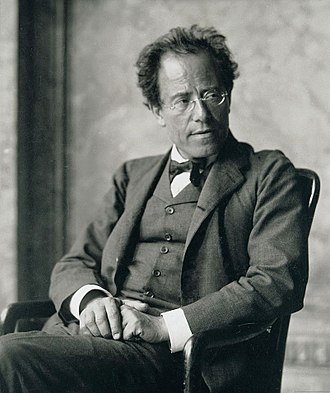 Gustav Mahler1860 – 1911Austrian late-Romantic composer (1860–1911)Source: Wikidata (country of birthplace)
 Antonín Dvořák1841 – 1904Czech composer (1841–1904)Source: Wikidata (country of birthplace)
 Václav Havel1936 – 2011Czech statesman, playwright, and former dissident, the last president of Czechoslovakia and the first president of the Czech Republic (1936–2011)Source: Wikidata (citizenship)
 Gregor Mendel1822 – 1884Moravian scientist and Augustinian friar (1822–1884)Source: Wikidata (country of birthplace)
 Rainer Maria Rilke1875 – 1926Austrian poet and writer (1875–1926)Source: Wikidata (country of birthplace)
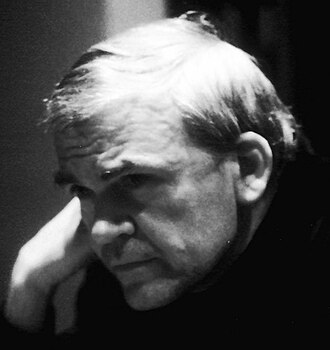 Milan Kundera1929 – 2023Franco-Czechoslovak poet and novelist (1929—2023)Source: Wikidata (citizenship)
 Kurt Gödel1906 – 1978Austrian-American logician, mathematician, and philosopher of mathematics (1906–1978)Source: Wikidata (country of birthplace)
 Karel Čapek1890 – 1938Czech writer (1890–1938)Source: Wikidata (country of birthplace)
 Madeleine Albright1937 – 2022United States Secretary of State from 1997 to 2001Source: Wikidata (citizenship)
 Bertha von Suttner1843 – 1914Austrian novelist, radical (organizational) pacifist, editorSource: Wikidata (country of birthplace)
 Jan Husc. 1370 – 1415Czech theologian, philosopher and preacher (1369-1415)Source: Wikidata (country of birthplace)
 Edmund Husserl1859 – 1938German philosopher, known as the father of phenomenology (1859–1938)Source: Wikidata (country of birthplace)
 John Amos Comenius1592 – 1670Czech teacher, educator, philosopher and writer (1592-1670)Source: Wikidata (country of birthplace)
 Martina Navratilovab. 1956Czech-American tennis playerSource: Wikidata (citizenship)
 Jaroslav Hašek1883 – 1923Czech humorist, satirist, writer and anarchist (1883-1923)Source: Wikidata (country of birthplace)
 Tomáš Garrigue Masaryk1850 – 1937Czechoslovak politician, statesman, sociologist and philosopher; first Czechoslovak president (1850–1937)Source: Wikidata (country of birthplace)
 Jaroslav Seifert1901 – 1986Czechoslovak poet, Nobel prize laureate (1901–1986)Source: Wikidata (country of birthplace)
 Bedřich Smetana1824 – 1884Czech composerSource: Wikidata (country of birthplace)
 Ernst Mach1838 – 1916Austrian physicist (1838–1916)Source: Wikidata (country of birthplace)
 Miloš Zemanb. 1944Czech politician, president of the Czech Republic from 2013 to 2023Source: Wikidata (citizenship)
 Gerty Cori1896 – 1957Austro-Hungarian-American biochemist (1896–1957)Source: Wikidata (country of birthplace)
 Miloš Forman1932 – 2018Czech American director, screenwriter, and professor (1932–2018)Source: Wikidata (citizenship)
 Václav Klausb. 1941President of the Czech Republic from 2003 to 2013Source: Wikidata (citizenship)
 Charles IV1316 – 1378Holy Roman EmperorSource: Wikidata (country of birthplace)
 Oskar Schindler1908 – 1974German industrialist and Holocaust rescuer (1908–1974)Source: Wikidata (country of birthplace)
 Peter Grünberg1939 – 2018German physicist, and Nobel Prize in Physics laureate (1939-2018)Source: Wikidata (country of birthplace)
 Petr Čechb. 1982Czech footballer (born 1982)Source: Wikidata (citizenship)
 Wilhelm Steinitz1836 – 1900Austrian-American chess player (1836–1900)Source: Wikidata (country of birthplace)
 Karl Kraus1874 – 1936Austrian playwright and publicist (1874–1936)Source: Wikidata (country of birthplace)
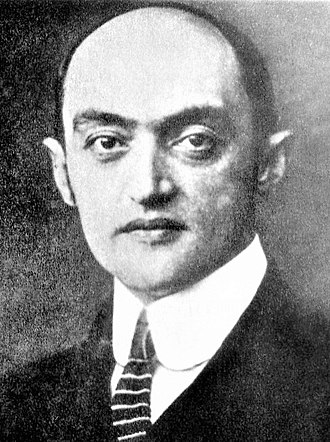 Joseph Schumpeter1883 – 1950Austrian political economist (1883–1950)Source: Wikidata (country of birthplace)
 Edvard Beneš1884 – 1948Czechoslovak politician (1884-1948)Source: Wikidata (country of birthplace)
 Petr Pavelb. 1961Czech general and statesman, 4th president of the Czech Republic (born 1961)Source: Wikidata (citizenship)
 Marie von Ebner-Eschenbach1830 – 1916Austrian writer (1830–1916)Source: Wikidata (country of birthplace)
 Alphonse Mucha1860 – 1939Czech painter, illustrator and graphic artist (1860–1939)Source: Wikidata (country of birthplace)
 Tom Stoppard1937 – 2025Czech–English playwright (1937–2025)Source: Wikidata (country of birthplace)
 Karl Kautsky1854 – 1938Czech-Austrian Marxist theorist (1854–1938)Source: Wikidata (country of birthplace)
 Andrej Babišb. 1954Czech politician and businessman, Prime Minister of the Czech RepublicSource: Wikidata (citizenship)
 Ivana Trump1949 – 2022Czech-American businesswoman (1949–2022)Source: Wikidata (citizenship)
 Jan Neruda1834 – 1891Czech poet, theater reviewer, publicist, journalist and writer (1834-1891)Source: Wikidata (country of birthplace)
 Pavel Nedvědb. 1972Czech association football playerSource: Wikidata (citizenship)
 Leoš Janáček1854 – 1928Czech composer (1854–1928)Source: Wikidata (country of birthplace)
 Jaroslav Heyrovský1890 – 1967Czech chemist (1890-1967)Source: Wikidata (country of birthplace)
 Petra Kvitováb. 1990Czech tennis playerSource: Wikidata (citizenship)
 Emil Zátopek1922 – 2000Czech long-distance runner (1922-2000)Source: Wikidata (citizenship)
 Ferdinand Porsche1875 – 1951Austrian-born German automotive engineer, inventor (1875–1951)Source: Wikidata (country of birthplace)
 Karl Renner1870 – 1950First President of Austria (1870–1950)Source: Wikidata (country of birthplace)
 Arthur Seyss-Inquart1892 – 1946Austrian Nazi politician, and Nazi ruler of occupied Netherlands, convicted of crimes against humanity and sentenced to death (1892–1946)Source: Wikidata (country of birthplace)
Showing the 48 best-known of 76 people.
Everything that happened
- 1420Battle of Vítkov HillVítkovThe Battle of Vítkov Hill was a part of the Hussite Wars. The battle pitted the forces of King Sigismund, against Hussite forces under command of Jan Žižka (English: John Zizka). Vítkov Hill was located on the edge of the city of Prague and the battle occurred in a vineyard established by Sigismund's father, Charles IV. It ended with a decisive Hussite victory.Source: Wikidata (country of the location)
- 1434Battle of LipanyLipanyThe Battle of Lipany (Czech: Bitva u Lipan), also called the Battle of Český Brod, was fought at Lipany 40 km east of Prague on 30 May 1434 and virtually ended the Hussite Wars.Source: Wikidata (country)
- 1618Siege of PilsenPlzeňThe Siege of Pilsen, 19 September to 21 November 1618, was the first significant action of the Thirty Years' War. Following the Bohemian Revolt, a Bohemian army under Ernst von Mansfeld captured Plzeň.Source: Wikidata (country)
- 1619Battle of SablatZáblatíThe Battle of Sablat or Záblatí occurred on 10 June 1619, during the Bohemian period of the Thirty Years' War. The battle was fought between a Roman Catholic Imperial army led by Charles Bonaventure de Longueval, Count of Bucquoy and the Protestant army of Ernst von Mansfeld.Source: Wikidata (country of the location)
- 1620Battle of White MountainBílá HoraThe Battle of White Mountain was fought on 8 November 1620 outside Prague in the early stages of the Thirty Years' War. An army backing Frederick V led by Christian of Anhalt was defeated by forces supporting his rival Ferdinand II, Holy Roman Emperor, under Bucquoy and Count Tilly.Source: Wikidata (country)
- 1645Battle of JankauJankovThe Battle of Jankau, took place on 6 March 1645 during the later stages of the Thirty Years' War, near Jankov in Bohemia (today the Czech Republic). It featured Swedish and Imperial armies, each containing around 16,000 men.Source: Wikidata (country of the location)
- 1648Battle of PraguePragueThe Battle of Prague, which occurred between 25 July and 1 November 1648 was the last action of the Thirty Years' War. While the negotiations for the Peace of Westphalia were proceeding, Sweden took the opportunity to mount one last campaign into Bohemia.Source: Wikidata (country)
- 1742Battle of ChotusitzChotusiceThe Battle of Chotusitz, took place on 17 May 1742, in Bohemia, now the Czech Republic, during the First Silesian War, part of the wider War of the Austrian Succession. Led by Charles of Lorraine, an Imperial force of around 25,000 men was advancing against French-occupied Prague, when it ran into a Prussian army of roughly equal size, commanded by Frederick the Great.Source: Wikidata (country of the location)
- 1745Battle of SoorHajniceThe Battle of Soor (30 September 1745) was a battle between Frederick the Great's Prussian army and an Austro-Saxon army led by Prince Charles Alexander of Lorraine during the Second Silesian War (part of the War of the Austrian Succession). The battle occurred in the vicinity of Soor, also known as Hajnice, in the modern day Czech Republic.Source: Wikidata (country of the location)
- 1756Battle of LobositzLovosiceThe Battle of Lobositz or Lovosice also Lowositz on 1 October 1756 was the opening land battle of the Third Silesian War and the wider Seven Years' War. Frederick the Great's 28,000 Prussians were prevented by 33,000 Austrians under Maximilian Ulysses Count von Browne from continuing their invasion into the rich Bohemian plain, forcing Frederick to ultimately fall back north into Saxony for the winter.Source: Wikidata (country)
- 1757Battle of KolínKolínThe Battle of Kolín (Kolin) on 18 June 1757 saw 54,000 Austrians under Count von Daun defeat 34,000 Prussians under Frederick the Great during the Third Silesian War (Seven Years' War). Prussian attempts to turn the Austrian right flank turned into piecemeal frontal attacks and were defeated in five and a half hours of combat. The Prussians lost 13,733 men, the Austrians 8,100.Source: Wikidata (country)
- 1757Battle of ReichenbergLiberecThe Battle of Reichenberg took place during the Third Silesian War (part of the Seven Years' War) on 21 April 1757 near the town of Reichenberg (Czech: Liberec) in Bohemia.Source: Wikidata (country)
- 1757Battle of ŠtěrboholyPragueThe Battle of Prague, also known as Battle of Štěrboholy, was fought on 6 May 1757, during the Third Silesian War and the broader Seven Years' War, between the Kingdom of Prussia and Habsburg Austria. Although Frederick the Great's army of 64,000 Prussians forced 60,000 Austrians to retreat, he lost 14,300 men and decided he was not strong enough to attack Prague.Source: Wikidata (country)
- 1758Battle of DomstadtlDomašov nad BystřicíThe Battle of Domstadtl (also spelled Domstadt, Czech: Domašov) was a battle between the Habsburg monarchy and the Kingdom of Prussia in the Moravian village of Domašov nad Bystřicí during the Third Silesian War (part of the Seven Years' War) on 30 June 1758, preceded by a minor clash at Guntramovice (Gundersdorf) on 28 June.Source: Wikidata (country of the location)
- 1758Siege of OlomoucOlomoucThe Siege of Olomouc took place in 1758 when a Prussian army led by Frederick the Great besieged the Austrian city of Olmütz (now Olomouc, Czech Republic) during the Prussian invasion of Moravia in the Third Silesian War (Seven Years' War). The attempt stalled as the besiegers faced stronger resistance than Frederick had expected.Source: Wikidata (country)
- 1778 – 1779War of the Bavarian SuccessionBohemiaThe War of the Bavarian Succession (German: Bayerischer Erbfolgekrieg; 3 July 1778 – 13 May 1779) was a dispute between the Austrian Habsburg monarchy and an alliance of Saxony and Prussia over succession to the Electorate of Bavaria after the extinction of the Bavarian branch of the House of Wittelsbach.Source: Wikidata (country of the location)
- 1805Battle of AusterlitzSlavkov u BrnaThe Battle of Austerlitz was fought on Monday 2 December 1805, near Austerlitz (then in the Austrian Empire, now in the Czech Republic), being the decisive engagement of the War of the Third Coalition. The Grande Armée under the command of Emperor Napoleon I defeated a combined Russo-Austrian army.Source: Wikidata (country)
- 1809Battle of ZnaimZnojmoFollowing defeat at the Battle of Wagram, Archduke Charles retreated north into Bohemia hoping to regroup his battered forces. The French army had also suffered in the battle and did not give immediate pursuit. But two days after the battle, Napoleon ordered his troops north intending to defeat the Austrians once and for all.Source: Wikidata (country)
- 1813Battle of KulmChlumecThe Battle of Kulm was fought near the town Kulm (Czech: Chlumec) and the village Přestanov (then called Priesten) in northern Bohemia. It was fought on 29–30 August 1813, during the War of the Sixth Coalition. A French corps under General Dominique Vandamme attacked Alexander Osterman-Tolstoy's Russian corps on 29 August.Source: Wikidata (country)
- 1850Punctation of OlmützOlomoucThe Punctation of Olmütz (German: Olmützer Punktation), also called the Agreement of Olmütz, was a treaty between Prussia and Austria, dated 29 November 1850, by which Prussia abandoned the Erfurt Union and accepted the revival of the German Confederation under Austrian leadership. The treaty concluded the Autumn Crisis of 1850 in Germany.Source: Wikidata (country of the location)
- 1866Austro-Prussian WarBohemiaThe Austro-Prussian War (German: Preußisch-Österreichischer Krieg) was fought in 1866 between the Austrian Empire and the Kingdom of Prussia, with each also being aided by various allies within the German Confederation. Prussia had also allied with the Kingdom of Italy, linking this conflict to the Third Independence War of Italian unification.Source: Wikidata (country of the location)
- 1866Battle of GitschinJičínThe Battle of Gitschin or Jičín (German: Schlacht bei Gitschin) took place during the Austro-Prussian War on 29 June 1866, ending with a Prussian victory over the Austrian forces. There is a memorial there today at Jičín in the Czech Republic.Source: Wikidata (country)
- 1866Battle of KöniggrätzSadováThe Battle of Königgrätz (or Battle of Sadová; Czech: Bitva u Hradce Králové) was the decisive battle of the Austro-Prussian War in which the Kingdom of Prussia defeated the Austrian Empire. It took place on 3 July 1866, near the Bohemian city of Hradec Králové (German: Königgrätz) and village of Sadová, now in the Czech Republic.Source: Wikidata (country)
- 1866Battle of NáchodNáchodThe Battle of Náchod (German: Nachod) on 27 June 1866 was the first major action of the Austro-Prussian War. The advance guard of General Karl Friedrich von Steinmetz's 5th Corps occupied some high ground near Náchod as part of a Prussian advance into Bohemia from Silesia. Elements of the Austrian 6th Corps under General Von Ramming came on the scene and attacked the Prussians but were repulsed.Source: Wikidata (country)
- 1866Battle of SkalitzČeská SkaliceThe Battle of Skalitz was a minor engagement in the Königgratz/Sadowa campaign of the Austro-Prussian War of 1866 in Bohemia on 28 June. Following the Prussian victory at the Battle of Náchod the previous day (27 June), the Prussian forces, led by General of the Infantry Steinmetz, advanced on Skalitz (Česká Skalice) and defeated the forces of Archduke Leopold.Source: Wikidata (country)
- 1866Battle of TrautenauTrutnovThe Battle of Trautenau (German: Schlacht bei Trautenau) or Battle of Trutnov was fought on 27 June 1866, during the Austro-Prussian War. It was the only battle of the war that ended in an Austrian victory over the Prussians, but at a large cost.Source: Wikidata (country)
- 1866Peace of PraguePragueThe Peace of Prague (German: Prager Frieden) was a peace treaty signed by the Kingdom of Prussia and the Austrian Empire at Prague on 23 August 1866. In combination with the treaties of Prussia and several south and central German states, it effectively ended the Austro-Prussian War.Source: Wikidata (country)
- 1876Reichstadt AgreementZákupy CastleOn the occasion of the Balkan crisis, Emperor Franz Joseph I of Austria-Hungary and Russian Tsar Alexander II met on 8 July 1876 for secret talks, the results of which were later termed the Reichstadt Agreement (also: Reichstadt Convention) by historians for the sake of brevity. Both emperors were in an alliance with each other and the German Empire in the League of the Three Emperors, or Dreikaiserbund.Source: Wikidata (country of the location)
- 1919Polish–Czechoslovak WarCieszyn SilesiaThe Czechoslovak-Polish War, widely known in Czech sources as the Seven-Day War (Czech: Sedmidenní válka) was a military confrontation between Czechoslovakia and Poland over the territory of Cieszyn Silesia in early 1919.Source: Wikidata (country of the location)
- 1939Jabłonków incidentJablunkov PassJabłonków incident (Polish: Incydent jabłonkowski, Czech: Jablunkovský incident) refers to the events of the night of 25–26 August 1939, along the Polish-Slovak border, when a group of German Abwehr agents attacked a rail station in Mosty. The main purpose of the attack was to capture the Jablunkov Pass, with its strategic railway tunnel, until the arrival of the German armed forces.Source: Wikidata (country of the location)
- 1942Lidice massacreLidiceThe Lidice massacre (Czech: Vyhlazení Lidic) was the complete destruction of the village of Lidice in the Protectorate of Bohemia and Moravia, which is now a part of the Czech Republic, in June 1942 on orders from Nazi leader Adolf Hitler and acting Reichsprotektor Kurt Daluege, successor to Reinhard Heydrich.Source: Wikidata (country of the location)
- 1945Moravia–Ostrava offensiveMoraviaThe Moravia–Ostrava offensive operation (Russian: Моравско-Остравская наступательная операция) was an offensive by the Red Army during World War II that lasted from March 10 to May 6, 1945, and was the Soviet conquest of present-day Eastern Czech Republic (Moravia also part of Polish and Czech Silesia). Bohuslav KřenekSource: Wikidata (country of the location)
- 1945Prague offensiveCentral EuropeThe Prague offensive (Russian: Пражская стратегическая наступательная операция, romanized: Prazhskaya strategicheskaya nastupatel'naya operatsiya, lit. 'Prague Strategic Offensive Operation') was the last major military operation of World War II in Europe. The offensive was fought on the Eastern Front from 6 May to 11 May 1945.Source: Wikidata (country)
- 1945Prague uprisingPragueThe Prague uprising (Czech: Pražské povstání) was a partially successful attempt by the Czech resistance movement to liberate the city of Prague from German occupation in May 1945, during the end of World War II. The preceding six years of occupation had fuelled anti-German sentiment and the rapid advance of Allied forces from the Red Army and the United States Army offered the resistance a chance of success.Source: Wikidata (country)
- 19481948 Czechoslovak coup d'étatPragueIn late February 1948, the Communist Party of Czechoslovakia (KSČ), with Soviet backing, assumed undisputed control over the government of Czechoslovakia through a coup d'état. It marked the beginning of four decades of the party's rule in the country.Source: Wikidata (country of the location)
- 1972JAT Flight 367HermsdorfJAT Flight 367 was a McDonnell Douglas DC-9-32 aircraft (registration YU-AHT) which exploded shortly after overflying NDB Hermsdorf (located in or around Hinterhermsdorf, in the present-day municipality of Sebnitz), Germany, while en route from Stockholm, Sweden, to Belgrade, SFR Yugoslavia, on 26 January 1972.Source: Wikidata (country of the location)
- 20022002 European floodsGermanyIn August 2002, a week of intense rainfall produced flooding across a large portion of Europe. It reached the Ukraine, Italy, Spain, Austria, Germany, Slovakia, Hungary, Romania, Bulgaria, Croatia, Czech Republic and Russia. The event killed 232 people and left €27.7 billion (US$27.115 billion) in damage. The flood was of a magnitude expected to occur roughly once a century. Flood heights unknown since St.Source: Wikidata (country of the location)
- 2011 – 2021New STARTPragueNew START was a nuclear arms reduction treaty between the United States and Russia with the formal name of Measures for the Further Reduction and Limitation of Strategic Offensive Arms. It was signed on 8 April 2010 in Prague, and after ratification it entered into force on 5 February 2011.Source: Wikidata (country of the location)
- 2020COVID-19 pandemicWorldwideA new coronavirus spreads worldwide. Lockdowns, remote work and fast-developed vaccines reshape daily life.Source: Wikidata (country)
- 20212021 European floodsEuropeIn July 2021, several European countries were affected by severe floods. Some were catastrophic, causing deaths and widespread damage. The floods started in the United Kingdom as flash floods causing some property damage and inconvenience. Later floods affected several river basins across Europe including Austria, Belgium, Croatia, Germany, Italy, Luxembourg, the Netherlands, and Switzerland.Source: Wikidata (country)
- 20212021 South Moravia tornadoBřeclav DistrictIn the evening hours of 24 June 2021, a rare, violent, and deadly long-tracked tornado struck several villages in the Hodonín and Břeclav districts of the South Moravian Region of the Czech Republic, killing six people and injuring 576 others. This tornado is the widest on record in Europe, at 3.5 kilometres (2.2 mi) maximum width.Source: Wikidata (country)