Canada
34 events
Canada is a country in North America. Its ten provinces and three territories extend from the Atlantic Ocean to the Pacific Ocean and northward into the Arctic Ocean, making it the second-largest country by total area, with the longest coastline of any country. Its border with the United States is the longest international land border. The country is characterized by a wide range of both meteorologic and geological regions. With a population of over 41 million, it has widely varying population densities, with the majority residing in its urban areas and large areas being sparsely populated.
Text from the Wikipedia article Canada, CC BY-SA 4.0
Built from Wikidata: an event or person is listed when Wikidata links them to this page, as shown next to each one. Many aren’t recorded there, so this list is incomplete.
Key people
 Elon Muskb. 1971American businessman (born 1971)Source: Wikidata (citizenship)
 Justin Bieberb. 1994Canadian singer-songwriter (born 1994)Source: Wikidata (citizenship)
 Céline Dionb. 1968French Canadian singer (born 1968)Source: Wikidata (citizenship)
 Justin Trudeaub. 197123rd prime minister of Canada from 2015 to 2025Source: Wikidata (citizenship)
 Avril Lavigneb. 1984Canadian singer-songwriter (born 1984)Source: Wikidata (citizenship)
 Leonard Cohen1934 – 2016Canadian singer, songwriter and poet (1934–2016)Source: Wikidata (citizenship)
 Alice Munro1931 – 2024Canadian writer (1931–2024)Source: Wikidata (citizenship)
 Jim Carreyb. 1962Canadian-American actor and comedian (born 1962)Source: Wikidata (citizenship)
 Keanu Reevesb. 1964Canadian actor and musician (born 1964)Source: Wikidata (citizenship)
 Saul Bellow1915 – 2005Canadian-American writer (1915–2005)Source: Wikidata (country of birthplace)
 James Cameronb. 1954Canadian filmmaker and explorer (born 1954)Source: Wikidata (citizenship)
 Elisha Cuthbertb. 1982Canadian actressSource: Wikidata (citizenship)
 Jessica Albab. 1981American actress and businesswoman (born 1981)Source: Wikidata (citizenship)
 Dwayne Johnsonb. 1972American actor and professional wrestler (born 1972)Source: Wikidata (citizenship)
 Stephen Harperb. 195922nd prime minister of Canada from 2006 to 2015Source: Wikidata (citizenship)
 Margaret Atwoodb. 1939Canadian poet, novelist, literary critic, essayist, teacher, environmental activist, pépiniériste and inventor (born 1939)Source: Wikidata (citizenship)
 Pamela Andersonb. 1967Canadian actress and model (born 1967)Source: Wikidata (citizenship)
 Christopher Plummer1929 – 2021Canadian actor (1929–2021)Source: Wikidata (citizenship)
 Mary Pickford1892 – 1979Canadian actress and producer (1892–1979)Source: Wikidata (citizenship)
 Donald Sutherland1935 – 2024Canadian actor (1935–2024)Source: Wikidata (citizenship)
 Rachel McAdamsb. 1978Canadian actress (born 1978)Source: Wikidata (citizenship)
 Matthew Perry1969 – 2023American-Canadian actor (1969–2023)Source: Wikidata (citizenship)
 Ryan Reynoldsb. 1976Canadian-American actor (born 1976)Source: Wikidata (citizenship)
 Bryan Adamsb. 1959Canadian singer-songwriter and musician (born 1959)Source: Wikidata (citizenship)
 Donna Stricklandb. 1959Canadian physicist, Nobel laurateSource: Wikidata (citizenship)
 Mark Carneyb. 196524th prime minister of Canada since 2025Source: Wikidata (citizenship)
 Ryan Goslingb. 1980Canadian actor (born 1980)Source: Wikidata (citizenship)
 Marshall McLuhan1911 – 1980Canadian educator, philosopher, and scholar (1911–1980)Source: Wikidata (citizenship)
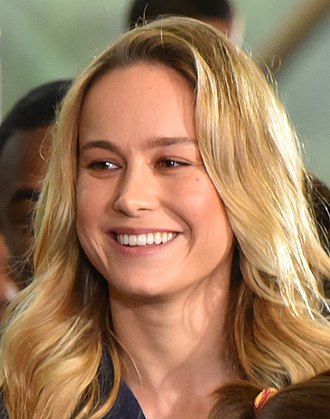 Brie Larsonb. 1989American actress, singer and filmmaker (born 1989)Source: Wikidata (citizenship)
 Nelly Furtadob. 1978Portuguese-Canadian singer and songwriterSource: Wikidata (citizenship)
 Drakeb. 1986Canadian and American rapper, singer-songwriter, and actor (born 1986)Source: Wikidata (citizenship)
 Mike Myersb. 1963Canadian actor, comedian and filmmakerSource: Wikidata (citizenship)
 Pierre Trudeau1919 – 2000Prime Minister of Canada from 1968 to 1979 and 1980 to 1984 (1919–2000)Source: Wikidata (citizenship)
 Michael J. Foxb. 1961Canadian-American actor, comedian, author, film producer, and activistSource: Wikidata (citizenship)
 Brendan Fraserb. 1968Canadian-American actor (born 1968)Source: Wikidata (citizenship)
 Frank Gehry1929 – 2025Canadian and American architect (1929–2025)Source: Wikidata (citizenship)
 Nina Dobrevb. 1989Bulgarian-Canadian actressSource: Wikidata (citizenship)
 Conrad Bain1923 – 2013Canadian-American actor, personality, entertainer, and activist (1923–2013)Source: Wikidata (citizenship)
 Jordan Petersonb. 1962Canadian clinical psychologist, author, and political commentator and manosphere activist (1962-)Source: Wikidata (citizenship)
 Alanis Morissetteb. 1974Canadian-American singer (born 1974)Source: Wikidata (citizenship)
 Akshay Kumarb. 1967ActorSource: Wikidata (citizenship)
 Lester B. Pearson1897 – 197214th Prime Minister of Canada, from 1963 to 1968 (1897–1972)Source: Wikidata (citizenship)
 Evangeline Lillyb. 1979Canadian actress (born 1979)Source: Wikidata (citizenship)
 Neil Youngb. 1945Canadian singer, songwriter and filmmaker (born 1945)Source: Wikidata (citizenship)
 William Shatnerb. 1931Canadian actor (born 1931)Source: Wikidata (citizenship)
 Frederick Banting1891 – 1941Canadian medical scientist and doctor (1891-1941)Source: Wikidata (citizenship)
 Leslie Nielsen1926 – 2010Canadian-American actor and comedian (1926–2010)Source: Wikidata (citizenship)
 Kiefer Sutherlandb. 1966British-Canadian actor (born 1966)Source: Wikidata (citizenship)
Showing the 48 best-known of 151 people.
Everything that happened
- 1690Battle of QuebecQuebec CityThe Battle of Quebec was fought in October 1690 between the colonies of New France and Massachusetts Bay, then ruled by the kingdoms of France and England, respectively. It was the first time Quebec City's defences were tested. Following the capture of Port Royal in Acadia, during King William's War, the New Englanders hoped to seize Quebec City itself, the capital of New France.Source: Wikidata (country)
- 17001700 Cascadia earthquakePacific NorthwestThe 1700 Cascadia earthquake occurred along the Cascadia subduction zone on January 26, 1700, with an estimated moment magnitude of 8.7–9.2. The megathrust earthquake involved the Juan de Fuca plate from mid-Vancouver Island, south along the Pacific Northwest coast as far as northern California. The plate slipped an average of 20 meters (66 feet) along a fault rupture about 1,000 kilometers (600 miles) long.Source: Wikidata (country)
- 1744 – 1748King George's WarNorth AmericaKing George's War (1744–1748) encompassed the military operations in North America that formed part of the War of the Austrian Succession (1740–1748). It was the third of the four French and Indian Wars. It took place primarily in the British provinces of New York, Massachusetts Bay (which included Maine as well as Massachusetts at the time), New Hampshire (which included Vermont at the time), and Nova Scotia.Source: Wikidata (country)
- 1758Siege of LouisbourgLouisbourgThe siege of Louisbourg (8 June – 26 July 1758) was fought during the Seven Years' War on Cape Breton Island between an attacking British force and defending French and Mi'kmaq troops. The French attempted to send reinforcements by sea, but were not able to as the fleet was blockaded and defeated by the British.Source: Wikidata (country)
- 1759Battle of BeauportBeauportThe Battle of Beauport, also known as the Battle of Montmorency, fought on 31 July 1759, was an important confrontation between the British and French armed forces during the Seven Years' War (also known as the French and Indian War and the War of Conquest) of the French province of Canada.Source: Wikidata (country)
- 1759Battle of the Plains of AbrahamQuebec CityThe Battle of the Plains of Abraham, also known as the First Battle of Quebec (French: Bataille des Plaines d'Abraham, Première bataille de Québec), was a pivotal battle in the Seven Years' War—whose North American theatre is referred to by Americans as the French and Indian War.Source: Wikidata (country)
- 1760Battle of Sainte-FoyQuebec CityThe Battle of Sainte-Foy (French: Bataille de Sainte-Foy) sometimes called the Battle of Quebec (French: Bataille du Quebec), was fought on April 28, 1760, near the British-held town of Quebec in the French province of Canada during the Seven Years' War (called the French and Indian War in the United States). It was a victory for the French under the Chevalier de Lévis over the British army under General Murray.Source: Wikidata (country)
- 1762Battle of Signal HillSt. John'sThe Battle of Signal Hill, fought on 15 September 1762, was the last battle of the French and Indian War. A British force under Lieutenant-colonel William Amherst recaptured St. John's, which the French had seized earlier that year in a surprise attack described in some accounts as an ambush.Source: Wikidata (country)
- 1763 – 1765Pontiac's WarGreat Lakes regionPontiac's War (also known as Pontiac's Conspiracy or Pontiac's Rebellion) was launched in 1763 by a confederation of Native Americans who were dissatisfied with British rule in the Great Lakes region following the French and Indian War (1754–1763). Warriors from numerous nations joined in an effort to drive British soldiers and settlers out of the region.Source: Wikidata (country of the location)
- 1775Battle of QuebecQuebec CityThe Battle of Quebec (French: Bataille de Québec) was fought on December 31, 1775, between American Continental Army forces and the British defenders of Quebec City as part of the invasion of Quebec of the American Revolutionary War. The battle was the first major defeat of the war for the Americans, and it came with heavy losses.Source: Wikidata (country)
- 1776Battle of Trois-RivièresBattle of Trois-Rivières National Historic SiteThe Battle of Trois-Rivières was fought on June 8, 1776, during the American Revolutionary War. A British army under Quebec Governor Sir Guy Carleton defeated an attempt by units from the Continental Army under the command of Brigadier General William Thompson to stop a British advance up the Saint Lawrence River valley.Source: Wikidata (country)
- 1812Battle of Queenston HeightsQueenston Heights National Historic Site of CanadaThe Battle of Queenston Heights was the first major engagement of the War of 1812. The battle took place on 13 October 1812, at Queenston in Upper Canada (now Ontario) and was a decisive British victory. United States regulars and New York militia led by Major General Stephen Van Rensselaer crossed the Niagara River from Lewiston and engaged British regulars and Canadian militia led by Major General Isaac Brock.Source: Wikidata (country)
- 1813Battle of Lake ErieLake ErieThe Battle of Lake Erie, also known as the Battle of Put-in-Bay, was fought on 10 September 1813, on Lake Erie off the shores of Ohio during the War of 1812. Nine vessels of the United States Navy defeated and captured six vessels of the British Royal Navy.Source: Wikidata (country)
- 1813Battle of the ThamesChatham-KentThe Battle of the Thames , also known as the Battle of Moraviantown, was an American victory over British forces and Tecumseh's Confederacy during the War of 1812. The battle took place on October 5, 1813, in Upper Canada near what is now Thamesville, Ontario. The British lost control of the Western District of Upper Canada as a result of the battle. Tecumseh was killed, and his confederacy collapsed.Source: Wikidata (country)
- 1837 – 1838Rebellions of 1837–1838CanadaThe Rebellions of 1837–1838 (French: Rébellions de 1837) were two armed uprisings that took place in Lower and Upper Canada in 1837 and 1838. Both rebellions were motivated by frustrations with lack of political reform. A key shared goal was responsible government, which was eventually achieved in the incidents' aftermath.Source: Wikidata (country)
- 1838 – 1839Pastry WarCanadaThe Pastry War began in November 1838 when French naval forces blockaded ports in Mexico, and captured San Juan de Ulúa in Veracruz. This was in response to allegations of mistreatment of French nationals in Mexico, including a pastry chef after whom the war was named, and ended in March 1839 with a British-brokered peace. A Second French intervention in Mexico followed in the 1860s.Source: Wikidata (country)
- 1866 – 1871Fenian raidsEastern CanadaThe Fenian raids were a series of incursions carried out by the Fenian Brotherhood, an Irish republican organization based in the United States, on military fortifications, customs posts, and other targets in Canada (called British North America until 1867) in 1866, and again from 1870 to 1871.Source: Wikidata (country)
- 1869Red River RebellionRed River ColonyThe Red River Rebellion (French: Rébellion de la rivière Rouge), also known as the Red River Resistance, Red River uprising, or First Riel Rebellion, was the sequence of events that led up to the 1869 establishment of a provisional government by Métis leader Louis Riel and his followers at the Red River Colony, in the early stages of establishing today's Canadian province of Manitoba.Source: Wikidata (country)
- 1879Canadian National ExhibitionExhibition PlaceThe Canadian National Exhibition (CNE), also known as The Exhibition or The Ex, is an annual fair that takes place at Exhibition Place in Toronto, Ontario, Canada, on the third or fourth Friday of August leading up to and including Labour Day, the first Monday in September. With approximately 1.6 million visitors each year, the CNE is Canada's largest annual community event and one of the top fairs in North America.Source: Wikidata (country)
- 1885North-West RebellionSaskatchewanThe North-West Rebellion (French: Rébellion du Nord-Ouest) was an armed rebellion of Métis under Louis Riel and an associated uprising of Cree and Assiniboine mostly in the District of Saskatchewan, against the Canadian government. Important events included the Frog Lake incident, and the capture of Batoche.Source: Wikidata (country)
- 1917Halifax ExplosionHalifaxOn the morning of 6 December 1917, the French cargo ship SS Mont-Blanc and the Norwegian vessel SS Imo collided in the harbour of Halifax, Nova Scotia, Canada. Laden with high explosives, Mont-Blanc caught fire and detonated, devastating the Richmond district of Halifax.Source: Wikidata (country)
- 1939 – 1945Battle of the AtlanticAtlantic OceanThe Battle of the Atlantic, the longest continuous military campaign in World War II, ran from 1939 to the defeat of Nazi Germany in 1945, covering a major part of the naval history of World War II. At its core was the Allied naval blockade of Germany, announced the day after the declaration of war, and Germany's subsequent counterblockade. The campaign peaked from mid-1940 to the end of 1943.Source: Wikidata (country of the location)
- 1943First Quebec ConferenceQuebec CityThe First Quebec Conference, codenamed Quadrant, was a highly secret military conference held during World War II by the governments of the United Kingdom, Canada, and the United States. It took place in Quebec City on August 17–24, 1943, at both the Citadelle and the Château Frontenac. The chief representatives were Winston Churchill and Franklin D.Source: Wikidata (country)
- 1969Bed-inAmsterdamA bed-in is a nonviolent protest against wars, initiated by Yoko Ono and her husband John Lennon during a two week period in Amsterdam and Montreal as an experimental test of new ways to promote peace. As the Vietnam War raged in 1969, artists Ono and Lennon held one bed-in protest at the Hilton Hotel in Amsterdam and one at the Queen Elizabeth Hotel in Montreal.Source: Wikidata (country)
- 1987Montreal ProtocolMontrealThe Montreal Protocol, officially the Montreal Protocol on Substances That Deplete the Ozone Layer, is an international treaty designed to protect the ozone layer by phasing out the production of numerous substances that are responsible for ozone depletion. It was agreed on 16 September 1987, and was entered into force on 1 January 1989.Source: Wikidata (country)
- 1997Ottawa TreatyOttawaThe Convention on the Prohibition of the Use, Stockpiling, Production and Transfer of Anti-Personnel Mines and on their Destruction of 1997, known informally as the Ottawa Treaty, the Anti-Personnel Mine Ban Convention, or often simply the Mine Ban Treaty, aims at eliminating anti-personnel landmines (APLs) around the world.Source: Wikidata (country)
- 2000Cartagena Protocol on BiosafetyMontrealThe Cartagena Protocol on Biosafety to the Convention on Biological Diversity is an international agreement on biosafety as a supplement to the Convention on Biological Diversity (CBD) effective since 2003. The Biosafety Protocol seeks to protect biological diversity from the potential risks posed by genetically modified organisms resulting from modern biotechnology.Source: Wikidata (country of the location)
- 2006Anti-Counterfeiting Trade AgreementTokyoThe Anti-Counterfeiting Trade Agreement (ACTA) is a multilateral treaty for the purpose of establishing international standards for intellectual property rights enforcement that did not enter into force.Source: Wikidata (country)
- 2017Quebec City mosque shootingIslamic Cultural Centre of Quebec CityOn the evening of January 29, 2017, an Islamophobic domestic terrorist attack took place at the Islamic Cultural Centre of Quebec City, a mosque in the Sainte-Foy neighbourhood of Quebec City, Canada. Six worshippers were killed and five others seriously injured after evening prayers when the gunman entered the prayer hall shortly before 8:00 pm and opened fire for about two minutes with a semi-automatic pistol.Source: Wikidata (country)
- 2018Yellow vests protestsFranceThe yellow vest movement (French: Mouvement des gilets jaunes, pronounced [muvmɑ̃ de ʒilɛ ʒon]) refers to those involved in a series of populist, grassroots weekly protests in France that began on 17 November 2018 and ended on 28 June 2020.Source: Wikidata (country)
- 2020COVID-19 pandemicWorldwideA new coronavirus spreads worldwide. Lockdowns, remote work and fast-developed vaccines reshape daily life.Source: Wikidata (country)
- 2022Freedom ConvoyCanadaThe Freedom Convoy (French: Convoi de la liberté), was a series of protests and blockades across Canada in early 2022, initially organized to oppose COVID-19 vaccine mandates for cross-border truck drivers. The movement quickly expanded to protest all COVID-19 restrictions and mandates.Source: Wikidata (country)
- 20232023 Chinese balloon incidentairspaceFrom January 28 to February 4, 2023, a high-altitude balloon originating from China drifted across North American airspace, including Alaska, western Canada, and the contiguous United States. On February 4, the U.S. Air Force shot down the balloon over U.S. territorial waters off the coast of South Carolina near the city of Myrtle Beach.Source: Wikidata (country)
- 2026First 48-team World CupUSA, Canada and MexicoThe tournament grows to 48 teams and 104 matches, spread across three host countries for the first time.Source: Wikidata (country)