Bulgaria
44 events
Bulgaria, officially the Republic of Bulgaria, is a country in Southeastern Europe. It is situated on the eastern portion of the Balkans directly south of the Danube river and west of the Black Sea. Bulgaria is bordered by Greece and Turkey to the south, Serbia and North Macedonia to the west, and Romania across the Danube river to the north. It covers a territory of 110,994 square kilometres (42,855 sq mi), making it the tenth largest within the European Union and the sixteenth-largest country in Europe by area.
Text from the Wikipedia article Bulgaria, CC BY-SA 4.0
Built from Wikidata: an event or person is listed when Wikidata links them to this page, as shown next to each one. Many aren’t recorded there, so this list is incomplete.
Key people
 Aesop620 BCE – 564 BCEAncient Greek storyteller (619 BC–563 BC)Source: Wikidata (country of birthplace)
 Elias Canetti1905 – 1994Bulgarian-born Swiss and British Jewish modernist novelist, playwright, memoirist, and non-fiction writer (1905–1994)Source: Wikidata (citizenship)
 Nina Dobrevb. 1989Bulgarian-Canadian actressSource: Wikidata (citizenship)
 Rumen Radevb. 1963Prime Minister of Bulgaria since 2026Source: Wikidata (citizenship)
 Julia Kristevab. 1941Bulgarian philosopher, psychoanalyst & academicSource: Wikidata (citizenship)
 Georgi Dimitrov1882 – 1949Bulgarian politician (1882–1949)Source: Wikidata (citizenship)
 Boyko Borissovb. 1959Prime Minister of Bulgaria (2009–2013; 2014–2017; 2017–2021)Source: Wikidata (citizenship)
 Belisarius505 CE – 565 CE6th century Byzantine general instrumental in reconquest of much of the former Roman Mediterranean territories (505-565)Source: Wikidata (country of birthplace)
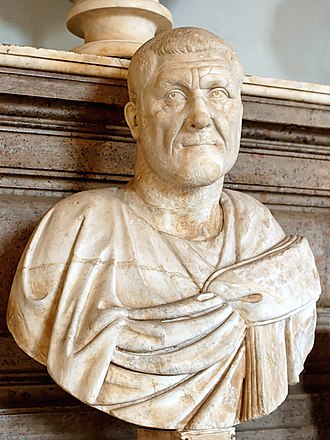 Maximinus Thrax173 CE – 238 CERoman Emperor (173-238)Source: Wikidata (country of birthplace)
 Ahmed III1673 – 173623th Sultan of Ottoman Empire (1703–1730)Source: Wikidata (country of birthplace)
 Hristo Stoichkovb. 1966Bulgarian footballer and manager (born 1966)Source: Wikidata (citizenship)
 Todor Zhivkov1911 – 1998Former General Secretary of the Bulgarian Communist PartySource: Wikidata (citizenship)
 Ivan Vazov1850 – 1921Bulgarian writer and poet (1850-1921)Source: Wikidata (citizenship)
 Veselin Topalovb. 1975Bulgarian chess grandmasterSource: Wikidata (citizenship)
 Georgi Parvanovb. 19574th President of Bulgaria 2002-2012Source: Wikidata (citizenship)
 Aëtiusc. 390 CE – 454 CERoman general and statesman ( c. 390 – 454)Source: Wikidata (country of birthplace)
 Philipp Kirkorovb. 1967Russian-Bulgarian singer and music producerSource: Wikidata (citizenship)
 Marcian392 CE – 457 CEEastern Roman (Byzantine) emperor (390-457)Source: Wikidata (country of birthplace)
 Simeon II of Bulgariab. 1937Bulgarian politician and royal (born 1937)Source: Wikidata (citizenship)
 Ferdinand I of Bulgaria1861 – 1948Bulgarian ruler (1861–1948)Source: Wikidata (citizenship)
 Dimitar Berbatovb. 1981Bulgarian footballerSource: Wikidata (citizenship)
 Leo I401 CE – 474 CEEastern Roman emperor from 457 to 474Source: Wikidata (country of birthplace)
 Phocas547 CE – 610 CEEmperor of Byzantine Empire (547-610)Source: Wikidata (country of birthplace)
 Boris III of Bulgaria1894 – 1943King of Bulgaria (1894–1943)Source: Wikidata (citizenship)
 Irina Bokovab. 1952Bulgarian diplomatSource: Wikidata (citizenship)
 Tiberius II Constantine520 CE – 582 CEByzantine Emperor (520-582)Source: Wikidata (country of birthplace)
 Rosen Plevnelievb. 1964Bulgarian politicianSource: Wikidata (citizenship)
 Anna-Maria Ravnopolska-Deanb. 1960Harpist and composerSource: Wikidata (citizenship)
 Fritz Zwicky1898 – 1974Swiss astronomer (1898–1974)Source: Wikidata (country of birthplace)
 Iliana Iotovab. 1964President of Bulgaria since 2026, vice-president of Bulgaria from 2017 to 2026, politician and journalistSource: Wikidata (citizenship)
 Talaat Paşa1874 – 1921Turkish Ottoman politician (1874–1921)Source: Wikidata (country of birthplace)
 Stefka Kostadinovab. 1965Bulgarian high jumperSource: Wikidata (citizenship)
 Ratko Janev1939 – 2019Macedonian atomic physicist (1939–2019)Source: Wikidata (country of birthplace)
 Kristalina Georgievab. 1953Bulgarian economist and CEOSource: Wikidata (citizenship)
 Hristo Botev1848 – 1876Bulgarian poet, journalist and revolutionary (1847–1876)Source: Wikidata (country of birthplace)
Everything that happened
- 492 BCE – 490 BCEFirst Persian invasion of GreeceThraceThe first Persian invasion of Greece took place from 492 BC to 490 BC, as part of the Greco-Persian Wars. It ended with a decisive Athenian-led victory over the Achaemenid Empire during the Battle of Marathon.Source: Wikidata (country of the location)
- 316 CEBattle of MardiaHarmanliThe Battle of Mardia, also known as Battle of Campus Mardiensis or Battle of Campus Ardiensis, was fought in late 316/early 317 between the forces of Roman Emperors Constantine I and Licinius. Its location was probably modern Harmanli (Bulgaria) in Thrace.Source: Wikidata (country)
- 376 CEBattle of MarcianopleMarcianopolisThe Battle of Marcianople or Marcianopolis took place in 376 following the Goths' migration over the Danube. It was the first notable battle of the Gothic War of 376–382.Source: Wikidata (country)
- 376 CE – 382 CEGothic WarThraceThe Gothic War of 376–382 was one of several Gothic Wars in Roman history in which the Goths fought against the Roman Empire. This particular conflict included the catastrophic Roman defeat at the Battle of Adrianople, which is commonly seen as a cause of the decline of the Western Roman Empire, although its significance is widely debated.Source: Wikidata (country of the location)
- 477 CEBattle of the UtusVitThe Battle of the Utus was fought in 447 between the army of the Eastern Roman Empire, and the Huns led by Attila at Utus, a river that is today the Vit in Bulgaria. It was the last of the bloody pitched battles between the Eastern Roman Empire and the Huns, as the former attempted to stave off the Hunnic invasion.Source: Wikidata (country)
- 708 CEBattle of AnchialusPomorieThe Battle of Anchialus (Bulgarian: Битката при Анхиало) (Medieval Greek: Μάχη του Αγχίαλου) occurred in 708 near the modern-day town of Pomorie, BulgariaSource: Wikidata (country)
- 756 CEBattle of MarcellaeMarkeliThe Battle of Marcellae (Bulgarian: Битката при Маркели, Greek: Μάχη των Μαρκελλών) took place in 756 between the armies of the First Bulgarian Empire and the Byzantine Empire at Markeli, near the town of Karnobat in south eastern Bulgaria. The result was a Byzantine victory.Source: Wikidata (country)
- 763 CEBattle of AnchialusPomorieThe battle of Anchialus (Bulgarian: Битката при Анхиало) occurred in 763, near the town of Pomorie on the Bulgarian Black Sea Coast. The result was a Byzantine victory.Source: Wikidata (country)
- 792 CEBattle of MarcellaeMarkeliThe Battle of Marcellae (Bulgarian: Битката при Маркели; Greek: Μάχη των Μαρκελλών) was fought on the 20 July 792 between the forces of the Byzantine Empire, led by Constantine VI, and those of the First Bulgarian Empire under Kardam. The Byzantines were routed and forced to retreat to Constantinople.Source: Wikidata (country)
- 811 CEBattle of PliskaPliskaThe Battle of Pliska or Battle of Vărbitsa Pass was a series of battles between the forces of the Byzantine Empire under Emperor Nicephorus I, and the First Bulgarian Empire under Khan Krum in July 811. The Byzantines plundered and burned the Bulgar capital Pliska which gave time for the Bulgarians to block passes in the Balkan Mountains that served as exits out of Bulgaria.Source: Wikidata (country)
- 813 CEBattle of VersinikiaEdirneBulgarian Battle of Versinikia (Bulgarian: Битката при Версиникия; Greek: Μάχη της Βερσινικίας) was a battle fought in 813 AD between the Byzantine Empire and the Bulgarian Empire, near the city of Adrianople (Edirne), in modern-day Turkey.Source: Wikidata (country)
- 917 CEBattle of AchelousPomorieThe Battle of Achelous or Acheloos (Bulgarian: Битката при Ахелой, Greek: Μάχη του Αχελώου), also known as the Battle of Anchialus, took place on 20 August 917, on the Achelous river near the Bulgarian Black Sea coast, close to the fortress Tuthom (modern Pomorie) between Bulgarian and Byzantine forces.Source: Wikidata (country)
- 971 CESiege of DorostolonSilistraThe Siege and Battle of Dorostolon (Silistra) was fought in 971 between the Byzantine Empire and forces of Kievan Rus'. The Byzantines, led by John I Tzimiskes, were victorious.Source: Wikidata (country)
- 986 CEBattle of the Gates of TrajanGate of TrajanThe Battle of the Gates of Trajan (Bulgarian: Битка край Траянови врати, Medieval Greek: Μάχη στις Πύλες του Τραϊανού) was a battle between Byzantine and Bulgarian forces in the year 986.Source: Wikidata (country)
- 1122Battle of BeroiaAugusta TraianaThe Battle of Beroia (modern Stara Zagora) was fought in 1122 between the Pechenegs and the Byzantine Empire under Emperor John II Komnenos (r. 1118–1143) in what is now Bulgaria. The Byzantine army won the battle, resulting in the disappearance of the Pechenegs as a distinct, independent people.Source: Wikidata (country)
- 1204Bulgarian–Latin warsThraceThe Bulgarian–Latin wars were a series of conflicts between the Second Bulgarian Empire (1185–1396) and the Latin Empire (1204–61). The wars affected the northern border of the Latin Empire throughout its existence.Source: Wikidata (country of the location)
- 1230Battle of KlokotnitsaKlokotnitsaThe Battle of Klokotnitsa (Bulgarian: Битката при Клокотница, Bitkata pri Klokotnitsa) occurred on 9 March 1230 near the village of Klokotnitsa (today in Haskovo Province, Bulgaria) between the Second Bulgarian Empire and the Empire of Thessalonica. As a result, Bulgaria emerged once again as the most powerful state in South-Eastern Europe.Source: Wikidata (country)
- 1304Battle of SkafidaSozopolThe Battle of Skafida (Bulgarian: Битка при Скафида) was an engagement between the Bulgarian Empire and the Byzantine Empire which occurred in 1304 near Poros (Burgas), modern Bulgaria. The outcome was Bulgarian victory.Source: Wikidata (country)
- 1330Battle of VelbazhdKyustendilThe Battle of Velbazhd (Bulgarian: битка при Велбъжд, romanized: bitka pri Velbazhd; Serbian: Битка код Велбужда, romanized: Bitka kod Velbužda) was fought by the Second Bulgarian Empire and the Kingdom of Serbia on 28 July 1330, near the town of Velbazhd (present day Kyustendil).Source: Wikidata (country)
- 1332Battle of RusokastroRusokastroThe Battle of Rusokastro (Bulgarian: Битка при Русокастро, Greek: Μάχη τοῦ Ῥουσοκάστρου) occurred on July 18, 1332 near the village of Rusokastro, Bulgaria, between the armies of the Bulgarian and Byzantine Empires. The outcome was a Bulgarian victorySource: Wikidata (country)
- 1393Siege of TarnovoVeliko TarnovoThe siege of Tarnovgrad occurred in the spring of 1393 and resulted in a decisive Ottoman victory. With the fall of its capital, the Bulgarian Empire was reduced to a few fortresses along the Danube.Source: Wikidata (country)
- 1396Battle of NicopolisNikopolThe Battle of Nicopolis took place on 25 September 1396 and resulted in the rout of an allied Crusader army, assisted by the Venetian navy, at the hands of an Ottoman force, raising the siege of the Danubian fortress of Nicopolis and leading to the end of the Second Bulgarian Empire.Source: Wikidata (country)
- 1444Battle of VarnaVarnaThe Battle of Varna took place on 10 November 1444 near Varna in what is today eastern Bulgaria. The Ottoman army under Sultan Murad II (who did not actually rule the sultanate at the time) defeated the Crusaders commanded by King Władysław III of Poland and Hungary, John Hunyadi (acting as commander of the combined Christian forces) and Mircea II of Wallachia.Source: Wikidata (country)
- 1790Battle of Kerch StraitBlack SeaThe naval Battle of (the) Kerch Strait (also known as Battle of Yenikale, by the old Turkish name of the strait near Kerch) took place on 19 July 1790 near Kerch, Crimea, was a victory for Imperial Russia over the Ottoman Empire during the Russo-Turkish War, 1787-1792.Source: Wikidata (country of the location)
- 1853 – 1856Crimean WarCrimeaThe Crimean War was fought between Russia and an alliance of the Ottoman Empire, France, the United Kingdom, and Sardinia from October 1853 to February 1856. Geopolitical causes of the war included the Eastern question (the decline of the Ottoman Empire), the expansion of Russia in the preceding Russo-Turkish wars, and the British and French preference to preserve the Ottoman Empire to maintain the balance of power…Source: Wikidata (country of the location)
- 1854Siege of SilistriaSilistraThe siege of Silistria, or siege of Silistra, was a key engagement in the Crimean War, fought from 11 May to 23 June 1854 between the Russian Empire and the Ottoman Empire in present-day Bulgaria.Source: Wikidata (country)
- c. 1870Kresna–Razlog uprisingPirinThe Kresna–Razlog uprising (Bulgarian: Кресненско-Разложко въстание, romanized: Kresnensko-Razlozhko vastanie), also known as the Kresna uprising (Macedonian: Кресненско востание, romanized: Kresnensko vostanie), was an anti-Ottoman Bulgarian uprising that took place in Ottoman Macedonia, predominantly in the areas of modern Blagoevgrad Province in Bulgaria in late 1878 and early 1879.Source: Wikidata (country)
- 1876April Uprising of 1876BulgariaThe April Uprising (Bulgarian: Априлско въстание, romanized: Aprilsko vastanie) was an insurrection organised by the Bulgarians in the Ottoman Empire from April to May 1876. The rebellion was suppressed by irregular Ottoman bashi-bazouk units that engaged in indiscriminate slaughter of both rebels and non-combatants (see Batak massacre).Source: Wikidata (country)
- 1876Batak massacreBatakThe Batak massacre was a massacre of Bulgarians in the town of Batak by Ottoman irregular cavalry troops in 1876, at the beginning of the Bulgarian April Uprising of 1876. The estimate for the number of casualties ranges from 1,200 to 8,000, depending on source, with the most common estimate being 5,000 casualties.Source: Wikidata (country of the location)
- 1877Battle of Gorni DubnikDanube VilayetThe Battle of Gorni Dubnik took place during the Russo-Turkish War on 24 October 1877. In an effort to reduce the fortress of Pleven quicker, Russian forces began targeting garrisons along the Ottoman supply and communications route. A significant garrison had been reduced at the Battle of Lovcha in September.Source: Wikidata (country)
- 1877Battle of NikopolNikopolThe Battle of Nikopol, or Nicopolis (Turkish: Niğbolu Muharebesi), was one of the early battles of the Russo-Turkish War (1877–1878). As the Russian army crossed the Danube river, they approached the fortified city of Nikopol (Nicopolis). The Turkish high command sent Osman Pasha with the troops from Vidin to oppose the Russians' crossing of the Danube. Osman's intentions were to reinforce and defend Nikopol.Source: Wikidata (country)
- 1877 – 1878Battle of Shipka PassShipka PassThe Battle of Shipka Pass consisted of four battles that were fought between the Russian Empire, aided by Bulgarian volunteers known as opalchentsi, and the Ottoman Empire for control over the vital Shipka Pass during the Russo-Turkish War (1877–1878). The final battle is known as the battle of Shipka-Sheynovo or simply the battle of Sheynovo (Russian: Шипко-Шейновское сражение; Bulgarian: Шейновска битка).Source: Wikidata (country)
- 1877Siege of PlevnaPlevenThe siege of Plevna or Pleven, was a major battle of the Russo-Turkish War of 1877–1878, fought by the joint army of the Russian Empire and the Kingdom of Romania against the Ottoman Empire.Source: Wikidata (country)
- 1901Miss Stone AffairBulgariaThe Miss Stone Affair (Bulgarian: Афера „Мис Стоун“, Macedonian: „Афера Мис Стон“) was the kidnapping of American Protestant missionary Ellen Maria Stone and her pregnant Bulgarian fellow missionary and friend Katerina Cilka by the pro-Bulgarian Internal Macedonian Revolutionary Organization.Source: Wikidata (country)
- 1914Black Sea raidBlack SeaThe Black Sea raid was an Ottoman naval sortie against Russian ports in the Black Sea on 29 October 1914, supported by Germany, that led to the Ottoman entry into World War I. The attack was conceived by Ottoman War Minister Enver Pasha, German Admiral Wilhelm Souchon, and the German foreign ministry.Source: Wikidata (country of the location)
- 1916Battle of TurtucaiaSouthern DobrujaThe Battle of Turtucaia (Romanian: Bătălia de la Turtucaia; Bulgarian: Битка при Тутракан, Bitka pri Tutrakan), also known as Tutrakan Epopee (Bulgarian: Тутраканска епопея, Tutrakanska epopeya) in Bulgaria, was the opening battle of the first Central Powers offensive during the Romanian Campaign of World War I.Source: Wikidata (country)
- 1916Flămânda OffensiveRyahovoThe Flămânda Offensive (or Flămânda Maneuver), which took place during World War I between 29 September and 5 October 1916, was an offensive across the Danube mounted by the Romanian 3rd Army supported by Romanian coastal artillery. Named after the hamlet of Flămânda, the battle represented a consistent effort by the Romanian Army to stop the Central Powers' southern offensive led by August von Mackensen.Source: Wikidata (country)
- 1918Battle of DoiranDojran LakeThe Third Battle of Doiran was fought from 18 to 19 September 1918, with the British and the Greeks assaulting the positions of the Bulgarian First Army near Doiran Lake. The battle was part of World War I and took place in the Balkan Theatre. The battle ended with the Bulgarians repulsing all attacks.Source: Wikidata (country)
- 19231923 Bulgarian coup d'étatSofiaThe 1923 Bulgarian coup d'état, also known as the 9 June coup d'état (Bulgarian: Деветоюнски преврат, Devetoyunski prevrat), was a coup d'état in Bulgaria implemented by armed forces under General Ivan Valkov's Military League on the evening of 9 June 1923.Source: Wikidata (country)
- 1925St. Nedelya Church bombingSaint Nedelya ChurchThe St Nedelya Church bombing was a terrorist attack on St Nedelya Church in Sofia, Bulgaria. It was carried out on 16 April 1925, when a group of the Military Organisation of the Bulgarian Communist Party directed and supplied by the Soviet Military Intelligence blew up the church's roof during the funeral service of General Konstantin Georgiev, who had been killed in a previous communist assault on 14 April.Source: Wikidata (country)
- 1943 – 1944Bombing of Bulgaria in World War IIKingdom of BulgariaBulgaria suffered a series of Allied bombing raids during World War II, from mid 1941 to early 1944. Bulgaria declared war on the United Kingdom and the United States on 13 December 1941. The Southern Italy-based Allied air forces extended the range of their strategic operations to include Bulgaria and other Axis allies in 1943.Source: Wikidata (country)
- 19441944 Bulgarian coup d'étatBulgariaThe 1944 Bulgarian coup d'état, also known as the 9 September coup d'état (Bulgarian: Деветосептемврийски преврат, romanized: Devetoseptemvriyski prevrat), was a coup that overthrew the government of Kingdom of Bulgaria on the eve of 9 September 1944.Source: Wikidata (country)
- 2020COVID-19 pandemicWorldwideA new coronavirus spreads worldwide. Lockdowns, remote work and fast-developed vaccines reshape daily life.Source: Wikidata (country)
- c. 2020Gen Z protestsworldDuring the 2020s, members of Generation Z have participated in youth-led protests. The 2024 protests in Bangladesh are widely cited as the first successful Gen Z revolution, inspiring other Gen Z–led protests, including those in Nepal, Indonesia, Philippines, Timor-Leste, Maldives, Mongolia, Madagascar, Morocco, Serbia, India, Albania, South Korea, Taiwan, and Japan.Source: Wikidata (country of the location)