Former state · 1750 – 1867
Austrian Empire
2 events
The Austrian Empire, officially known as the Empire of Austria, was a multinational European great power from 1804 to 1867, created by proclamation out of the realms of the Habsburgs. During its existence, it was the third most populous nation in Europe after the Russian Empire and the United Kingdom, while geographically, it was the third-largest empire in Europe after the Russian Empire and the First French Empire.
Text from the Wikipedia article Austrian Empire, CC BY-SA 4.0
Built from Wikidata: an event or person is listed when Wikidata links them to this page, as shown next to each one. Many aren’t recorded there, so this list is incomplete.
Showing 135 years
Key people
 Ludwig van Beethoven1770 – 1827German composer (1770-1827)Source: Wikidata (citizenship)
 Nikola Tesla1856 – 1943Serbian-American engineer and inventor (1856-1943)Source: Wikidata (citizenship)
 Franz Schubert1797 – 1828Austrian composer (1797–1828)Source: Wikidata (citizenship)
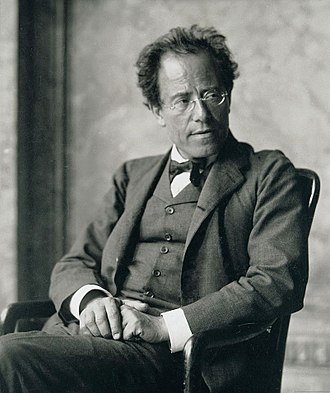 Gustav Mahler1860 – 1911Austrian late-Romantic composer (1860–1911)Source: Wikidata (citizenship)
 Gregor Mendel1822 – 1884Moravian scientist and Augustinian friar (1822–1884)Source: Wikidata (citizenship)
 Franz Liszt1811 – 1886Hungarian romantic composer and virtuoso pianist (1811-1886)Source: Wikidata (citizenship)
 Alessandro Manzoni1785 – 1873Italian writer and poet (1785–1873)Source: Wikidata (citizenship)
 Bertha von Suttner1843 – 1914Austrian novelist, radical (organizational) pacifist, editorSource: Wikidata (citizenship)
 Gustav Klimt1862 – 1918Austrian symbolist painter (1862–1918)Source: Wikidata (citizenship)
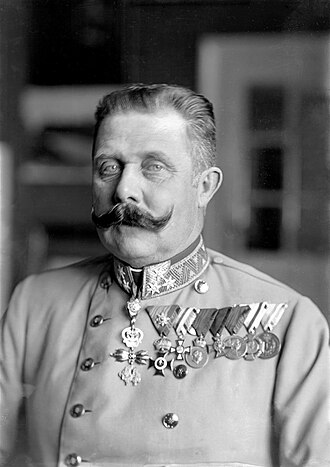 Archduke Franz Ferdinand of Austria1863 – 1914Heir presumptive to the throne of Austria-Hungary (1863–1914)Source: Wikidata (citizenship)
 Edmund Husserl1859 – 1938German philosopher, known as the father of phenomenology (1859–1938)Source: Wikidata (citizenship)
 Franz Joseph I of Austria1830 – 1916Emperor of Austria and King of Hungary (1830-1916)Source: Wikidata (citizenship)
 Klemens von Metternich1773 – 1859Austrian diplomat, foreign minister and Chancellor (1773–1859)Source: Wikidata (citizenship)
 Bedřich Smetana1824 – 1884Czech composerSource: Wikidata (citizenship)
 Anton Bruckner1824 – 1896Austrian composer (1824-1896)Source: Wikidata (citizenship)
 Johann Strauss II1825 – 1899Austrian composer (1825-1899)Source: Wikidata (citizenship)
 Ivan Franko1856 – 1916Ukrainian poet and writer (1856–1916)Source: Wikidata (citizenship)
 Rudolf Steiner1861 – 1925Austrian social reformer, occultist and esotericist (1861–1925)Source: Wikidata (citizenship)
 France Prešeren1800 – 1849Slovene national poet, a Carniolan Romantic poet of Slovene descent (1800–1849)Source: Wikidata (citizenship)
 Empress Elisabeth of Austria1837 – 1898Empress of Austria and Queen of Hungary from 1854 to 1898 (1837–1898)Source: Wikidata (citizenship)
 Arthur Schnitzler1862 – 1931Austrian writer (1862–1931)Source: Wikidata (citizenship)
 Christian Dopplerr1803 – 1853Austrian mathematician and physicist (1803-1853)Source: Wikidata (citizenship)
 Camillo Golgi1843 – 1926Italian physician, pathologist, scientist, and Nobel laureate (1843-1926)Source: Wikidata (citizenship)
 Ignaz Semmelweis1818 – 1865Hungarian physician, early pioneer of antiseptic procedures (1818–1865)Source: Wikidata (citizenship)
 Wilhelm Steinitz1836 – 1900Austrian-American chess player (1836–1900)Source: Wikidata (citizenship)
 Antonio Salieri1750 – 1825Italian composer and teacher (1750–1825)Source: Wikidata (citizenship)
 Marie von Ebner-Eschenbach1830 – 1916Austrian writer (1830–1916)Source: Wikidata (citizenship)
 Alphonse Mucha1860 – 1939Czech painter, illustrator and graphic artist (1860–1939)Source: Wikidata (citizenship)
 Ferdinand I of Austria1793 – 1875Austrian emperor, king of Hungary and Bohemia (1793-1875)Source: Wikidata (citizenship)
 Maximilian I of Mexico1832 – 1867Emperor of Mexico (1832-1867)Source: Wikidata (citizenship)
 Franz Grillparzer1791 – 1872Austrian dramatist and poet (1791-1872)Source: Wikidata (citizenship)
 Jan Neruda1834 – 1891Czech poet, theater reviewer, publicist, journalist and writer (1834-1891)Source: Wikidata (citizenship)
 Leoš Janáček1854 – 1928Czech composer (1854–1928)Source: Wikidata (citizenship)
 Leopold von Sacher-Masoch1836 – 1895Austrian author (1836–1895)Source: Wikidata (citizenship)
 Carl Menger1840 – 1921Founder of the Austrian School of economics (1840–1921)Source: Wikidata (citizenship)
 Božena Němcová1820 – 1862Czech writer (1820-1862)Source: Wikidata (citizenship)
 János Bolyai1802 – 1860Hungarian mathematician (1802–1860)Source: Wikidata (citizenship)
 Josef Stefan1835 – 1893Carinthian Slovene physicist, mathematician and poet (1835-1893)Source: Wikidata (citizenship)
 Johann Strauss I1804 – 1849Austrian Romantic composerSource: Wikidata (citizenship)
 Ignacy Łukasiewicz1822 – 1882Polish pharmacist and petroleum industry pioneer (1822-1882)Source: Wikidata (citizenship)
 Otto Wagner1841 – 1918Austrian architect (1841-1918)Source: Wikidata (citizenship)
 Carl Czerny1791 – 1857Austrian composer and pianist (1791-1857)Source: Wikidata (citizenship)
 Johann Palisa1848 – 1925Austrian astronomist (1848–1925)Source: Wikidata (citizenship)
 Rudolf, Crown Prince of Austria1858 – 1889Austrian archduke (1858-1889)Source: Wikidata (citizenship)
 Francesco Hayez1791 – 1882Italian painter (1791–1882)Source: Wikidata (citizenship)
 Ľudovít Štúr1815 – 1856Slovak poet, philosopher, linguist, publicist, politician and writer (1815–1856)Source: Wikidata (citizenship)
Everything that happened
- 1805Battle of AusterlitzSlavkov u BrnaThe Battle of Austerlitz was fought on Monday 2 December 1805, near Austerlitz (then in the Austrian Empire, now in the Czech Republic), being the decisive engagement of the War of the Third Coalition. The Grande Armée under the command of Emperor Napoleon I defeated a combined Russo-Austrian army.Source: Wikidata (country)
- 1848Revolutions of 1848 in the Austrian EmpireAustrian EmpireThe revolutions of 1848 in the Austrian Empire took place from March 1848 to November 1849. Much of the revolutionary activity had a nationalist character: the Austrian Empire, ruled from Vienna, included ethnic Germans, Hungarians, Poles, Bohemians (Czechs), Ruthenians (Ukrainians), Slovenes, Slovaks, Romanians, Croats, Italians, and Serbs, all of whom attempted in the course of the revolution to achieve one of…Source: Wikidata (country)