Austria
39 events
Austria, formally the Republic of Austria, is a landlocked country in Central Europe, lying in the Eastern Alps. It is a federation of nine states, of which the capital Vienna is the most populous city and state. Austria is bordered by Germany to the northwest, the Czech Republic to the north, Slovakia to the northeast, Hungary to the east, Slovenia and Italy to the south, and Switzerland and Liechtenstein to the west. The country occupies an area of 83,879 km2 (32,386 sq mi) and has a population of about 9.2 million.
Text from the Wikipedia article Austria, CC BY-SA 4.0
Built from Wikidata: an event or person is listed when Wikidata links them to this page, as shown next to each one. Many aren’t recorded there, so this list is incomplete.
Key people
 Adolf Hitler1889 – 1945Dictator of Germany from 1933 to 1945 (1889–1945)Source: Wikidata (citizenship)
 Wolfgang Amadeus Mozart1756 – 1791Austrian composer of the Classical period (1756-1791)Source: Wikidata (country of birthplace)
 Richard Wagner1813 – 1883German composer (1813–1883)Source: Wikidata (citizenship)
 Franz Schubert1797 – 1828Austrian composer (1797–1828)Source: Wikidata (country of birthplace)
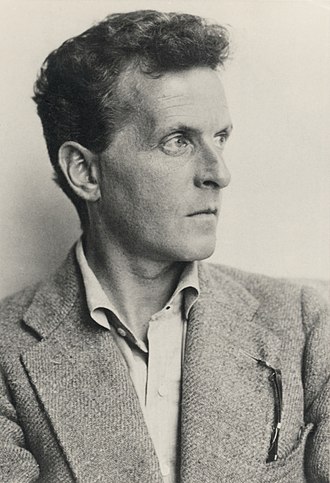 Ludwig Wittgenstein1889 – 1951Austrian philosopher and logician (1889–1951)Source: Wikidata (citizenship)
 Anna Netrebkob. 1971Russian and Austrian operatic sopranoSource: Wikidata (citizenship)
 Erwin Schrödinger1887 – 1961Austrian physicist (1887–1961)Source: Wikidata (country of birthplace)
 Joseph Haydn1732 – 1809Austrian composer (1732–1809)Source: Wikidata (country of birthplace)
 Bertolt Brecht1898 – 1956German poet, playwright, and theatre director (1898–1956)Source: Wikidata (citizenship)
 Arnold Schwarzeneggerb. 1947Austrian and American actor, bodybuilder, and politician (born 1947)Source: Wikidata (citizenship)
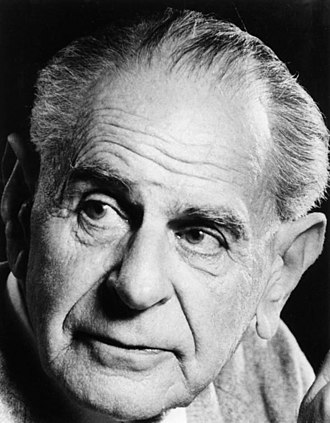 Karl Popper1902 – 1994Austrian-British philosopher of science and social and política e falsificationism and for criticism of Plato, Hegel and Marx as totalitarian opponents of open society (1902-1994)Source: Wikidata (citizenship)
 Franz Liszt1811 – 1886Hungarian romantic composer and virtuoso pianist (1811-1886)Source: Wikidata (country of birthplace)
 Elfriede Jelinekb. 1946Austrian playwright and novelistSource: Wikidata (citizenship)
 Stefan Zweig1881 – 1942Austrian writer (1881–1942)Source: Wikidata (citizenship)
 Kurt Gödel1906 – 1978Austrian-American logician, mathematician, and philosopher of mathematics (1906–1978)Source: Wikidata (citizenship)
 Friedrich Hayek1899 – 1992Austrian and British economist (1899–1992)Source: Wikidata (citizenship)
 Gustav Klimt1862 – 1918Austrian symbolist painter (1862–1918)Source: Wikidata (country of birthplace)
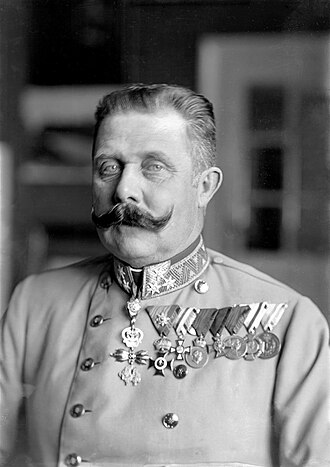 Archduke Franz Ferdinand of Austria1863 – 1914Heir presumptive to the throne of Austria-Hungary (1863–1914)Source: Wikidata (country of birthplace)
 Maria Theresa of Austria1717 – 1780Ruler of the Habsburg Dominions (1717-1780)Source: Wikidata (country of birthplace)
 Theodor W. Adorno1903 – 1969German philosopher, sociologist and theorist (1903–1969)Source: Wikidata (citizenship)
 Hedy Lamarr1914 – 2000Austrian-American actress and co-inventor of an early technique for spread spectrum communications and frequency hopping (1914-2000)Source: Wikidata (citizenship)
 Franz Joseph I of Austria1830 – 1916Emperor of Austria and King of Hungary (1830-1916)Source: Wikidata (country of birthplace)
 Lise Meitner1878 – 1968Austrian-Swedish physicistSource: Wikidata (citizenship)
 Konrad Lorenz1903 – 1989Austrian zoologist, winner of the Nobel Prize in Physiology or Medicine in 1973 (1903–1989)Source: Wikidata (citizenship)
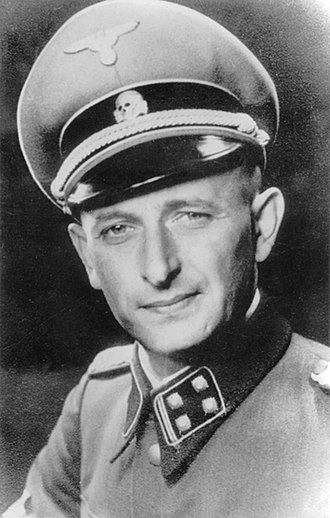 Adolf Eichmann1906 – 1962German-Austrian SS officer and one of the major organizers of the Holocaust (1906–1962)Source: Wikidata (citizenship)
 Peter Handkeb. 1942Austrian writer, playwright and film director (born 1942)Source: Wikidata (citizenship)
 Anton Bruckner1824 – 1896Austrian composer (1824-1896)Source: Wikidata (country of birthplace)
 Kurt Waldheim1918 – 2007Austrian politician and diplomat (1918–2007)Source: Wikidata (citizenship)
 Alexander Van der Bellenb. 1944President of Austria since 2017 (born 1944)Source: Wikidata (citizenship)
 Johann Strauss II1825 – 1899Austrian composer (1825-1899)Source: Wikidata (country of birthplace)
 Ludwig Boltzmann1844 – 1906Austrian physicist and philosopher (1844–1906)Source: Wikidata (country of birthplace)
 Robert Musil1880 – 1942Austrian philosophical writer (1880–1942)Source: Wikidata (citizenship)
 Sebastian Kurzb. 1986Chancellor of Austria (2017–2019, 2020–2021)Source: Wikidata (citizenship)
 Theodoric the Great454 CE – 526 CEKing of the Germanic Ostrogoths and ruler of Italy (493–526)Source: Wikidata (country of birthplace)
 Klaus Ebnerb. 1964Austrian writerSource: Wikidata (citizenship)
 Karl Landsteiner1868 – 1943Jewish-Austrian biologist, physician and Nobel Prize laureateSource: Wikidata (country of birthplace)
 Heinz Fischerb. 1938Austrian politician (SPÖ), 8th president of Austria (born 1938)Source: Wikidata (citizenship)
 Arnold Schoenberg1874 – 1951Austrian-Jewish American composer (1874-1951)Source: Wikidata (citizenship)
 Rudolf Steiner1861 – 1925Austrian social reformer, occultist and esotericist (1861–1925)Source: Wikidata (citizenship)
 Arthur Schnitzler1862 – 1931Austrian writer (1862–1931)Source: Wikidata (citizenship)
 Conchita Wurstb. 1988Austrian singer and drag queenSource: Wikidata (citizenship)
 Joseph II, Holy Roman Emperor1741 – 1790Holy Roman Emperor from 1765 to 1790, (1741-1790).Source: Wikidata (country of birthplace)
 Victor Francis Hess1883 – 1964Austrian physicist and Nobel prize laureate (1883-1964)Source: Wikidata (citizenship)
 Christian Dopplerr1803 – 1853Austrian mathematician and physicist (1803-1853)Source: Wikidata (country of birthplace)
 Viktor Frankl1905 – 1997Austrian Holocaust survivor, psychiatrist, philosopher and author (1905–1997)Source: Wikidata (citizenship)
 Billy Wilder1906 – 2002Austrian and American filmmaker (1906–2002)Source: Wikidata (citizenship)
 Christoph Waltzb. 1956Austrian-German actor (born 1956)Source: Wikidata (citizenship)
 Charles VI, Holy Roman Emperor1685 – 174018th century Habsburg Holy Roman EmperorSource: Wikidata (country of birthplace)
Showing the 48 best-known of 162 people.
Everything that happened
- 112 BCEBattle of NoreiaNoreiaThe Battle of Noreia, in 113 BC, was the opening battle of the Cimbrian War fought between the Roman Republic and the migrating Proto-Germanic tribes, the Cimbri and the Teutons. It ended in defeat, and near disaster, for the Romans.Source: Wikidata (country)
- 1246Battle of the Leitha RiverLeithaThe Battle of the Leitha River was fought on 15 June 1246 near the banks of the Leitha river between the forces of the King Béla IV of Hungary and Duke Frederick II of Austria. The Hungarian army was routed, but Duke Frederick was killed, ending Austrian claims to the western counties of Hungary.Source: Wikidata (country of the location)
- 1278Battle on the MarchfeldLower AustriaThe Battle on the Marchfeld (i.e. Morava Field; German: Schlacht auf dem Marchfeld / Schlacht bei Dürnkrut und Jedenspeigen; Czech: Bitva na Moravském poli; Hungarian: Második morvamezei csata / dürnkruti csata; Polish: Bitwa pod Suchymi Krutami) at Dürnkrut and Jedenspeigen took place on 26 August 1278 and was a decisive event for the history of Central Europe for the following centuries.Source: Wikidata (country of the location)
- 1529Siege of ViennaViennaThe 1529 siege of Vienna was the first attempt by the Ottoman Empire to capture the city of Vienna in the Archduchy of Austria, part of the Holy Roman Empire. Suleiman the Magnificent, sultan of the Ottomans, attacked the city with over 100,000 men, while the defenders, led by Niklas Graf Salm, numbered no more than 21,000. Nevertheless, Vienna was able to survive the siege.Source: Wikidata (country)
- 1606Treaty of ViennaViennaThe Treaty of Vienna (also known as the Peace of Vienna) was signed on 23 June 1606 between Stephen Bocskai, Prince of Transylvania, and Rudolf II, Holy Roman Emperor. Based on the terms of the treaty, all constitutional and religious rights and privileges were granted to the Hungarians in both Transylvania and Royal Hungary.Source: Wikidata (country of the location)
- 1672 – 1678Franco-Dutch WarWestern EuropeThe Franco-Dutch War, 1672 to 1678, was primarily fought by France and the Dutch Republic, with both sides backed at different times by a variety of allies. Related conflicts include the Third Anglo-Dutch War of 1672 to 1674 and the Scanian War of 1675 to 1679.Source: Wikidata (country of the location)
- 1683Battle of ViennaKahlenbergThe Battle of Vienna took place at Kahlenberg Mountain near Vienna on 12 September 1683 after the city had been besieged by the Ottoman Empire for two months. The battle was fought between an Ottoman army commanded by Grand Vizier Kara Mustafa Pasha and a coalition of Imperial, German and Polish Crown forces under the overall command of King John III Sobieski of the Polish–Lithuanian Commonwealth.Source: Wikidata (country)
- 1683 – 1699Great Turkish WarAustriaThe Great Turkish War was a series of conflicts between the Ottoman Empire and the Holy League consisting of the Holy Roman Empire, Poland-Lithuania, Venice, Russia, and the Kingdom of Hungary. Intensive fighting began in 1683 and ended with the signing of the Treaty of Karlowitz in 1699.Source: Wikidata (country)
- 1683 – 1699Polish–Ottoman WarAustriaThe Polish–Ottoman War or the War of the Holy League was the Polish side of the conflict that is otherwise known as the Great Turkish War. The conflict began with a Polish victory at the Battle of Vienna in 1683 and ended with the Treaty of Karlowitz, which restored to the Polish–Lithuanian Commonwealth lands lost in the previous Polish–Ottoman War (1672–76)).Source: Wikidata (country of the location)
- 1725Treaty of ViennaViennaThe Peace of Vienna, also known as the First Treaty of Vienna, was a series of four treaties signed between 30 April 1725 and 5 November 1725 involving the Habsburg Monarchy, the Holy Roman Empire (on behalf of Austria), and Bourbon Spain. A new military alliance was formed, with the Russian Empire joining later in 1726.Source: Wikidata (country)
- 1792 – 1797War of the First CoalitionWestern EuropeThe War of the First Coalition (French: Guerre de la première coalition) was a set of wars between a coalition of several European powers and France fought from 1792 to 1797. The coalition was only loosely allied and fought without much coordination; each power wanted to annex a different part of France should they defeat the French, something that never occurred.Source: Wikidata (country of the location)
- 1805Battle of DürensteinDürnsteinThe Battle of Dürenstein (German: Schlacht bei Dürnstein; also known as Dürrenstein, Dürnstein and Diernstein) or the Battle of Krems (Russian: Сражение при Кремсе), on 11 November 1805, was an engagement in the Napoleonic Wars during the War of the Third Coalition. Dürenstein (modern Dürnstein), Austria, is located in the Wachau valley, on the river Danube, 73 kilometers (45 mi) upstream from Vienna, Austria.Source: Wikidata (country)
- 1805Battle of SchöngrabernHollabrunnThe Battle of Schöngrabern, also known as the Battle of Hollabrunn, was an engagement in the Napoleonic Wars during the War of the Third Coalition, fought on 16 November 1805 near Hollabrunn in Lower Austria, four weeks after the Battle of Ulm and two weeks before the Battle of Austerlitz (Slavkov, Moravia - now Czech Republic).Source: Wikidata (country)
- 1807Treaty of FinckensteinFinkenstein am Faaker SeeThe Treaty of Finckenstein (Persian: عهدنامه فینکنشتاین), often spelled Finkenstein, was a treaty concluded between France and Iran (Persia) in the Finckenstein Palace (now Kamieniec, Poland) on 4 May 1807 and formalised the Franco-Persian alliance.Source: Wikidata (country of the location)
- 1809Battle of Aspern–EsslingLobauIn the Battle of Aspern–Essling (21–22 May 1809), Napoleon crossed the Danube near Vienna, but the French and their allies were attacked and forced back across the river by the Austrians under Archduke Charles.Source: Wikidata (country)
- 1809Battle of WagramDeutsch-WagramThe Battle of Wagram ([ˈvaɡram]; 5–6 July 1809) was a military engagement of the Napoleonic Wars that ended in a costly but decisive victory for Emperor Napoleon's French and allied army against the Austrian army under the command of Archduke Charles of Austria-Teschen. The battle led to the breakup of the Fifth Coalition, the Austrian and British-led alliance against France.Source: Wikidata (country)
- 1814 – 1815Congress of ViennaViennaThe Congress of Vienna of 1814–1815 was a series of international diplomatic meetings to discuss and agree upon a possible new layout of the European political and constitutional order after the downfall of the French emperor Napoleon Bonaparte. Participants were representatives of all European powers (other than the Ottoman Empire) and other stakeholders.Source: Wikidata (country)
- 1866Treaty of ViennaViennaThe 1866 Treaty of Vienna was an agreement signed on 3 October 1866 and ratified on 12 October by the Kingdom of Italy and the Austrian Empire that concluded the hostilities of the Third War of Italian Independence, a theatre of the concurrent Austro-Prussian War.Source: Wikidata (country of the location)
- 1927July Revolt of 1927Palace of JusticeThe July Revolt of 1927 (also known as the Vienna Palace of Justice fire, German: Wiener Justizpalastbrand) was a major riot starting on 15 July 1927 in the Austrian capital, Vienna.Source: Wikidata (country)
- 1933Nazi book burningsBebelplatzThe Nazi book burnings were a campaign conducted by the German Student Union (German: Deutsche Studentenschaft, DSt) to ceremonially burn books in Nazi Germany and Austria in the 1930s. The books targeted for burning were those viewed as being subversive or as representing ideologies opposed to Nazism.Source: Wikidata (country)
- 1938First Vienna AwardViennaThe First Vienna Award was a treaty signed on 2 November 1938 pursuant to the Vienna Arbitration, which took place at Vienna's Belvedere Palace. The arbitration and award were direct consequences of the previous month's Munich Agreement, which resulted in the partitioning of Czechoslovakia.Source: Wikidata (country)
- 1940Second Vienna AwardBelvedereThe Second Vienna Award was the second of two territorial disputes that were arbitrated by Nazi Germany and Fascist Italy. On 30 August 1940, they assigned the territory of Northern Transylvania, including all of Maramureș and part of Crișana, from the Kingdom of Romania to the Kingdom of Hungary.Source: Wikidata (country of the location)
- 1945Battle of Castle ItterItter CastleThe Battle of Castle Itter was fought on 5 May 1945, in the Austrian village of Itter in the North Tyrol region of the country, during the last days of the European Theater of World War II.Source: Wikidata (country)
- 1945Bleiburg repatriationsBleiburgThe Bleiburg repatriations (see terminology) were a series of forced repatriations from Allied-occupied Austria of Axis-affiliated individuals to Yugoslavia in May 1945 after the end of World War II in Europe.Source: Wikidata (country)
- 1955Austrian State TreatyBelvedereThe Austrian State Treaty (German: Österreichischer Staatsvertrag [ˈøːstɐraɪçɪʃɐ ˈʃtaːtsfɐˌtraːɡ] ) or Austrian Independence Treaty established Austria as a sovereign state. It was signed on 15 May 1955 in Vienna, at the Schloss Belvedere among the Allied occupying powers (France, the United Kingdom, the United States, and the Soviet Union) and the Austrian government.Source: Wikidata (country)
- 1961Vienna Convention on Diplomatic RelationsViennaThe Vienna Convention on Diplomatic Relations of 1961 is an international treaty that defines a framework for diplomatic relations between independent countries. Its aim is to facilitate "the development of friendly relations" among governments through a uniform set of practices and principles; most notably, it codifies the longstanding custom of diplomatic immunity, in which diplomatic missions are granted…Source: Wikidata (country)
- 1963Vienna Convention on Consular RelationsViennaThe Vienna Convention on Consular Relations is an international treaty that defines a framework for consular relations between sovereign states. It codifies many consular practices that originated from state custom and various bilateral agreements between states.Source: Wikidata (country)
- 1969Vienna Convention on the Law of TreatiesViennaThe Vienna Convention on the Law of Treaties (VCLT) is an international agreement that regulates treaties among sovereign states.Source: Wikidata (country)
- 1971Convention on Psychotropic SubstancesViennaThe Convention on Psychotropic Substances of 1971 is a United Nations treaty designed to control psychoactive drugs such as amphetamine-type stimulants, barbiturates, benzodiazepines, and psychedelics signed in Vienna, Austria on 21 February 1971.Source: Wikidata (country of the location)
- 1978Vienna Convention on Succession of States in Respect of TreatiesViennaThe Vienna Convention on Succession of States in Respect of Treaties is an international treaty opened for signature in 1978 to set rules on succession of states. It was adopted partly in response to the "profound transformation of the international community brought about by the decolonization process".Source: Wikidata (country)
- 1979Strategic Arms Limitation TalksViennaThe Strategic Arms Limitation Talks (SALT) were two rounds of bilateral conferences and corresponding international treaties involving the United States and the Soviet Union. The Cold War superpowers dealt with arms control in two rounds of talks and agreements: SALT I and SALT II.Source: Wikidata (country)
- 1986Vienna Convention on the Law of Treaties Between States and International Organizations or Between International OrganizationsViennaThe Vienna Convention on the Law of Treaties Between States and International Organizations or Between International Organizations (VCLTIO) is an extension of the Vienna Convention on the Law of Treaties which deals with treaties between states. It was developed by the International Law Commission and opened for signature on 21 March 1986.Source: Wikidata (country of the location)
- 1989Pan-European PicnicPan-European Picnic Memorial ParkThe Pan-European Picnic (German: Paneuropäisches Picknick; Hungarian: Páneurópai piknik; Slovak: Paneurópsky piknik; Czech: Panevropský piknik) was a peace demonstration held on the Austro-Hungarian border near Sopron, Hungary, on 19 August 1989.Source: Wikidata (country)
- 1993World Conference on Human RightsViennaThe World Conference on Human Rights was held by the United Nations in Vienna, Austria, on 14 to 25 June 1993. It was the first human rights conference held since the end of the Cold War. The main result of the conference was the Vienna Declaration and Programme of Action.Source: Wikidata (country)
- 1995Europa-Forum WachauGöttweig AbbeyThe Europa-Forum Wachau is a discussion meeting that was first held in 1995 in Göttweig Abbey in Lower Austria. Since 1995, the meeting has been held annually with the exception of 2006. The event is mostly held in June but has been moved to May and July in previous years because of special circumstances.Source: Wikidata (country)
- 20022002 European floodsGermanyIn August 2002, a week of intense rainfall produced flooding across a large portion of Europe. It reached the Ukraine, Italy, Spain, Austria, Germany, Slovakia, Hungary, Romania, Bulgaria, Croatia, Czech Republic and Russia. The event killed 232 people and left €27.7 billion (US$27.115 billion) in damage. The flood was of a magnitude expected to occur roughly once a century. Flood heights unknown since St.Source: Wikidata (country of the location)
- 2015Ni una menosArgentinaNi una menos (Spanish: [ni ˈuna ˈmenos]; Spanish for "Not one [woman] less") is a Hispanic American fourth-wave grassroots feminist movement, which started in Argentina and has spread across several Hispanic American countries, that campaigns against gender-based violence. This mass mobilization comes as a response to various systemic issues that proliferate violence against women.Source: Wikidata (country of the location)
- 2020COVID-19 pandemicWorldwideA new coronavirus spreads worldwide. Lockdowns, remote work and fast-developed vaccines reshape daily life.Source: Wikidata (country)
- 20202020 Vienna attackInnere StadtOn 2 November 2020, a series of shootings took place in Vienna, Austria a few hours before the city was scheduled to enter a lockdown as a result of the COVID-19 pandemic. A lone gunman started shooting in the busy city centre, killing four civilians and injuring 23 others, seven critically, including a police officer. The attacker was killed by police and was later identified as an ISIL sympathizer.Source: Wikidata (country)