Topic timeline · c. 800 BCE – 146 BCE
Ancient Greece
10 events
City-states like Athens and Sparta, the first Olympics, democracy and philosophy, until the Roman conquest in 146 BCE.
Showing 752 years
Key people
 Alexander the Great356 BCE – 323 BCEKing of Macedonia and conqueror of Achaemenid Persia (356–323 BC)
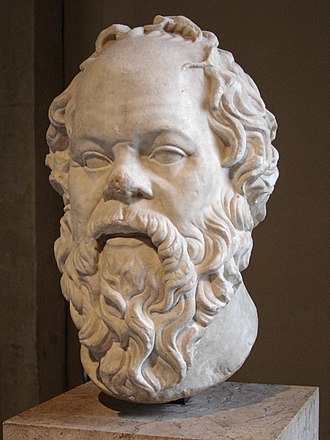 Socrates470 BCE – 399 BCE5th-century BCE Greek philosopher
 Platoc. 428 BCE – 348 BCE4th-century BCE Greek philosopher
 Aristotle384 BCE – 322 BCEGreek philosopher
 Pericles494 BCE – 429 BCEAthenian statesman, orator and general (c. 495 – 429 BC)
 Homerc. 900 BCE – 800 BCEReputed author of the Iliad and the Odyssey
 Archimedes287 BCE – 212 BCEGreek mathematician and physicist (c. 287 – c. 212 BC)
Everything that happened
- c. 1,100 BCE – 1500MiletusTurkeyMiletus (Ancient Greek: Μίλητος, romanised: Mílētos) was an influential ancient Greek city on the western coast of Anatolia, near the mouth of the Maeander River in present day Turkey. Renowned in antiquity for its wealth, maritime power, and extensive network of colonies, Miletus was a major center of trade, culture, and innovation from the Bronze Age through the Roman period.
- 776 BCEFirst recorded Olympic GamesOlympia, GreeceThe earliest recorded Games are held at Olympia. Greeks later count years in four-year Olympiads starting from this date.
- 508 BCEClassical AthensClassical AthensAthens (Ancient Greek: Ἀθῆναι, Athênai) was a prominent polis (city-state) of ancient Greece, located in the peninsula of Attica. Athenian democracy was established in 508 BC and remained in place for almost two centuries except for a few brief interruptions.
- 490 BCEBattle of MarathonMarathonThe Battle of Marathon took place in 490 BCE during the first Persian invasion of Greece. It was fought between the citizens of Athens, aided by Plataea, against a Persian force commanded by Datis and Artaphernes. The battle was the culmination of the first attempt by Persia under King Darius I to subjugate Greece.
- 480 BCEBattle of ThermopylaeThermopylaeThe Battle of Thermopylae was fought in 480 BC at Thermopylae between the Achaemenid Persian Empire under Xerxes and an alliance of Greek city-states led by Sparta under Leonidas I. Lasting over the course of three days, it was one of the most prominent battles of both the second Persian invasion of Greece and the wider Greco-Persian Wars.
- 480 BCEBattle of SalamisSalamis IslandThe Battle of Salamis ( SAL-ə-miss) was a naval battle fought in 480 BC, between an alliance of Greek city-states under Themistocles, and the Achaemenid Empire under King Xerxes. It resulted in a victory for the outnumbered Greeks.
- 431 BCE – 404 BCEPeloponnesian WarAncient GreeceThe Peloponnesian War was fought in the Eastern Mediterranean between the Athenian-led Delian League and the Spartan-led Peloponnesian League from 431 to 404 BC for hegemony over Ancient Greece. Initially inconclusive, the intervention of the Persian Empire in support of Sparta in 413 BC allowed the Spartan coalition to decisively defeat Athens, beginning a period of Spartan hegemony over Greece.
- 334 BCE – 323 BCECampaigns of AlexanderGreece to IndiaAlexander of Macedon defeats the Persian Empire and marches as far as the Indus River, spreading Greek culture across the Middle East.
- 331 BCEBattle of GaugamelaGaugamelaThe Battle of Gaugamela ( GAW-gə-MEE-lə; Ancient Greek: Γαυγάμηλα, romanized: Gaugámēla, lit. 'the Camel's House'), also called the Battle of Arbela (Ἄρβηλα, Árbēla), took place in 331 BC between the forces of the Army of Macedon under Alexander the Great and the Persian Army under King Darius III.
- 323 BCE – 30 BCEHellenistic period—In classical antiquity, the Hellenistic period covers the time in Greek, Eastern Mediterranean and West Asian history following Classical Greece, between the death of Alexander the Great in 323 BC and the death of Cleopatra VII in 30 BC, in which all these regions were under the influence of Greek leadership, culture, and language as a result of Alexander's conquests.